
Reviewed · ROME COOKING CLASSES
Rome: Pasta Cooking Class in a Professional Pasta Laboratory
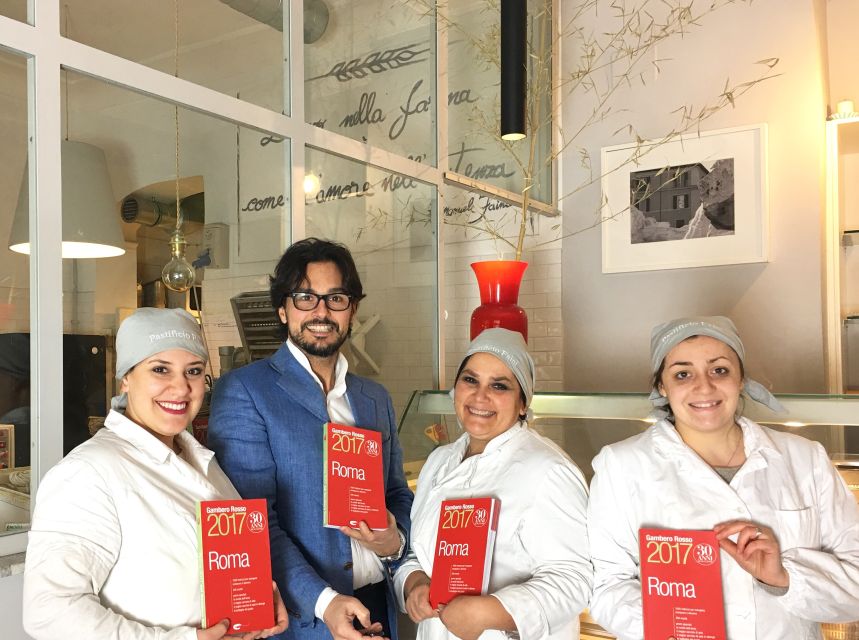
Making pasta inside a real professional pastificio gives this Rome class more substance than a quick tourist cooking demo. Chef Angelo and Emanuele guide a small group through dough, fillings, ravioli, sauces, and a shared meal at Pastificio Faini on Via dei Latini.
I like the hands-on method, especially the rolling pin work instead of simply feeding dough through a machine. I also like the thoughtful flour selection, which includes ancient grains and buckwheat for gluten-free pasta. The one drawback is that three hours can feel tight if you want lengthy practice with every pasta shape, particularly on Thursdays when gnocchi receives a shorter demonstration.
Key points at a glance
- A real pasta laboratory: Learn inside Pastificio Faini, not a home kitchen dressed up for visitors.
- Three distinctive flours: Work with Triticum Monococcum, Senatore Cappelli, and gluten-free buckwheat flour.
- Hand-rolled dough: Use a rolling pin to create thin pasta sheets before cutting and shaping them.
- Several pasta styles: Make filled pasta, ravioli, and a pasta without egg that is suitable for vegans.
- A proper finish: Eat the pasta and sauces you prepare with Italian wine and water.
- Small, friendly format: The class is limited to nine participants and is taught in English and Italian.
Inside Pastificio Faini on Via dei Latini
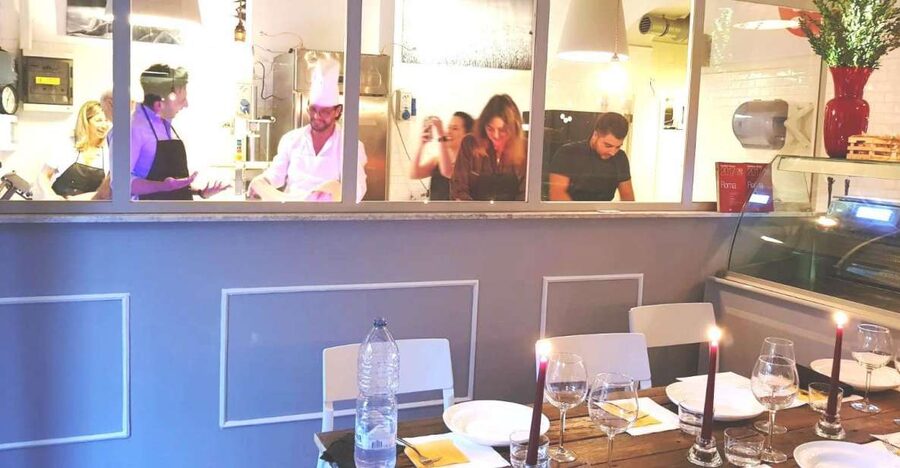
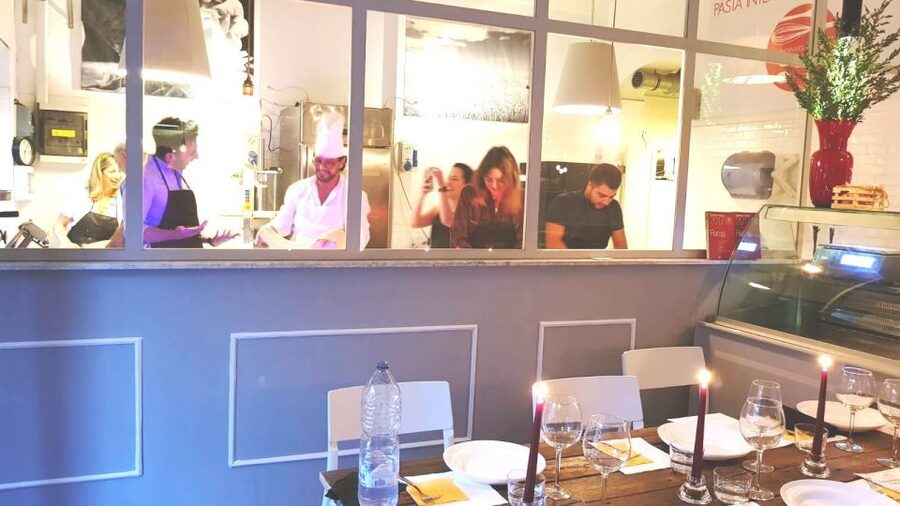
The class begins at Pastificio Faini, at 13 Via dei Latini in Rome. You are not heading to a restaurant kitchen or a private apartment. You are entering a professional pasta laboratory, which changes the feel of the lesson from the first minute.
The setting matters because you see pasta as a working craft. You learn how dough is handled, rolled, cut, and shaped in a place devoted to making pasta. That practical setting also helps explain why the class focuses on repeatable methods rather than fancy presentation.
The group is capped at nine participants. That is a useful size for a hands-on lesson. You can watch a demonstration, work at your own station, and still get help when dough becomes too dry, too sticky, or uneven. A much larger class would make this sort of instruction less useful.
You receive a chef hat and apron signed by the chef, along with the ingredients and equipment needed during the class. The recipes are included, so you leave with something more useful than a few photographs. You can try the dishes again at home while the instructions are still fresh in your mind.
More cooking classes in Rome:
- 3 in 1 Cooking Class near Navona: Fettuccine, Ravioli & Tiramisu
★ 5.0 · 7,376 reviews - Rome: 3-in-1 Fettuccine, Ravioli, and Tiramisu Cooking Class
★ 4.9 · 2,704 reviews - Rome: Fettuccine Pasta Cooking Class in Rome’s City Center
★ 4.8 · 2,414 reviews
A gentle start with food safety and a welcome drink
The session opens with a welcome drink and an explanation of safe food-cutting procedures. This is a small but worthwhile part of the class. Before knives and pasta tools appear, you get a clear idea of how to work safely and efficiently.
The instructors teach in English and Italian. The English instruction is described as clear, and the lesson follows a demonstration-first format. Chef Emanuele demonstrates a step, then you copy it while the team moves around the group to offer help.
The tone is friendly and energetic, with music in the background and plenty of conversation. The class is social, but it remains a cooking lesson. If you want to meet people from different countries while making something useful with your hands, the format works well.
You do not need professional cooking experience. You only need patience and an interest in pasta. Expect some flour on your hands, a few imperfect shapes, and plenty of chances to correct your technique.
Three grains, three ways to understand pasta dough
One of the most interesting parts of the class is the use of three different grains. This is not just a lesson in making one standard batch of egg pasta.
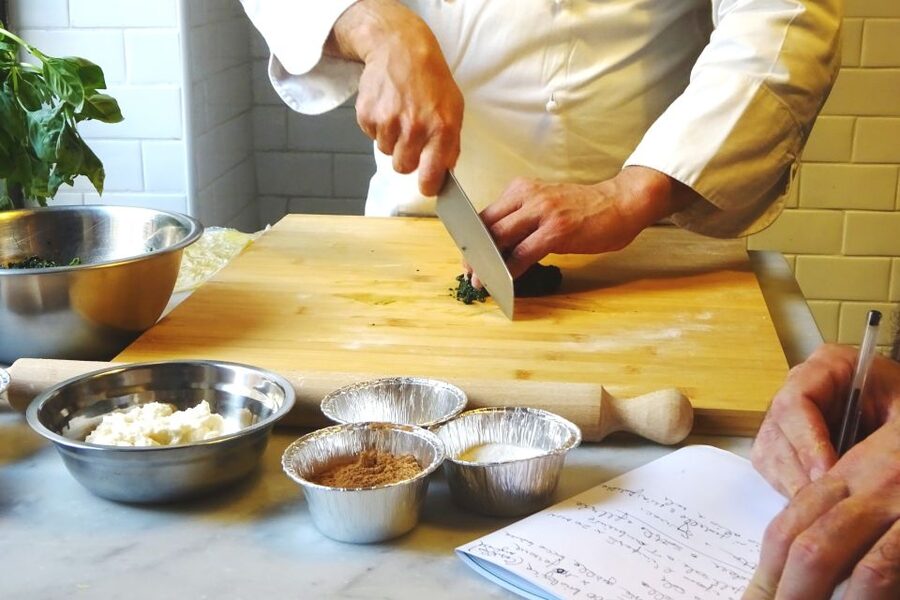
The first is Triticum Monococcum, an ancient wheat considered one of the first cereals cultivated by humans, around 7500 BC. You do not need to memorize the name to benefit from using it. The point is to see how a different grain affects the dough and how traditional ingredients can still have a place in a modern pasta kitchen.
The second is Senatore Cappelli, a wheat variety selected by Nazareno Strampelli in 1915. It disappeared from common use in the 1960s before being rediscovered through the work of a small farmer. That backstory adds useful context to the flour in front of you. You are not simply mixing ingredients. You are handling varieties with their own place in Italian food culture.
The third flour is buckwheat, or Grano Saraceno. Despite its name, buckwheat is not wheat. Here it is used for gluten-free pasta, giving participants with gluten restrictions a chance to take part in the main activity rather than watch from the side.
The class can cater for gluten-free participants, but you should advise the provider of dietary requirements in advance. This is especially important for anyone with coeliac disease or a serious allergy. The class information confirms that gluten-free pasta can be made, but it does not provide detailed cross-contamination procedures, so ask specific questions before booking if that concern applies to you.
Rolling pasta sheets by hand
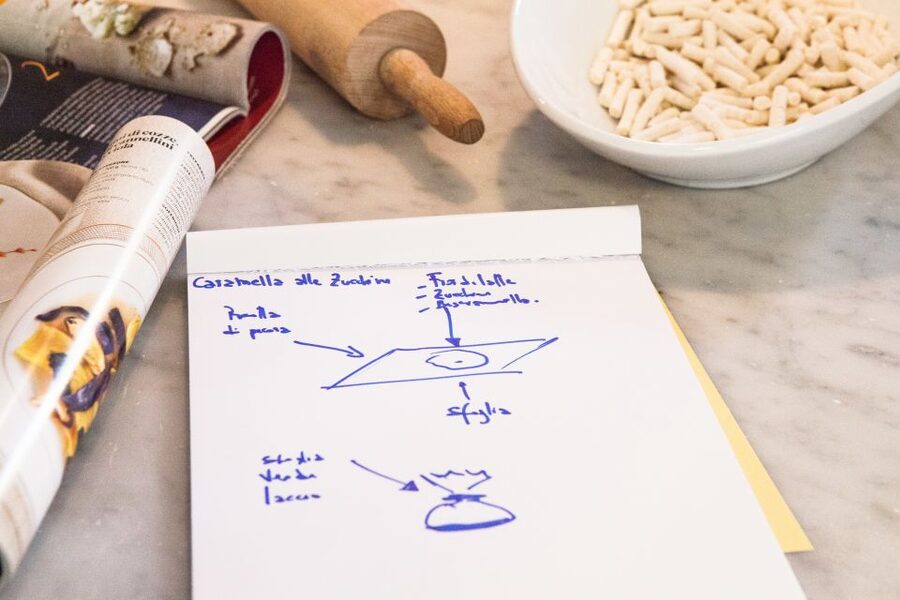
The dough work is the heart of the experience. You create thin sheets by hand, using a rolling pin rather than relying only on a pasta machine. That makes the class more physical and gives you a better feel for the dough.
This is also where the lesson becomes genuinely useful at home. A machine can give you even sheets quickly, but a rolling pin teaches you to judge thickness, pressure, and texture. You learn when to turn the dough, when to add a little flour, and when to keep working instead of reaching for more ingredients.
The instructors demonstrate each stage before you follow along. Beginners receive help with the parts that feel awkward, especially getting an even sheet and keeping the edges neat. Do not expect perfect restaurant pasta on your first attempt. The value is in learning a process you can repeat.
That hand-rolled approach may not suit you if you want a relaxed class with minimal work. This is not a tasting with a token cooking activity. You are expected to make the dough, roll it, cut it, shape it, and help prepare the meal.
Same city, a completely different half-day:
- Vatican Museums & Sistine Chapel Tour with Optional Basilica
★ 4.3 · 67,413 reviews - Vatican Museums, Sistine Chapel & St Peter’s Basilica Guided Tour
★ 4.5 · 39,149 reviews - Rome: Colosseum, Palatine Hill and Roman Forum Guided Tour
★ 4.8 · 32,814 reviews - Rome: Guided Tour of Colosseum, Roman Forum & Palatine Hill
★ 4.7 · 27,897 reviews
Ravioli, fillings, and a pasta without egg
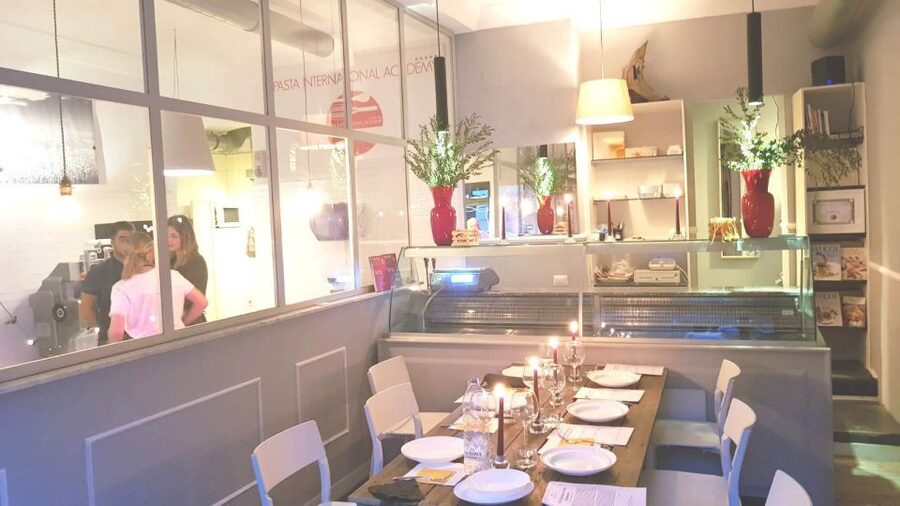
The class includes three types of ravioli. You prepare the thin pasta sheets, work with fillings, and learn how to shape the parcels so they hold together during cooking.
Filled pasta rewards care. Too much filling makes the ravioli difficult to seal. Too little leaves an empty pocket. The instructors help you find the balance and show you how to press out excess air before sealing the edges.
You also make one kind of pasta without egg, making that portion vegan. This gives the class some range beyond the familiar yellow egg dough. It also shows how flour, water, and technique can produce a satisfying result without relying on eggs.
The exact selection may vary with the day’s program. The available information names ravioli, fettuccine, simple tomato sauce, and Roman sauces such as carbonara, cacio e pepe, or gricia. Ask at the start which dishes are planned if you have a particular sauce or pasta shape in mind.
The class is suited to families as well as couples and solo visitors. Children and complete beginners can participate, though younger cooks will need to follow the knife-safety instructions and keep pace with the group.
Roman sauces and the reward at the table
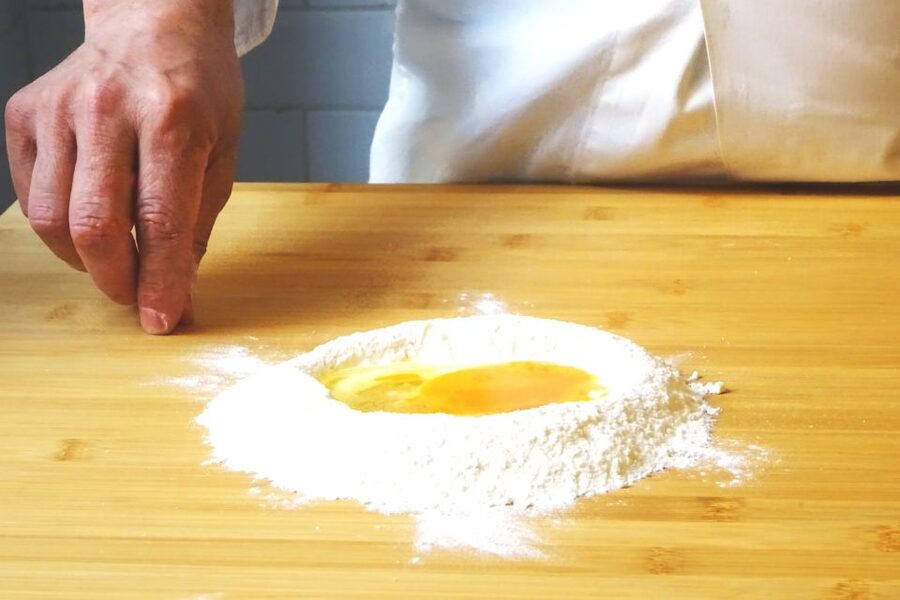
After the pasta work, you prepare sauces. A typical Roman option may be carbonara, cacio e pepe, or gricia. These sauces are useful choices for a class because they depend on technique and balance rather than a long list of ingredients.
Carbonara demands care with heat and texture. Cacio e pepe depends on turning cheese and pasta water into a smooth sauce. Gricia sits between the two in spirit, with a savory, direct flavor. The class gives you a practical introduction to the Roman sauce family and helps you understand why simple dishes can be difficult to get right.
The meal at the end is not a separate restaurant course. You eat the pasta and sauces you have made. That gives the three-hour lesson a satisfying shape: work first, then sit down together and taste the result.
Wine and water are included. You may also receive a welcome drink at the beginning. The meal is served at the end, and the group sits together, which turns the final part into a relaxed social occasion rather than a quick plate at the worktable.
This arrangement adds real value to the price. At $66.84 per person, you are paying for three hours of instruction, ingredients, equipment, recipes, a chef hat and apron, wine, water, and a prepared meal. I would not call it the cheapest way to eat pasta in Rome, but it offers far more than a meal alone.
Thursdays bring homemade gnocchi
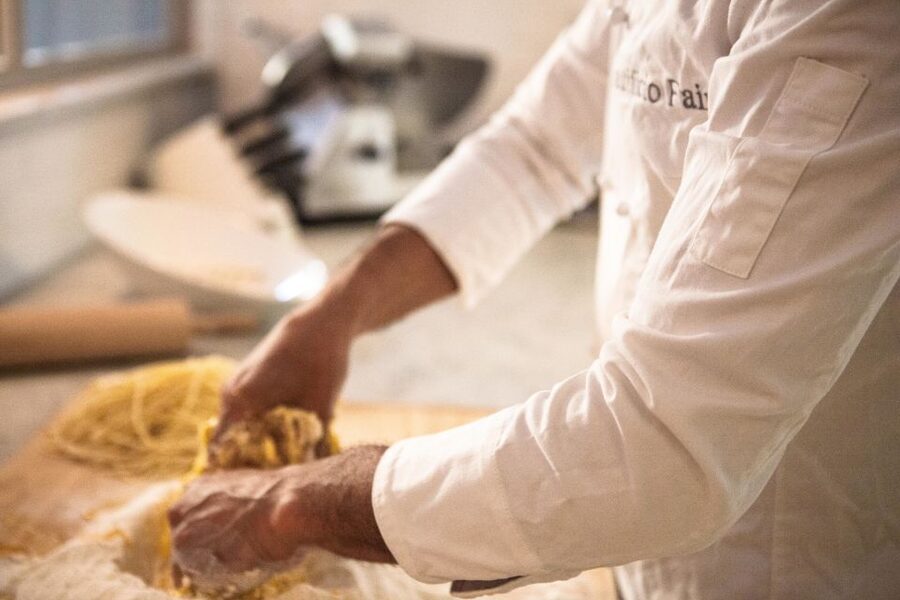
Thursday has a special variation: homemade Italian gnocchi with fresh potatoes. If you particularly want to make gnocchi, choose this day when possible.
There is one practical caution. The gnocchi portion may be more of a quick demonstration than a long period of hands-on practice. The instructors still explain the process, but the class has a fixed schedule and must make room for the other pasta work.
That makes Thursday a good choice for a broad introduction to Italian pasta, but not necessarily the best choice if gnocchi is your main goal. If you want extended practice bringing the potato dough together and shaping every piece yourself, ask how much of the session will be devoted to gnocchi before booking.
What makes the instructors effective
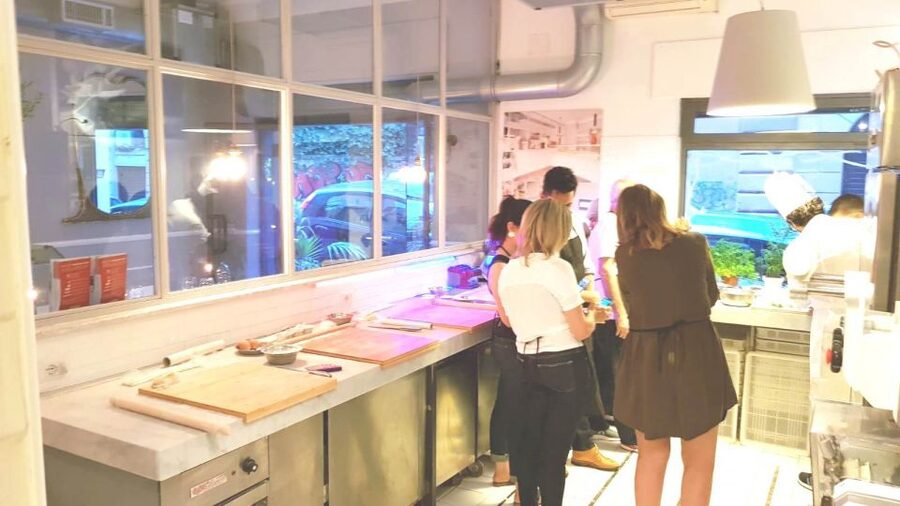
Chef Emanuele Faini is described as passionate about pasta and his family’s pasta-making background. Chef Angelo is also named as an instructor. The teaching style is practical: demonstrate first, then let you work with guidance when needed.
That balance is important. Too much demonstration turns a cooking class into a show. Too little leaves beginners unsure what to do next. Here, the team keeps the lesson moving while offering individual help around the tables.
The instructors are also part of the social atmosphere. They eat with the group, answer questions, and keep the mood light. If you prefer a quiet, technical workshop, the music and conversation may feel lively. If you want a warm class where you can chat while cooking, it is a good match.
The class receives a 4.9 rating from 157 ratings, and the strongest pattern is clear: people value the friendly instruction, the step-by-step method, the meal, and the chance to make pasta by hand. Several families also appreciated that a child with coeliac disease could make gluten-free pasta alongside the group.
Who will get the most from this class
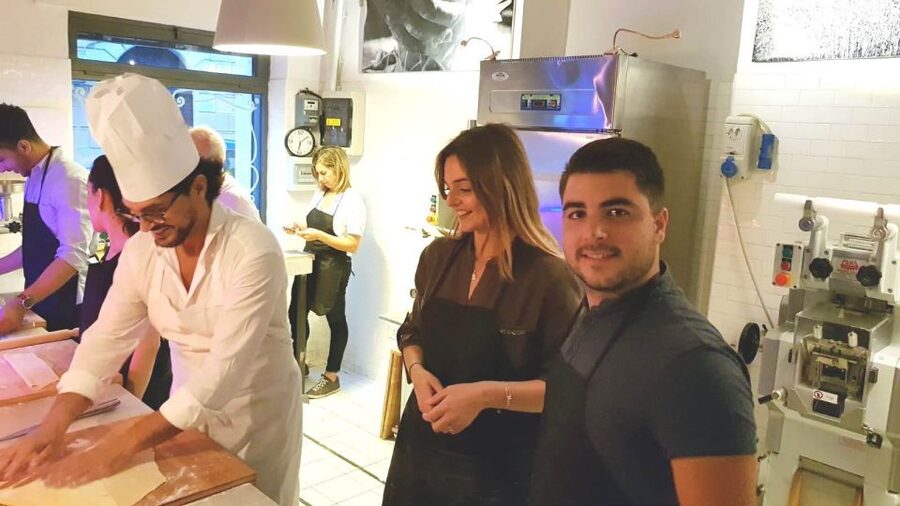
I would recommend this experience to you if you want to take a practical skill home from Rome. The recipes and techniques are simple enough to repeat, and the rolling-pin method gives you a useful foundation even if you later buy a pasta machine.
It suits:
- First-time pasta makers
- Couples looking for a shared activity
- Families who enjoy cooking together
- Solo visitors who like small group classes
- Anyone interested in Roman sauces
- Gluten-free participants who notify the provider in advance
- People who want a meal with wine after the lesson
It may be less suitable if you dislike group activities, do not want to handle flour and dough, or want a highly specialized masterclass focused on one pasta shape. The class covers several kinds of pasta in three hours, so breadth comes before exhaustive practice.
The location is in Rome’s Lazio region and the class begins and ends at Pastificio Faini. You arrange your own way to the meeting point, so check the address carefully and allow time to arrive before the scheduled start.
Free cancellation is available up to 24 hours in advance for a full refund, and the reserve-now, pay-later option can help if your Rome plans are still moving around. Pets are not allowed.
Should you book the Pastificio Faini class?
Book it if you want to make pasta by hand in a genuine working laboratory, not just watch a chef prepare lunch. The strongest reasons are the small group, the rolling-pin technique, the unusual grains, the gluten-free option, and the meal shared with the instructors.
I would choose a non-Thursday date if ravioli and hand-rolled pasta are your main interests. Choose Thursday if homemade gnocchi is important to you, but keep your expectations realistic about how much practice that part receives.
At $66.84, the class is good value for a three-hour activity that includes instruction, food, wine, equipment, recipes, and a meal. It is especially worthwhile early in your Rome visit, since you can use the recipes and pasta skills for years after the trip.
FAQ
Where does the pasta class take place?
The class takes place at Pastificio Faini, located at 13 Via dei Latini, Roma 00185.
How long does the experience last?
The class lasts three hours. Starting times vary, so check availability when booking.
How many people are in each class?
The class is limited to nine participants.
Which languages are spoken?
Instruction is available in English and Italian.
Do I need professional cooking experience?
No. You do not need specific professional skills. The class is designed for people who enjoy pasta, including beginners.
Can people who avoid gluten participate?
Yes. The class caters for gluten-free participants, who can make gluten-free pasta with buckwheat flour. Tell the provider about dietary requirements in advance.
What do you make during the class?
You work with three kinds of flour, make thin pasta sheets, prepare three types of ravioli, create a pasta without egg, and prepare sauces. Depending on the session, sauces may include carbonara, cacio e pepe, gricia, or simple tomato sauce.
What is different about Thursday classes?
On Thursdays, the class includes homemade Italian gnocchi made with fresh potatoes. The gnocchi portion may be a shorter demonstration within the wider pasta lesson.
Is food and wine included?
Yes. Ingredients, equipment, wine, and water are included. You eat the pasta and sauces prepared during the class.
What happens if I need to cancel?
You can cancel up to 24 hours in advance for a full refund. You can also reserve now and pay later to keep your plans flexible.
More pasta and pizza making classes in Rome
- Rome: Pasta & Tiramisu Class with Fine Wine by the Vatican
★ 4.9 · 4,852 reviews - Rome: Pasta Making Class with Wine, Limoncello, and Dessert
★ 4.9 · 3,177 reviews - Rome: Traditional Pasta with Cocktails Cooking Class
★ 5.0 · 2,374 reviews - Learn to Make Pasta & Tiramisu with Wine and Limoncello Included
★ 5.0 · 2,345 reviews
Newest Rome tours we have reviewed
- Private TikTok Video Making in Rome★ 5.0 · 7 reviews
- Assisi, Orvieto and Civita di Bagnoregio Full Day Tour from Rome★ 4.5 · 45 reviews
- Assisi & Saint Francis Path Tour from Rome★ 5.0 · 45 reviews
- Assisi and Cascia Private Day Tour from Rome with Lunch★ 5.0 · 10 reviews
- Art Class in the center of Rome!★ 4.0 · 4 reviews
- Art & Craft: Beer Tour with Street Art in Rome★ 4.5 · 6 reviews
- Arrival in Rome: Airport Transfer & Exclusive City Introduction★ 5.0 · 3 reviews
- From Rome: Private Day-Tour of Tuscany★ 5.0 · 16 reviews
Rome Cooking Classes, compared.
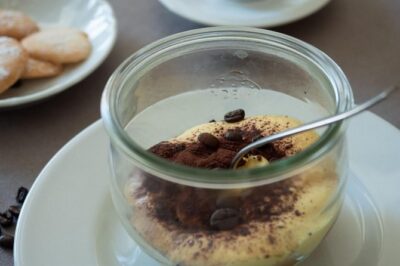
3 in 1 Cooking Class near Navona: Fettuccine, Ravioli & Tiramisu
Read our review →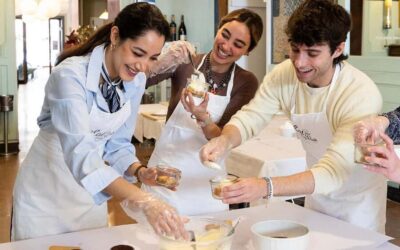
3-in-1 Fettuccine, Ravioli, and Tiramisu Cooking Class
Read our review →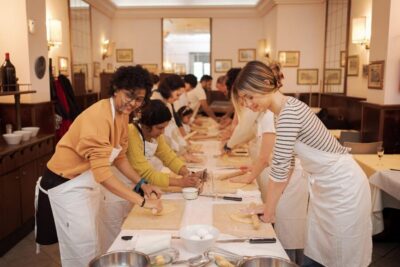
Fettuccine Pasta Cooking Class in Rome’s City Center
Read our review →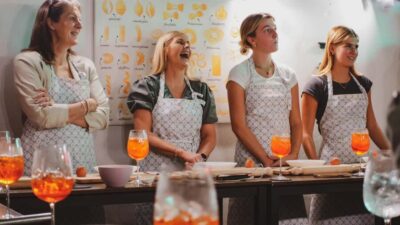
Traditional Pasta with Cocktails Cooking Class
Read our review →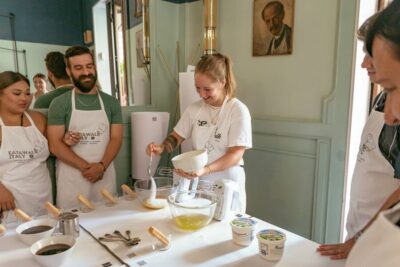
Fettuccine and Tiramisu Cooking Class with Wine
Read our review →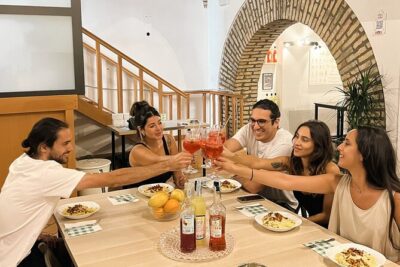
Pasta Cooking Class Near the Colosseum with 3 Spritz Cocktails
Read our review →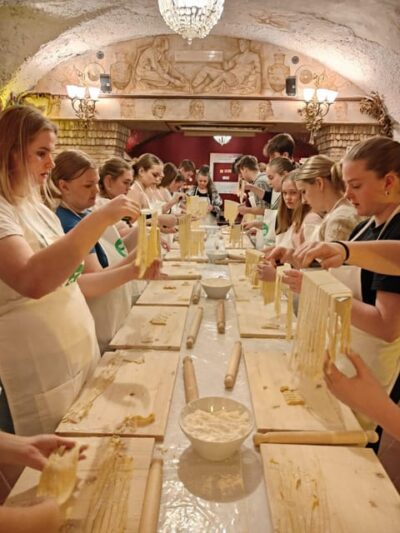
Pasta & Tiramisu Cooking Class near the Spanish Steps
Read our review →
Rome Tipsy Cooking Class: Make Pasta and Mix 3 Spritz Cocktails
Read our review →Browse the lists this tour appears in