
Reviewed · UNDERGROUND ROME TOURS
Rome: Piazza Navona and Trevi District Underground Pass
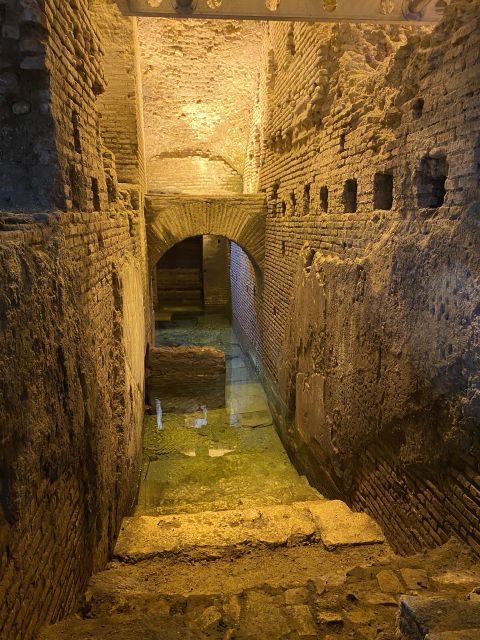
The most unusual part of this experience happens below street level. Beneath Piazza Navona, you can see the remains of the Stadium of Domitian, while near Trevi Fountain, the Vicus Caprarius excavation reveals ancient passages and the remains of a Roman house. Rome’s famous squares take on a new meaning when you see what lies under them.
I like the combination of two small archaeological sites with a walk past Piazza Navona, the Pantheon, and Trevi Fountain. I also like the audio guides, since they let you move at your own pace instead of being tied to a spoken tour group.
The main caution is scale. Neither excavation is large, and many visitors spend about 30 minutes at each one. The ticket is best for people who want a focused look at Rome’s layers, not for anyone expecting a vast underground city.
Key points to know before booking
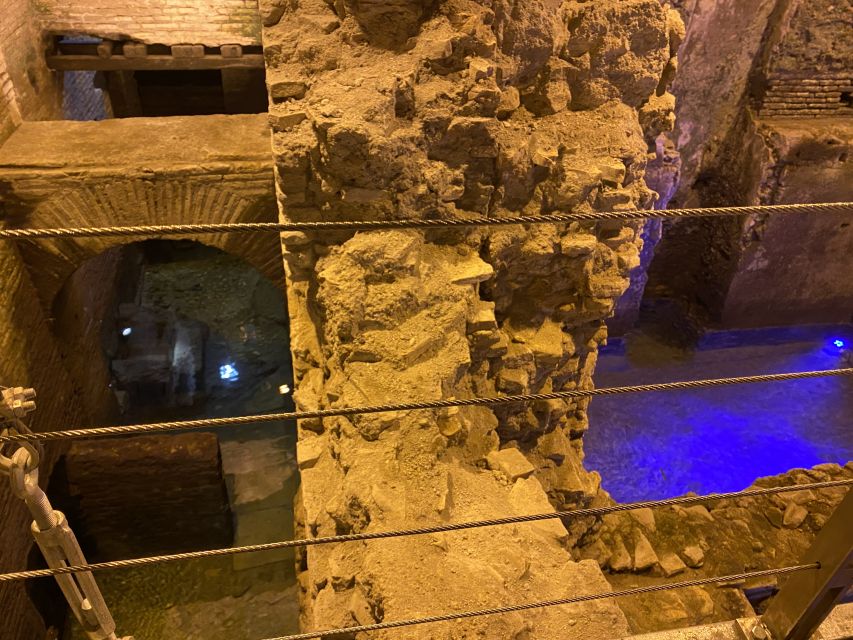
- The Stadium of Domitian sits beneath Piazza Navona, linking today’s elegant square to Roman sporting life.
- Vicus Caprarius is near Trevi Fountain, with excavated passages and the remains of a Roman home.
- The two sites are about 10 minutes apart on foot, making the pass easy to fit into a central Rome day.
- Audio guides are included in English, Italian, French, Spanish, German, Russian, and Portuguese.
- Your voucher is not the entry ticket. Redeem it first at the Tourist Office at Piazza Navona 25.
- Expect a compact visit, with roughly half an hour at each excavation and extra time for the city walk.
Rome’s famous squares have an older floor beneath them
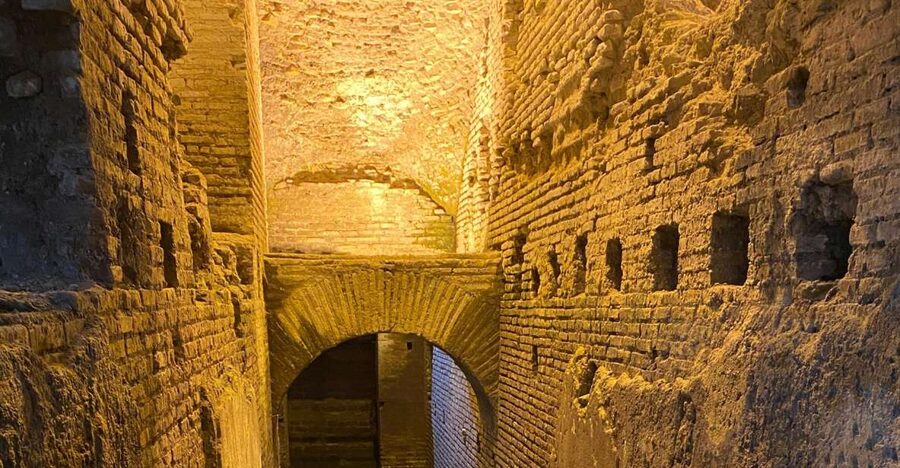
Rome can feel like several cities stacked together. At street level, you have fountains, cafés, churches, and shops. Below that, you find fragments of imperial buildings, medieval streets, and later homes built over ancient foundations.
This combination ticket gives you a clear look at that layered city. The two underground stops are not connected, but they are close enough to visit during the same outing. You begin around Piazza Navona, then continue toward the Trevi area, with the city itself forming the link between the sites.
The experience is listed as two hours. That time includes the route through central Rome and the two archaeological visits. The excavations themselves are fairly compact, so you should not expect to spend the full two hours underground.
I see this as a useful choice for a first visit to Rome if you want more than the usual fountain-and-photo circuit. It also works well for a return visit, when you have already seen the major monuments and want a different angle on the city.
More Piazza Navona tours:
- 3 in 1 Cooking Class near Navona: Fettuccine, Ravioli & Tiramisu
★ 5.0 · 7,376 reviews - Enjoy Spritz and Pasta Making in Piazza Navona
★ 5.0 · 1,681 reviews - Rome: Traditional Pizza Cooking Class near Piazza Navona
★ 4.7 · 1,241 reviews
Starting at the Stadium of Domitian beneath Piazza Navona
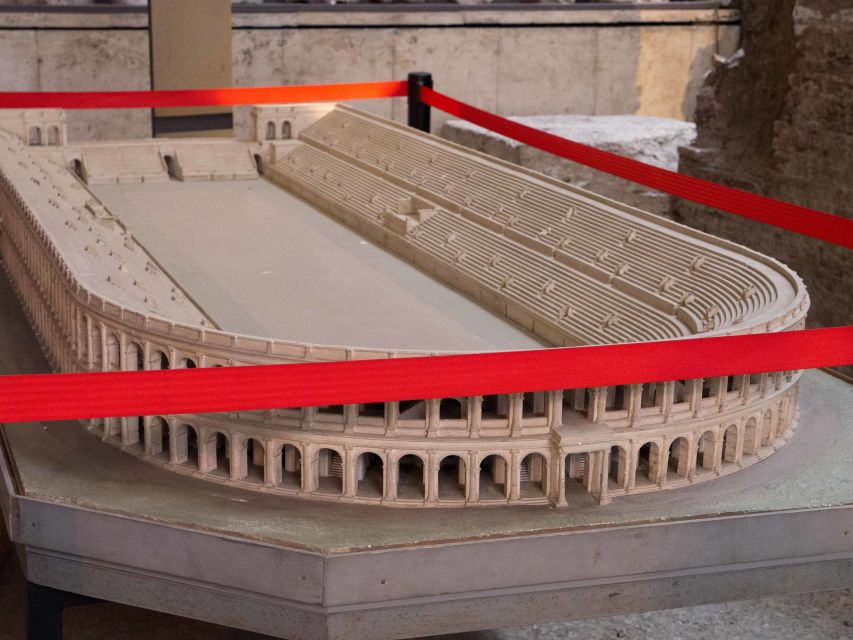
Piazza Navona is one of Rome’s most memorable public spaces. Its long, oval shape follows the outline of the ancient Stadium of Domitian, a place built for athletic contests and public spectacles.
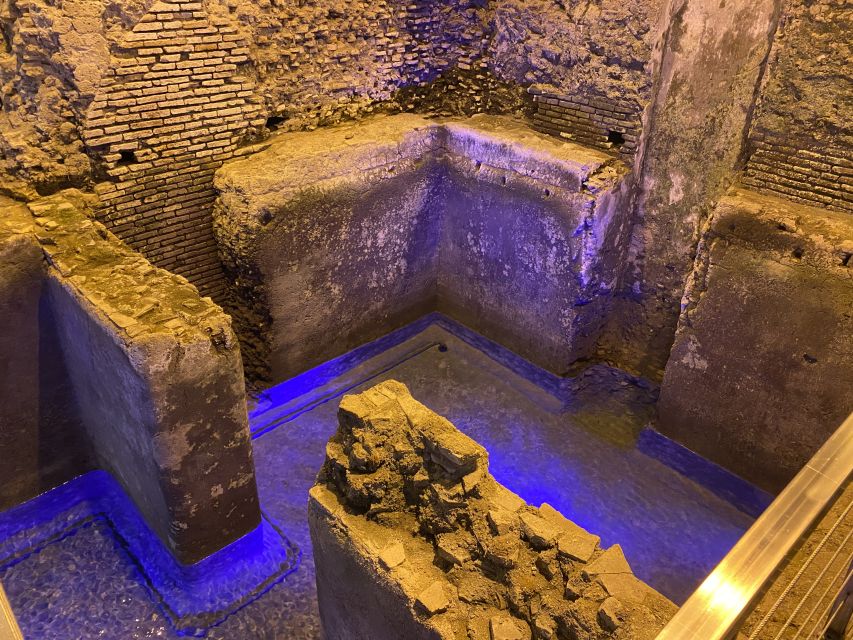
The modern square is known for its fountains, especially Bernini’s Fountain of the Four Rivers. Below it, the archaeological area helps explain why the piazza has such an unusual shape. You are not simply walking into a generic Roman ruin. You are seeing the foundations of the structure that influenced the layout above.
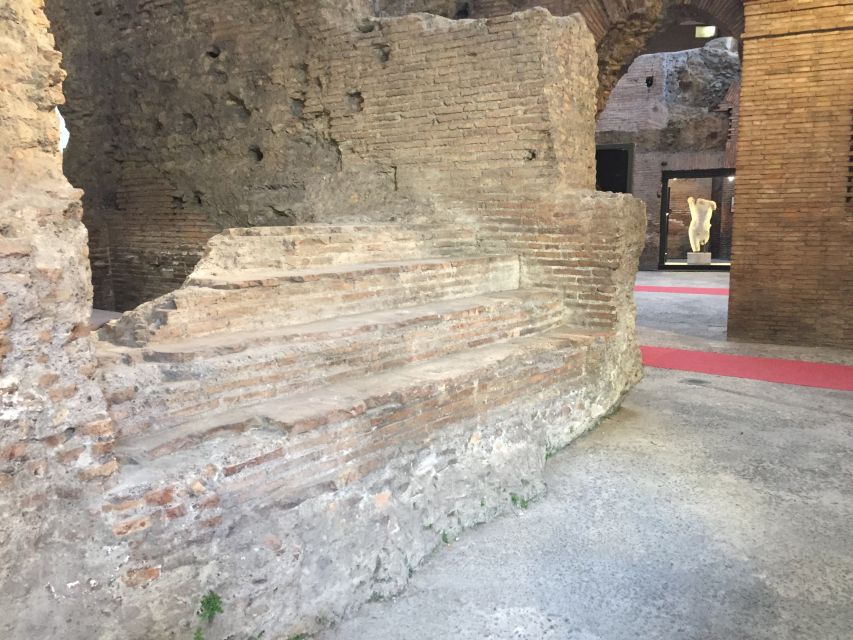
The site focuses on the history of the stadium and the Roman world that produced it. The audio guide supplies the background as you move through the remains. That format is helpful here because the surviving walls and fragments need explanation. Without context, an underground ruin can look like a collection of worn stones.
The excavation is not huge. Plan on around 30 minutes if you listen carefully and pause at the displays. If you enjoy ancient architecture, the visit can be fascinating because it connects an active modern square with a building from Rome’s imperial period.
If you are mainly looking for dramatic intact structures, keep your expectations in check. The appeal is the setting and the connection between the layers of the city, not a large walk-through monument.
Walking from Piazza Navona toward the Trevi district
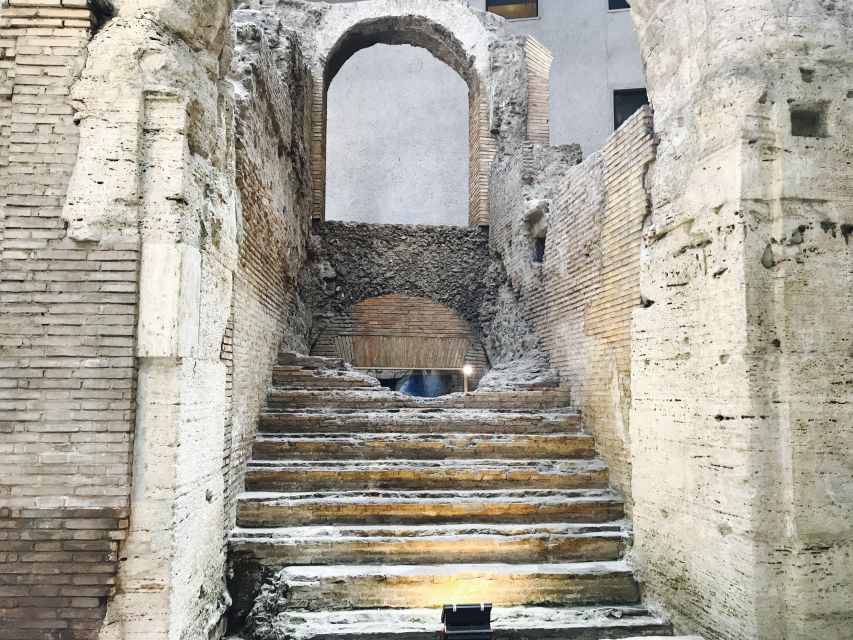
The two archaeological sites are roughly 10 minutes apart on foot. That short walk is one of the better features of the pass because you are not spending the day moving between distant attractions.
Along the way, the route takes in some of central Rome’s best-known sights. You can see Piazza Navona above the stadium, view the Pantheon from outside, and continue toward Trevi Fountain. The guide provides information about Rome from the Roman Empire through later periods, so the walk adds useful context to the underground stops.
The Pantheon is included as an exterior viewing point rather than an interior visit. Even from outside, its massive dome and ancient columns make it an important stop. It is often described as one of the best-preserved ancient temples in the world, and its design impressed Michelangelo when he first saw it.
Trevi Fountain is another major highlight. You can toss in a coin according to the familiar tradition, but the more useful part of the visit is learning about the fountain and its place in Rome’s story. The area can be crowded, so the practical value of the guide is that you receive context while taking in the scene rather than simply arriving, taking a picture, and moving on.
Bring comfortable shoes. The route is short, but central Rome involves walking on old paving and through busy public spaces. The walk also means you should treat the activity as a combination of sightseeing and archaeology, not as a museum visit with two entrances next door.
Entering Vicus Caprarius near Trevi Fountain
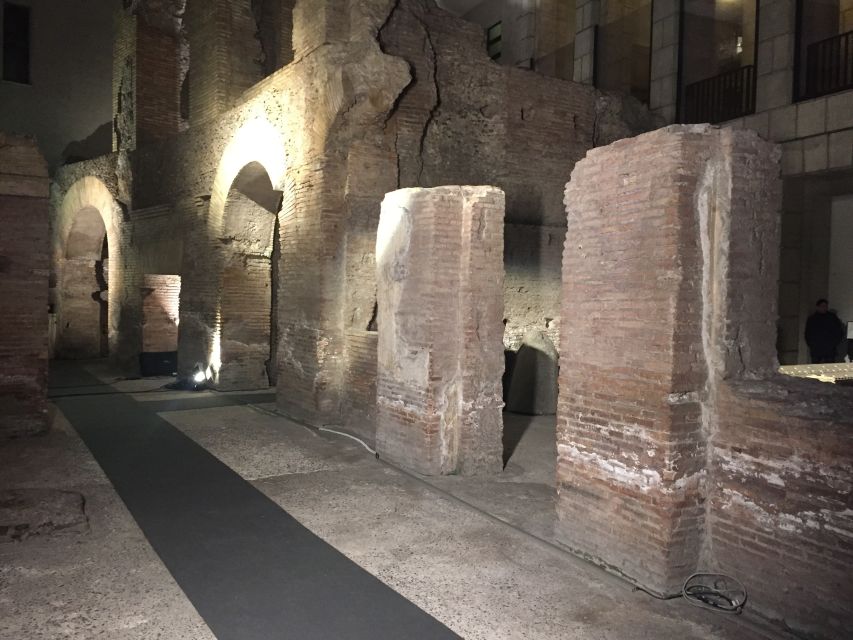
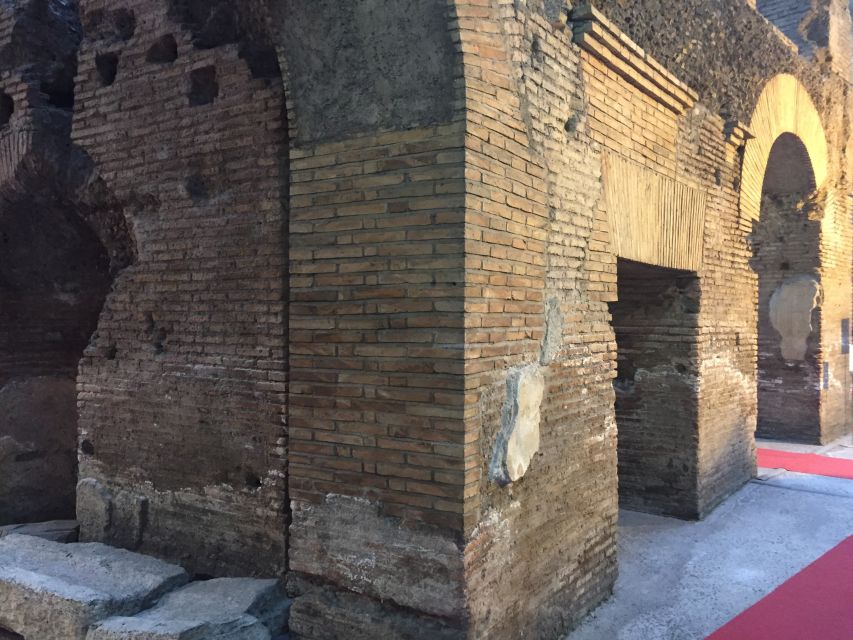
The second underground site is Vicus Caprarius, often called the Trevi District Underground. It lies near the fountain and offers a look at ancient passages and the remains of a Roman house.
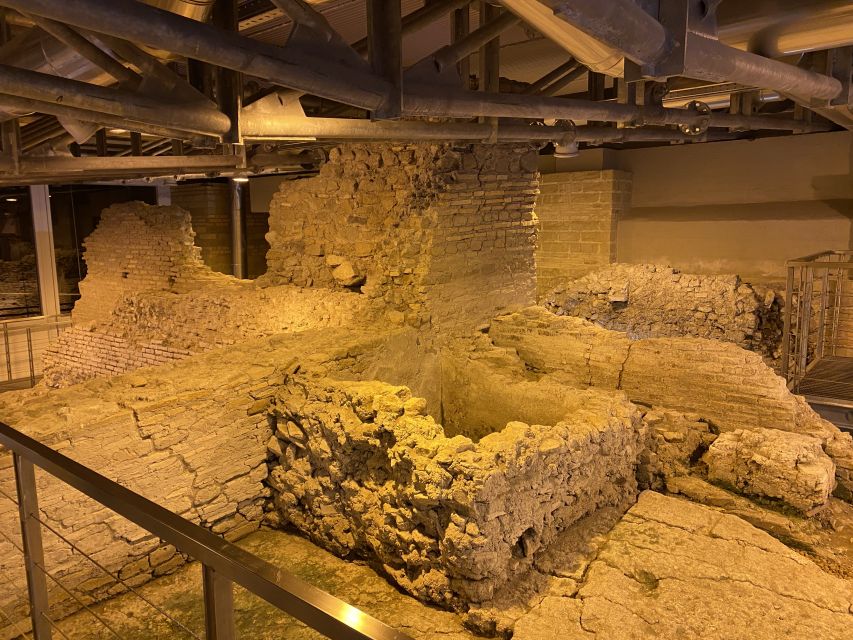
This excavation is valuable because it shows ordinary urban life below one of Rome’s grandest monuments. Trevi Fountain attracts attention with water, stone, and theatrical design. Beneath the surrounding streets, Vicus Caprarius points to the homes, structures, and water systems that formed part of the older neighborhood.
The site is also compact. You may spend about half an hour here, depending on how closely you follow the audio guide. That makes it easy to add to a day of sightseeing, but it also explains why some people find the ticket less substantial than expected.
I would approach Vicus Caprarius as a focused archaeological stop. You are seeing a real Roman domestic setting and underground remains, not an entire buried neighborhood. The experience works best when you are interested in how Rome’s everyday buildings fit beneath the modern city.
The contrast with the Stadium of Domitian makes the pass worthwhile. One site relates to a large public venue, while the other gives you a closer look at urban housing and ancient passages. Together, they show two different sides of Roman life.
More Trevi Fountain walks:
- Rome: Trevi Fountain and Underground Guided Tour
★ 4.3 · 1,664 reviews - Rome: Opera Concert at Palazzo Poli – Fontana di Trevi
★ 4.7 · 1,026 reviews - Best of Rome Walking Tour including Trevi Fountain
★ 4.5 · 923 reviews - Catacombs Tour with Transfer – Optional Capuchin Crypt or Trevi
★ 4.5 · 694 reviews
What the audio guides add
The audio guide is included with both reserved entries. It is available in English, Italian, French, Spanish, German, Russian, and Portuguese.
I like this arrangement for two reasons. First, you can move at your own pace. Second, you can pause longer at a section that interests you without holding up a group. One person can listen closely while another takes pictures or studies the remains.
The audio guide is especially useful at the Stadium of Domitian, where the shape and function of the ancient building are not always obvious from the visible ruins. At Vicus Caprarius, it helps explain how the excavated home and passages fit into the larger history of Rome.
This is not the right choice if you want a guide speaking continuously beside you underground. The experience includes a professional English-guided route through the city, but the reserved archaeological entrances themselves come with audio guides. Check the exact option details when booking so you know how the city portion and attraction entries are arranged.
Getting the ticket process right
There is one important practical detail: the voucher you receive is not the ticket for the archaeological sites. Before visiting, you must redeem it at the Tourist Office at Piazza Navona 25 in Rome.
Allow time for this step. Do not walk directly to an excavation with only the voucher and expect to enter. The tourist office is the starting point, and the activity ends back at the meeting point.
Pay close attention to the times printed on your booking documents. The times may use the 24-hour clock. A timing mistake can create a needless rush, especially if you think an afternoon appointment is an hour earlier than it really is.
It is also wise not to arrive far ahead of the scheduled start and assume you can enter early. The entry arrangements are tied to your reserved time. If you have a 10:00 booking, plan around that time rather than expecting an early visit to the site.
The reserved entry is useful because it helps you avoid the regular ticket line. Still, reserved entry does not mean you can skip the voucher redemption step.
Is $34 a fair price?
At $34 per person, the pass is reasonably priced if you want both excavations and value a structured route through central Rome. You are paying for reserved admission to two archaeological sites, audio guides, and the organized connection between them.
The value depends heavily on your interests. If you enjoy Roman archaeology and want to understand what lies below the streets, the price is fair. You get two different sites without arranging separate tickets, and both are in the center of Rome.
If your main goal is a long underground exploration, the price may feel high. Each excavation is relatively small, and the total time inside is limited. You are paying for quality of subject matter and location rather than a large amount of floor space.
The surrounding walk improves the value. Piazza Navona, the Pantheon exterior, and Trevi Fountain are central Rome highlights, and the guide helps connect them to the city’s past. The pass makes the most sense as part of a wider walking day rather than as your only activity.
Who will enjoy this experience most?
I would recommend it to:
- First-time visitors who want an introduction to Rome’s archaeological layers.
- History-minded visitors who have already seen the major monuments.
- Couples and independent sightseers who prefer audio guides and a flexible pace.
- Anyone interested in the contrast between a public stadium and a Roman home.
- Visitors who want central Rome sights combined with a short indoor activity.
I would be more cautious about recommending it to children who need constant action, people expecting large ruins, or anyone who dislikes walking between timed stops. It is also not suitable for wheelchair users, according to the activity information.
The compact scale can be an advantage for a busy itinerary. You can see both sites without giving up an entire day. It can also be a drawback if you have traveled far specifically for a major archaeological excavation.
Booking tips for a smoother visit
Book a time that leaves room around the activity. The route includes public sights where you may want to stop for photos, and the ticket redemption step takes place before the attraction visits.
Use the city walk to get your bearings. Piazza Navona, the Pantheon, and Trevi Fountain are close enough to combine with other central Rome sights, but do not try to squeeze in a tightly timed indoor reservation immediately afterward.
Listen to the audio guide at both sites, even if you plan to move quickly. The ruins are more rewarding when you understand what you are seeing. At the same time, you do not need to linger simply to fill two hours. The sites are small by design.
The activity allows free cancellation up to 24 hours before the scheduled time, and you can reserve now and pay later. Those terms help if your Rome plans are still changing.
Should you book the Piazza Navona and Trevi Underground Pass?
Book it if you want a short, well-located introduction to the archaeology beneath central Rome. The Stadium of Domitian is the stronger stop for understanding Piazza Navona, while Vicus Caprarius offers the more intimate look at an ancient Roman home and underground passage.
Do not book it expecting an enormous tunnel network or a full-day archaeological tour. The sites are modest in size, and the real value comes from the contrast between them, the audio explanations, and the walk past Rome’s best-known fountains and monuments.
For $34, I think it is a sensible add-on for a history-focused day in Rome. Redeem your voucher early, read the 24-hour times carefully, and approach the excavations as compact windows into the city rather than giant ruins. With those expectations, the pass gives you something many Rome itineraries miss: a look below the streets you are already walking.
FAQ
How long does the experience last?
The activity lasts about two hours. This includes the route through central Rome and visits to both underground archaeological sites.
Where does the activity begin?
You begin at the Tourist Office at Piazza Navona 25 in Rome. You must redeem your voucher there before visiting the attractions.
Is the voucher the same as the entry ticket?
No. The voucher must be redeemed at the Tourist Office before you visit the Stadium of Domitian and the Trevi District Underground.
What languages are available for the audio guide?
The audio guide is available in Italian, French, English, Spanish, German, Russian, and Portuguese.
How far apart are the two archaeological sites?
The Stadium of Domitian beneath Piazza Navona and the Trevi District Underground are about 10 minutes apart on foot.
Is the activity suitable for wheelchair users?
No. The activity is not suitable for wheelchair users.
Can I cancel the booking?
Yes. You can cancel up to 24 hours in advance for a full refund. You can also reserve now and pay later.
More underground Rome tours
- Colosseum: Underground and Ancient Rome Tour
★ 4.7 · 12,691 reviews - Rome: Crypts and Catacombs Underground Tour with Transfers
★ 4.6 · 5,341 reviews - Expert Guided Tour of Colosseum Arena OR Underground, and Forum
★ 4.5 · 5,041 reviews - Rome: Colosseum Underground Small Group Guided Tour
★ 4.7 · 4,844 reviews
Newest Rome tours we have reviewed
- Private TikTok Video Making in Rome★ 5.0 · 7 reviews
- Assisi, Orvieto and Civita di Bagnoregio Full Day Tour from Rome★ 4.5 · 45 reviews
- Assisi & Saint Francis Path Tour from Rome★ 5.0 · 45 reviews
- Assisi and Cascia Private Day Tour from Rome with Lunch★ 5.0 · 10 reviews
- Art Class in the center of Rome!★ 4.0 · 4 reviews
- Art & Craft: Beer Tour with Street Art in Rome★ 4.5 · 6 reviews
- Arrival in Rome: Airport Transfer & Exclusive City Introduction★ 5.0 · 3 reviews
- From Rome: Private Day-Tour of Tuscany★ 5.0 · 16 reviews
Underground Rome Tours, compared.
Colosseum: Underground and Ancient Rome Tour
Read our review →
Crypts and Catacombs Underground Tour with Transfers
Read our review →
Expert Guided Tour of Colosseum Arena OR Underground, and Forum
Read our review →
Colosseum Underground Small Group Guided Tour
Read our review →
St. Peter’s Basilica, Dome Climb, and Underground Tour
Read our review →
Colosseum Underground & Ancient Rome Guided Tour
Read our review →
Browse the lists this tour appears in