
Reviewed · ROME OPERA AND CONCERT TICKETS
Rome: The Four Seasons by Vivaldi
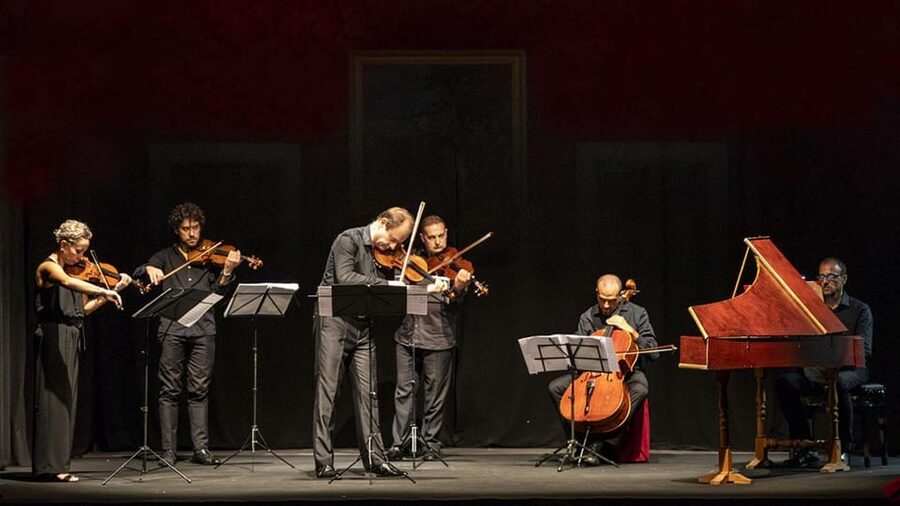
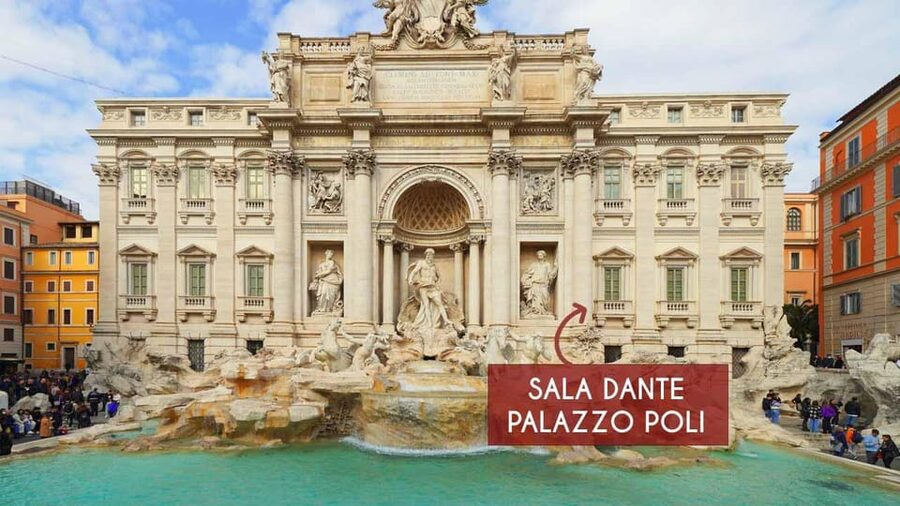
Vivaldi’s Four Seasons makes an excellent Rome evening because the music is short, dramatic, and easy to follow. Birds call, storms break, hunters chase game, and winter winds cut through the sound. At $35, you get a full performance by Opera e Lirica with violinist Elvin Dhimitri, strings, and harpsichord. I like the intimate settings, especially the church, and the chance to see Sala Dante inside Palazzo Poli, with its remarkable position above Trevi Fountain. The main catch is that the venue can vary, and seating is first come, first served.
I also like the 80-minute format. It gives you a real concert without taking over your whole evening, and it can work well for families with older children. Check the venue carefully before you go: some performances are held at Chiesa Evangelica Metodista, while others use Sala Dante or Horti Sallustiani. Temperature and air flow can also be uneven in these rooms, with past performances feeling hot in summer and chilly at other times.
Key points to know before booking
- Hear all four concertos: The program covers Spring, Summer, Autumn, and Winter, plus additional Baroque works.
- Watch Elvin Dhimitri lead from the first violin: He serves as soloist and conductor for the performance.
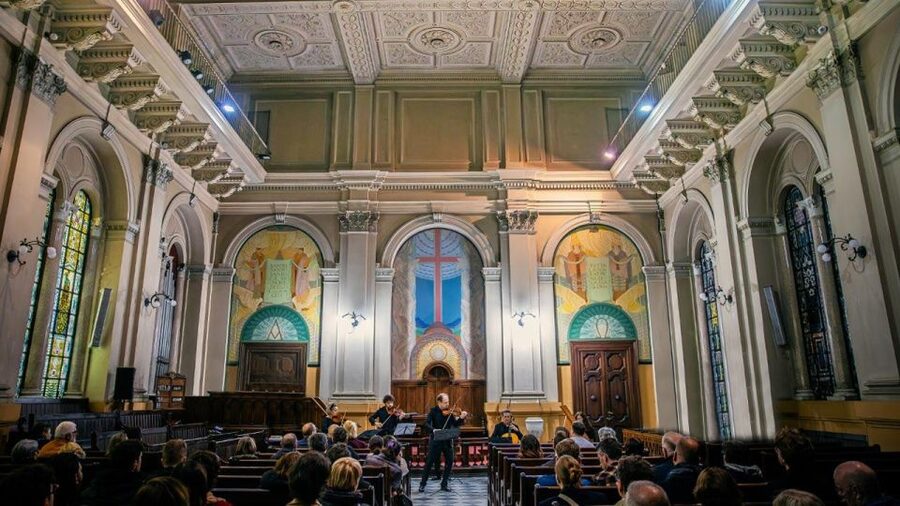
- Choose your setting carefully: The Methodist church offers church acoustics, while Sala Dante may provide a view over Trevi Fountain.
- Expect open seating: Seats are not numbered, so arriving earlier can help you get a better view.
- Plan for an 80-minute evening: Some past performances have felt closer to one hour, so allow flexibility in your schedule.
- Enjoy central Rome after the concert: The Trevi Fountain area and nearby rooftop bars make an easy follow-up stop.
Why Vivaldi’s Four Seasons fits a Rome evening
The Four Seasons is one of those classical works you may know without realizing it. Its melodies have appeared in films, advertisements, and countless recordings. Live, though, the music has more bite. You can hear the players answer one another, push the tempo, and shape the sudden changes from calm skies to violent weather.
Vivaldi wrote each concerto to suggest a season in sound. Spring opens with bird calls and a pastoral mood. Summer grows tense, with heat, thunder, and a storm. Autumn brings dancing peasants, sleepy drinkers, and a hunt. Winter moves from chattering cold to a quieter indoor scene, then finishes with brisk energy.
That storytelling makes this a friendly first concert. You do not need to know Baroque music or read program notes to follow the action. If you already love Vivaldi, you will notice the fine detail in the solo violin lines and the way the small string group gives the music a more direct, almost conversational feel.
The program also includes Concerto per archi RV 127 and RV 151, Concerto XI No. 4 in A Major, and the four seasonal concertos. The harpsichord adds the crisp, plucked sound associated with the period. It is a small detail, but an important one: the performance is not just a violin recital with background strings.
More opera and concert tickets in Rome:
- Rome: “The Most Beautiful Opera Arias” Concert
★ 4.3 · 2,495 reviews - Rome: Opera Concert at Palazzo Poli – Fontana di Trevi
★ 4.7 · 1,026 reviews - Rome: The Three Tenors at St. Paul’s Church Concert Ticket
★ 4.7 · 699 reviews
Elvin Dhimitri and the Opera e Lirica ensemble
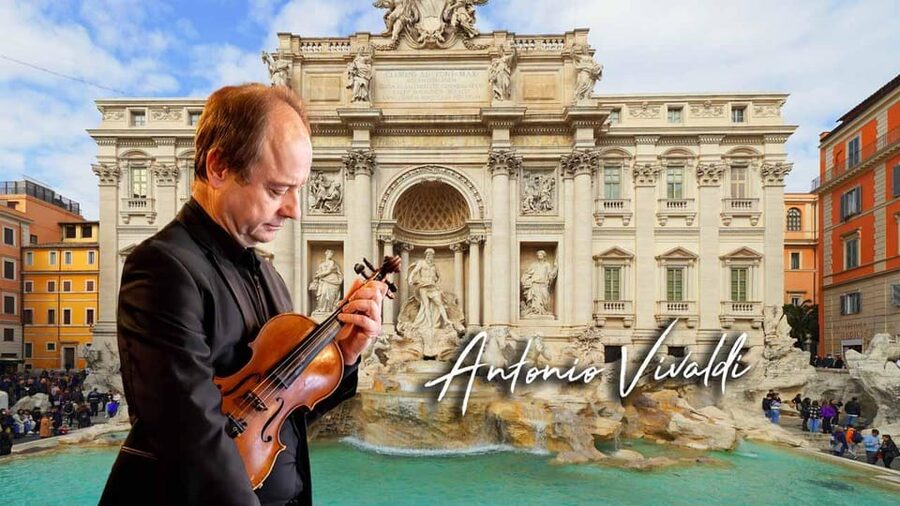
Elvin Dhimitri is the featured first violin and conductor. His professional background includes work with orchestras in Trapani, Naples, and Parma, as well as the Rome Philharmonic Orchestra and the Rome and Lazio Symphony Orchestra. He was also appointed concertmaster of the Bilkent Youth International Symphony Orchestra in 1992.
For you, the useful point is simple: Dhimitri is not only there to play the solo passages. He directs the small ensemble from the violin, helping shape the pace and musical conversation from the front. Past performances have particularly praised his energy, memory, and expressive playing.
The ensemble is described as a string quintet with harpsichord. That means you are not getting the massed sound of a large symphony orchestra. Instead, the music has a leaner texture. In a small room, this can make the individual instruments easier to follow, though the sound may also feel less grand than a full orchestral performance.
I think that trade-off suits The Four Seasons. The solo violin should sound like a bird, a shepherd, or a hunter, while the accompanying strings create the weather around it. A compact group can make those contrasts feel immediate.
Chiesa Evangelica Metodista: the church setting
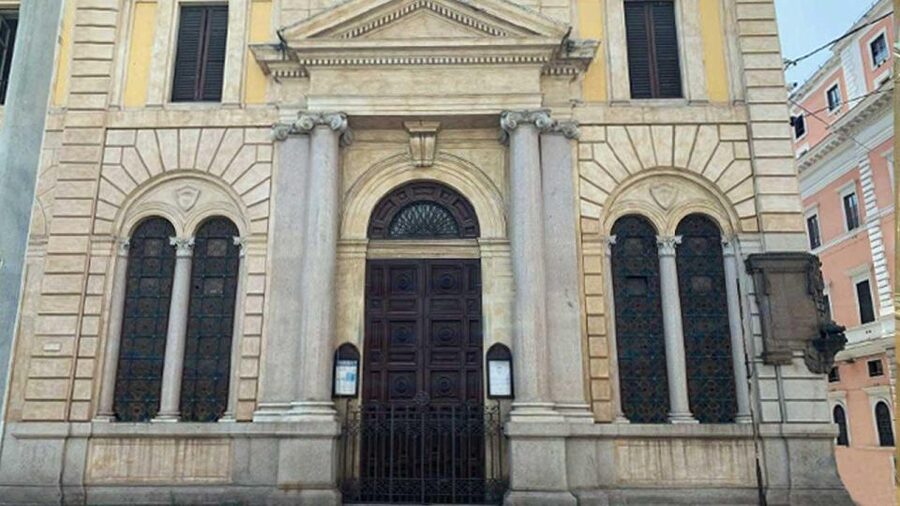
One listed location is Chiesa Evangelica Metodista at Via XX Settembre 122 c. This is the setting most closely associated with the intimate church-concert experience. The room gives the strings natural resonance, and the religious setting adds atmosphere without requiring a full opera-house production.
I like a church for this kind of program because it puts the music first. You are seated close to the performers, and the architectural space helps the sustained notes carry. Several performances have been praised for their sound, with the church acoustics making the violin and strings feel especially present.
Still, church acoustics are not always perfect from every seat. One performance drew criticism for less clear sound, and rows of chairs may not be staggered enough for everyone to see well. You are there for the music, but sight lines matter when the lead violinist is the focus.
The temperature can also be unpredictable. Summer performances have felt very hot, with musicians visibly affected by the heat. Another performance was described as chilly inside. Wear something easy to adjust, especially if you are attending in a cooler month or during a warm Roman evening.
Sala Dante at Palazzo Poli and the Trevi Fountain view
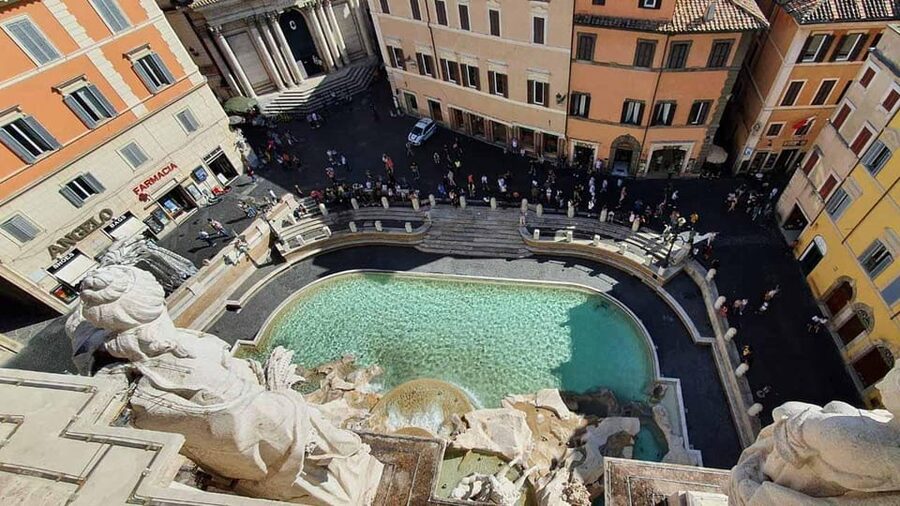
The most unusual setting is Sala Dante of Palazzo Poli at Via Poli 54. This is the location beside Trevi Fountain, and the room can offer a remarkable view over the famous monument. The chance to pair Vivaldi with a look down toward Trevi Fountain is the special feature here.
Do not assume every performance takes place in Sala Dante. The available venue depends on the date, and some events have been moved between locations. If the Trevi view is the reason you are booking, confirm the address and current venue before setting out.
The location is excellent for an evening plan. You can visit Trevi Fountain before the concert, attend the performance, and then walk to nearby rooftop bars afterward. The central position also makes this a practical choice if your sightseeing day already includes Rome’s historic center.
The room itself may feel more like a small hall than a traditional church. That can mean a different acoustic character and a less dramatic religious setting. In exchange, you get the chance to hear Baroque music in a building connected directly to one of Rome’s most famous sights.
Same city, a completely different half-day:
- Vatican Museums & Sistine Chapel Tour with Optional Basilica
★ 4.3 · 67,413 reviews - Vatican Museums, Sistine Chapel & St Peter’s Basilica Guided Tour
★ 4.5 · 39,149 reviews - Rome: Colosseum, Palatine Hill and Roman Forum Guided Tour
★ 4.8 · 32,814 reviews - Rome: Guided Tour of Colosseum, Roman Forum & Palatine Hill
★ 4.7 · 27,897 reviews
Horti Sallustiani and the double-concert option
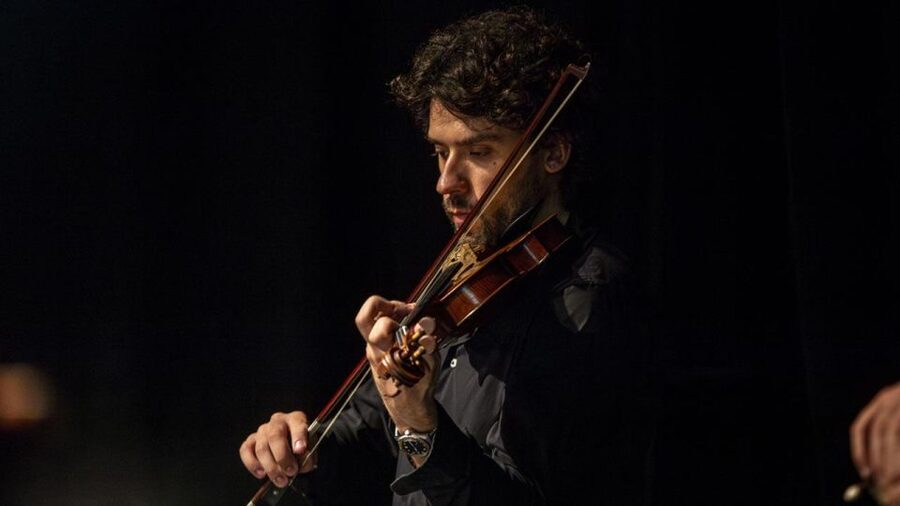
Another listed location is Horti Sallustiani at Piazza Sallustio 21. On some dates, there are two performances, at 7:00 pm and 9:00 pm. This gives you more flexibility than a single fixed start time, particularly if you are fitting the concert around dinner or an afternoon visit.
The supplied details do not promise the same setting or seating arrangement at every performance, so check the date-specific information closely. Horti Sallustiani is not the same place as the Methodist church or Sala Dante, and the feel of the evening can change with the room.
If you prefer an early dinner after sightseeing, the 7:00 pm show may work well. The 9:00 pm option can suit you if you want to eat first or spend more of the afternoon at museums and monuments. Remember that the concert itself is listed as 80 minutes, so add time for finding the address and taking your seat.
What the concert program actually includes
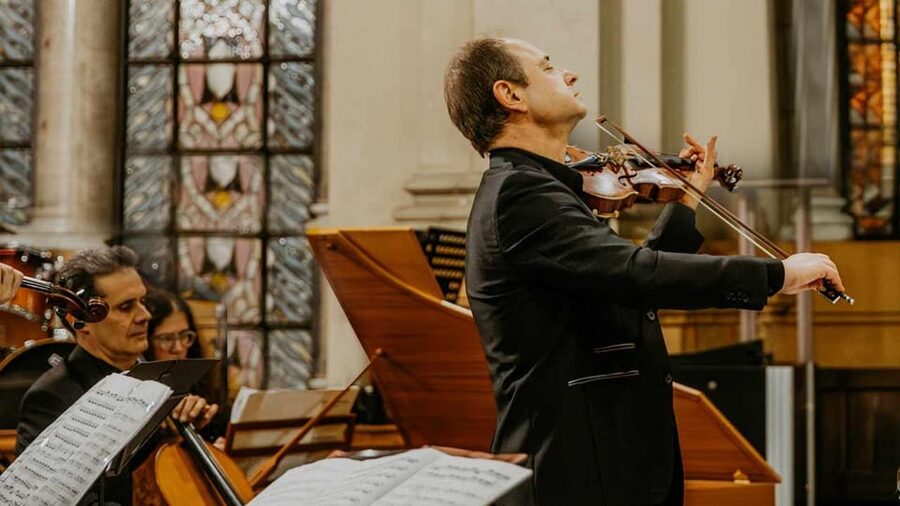
The central program follows the complete Four Seasons cycle:
- Spring, Concerto No. 1 in E Major, RV 269
- Summer, Concerto No. 2 in G Minor, RV 315
- Autumn, Concerto No. 3 in F Major, RV 293
- Winter, Concerto No. 4 in F Minor, RV 297
Each concerto has three movements. The first and third movements usually carry the strongest action, while the middle movements slow the pace and create a more reflective pause.
Spring includes the famous pastoral dance. Summer moves from rising heat to a sudden storm. Autumn shifts between peasant celebration, sleeping drinkers, and the hunt. Winter begins with cold and wet conditions, turns inward with a quiet Largo, then finishes with quick, unsettled motion.
The additional works give the evening more substance than a short greatest-hits sampler. You hear other examples of Italian Baroque writing before or around the better-known concertos. The full program also helps explain why The Four Seasons was so striking in its own time: Vivaldi was not simply writing pleasant melodies. He was using rhythm, harmony, and instrumental color to create scenes.
The program is accessible, but not lightweight. If you are new to classical concerts, you can enjoy the images. If you already know the work, you can listen for phrasing, tempo choices, and the relationship between the soloist and ensemble.
Seating, timing, and comfort
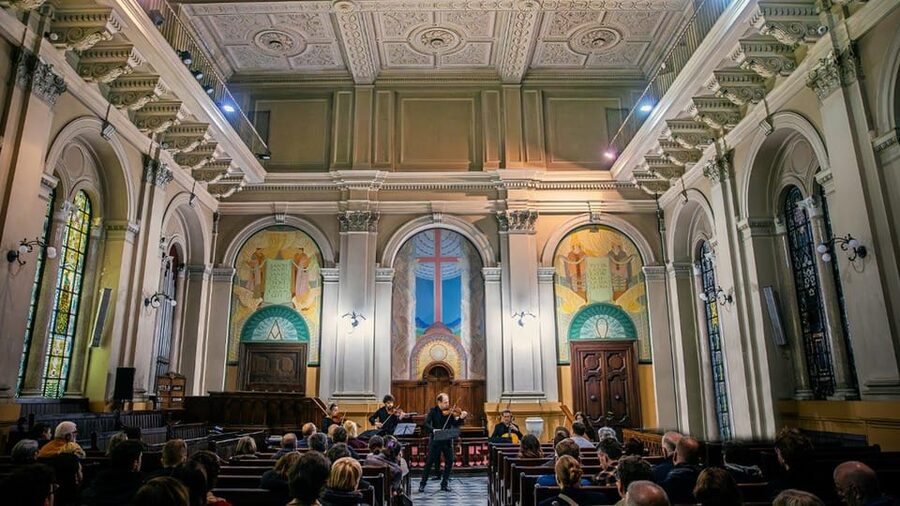
Seats are unnumbered and assigned on a first come, first served basis. That is one of the most important practical details. If seeing the musicians clearly matters to you, arrive with enough time to enter, find your place, and settle before the performance begins.
This matters particularly in a church, where chair rows may not be staggered. A taller person seated directly in front of you can affect your view of the violinist. The strongest sound and the best sight line may not be found in exactly the same place, so decide which matters more to you.
The concert is advertised at 80 minutes, but at least one past performance felt closer to one hour. Do not schedule an important dinner reservation immediately afterward. Allow a little breathing room, especially if the event is at a location different from the one you first expected.
The experience is wheelchair accessible according to the supplied information. Venue changes can affect the practical details, so if you need a specific access arrangement, check the address and current information before the date.
For clothing, think in layers. The rooms have not always felt the same. Summer church performances have been hot, while another performance felt chilly. A light layer is easier than trying to guess the temperature from the weather outside.
Is $35 good value in Rome?
At $35 per person, this is a reasonable cultural splurge, especially if you want a live performance rather than another sightseeing stop. You receive an 80-minute concert with a named violin soloist, a string quintet, and harpsichord. The central venues also reduce the time and cost of getting to a distant concert hall.
The value depends partly on what you expect. This is not a full opera production, a large orchestra, or a formal concert-hall event with assigned premium seating. It is a small-scale Baroque performance in atmospheric Roman rooms.
That intimate format is the reason I would book it. You can hear the solo violin clearly, watch the ensemble work together, and feel close to the music. If you want a powerful wall of sound, choose a larger orchestral event instead.
The price also compares well with the evening setting. At Sala Dante, the connection to Trevi Fountain adds something beyond the notes on the page. At the church, the architecture and acoustics create a different kind of value. Neither feature is guaranteed at every date, so check the venue before deciding.
Who will enjoy this concert most?
I would recommend it to you if you want a relaxed evening activity that feels distinctly Italian and does not require specialist knowledge. The Four Seasons is familiar enough for first-time classical listeners, yet detailed enough to reward regular concertgoers.
Families can also consider it. One family attended with children aged four and eight and found the roughly one-hour experience manageable. Younger children may still struggle with sitting quietly, but the short format is more forgiving than a long opera or symphony.
Couples may especially like the Sala Dante option, with Trevi Fountain nearby and rooftop bars within a short stroll. Solo visitors can also enjoy the directness of the performance, though the unnumbered seating makes arriving early useful if you care about your position.
I would hesitate only if you need a guaranteed venue, a reserved seat, or a perfectly controlled concert environment. Venue changes, mixed room temperatures, and uneven sight lines are real considerations. The music is the reliable part. The setting requires a little flexibility.
Practical tips for making the evening work
Check the exact address on your confirmation before leaving. The three possible locations are not interchangeable, and a last-minute venue change has caused confusion in the past.
Arrive early if you want a clear view. Seats are not numbered, and the chair layout may not provide a perfect sight line from every position.
Plan your evening around the location. Sala Dante is close to Trevi Fountain and nearby bars. The church on Via XX Settembre is a different part of central Rome, so do not rely on the Trevi Fountain location unless your date specifically lists Palazzo Poli.
Dress for changing indoor temperatures. A light layer is sensible even in summer, and a small handheld fan may be useful for a hot church performance.
Use the program to follow the scenes. Listen for birds in Spring, thunder in Summer, the hunt in Autumn, and shivering cold in Winter. You will get more from the concert when you treat it as musical storytelling rather than background music.
The booking terms are flexible: cancellation is allowed up to 24 hours before the performance for a full refund, and you can reserve now and pay later. Those policies help if your Rome schedule is still moving.
Should you book Rome: The Four Seasons by Vivaldi?
Book it if you want a compact, atmospheric concert with a strong central location and a well-known work that is easy to appreciate. Elvin Dhimitri’s role as violin soloist and conductor gives the performance a clear focal point, while the harpsichord and strings provide the proper Baroque color.
The biggest choice is the venue. Choose the date and location with care, particularly if you want the church acoustics or the possible Trevi Fountain view. Go in knowing that seating is open, room comfort can vary, and the performance may feel closer to an hour than the advertised 80 minutes.
For $35, I think it is a good Rome evening for music lovers, families seeking a manageable cultural outing, and anyone who wants something beyond monuments and dinner. Just keep your expectations aimed at an intimate ensemble concert, not a grand opera-house production.
FAQ
Where does the Vivaldi concert take place?
The listed venues are Chiesa Evangelica Metodista at Via XX Settembre 122 c, Sala Dante of Palazzo Poli at Via Poli 54, and Horti Sallustiani at Piazza Sallustio 21. Check the venue for your specific performance.
How long does the concert last?
The activity is listed as 80 minutes. Some past performances have lasted closer to one hour.
Who performs The Four Seasons?
The concert features violin soloist and conductor Elvin Dhimitri, a string quintet from Opera e Lirica, and harpsichord.
Is the complete Four Seasons performed?
Yes. The program includes Spring, Summer, Autumn, and Winter, along with additional Baroque concertos.
Can I see Trevi Fountain from the concert venue?
Sala Dante of Palazzo Poli offers the opportunity to overlook Trevi Fountain. This view is connected to that venue and is not guaranteed at the church or Horti Sallustiani locations.
Are the seats reserved?
No. Seats are not numbered, and seating is first come, first served.
Is the concert wheelchair accessible?
Yes, the activity is listed as wheelchair accessible.
What is included in the ticket?
The ticket includes admission to the concert.
Can I cancel my booking?
You can cancel up to 24 hours in advance for a full refund. A reserve-now, pay-later option is also available.
Newest Rome tours we have reviewed
- Private TikTok Video Making in Rome★ 5.0 · 7 reviews
- Assisi, Orvieto and Civita di Bagnoregio Full Day Tour from Rome★ 4.5 · 45 reviews
- Assisi & Saint Francis Path Tour from Rome★ 5.0 · 45 reviews
- Assisi and Cascia Private Day Tour from Rome with Lunch★ 5.0 · 10 reviews
- Art Class in the center of Rome!★ 4.0 · 4 reviews
- Art & Craft: Beer Tour with Street Art in Rome★ 4.5 · 6 reviews
- Arrival in Rome: Airport Transfer & Exclusive City Introduction★ 5.0 · 3 reviews
- From Rome: Private Day-Tour of Tuscany★ 5.0 · 16 reviews
Rome Opera and Concert Tickets, compared.
Opera Concert at Palazzo Poli – Fontana di Trevi
Read our review →
The Three Tenors at St. Paul’s Church Concert Ticket
Read our review →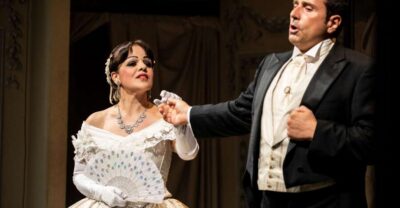
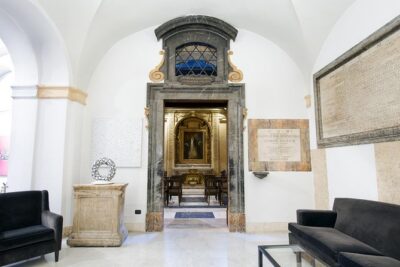
The Great Opera Arias Concert at Palazzo Poli – Trevi Fountain
Read our review →
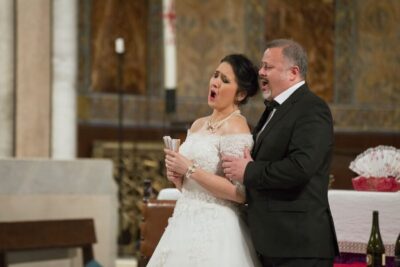
Giuseppe Verdi’s “La Traviata” Live Performance
Read our review →
St. Paul’s Within the Walls Church Opera Arias Ticket
Read our review →Browse the lists this tour appears in