
Reviewed · UNDERGROUND ROME TOURS
Rome: Trevi Fountain Underground Small Group Tour
The most surprising part of this Trevi Fountain tour is not the fountain at all. It is Vicus Caprarius, an underground archaeological site where Roman water works, an Imperial-era domus, and medieval houses sit below the modern city. I like the clear connection to the Aqua Virgo aqueduct, and I like that entry tickets, an English-speaking guide, and headsets are included. The main catch is that you do not walk into the fountain itself, and guide quality may vary.
I also like the short format. You can fit this visit into a busy day around the Trevi Fountain without giving up half a morning. Arrive early at Piazza dei Crociferi, not at the archaeological site entrance, and look for a guide holding the Rome with Silvia logo. One serious complaint described poor communication and a weak guide, while other bookings praised guides such as Virginia and Silvia, so the person leading your tour matters.
Key points at a glance
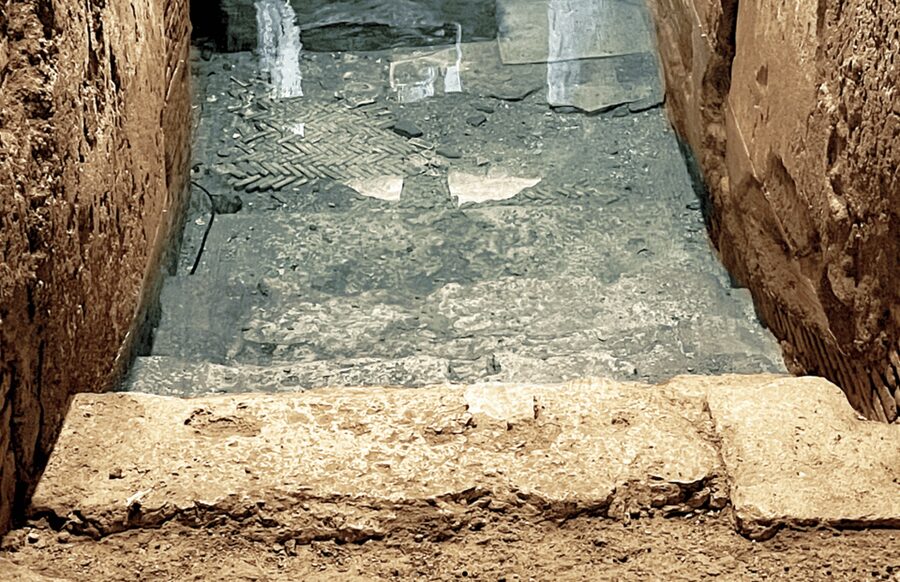
- Roman water engineering below the street: See remains linked to Aqua Virgo, one of Rome’s ancient aqueducts.
- More than an aqueduct: The site includes an Imperial-era domus, medieval houses, and a castellum aquae, or water tank.
- A short visit near the fountain: The guided underground portion is listed as 45 minutes, with a further fountain stop in the schedule.
- English guidance and headsets: Headsets help you follow explanations in a compact archaeological space.
- A useful Trevi Fountain correction: The archaeological area is beneath the surrounding Trevi district, not inside the fountain basin.
- Not suitable for wheelchair users: Expect an underground archaeological setting with access limits.
What lies beneath the Trevi Fountain area

Rome rewards you when you look below street level. At the Trevi Fountain, most people focus on the marble figures, the coins, and the crowds gathered around the basin. This tour shifts your attention to the water system and buildings below the modern streets.
The underground site is called Vicus Caprarius, or the City of Water. It came to light during renovation work at the former Cinema Trevi in 1999 and opened to the public in 2004. That origin gives the place a useful modern connection: this is not an isolated monument left untouched for centuries. It was found beneath a working part of the city.
I find the site valuable because it shows Rome as a stack of different periods. Roman construction sits below medieval homes, while later buildings and modern streets sit above them. You are not simply looking at one ancient ruin. You are seeing how the city kept rebuilding on top of itself.
The Aqua Virgo is the star of the visit. Its Latin name means pure water, a reference to the clarity of the water it carried. Another legend says that a young woman led thirsty Roman soldiers to a spring, giving the aqueduct its name. The story is romantic, but the engineering is the practical reason to pay attention.
More Trevi Fountain walks:
- Rome: Trevi Fountain and Underground Guided Tour
★ 4.3 · 1,664 reviews - Rome: Opera Concert at Palazzo Poli – Fontana di Trevi
★ 4.7 · 1,026 reviews - Best of Rome Walking Tour including Trevi Fountain
★ 4.5 · 923 reviews
Meeting at Piazza dei Crociferi
Your meeting point is Piazza dei Crociferi, a small square close to the Trevi Fountain. This detail matters because the square is easy to miss, and the instructions specifically tell you not to wait at the entrance to the archaeological site.
Look for a guide holding a sign with the Rome with Silvia logo. I would arrive a little before the scheduled time, even though the ticket may show a particular start time. One customer who arrived only three minutes before the listed time received repeated calls and found the meeting process stressful. You can avoid that problem by allowing extra time to find the tiny square.
The guide situation deserves a realistic note. Guides named Silvia, Sylvia, and Virginia appear in the feedback connected with this experience, but you should not assume you will receive a particular person. Several customers praised the guide’s friendliness and explanations, while one detailed complaint described a guide who offered little information and argued with another guide during the visit. That is not a reason to dismiss the site, but it is a reason to judge the tour partly on the guide assigned that day.
Headsets are included. In a small underground space, that can make a real difference. You will hear the explanation without needing to crowd close to the guide, and families may find it easier to follow the commentary.
Walking through Vicus Caprarius

The underground visit is the heart of the experience. The listed guided portion lasts 45 minutes, giving you enough time to see the principal areas without turning this into a long archaeological lecture.
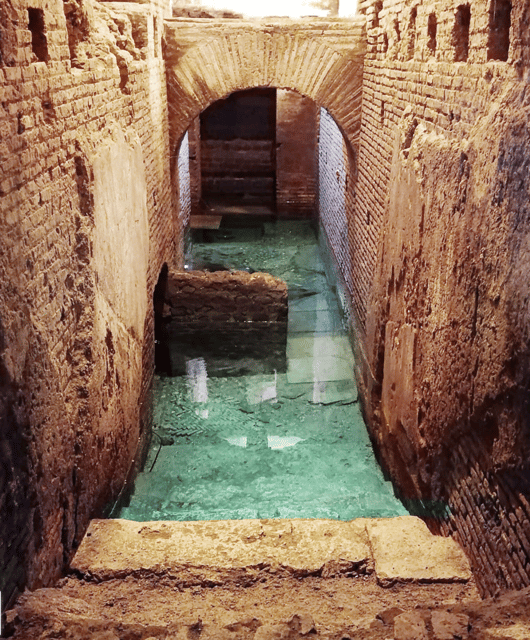
You begin with the remains connected to the Aqua Virgo. Rome had 11 aqueducts, and this one supplied water to the city in a way that still affects the Trevi Fountain today. The fountain’s modern beauty makes more sense once you understand that it is tied to an ancient water route rather than being an isolated decorative monument.
The remains of the castellum aquae are especially useful for understanding the system. This was a monumental water tank associated with the Aqua Virgo, built to help manage water supplies in the Campo Marzio area. You are looking at the practical side of Roman public works: water had to arrive, be stored, and be distributed.
I appreciate this kind of stop because it gives you something concrete to remember. Instead of hearing only that Romans were good engineers, you can see a part of the infrastructure that helped make urban life possible. The underground setting also makes the subject feel close at hand, even though the site itself is compact.
The visit also includes a domus from the Imperial period. A domus was a private Roman house, and its presence helps broaden the story. The underground remains are not just about public utilities. They also show how private life and public systems occupied the same urban space.
Medieval houses add another layer. Their inclusion is important because Rome did not stop being a living city after the Roman Empire. Buildings were altered, reused, buried, and built over. The medieval remains show you that the street above was shaped by many eras, not only the ancient one.
The Trevi Fountain stop and what to expect
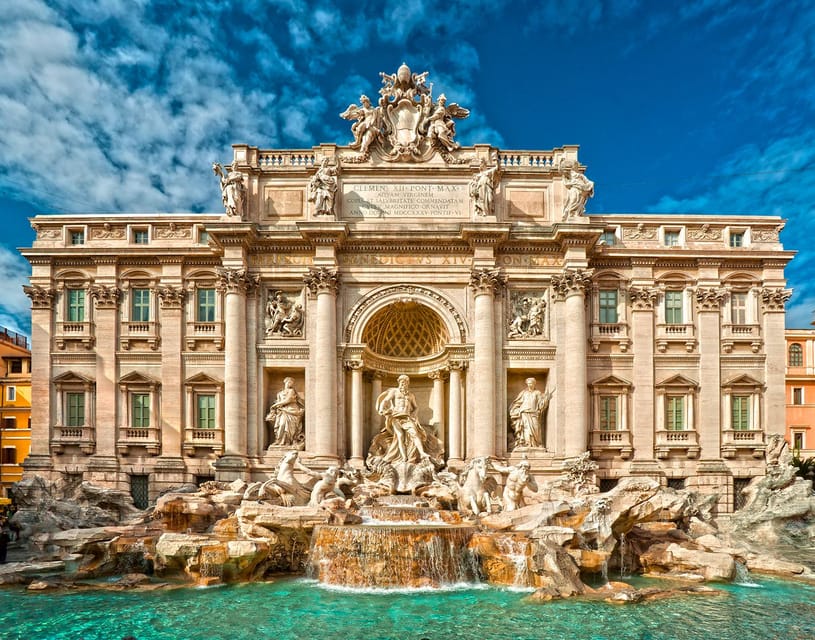
After the underground visit, the schedule includes a guided stop at the Trevi Fountain for photographs and commentary. You will return to the famous view above ground, where the scale and decoration are very different from the quiet archaeological rooms below.
This is a good pairing. The fountain is one of Rome’s most recognizable sights, but its usual visit can be brief and crowded. Adding the underground site gives you a stronger sense of place. You see the modern monument, then connect it to the much older water supply beneath the district.
Be clear about the wording, though. You are not entering the fountain basin or walking directly below the central sculpture. The underground archaeology is at Vicus Caprarius near the Trevi Fountain area. One customer considered the idea of going under the fountain misleading. I think the experience works best when you book it as a nearby underground archaeological visit tied to the Aqua Virgo, followed by time at the fountain.
The fountain itself carries plenty of cultural weight. It became famous around the world after Federico Fellini’s La Dolce Vita, including the well-known scene with Anita Ekberg. Today, people also toss coins into the water with the hope of returning to Rome. The tour gives you a chance to place those familiar customs beside the less familiar infrastructure that made the fountain possible.
More underground Rome tours:
- Colosseum: Underground and Ancient Rome Tour
★ 4.7 · 12,691 reviews - Rome: Crypts and Catacombs Underground Tour with Transfers
★ 4.6 · 5,341 reviews - Expert Guided Tour of Colosseum Arena OR Underground, and Forum
★ 4.5 · 5,041 reviews - Rome: Colosseum Underground Small Group Guided Tour
★ 4.7 · 4,844 reviews
Is $71 a fair price?
At $71 per person, this is not the cheapest way to see the Trevi Fountain. You can view the fountain from the piazza without paying anything. The price makes more sense if you specifically want entry to Vicus Caprarius, an English-speaking guide, headsets, and a short explanation of the site.
I see the value in the compact format. A 45-minute visit does not consume a large part of your day, and the location makes it easy to pair with other sights in central Rome. You are paying for access and interpretation, not for a long sightseeing route across the city.
The price is harder to justify if you expect a major underground complex or a tour that spends most of its time at the fountain. The archaeology is focused, and the experience depends strongly on the guide. A good guide can explain why the aqueduct matters and help you read the layers of the site. A weak guide can reduce the visit to repeated facts that you could have picked up from a sign.
For me, the best reason to pay is the Aqua Virgo connection. The fountain is famous, but the aqueduct is the part many visitors miss. If you enjoy Roman engineering and archaeology, $71 may feel reasonable. If you mainly want photographs of the fountain, spend your money elsewhere and visit the piazza on your own.
Who will enjoy this short archaeological visit?
I would recommend the tour to you if you have already seen Rome’s major monuments and want a less obvious stop. It also works well for a first visit if you want one small archaeological site without committing to a large museum or a full-day ancient Rome tour.
The experience should suit adults and older children who can listen to a short explanation about water systems, houses, and urban layers. The compact length can help families fit it between other appointments, though one family found that children had trouble understanding a guide who was not speaking clearly. If you are bringing children, ask them beforehand to watch for the aqueduct, the water tank, and the different building periods.
You should skip it if you need wheelchair access. The activity is not suitable for wheelchair users, and the information provided does not promise step-free access.
Comfortable shoes are sensible, and you should dress for the weather because part of the experience begins outdoors and the tour runs rain or shine. Bring a passport or ID card, as requested for the activity.
Timing, cancellation, and practical planning
The activity is listed as 45 minutes, but the schedule describes a 45-minute guided visit at Vicus Caprarius followed by a 15-minute guided photo stop at the Trevi Fountain. I would allow more than the headline duration so you are not rushing to your next booking.
The separate entrance is presented as a way to skip the line. That is useful in the Trevi area, where the fountain can be crowded. It does not mean you skip every part of meeting up, so arrive at Piazza dei Crociferi rather than going straight to the archaeological entrance.
You can cancel up to 24 hours in advance for a full refund, and the reserve-now, pay-later option keeps your plans flexible. Those terms help if your Rome schedule is still changing. The tour runs in all weather, so a rainy forecast does not automatically cancel the visit.
The activity is conducted in English. If you need another language, this is not the right choice based on the information available.
My verdict on Rome’s underground Trevi tour
I would book this tour if you want the story beneath the postcard. The Aqua Virgo, castellum aquae, Imperial domus, and medieval houses give the Trevi Fountain a useful sense of depth, and the short format makes the visit easy to fit into a Rome itinerary.
I would not book it expecting to walk below the fountain itself, see a huge network of tunnels, or receive a guaranteed guide named Silvia or Virginia. The guide can make or break the visit, and one poor experience included late-arrival pressure, unclear explanations, and an uncomfortable dispute with another guide.
The safest call is this: choose it for focused archaeology and Roman water engineering, not simply for fountain photos. Arrive early at Piazza dei Crociferi, use the included headset, and treat the underground site as its own attraction near Trevi Fountain. With those expectations, this can be a smart way to see a less familiar side of one of Rome’s most familiar sights.
FAQ
Where does the tour meet?
The meeting point is Piazza dei Crociferi, a small square near the Trevi Fountain. Do not wait at the entrance to the archaeological site.
How do I recognize the guide?
The guide will hold a sign with the Rome with Silvia logo.
How long does the activity last?
The activity is listed as 45 minutes. The schedule also includes a 15-minute guided stop at the Trevi Fountain, so allow extra time around the advertised duration.
What language is the tour in?
The live tour is conducted in English.
What is included in the price?
Entry tickets, an official English-speaking guide, and headsets to hear the guide clearly are included.
Will I go directly underneath the Trevi Fountain?
The activity visits Vicus Caprarius, an underground archaeological area beneath the Trevi district, followed by a stop at the Trevi Fountain. It does not state that you enter the fountain basin or walk directly beneath its central structure.
What can I see underground?
You can see remains connected with the Aqua Virgo aqueduct, an Imperial-era domus, medieval houses, and a castellum aquae, or monumental water tank.
Is the tour suitable for wheelchair users?
No. The activity is not suitable for wheelchair users.
What should I bring?
Bring a passport or ID card, comfortable shoes, and clothing suitable for the weather.
Can I cancel the booking?
Yes. You can cancel up to 24 hours in advance for a full refund. You can also reserve now and pay later.
Newest Rome tours we have reviewed
- Private TikTok Video Making in Rome★ 5.0 · 7 reviews
- Assisi, Orvieto and Civita di Bagnoregio Full Day Tour from Rome★ 4.5 · 45 reviews
- Assisi & Saint Francis Path Tour from Rome★ 5.0 · 45 reviews
- Assisi and Cascia Private Day Tour from Rome with Lunch★ 5.0 · 10 reviews
- Art Class in the center of Rome!★ 4.0 · 4 reviews
- Art & Craft: Beer Tour with Street Art in Rome★ 4.5 · 6 reviews
- Arrival in Rome: Airport Transfer & Exclusive City Introduction★ 5.0 · 3 reviews
- From Rome: Private Day-Tour of Tuscany★ 5.0 · 16 reviews
Underground Rome Tours, compared.
Colosseum: Underground and Ancient Rome Tour
Read our review →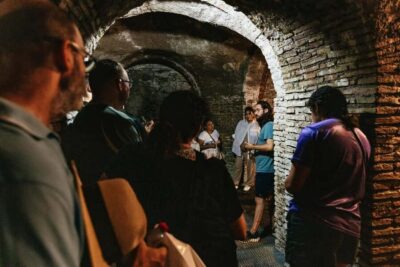
Crypts and Catacombs Underground Tour with Transfers
Read our review →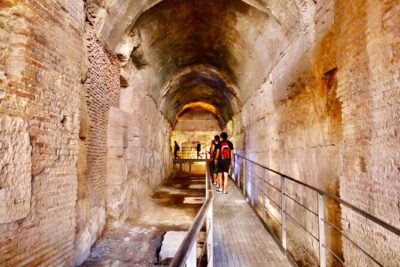
Expert Guided Tour of Colosseum Arena OR Underground, and Forum
Read our review →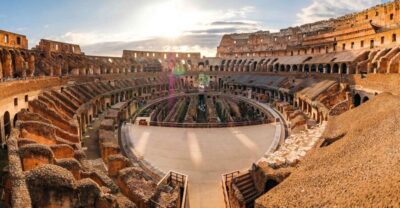
Colosseum Underground Small Group Guided Tour
Read our review →
St. Peter’s Basilica, Dome Climb, and Underground Tour
Read our review →
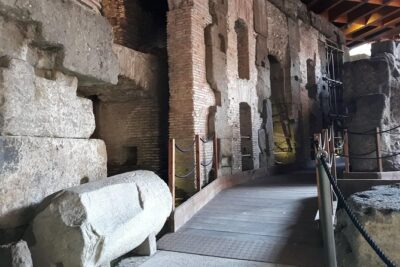
Colosseum Underground & Ancient Rome Guided Tour
Read our review →
Browse the lists this tour appears in