
Reviewed · ROME CHURCHES AND BASILICAS TOURS
Rome Walking Tour of Holy Sites: Basilica of the Holy Cross in Jerusalem, San Giovanni in Laterano and Scala Santa
The most striking moment here may be the Scala Santa, where you can climb the marble steps on your knees in prayer, as some participants do, or simply observe their religious meaning. The route also brings you to relics linked with Christ’s Passion and Rome’s official cathedral, all within about two hours.
I like the private format, which gives you room to ask questions or pause for prayer. I also like the efficient grouping of three important churches, sites that can be missed when you focus only on Rome’s ancient ruins. The main consideration is the price, $346.87 per person, which is a serious expense for a short walking tour.
Key points to know before you book
- The Scala Santa can be approached as an act of prayer: Some people climb the steps on their knees, while others walk beside them or view them quietly.
- Santa Croce holds Passion relics: You may see objects associated with the Holy Cross, nails, thorns, and a full-size copy of the Shroud of Turin.
- San Giovanni in Laterano is Rome’s cathedral: It is the oldest and most important Western basilica in the itinerary.
- Your guide shapes the experience: Francesco, Giorgio, Bruno, Tommaso, and Giovanni Giorgio are named by past participants as especially engaging guides.
- The tour is private and English-language: Only your group takes part, with several possible start times.
- Dress matters: Cover your knees and shoulders, or you may be refused entry to the churches.
Three holy sites in one compact Rome walk
This tour focuses on a side of Rome that many first-time visitors miss. The Colosseum and Trevi Fountain draw the biggest crowds, but these churches tell a different story, one tied to Christian worship, papal power, relics, and the city’s long religious life.
The schedule allows about 40 minutes at each stop. That is enough time for a guide to explain the main works and relics without turning the visit into a rushed photo stop. It is not enough for a slow, private study of every chapel, inscription, and painting, so think of this as a focused introduction.
Because the tour is private, you can ask why a relic matters, how a church developed, or what a particular image means. You can also tell the guide if you need a quiet moment. Several guides named in the feedback, including Francesco, Giorgio, Bruno, Tommaso, and Giovanni Giorgio, were praised for patience, clear explanations, and a personal approach.
The tour is offered in English and has a range of start times. That helps you fit it around a larger Rome plan. It is also near public transportation, though hotel pickup and drop-off are not included. You meet in the Piazza di San Giovanni in Laterano area, so allow time to find the exact point.
One practical note deserves attention. The supplied meeting information lists the start at Piazza di San Giovanni in Laterano and the end at Basilica di Santa Croce in Gerusalemme. The route description presents the Scala Santa first, Santa Croce second, and San Giovanni in Laterano last. Since those details do not line up perfectly, confirm the exact meeting point and walking order before setting out.
More churches and basilicas in Rome:
- Vatican Museums, Sistine Chapel & 4 Papal Basilicas Full Day Tour
★ 4.5 · 1,068 reviews - Vatican: Pope Francis Tomb and Papal Basilicas Tour
★ 4.7 · 340 reviews - Rome: Santa Maria Maggiore Upper Areas Skip-the-Line Ticket
★ 3.8 · 223 reviews
Scala Santa, Rome’s staircase of prayer
The Scala Santa, or Holy Stairs, is the emotional center of the tour for many people. Tradition holds that these are the stairs Jesus climbed before his interrogation by Pontius Pilate. The story also says that St. Helena, the mother of Emperor Constantine, brought them from the Holy Land to Rome.
You can approach the staircase in different ways. Some people climb on their knees, often using small knee pads, while others walk normally or stand to one side. There is no need to treat the visit as a test of devotion. Your guide can explain the tradition and let you decide how you want to take part.
A participant described repeating a prayer on every step and finding the experience deeply moving. Another said the staircase was the highlight of a visit shared with a spouse. These details matter because the Scala Santa is not simply another old structure to photograph. Its power depends on what the tradition means to you.
The surrounding chapel building also contains objects connected with the story of Christ’s Passion. Your guide can help you understand what you are seeing rather than leaving you to guess which details deserve attention.
This stop may be less comfortable for anyone with knee problems or limited mobility. The tour information says most people can participate, but it does not promise step-free access or special assistance. If kneeling or climbing is difficult for you, ask the operator about the exact arrangements before booking.
You should also remember that this is an active religious place, not only a monument. Keep your voice low, follow posted instructions, and allow people space to pray.
Santa Croce in Gerusalemme and the Passion relics
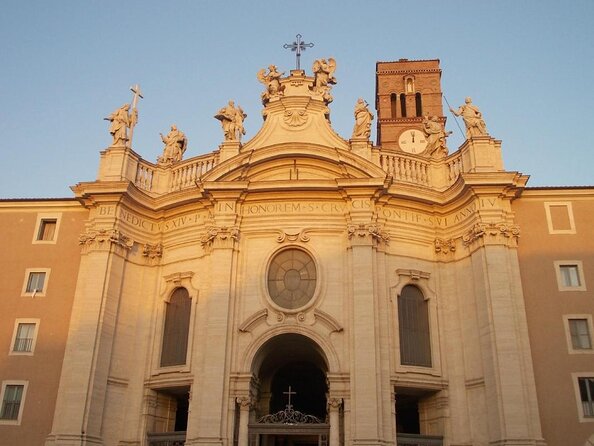
The Basilica of Santa Croce in Gerusalemme, or Basilica of the Holy Cross in Jerusalem, was begun in the fourth century on the site connected with buildings used by St. Helena. Its name points to the church’s central purpose: preserving relics associated with the Cross of Christ.
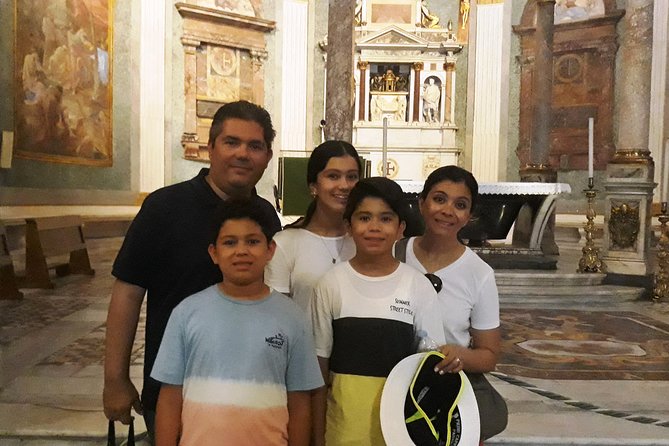
This is where the tour becomes especially valuable for anyone interested in Christian relics. The church displays objects associated with the Passion, including part of the Holy Cross, nails, and thorns linked with the crown. A full-size copy of the Shroud of Turin is also presented for reflection.
Your guide’s role is important here. Relics can be confusing when viewed without context. You need someone to explain the traditions surrounding them, distinguish what is displayed from what is believed, and point out the artistic setting around the collection.
The church also has Renaissance frescoes and a strong visual character. You get more than a cabinet of sacred objects. The architecture, paintings, and devotional displays work together to show how Rome preserved and presented Christian history.
One person described Santa Croce as especially moving and urged visitors not to skip the final stop. That is useful advice, particularly if the timing becomes tight. The relics are the reason many religious visitors choose this experience, and the church can feel more personal than Rome’s larger, more heavily visited sights.
Still, keep your expectations measured. The tour allows about 40 minutes here, not an extended art-history session. If you want to examine every fresco or spend a long period in prayer, you may wish to return on your own.
Food and drinks are not permitted inside the churches, except for water. Carry a bottle if you need one, but do not bring snacks into the worship spaces.
San Giovanni in Laterano, Rome’s official cathedral
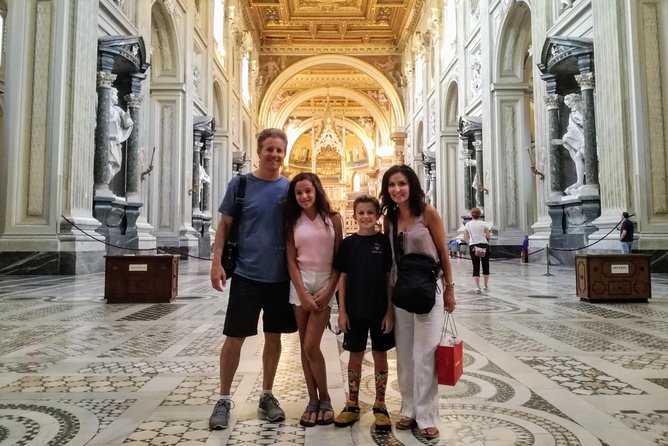
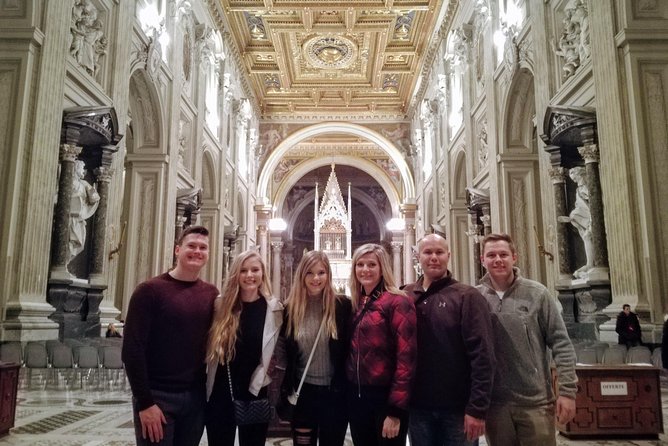
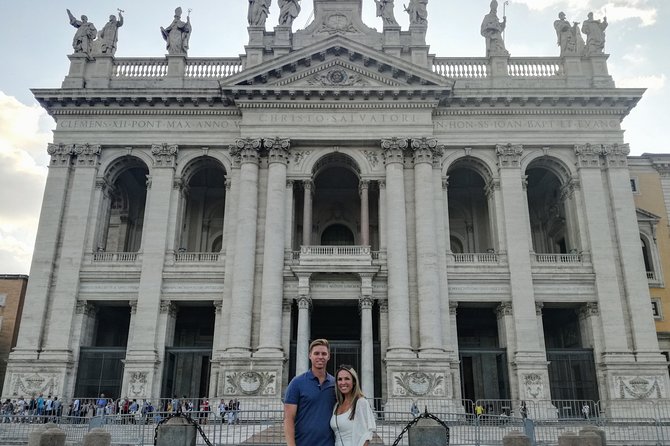
The Archbasilica of San Giovanni in Laterano is the first of Rome’s four major papal basilicas and the city’s official cathedral. It is also described as the oldest and most important Western basilica.
That distinction can surprise people. St. Peter’s Basilica is more famous, but San Giovanni in Laterano is Rome’s cathedral. A guide can make that difference clear while pointing out the art, relics, and ceremonial importance of the building.
The church gives the tour a broad finish. At the Scala Santa, you encounter a devotional tradition tied to Christ’s trial. At Santa Croce, you see relics connected with the Cross. At San Giovanni, you meet the institutional and architectural scale of the Roman Catholic Church.
The church is large and filled with details. You might find it easier to appreciate the main features with a guide who knows where to focus your attention. Past participants praised guides for explaining the meaning behind the art rather than simply listing dates and names.
Plan on about 40 minutes here. That is enough for an organized visit, but not for every side chapel and nearby religious building. If San Giovanni is your main interest, you may want to set aside extra time before or after the tour, subject to opening hours and access rules that are not specified here.
More walking tours in Rome:
- Rome: Trastevere & Campo de Fiori Street Food Walking Tour
★ 4.9 · 2,768 reviews - Rome: Paranormal Night Walking Tour & Secret Backstreets
★ 4.9 · 1,921 reviews - Rome by Night Walking Tour – Legends & Criminal Stories
★ 4.5 · 1,003 reviews - Rome: Guided City Center Evening Sightseeing Walking Tour
★ 4.4 · 953 reviews
What the private format is really worth
At $346.87 per person, this is not a budget walking tour. Its value depends heavily on your group size and your interest in religious history.
For a couple or a small family, the private setup offers real advantages. You can ask personal questions, move at a comfortable pace, and pause at the Holy Stairs without feeling that you are holding up a large group. If you are traveling with children, the guide can adjust explanations, although children must be accompanied by an adult.
The price is harder to justify if you mainly want a quick look inside three churches. Admission is listed as free at each stop, and the tour lasts about two hours. You are paying for the guide’s time, the private format, the planning, and the interpretation, not for entry tickets.
That can still be worthwhile. Rome’s churches are full of symbols and traditions that are easy to miss. A strong guide can explain why these places matter and connect the staircase, relics, and cathedral into one clear story.
The experience received a five-star overall rating from 21 participants, with 100 percent recommending it. More important than the numbers is the consistent pattern in the feedback: guides were praised for being patient, well prepared, passionate, and willing to answer questions. Giorgio was also credited with helping arrange a taxi after the tour and waiting until the group was collected. That kind of help is useful, though it should not be treated as a guaranteed part of every booking.
Timing, clothing, and practical planning
The walking portion lasts about two hours, with roughly 40 minutes at each site. Comfortable shoes are a smart choice, even though the route is not described as especially demanding.
Wear clothing that covers your shoulders and knees. This rule applies to both men and women, and entry can be refused if you arrive in shorts or a sleeveless top. A light scarf or overshirt can help, but make sure your overall clothing meets the requirement.
Do not plan a meal during the visit. Food and drinks are not allowed inside the churches, apart from water. Eat beforehand or wait until the tour ends.
You receive confirmation at booking, and a mobile ticket is available. The activity is near public transportation, but hotel transfers are not included. Give yourself extra time to reach the meeting point, especially since the published start and end details should be confirmed.
Free cancellation is available if you cancel at least 24 hours before the start time. Changes or cancellations made within 24 hours are not accepted for a refund.
Who will enjoy this tour most
I would recommend this experience to a Christian visitor who wants time for prayer as well as sightseeing. The Scala Santa and the relics at Santa Croce can carry real personal meaning, and the private format gives you space to respond in your own way.
It also suits anyone who enjoys church art, papal history, and Rome’s less obvious major sites. You do not need to be deeply religious. A good guide can explain the traditions, architecture, and history without assuming that every participant shares the same beliefs.
Families can benefit from the private setting, especially if children ask many questions. Still, the subject matter may be more meaningful to older children and adults, and everyone must follow the dress rules.
I would be more cautious about booking if you have strict mobility needs, dislike religious relics, or want a broad survey of Rome. This tour is narrow by design. It does not include the Colosseum, Pantheon, Vatican Museums, or other famous landmarks.
Should you book this Rome holy sites tour?
Book it if the Scala Santa, Passion relics, and San Giovanni in Laterano are high on your list, especially if you want a guide to connect them. The private format, adjustable start times, and patient guides make the experience personal rather than mechanical.
Skip it if $346.87 per person feels too high for a two-hour visit, or if you would rather explore churches independently. Before paying, confirm the meeting location and route order, wear proper clothing, and decide how you want to approach the Holy Stairs.
For the right visitor, this is not just a quick church walk. It is a focused encounter with three places where Rome’s faith, art, and history meet.
FAQ
How long does the tour last?
The tour lasts approximately two hours, with about 40 minutes planned at each of the three stops.
What sites are included?
The tour includes the Scala Santa, the Basilica of Santa Croce in Gerusalemme, and the Archbasilica of San Giovanni in Laterano.
Is this a private tour?
Yes. Only your group participates, and a local guide leads the experience.
Is the tour offered in English?
Yes. The experience is offered in English.
What is the price?
The listed price is $346.87 per person.
Are entrance tickets included?
Admission is listed as free at all three stops. The tour includes a local guide and private touring.
Where does the tour meet?
The meeting information gives Piazza di San Giovanni in Laterano in Rome as the start point. The listed end point is Basilica di Santa Croce in Gerusalemme. Because the route description presents a different order, confirm the exact details before the tour.
What should I wear?
You must cover your knees and shoulders. Shorts and sleeveless tops are not allowed for men or women, and entry may be refused if you do not follow the dress code.
Can I cancel for a refund?
Yes. You can receive a full refund if you cancel at least 24 hours before the experience begins. Cancellations or changes made less than 24 hours before the start time are not accepted.
Newest Rome tours we have reviewed
- Private TikTok Video Making in Rome★ 5.0 · 7 reviews
- Assisi, Orvieto and Civita di Bagnoregio Full Day Tour from Rome★ 4.5 · 45 reviews
- Assisi & Saint Francis Path Tour from Rome★ 5.0 · 45 reviews
- Assisi and Cascia Private Day Tour from Rome with Lunch★ 5.0 · 10 reviews
- Art Class in the center of Rome!★ 4.0 · 4 reviews
- Art & Craft: Beer Tour with Street Art in Rome★ 4.5 · 6 reviews
- Arrival in Rome: Airport Transfer & Exclusive City Introduction★ 5.0 · 3 reviews
- From Rome: Private Day-Tour of Tuscany★ 5.0 · 16 reviews
Rome Churches and Basilicas Tours, compared.
Vatican Museums, Sistine Chapel & 4 Papal Basilicas Full Day Tour
Read our review →
Santa Maria Maggiore Upper Areas Skip-the-Line Ticket
Read our review →
San Clemente Underground and Basilica Guided Tour
Read our review →
Santa Maria Maggiore and Panoramic Dome Guided Tour
Read our review →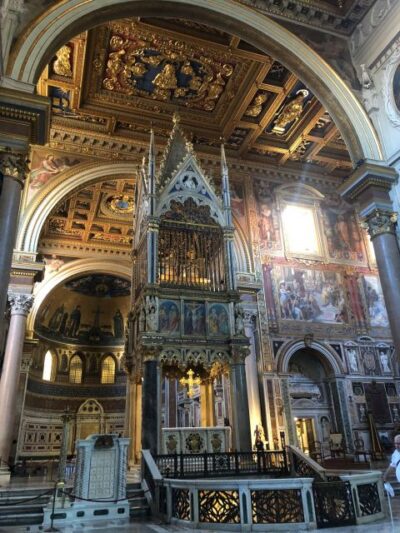
Basilica of St John Lateran & Holy Steps 1-Hour Tour
Read our review →
Basilica of St. Mary Major Priority Entrance Ticket
Read our review →Browse the lists this tour appears in