
Reviewed · 2-HOUR EXPERIENCES
St. Angel’s Castle: 2-Hour Private Tour
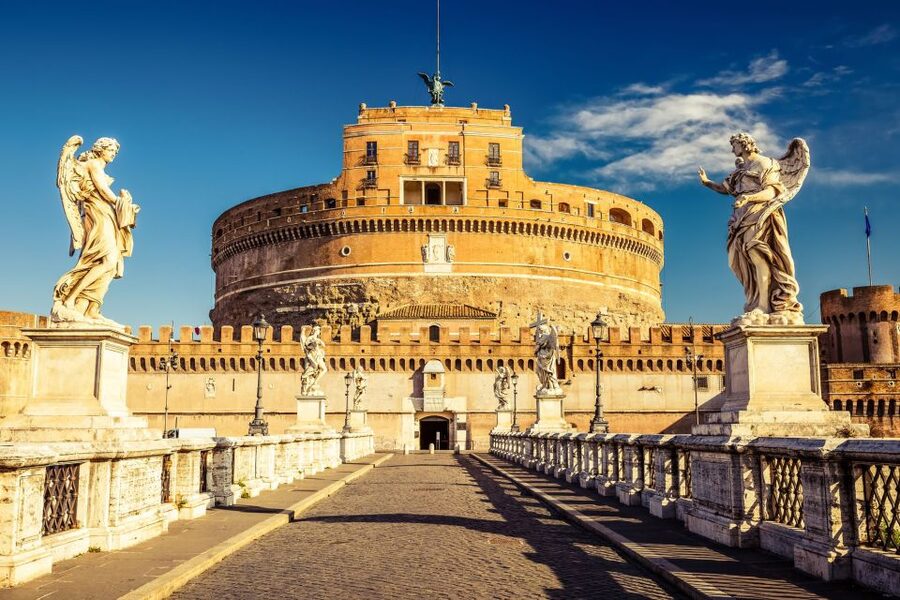
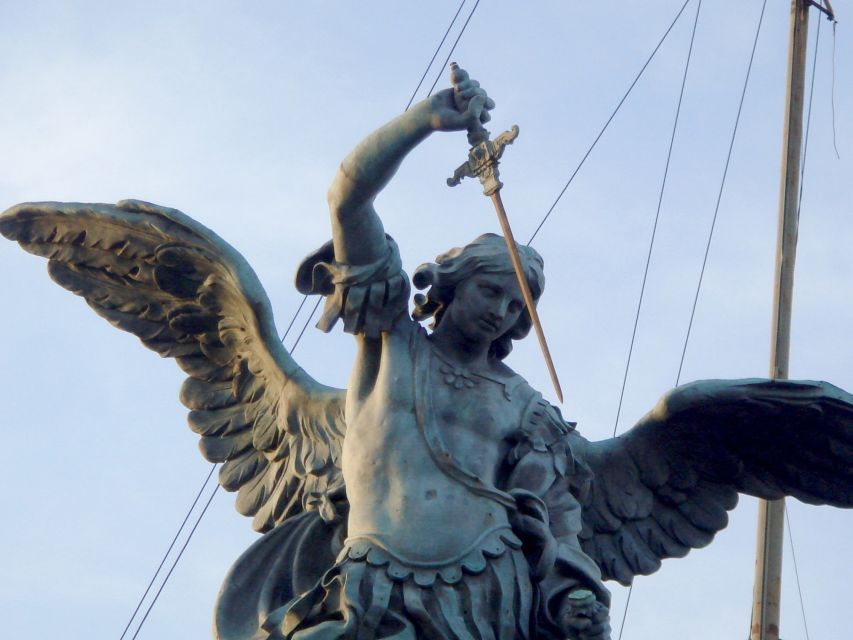
St. Angel’s Castle is not just another Roman monument. It began as Emperor Hadrian’s mausoleum in the 3rd century, then became a fortress, prison, Vatican treasury, archive, and papal residence. This private tour helps you follow those changes inside the same massive building, where polished rooms sit above stark reminders of confinement.
I like the private format, since your guide can spend more time on the parts that interest you, from the Borgia Pope to prison life. I also like the rooftop terrace, which gives you a clear view across Rome after the indoor history lesson. The main consideration is mobility: the castle has stairs and uneven routes, and the tour is not suitable for wheelchair users or people with limited mobility.
Key points of the St. Angel’s Castle tour
- A mausoleum turned fortress: Follow the building from Hadrian’s tomb through its military and papal chapters.
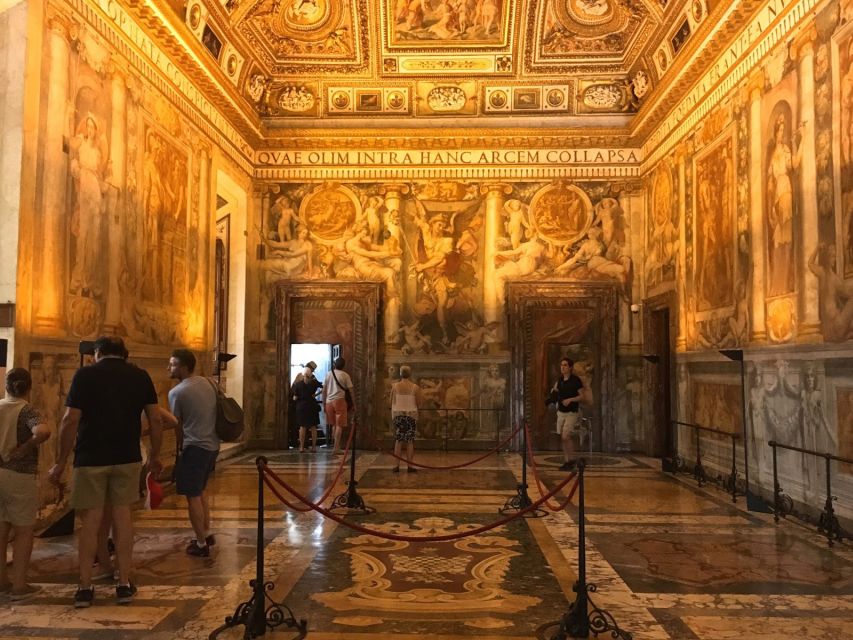
- Pope Paul III’s apartment: See Renaissance rooms linked to one of the castle’s most important periods.
- The Passetto story: Learn how popes could escape toward the Vatican through a protected passage.
- Paintings and ancient objects: View works associated with Carlo Crivelli, Luca Signorelli, and Dosso Dossi, along with arms, marble, ceramics, and sculpture.
- A private, guide-led visit: English and Italian tours are available, with guides such as Vincenzo known for making complex stories easy to follow.
- A finish in Rome’s Baroque heart: The planned stroll ends in Piazza Navona, with the option to remain inside the castle afterward.
Why St. Angel’s Castle is more than a fortress
The first thing to understand is the building’s long afterlife. Emperor Hadrian commissioned the original structure as a mausoleum in the 3rd century A.D. Its purpose was solemn and imperial, but Rome kept finding new uses for it.
In the Middle Ages, the mausoleum was strengthened and converted into a fortress. Later, it served as a prison and housed offices tied to the Vatican treasury and archive. During the Renaissance, it became a residence for the popes. Few Roman sights offer such a clear lesson in how one building can change with the city around it.
That makes a guided visit especially useful. Without context, St. Angel’s Castle can feel like a sequence of grand chambers, thick walls, weapons, and views. A good guide connects those pieces. You begin to see why a room built for ceremony could sit inside a structure designed for defense, and why a papal residence needed escape routes and prison levels.
The tour is private, so the pace can be more personal than a large group visit. You can ask about a particular pope, a military detail, or the castle’s role in films. The strongest guide feedback centers on warmth, enthusiasm, and storytelling. Vincenzo is described as kind, cultured, and compelling, while another guide gave special attention to the Borgia Pope when that subject became a priority for the group.
More two-hour experiences in Rome:
- Vatican Museums & Sistine Chapel Express 2-Hour Guided Tour
★ 4.5 · 1,037 reviews - Rome: 2-Hour Gladiator School
★ 4.7 · 630 reviews - Cooking Class 2 Hour Spanish Steps – Fettucine and Tiramisù
★ 5.0 · 298 reviews
Meeting your guide at the castle entrance
You meet your guide in front of the castle entrance. Arrive 15 minutes before the scheduled start, and look for a guide holding a sign with the tour name.
The tour lasts two hours, so punctuality matters. This is not a full-day experience with long breaks or transportation between sights. It is a focused visit through one of Rome’s most unusual buildings, followed by time in the surrounding historic center.
Entry tickets are included. Hotel pickup, drop-off, and private transportation are not, so you need to make your own way to the entrance. The tour ends back at the meeting point, although you can stay in the castle afterward and continue looking around at your own pace.
Bring comfortable shoes. Large bags and luggage are not allowed, so pack lightly. Children need a passport or ID card.
From Hadrian’s mausoleum to a papal stronghold
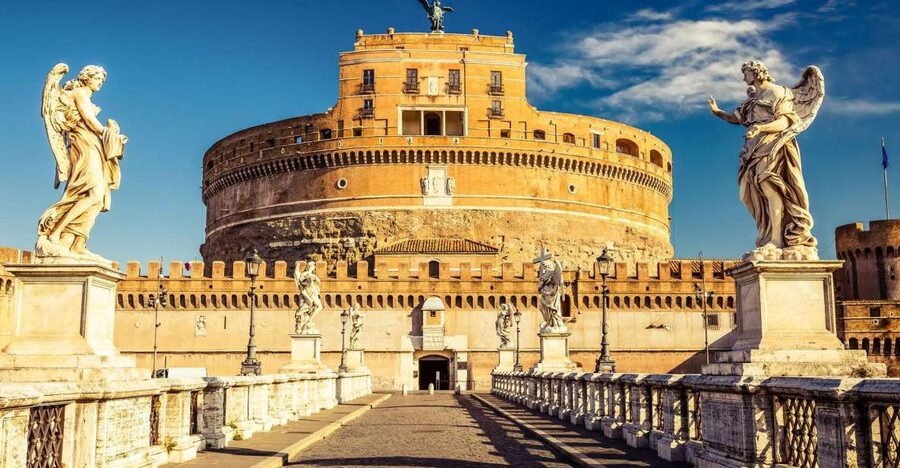
The opening part of the tour sets up the whole visit. You learn why Hadrian’s mausoleum was built and how its original purpose shaped the structure. From there, the story moves through the Middle Ages, when the building became a fortress.
This change is more than a date on a timeline. A mausoleum was built to honor the dead, while a fortress was built to protect the living. The castle’s later forms reflect Rome’s political troubles, the power of the papacy, and the need to defend the Vatican area.
Your guide adds stories and small details as you move through the building. That matters here because St. Angel’s Castle has several layers of meaning. A room may be decorative, defensive, religious, or grim, depending on the period being discussed.
The private setting should help if your interests are specific. You can ask for more detail on military use, papal politics, the prison, or the castle’s role in popular films. One guide has been praised for making subjects that are often left to books feel lively and easy to follow.
The Hall of Paolina and Renaissance power
The Hall of Paolina is one of the tour’s major artistic stops. Here, the guide tells stories connected with Alexander the Great and explains the room’s place in the papal phase of the castle.
This is where the building’s change into a papal residence becomes easier to picture. The castle was not only a defensive refuge. Parts of it were arranged for ceremony, display, and daily life at the highest level of Renaissance power.
The room is also a good reminder that St. Angel’s Castle is not simply a military site. You may arrive expecting walls and weapons, then find painted rooms and papal apartments that point to a very different use.
More private tours in Rome:
- Rome by Golf Cart Private Tour: Beyond the Landmarks
★ 5.0 · 4,361 reviews - Early Morning Vatican, Sistine, St. Peter’s Semi or Private Tour
★ 5.0 · 3,779 reviews - Rome on a Golf Cart Semi-Private Tour Max 6 with Private Option
★ 5.0 · 2,502 reviews - Rome Private Arrival Transfer: Fiumicino Airport to Hotel in Rome
★ 4.5 · 2,492 reviews
The Hall of Perseus and the castle’s myths
The Hall of Perseus brings Greek mythology into the tour. Your guide explains the myth of the Greek hero Perseus and ties it to the decoration and identity of the room.
This stop adds a mythic layer to the visit. Rome’s rulers and popes often used classical stories to present ideas about courage, power, and legitimacy. The Hall of Perseus gives your guide a chance to explain those links without turning the tour into a dry art lecture.
The value here depends heavily on interpretation. If you walk through quickly, the paintings and symbols may blur together. With a guide, the room becomes a story with characters, themes, and political meaning.
Arms, sculpture, and the painting gallery
The castle holds a collection of ancient arms, marble, ceramics, and sculptures. You also pass through a painting gallery with works connected to Carlo Crivelli, Luca Signorelli, and Dosso Dossi.
This collection broadens the visit beyond architecture. You are not only looking at walls and corridors. You are also seeing the objects used to decorate, furnish, defend, and explain the building.
The paintings give the tour an art-history element, while the weapons return you to the castle’s military role. That contrast is useful. St. Angel’s Castle does not fit neatly into one category, and the objects help show why.
The two-hour limit means the guide must keep the visit moving. You should expect selected highlights rather than a slow examination of every piece. That is a reasonable trade for a first visit, especially if you prefer a clear route through a large site.
The Passetto and the practical side of papal safety
The Passetto is one of the most memorable subjects on the tour. This protected path connected the castle with the Vatican and gave popes a way to escape when the area was under attack.
The story works because it joins architecture with danger. The passage was not just an engineering feature. It represented the real need for a secure route during periods of conflict.
Your guide explains how the Passetto fit into the castle’s defensive role. You also learn how the castle served as a refuge for popes, rather than merely as a grand residence. That practical side of papal life can be easy to miss in more formal Vatican visits.
Access and movement through particular areas can depend on site conditions, so the tour promises the history of the Passetto rather than suggesting that every part of the route is always open. Either way, it is one of the castle’s key stories and worth giving your guide time to explain.
Pope Paul III’s apartment
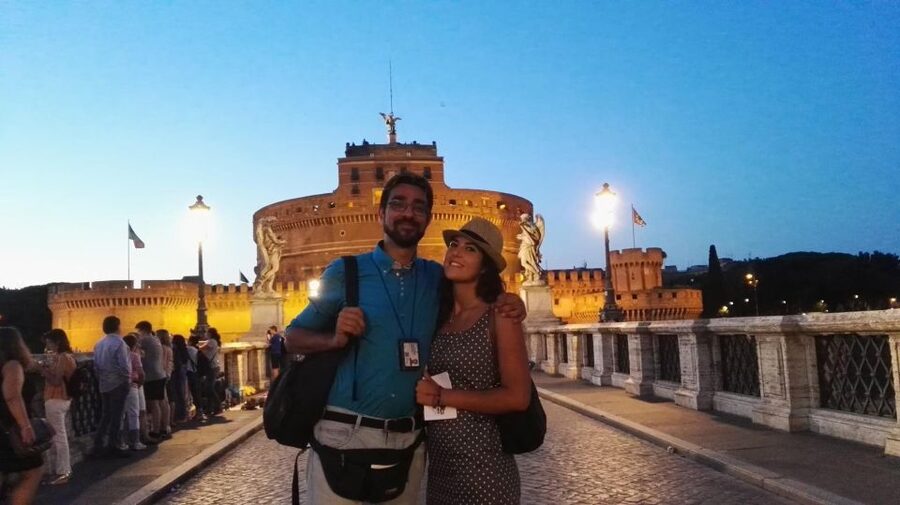
The apartment of Pope Paul III is another central stop. It shows the castle at its most refined, when it functioned as a Renaissance papal residence as well as a defensive refuge.
For me, this part helps connect the grand rooms with the people who used them. The papal apartments were not simply decorated spaces. They reflected status, religious authority, political power, and the need to live securely inside a fortified building.
If you are interested in the Borgia Pope, mention that at the start. One guide gave extra attention to that topic when asked, which suggests that the private format can work well for visitors with a particular historical interest.
The apartment also provides a counterpoint to the prison stories. Within the same castle, you can move from papal ceremony to confinement and from decorative art to military protection. That sharp contrast is one of the strongest reasons to choose a guided visit.
Prison stories and the castle’s darker chapters
St. Angel’s Castle also served as a prison. The tour explains this less polished side of the building, along with its later use for offices connected to the Vatican treasury and archive.
These stories give the castle weight. It was not only a place of emperors, popes, myths, and art. People were held there, institutions worked there, and the building remained tied to control and security long after Hadrian’s burial.
The prison levels can be especially interesting if you like the less formal side of Roman history. Ask your guide how the castle’s different uses fit together, since the private format gives you room to follow that thread.
You should also expect a physical visit rather than a flat museum route. The castle is a historic structure with stairs and changing levels. Comfortable shoes are essential, and anyone with limited mobility should think carefully before booking.
Rome from the castle terrace
The tour includes time on the castle’s terrace, where you can look across Rome’s historic center. After the dense indoor stories, the open view gives you a chance to get your bearings.
A rooftop viewpoint is valuable here because the castle’s history is tied to its location. From above, the fortress makes more sense as part of Rome’s defenses and papal district. The terrace also gives you a visual pause after the rooms, corridors, and prison stories.
The view is one of the clearest benefits of the two-hour route. You get history inside and a broad look at the city outside, rather than spending the entire visit in dark interiors.
Your guide may also discuss the castle’s role in famous movies. That detail is a pleasant extra for film fans, though the main value remains the building’s actual history.
Ending near Piazza Navona
The planned walk ends in Piazza Navona, one of Rome’s best-known Baroque squares and a symbol of the city’s Baroque style. This gives the experience a natural finish outside the castle.
Piazza Navona changes the mood. You leave a fortified monument and arrive in an open urban space shaped by fountains, architecture, and public life. It also makes the tour more than a castle-only visit, although the activity itself ends back at the meeting point.
After the guided portion, you have the option to remain inside St. Angel’s Castle and continue exploring independently. That is useful if two hours feels too short or if you want another look at the collection and rooms your guide covered quickly.
Is $135.94 per person good value?
At $135.94 per person, this is not a budget entry ticket. You are paying for admission, a private tour, and an English or Italian-speaking guide rather than only access to the building.
The value depends on how much help you want. A solo visitor or couple may find the price high compared with a self-guided visit, but a private group can split the cost among several people. The strongest reason to pay more is the guide’s ability to shape the visit around your interests and explain the castle’s many changes in use.
Two hours is also a sensible length for a first visit. It is long enough to cover the major rooms, the Passetto story, the papal apartment, the prison history, the collection, and the terrace without turning into an all-day commitment.
The tour becomes a better buy if you value clear historical context, have limited time in Rome, or want to ask questions as you go. It is less appealing if you prefer to wander alone, read labels at your own pace, or are mainly looking for a low-cost viewpoint.
Who should book this private visit?
I would choose this tour for families, couples, and small groups who want a guide to connect the castle’s many periods. It also suits anyone drawn to papal history, prison stories, Renaissance art, military architecture, or Rome’s famous escape routes.
The private format is particularly useful for a group with mixed interests. One person can ask about the Borgia Pope, another can focus on the Passetto, and someone else can spend time on the paintings or terrace views.
I would be cautious if you have trouble with stairs, uneven surfaces, or extended walking. The activity is not suitable for wheelchair users or people with limited mobility. Large bags and luggage are not permitted, so plan to visit without bulky belongings.
The available languages are English and Italian. You should also arrive early enough to find the meeting point and identify the guide’s sign without rushing.
Should you book St. Angel’s Castle?
Book it if you want more than a quick look at a fortress. The private guide brings together Hadrian’s mausoleum, medieval defenses, papal apartments, prison use, the Passetto, Renaissance art, and Rome’s skyline in one focused visit.
I especially recommend it if you have a strong interest in a particular pope or historical period. Mention that interest at the start, since the guide can give extra attention to subjects such as the Borgia Pope.
Skip it if your priority is the lowest possible price or a fully independent visit. Also skip it if mobility limits make stairs and historic passageways difficult. For everyone else, the combination of expert storytelling, included entry, a private group, and the terrace view makes this a strong way to understand one of Rome’s most unusual monuments.
FAQ
How long does the St. Angel’s Castle tour last?
The tour lasts two hours.
What is the price?
The listed price is $135.94 per person.
Are entry tickets included?
Yes. Entry tickets are included in the price.
Is the tour private?
Yes. This is a private group tour.
Which languages are available?
The live guide is available in English and Italian.
Where do I meet the guide?
Meet the guide in front of the entrance to St. Angel’s Castle. The guide will hold a sign with the tour name.
How early should I arrive?
Arrive 15 minutes before the activity begins.
Does the tour include hotel pickup or transportation?
No. Hotel pickup, drop-off, and private transportation are not included.
Can I stay at the castle after the guided tour?
Yes. After the guided portion, you have the option to remain inside and continue exploring independently.
Is the tour suitable for wheelchair users?
No. The tour is not suitable for wheelchair users or people with limited mobility.
Newest Rome tours we have reviewed
- Private TikTok Video Making in Rome★ 5.0 · 7 reviews
- Assisi, Orvieto and Civita di Bagnoregio Full Day Tour from Rome★ 4.5 · 45 reviews
- Assisi & Saint Francis Path Tour from Rome★ 5.0 · 45 reviews
- Assisi and Cascia Private Day Tour from Rome with Lunch★ 5.0 · 10 reviews
- Art Class in the center of Rome!★ 4.0 · 4 reviews
- Art & Craft: Beer Tour with Street Art in Rome★ 4.5 · 6 reviews
- Arrival in Rome: Airport Transfer & Exclusive City Introduction★ 5.0 · 3 reviews
- From Rome: Private Day-Tour of Tuscany★ 5.0 · 16 reviews
2-Hour Experiences, compared.
Vatican Museums & Sistine Chapel Express 2-Hour Guided Tour
Read our review →

Cooking Class 2 Hour Spanish Steps – Fettucine and Tiramisù
Read our review →

2-Hour Vip Tuk-tuk tour with Hotel Pickup and Prosecco
Read our review →
Fountains and Squares of Rome 2-Hour Walking Tour
Read our review →

Browse the lists this tour appears in