
Reviewed · ROME SQUARES AND FOUNTAINS TOURS
Fountains and Squares of Rome 2-Hour Walking Tour
Rome’s great fountains are not just pretty water features. They were public theater, political statements, and clever bits of engineering. This two-hour walk links several of the city’s best-known squares, from Piazza Barberini to Campo de’ Fiori, with the Trevi Fountain and Pantheon along the way.
I like the route for two reasons: it gives you a useful first look at central Rome, and it connects famous sights through art, legends, and urban history rather than treating each stop as an isolated photo opportunity. I also like the small-group format, which has allowed guides such as Felice, Federica, and Luisa to answer questions and adjust the pace.
The main drawback is value. At $74 per person, this is not a cheap orientation walk, especially since entrance tickets are not included. The route also covers busy streets and uneven pavement, so comfortable shoes matter.
Key points to know before you book
- Start at Piazza Barberini: Meet your guide by the fountain in front of the square, with the exact meeting information sent 24 hours before the tour.
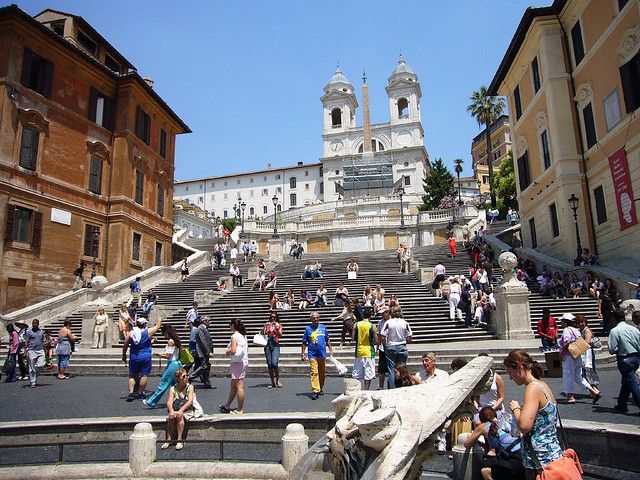
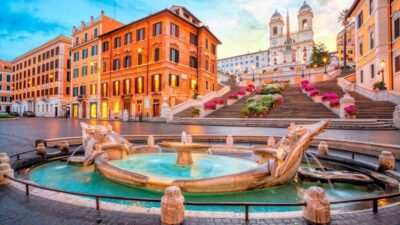
- See the Barcaccia fountain: At Piazza di Spagna, you’ll find Bernini’s half-sunken ship at the foot of the Spanish Steps.
- Toss a coin at Trevi: The famous tradition says a coin in the fountain helps ensure your return to Rome.
- Enter the Pantheon: The walk includes the chance to see the world’s largest non-reinforced concrete dome.
- Finish in Campo de’ Fiori: The square shifts from medieval market site to a place of public executions, marked by Giordano Bruno’s statue.
- Expect a flexible guide: English and Italian tours are available, and past guides have adapted well to children, older walkers, and family interests.
Why this route works for a first look at Rome
This is a sightseeing walk built around Rome’s public spaces. That matters because the city’s character often appears between the headline monuments: in the shape of a fountain, the layout of a piazza, or the way a church faces a broad open square.
The route is also compact in subject, but not dull. You move from Renaissance and Baroque design to Ancient Rome, then finish with a more sobering look at Rome’s past. The stops are familiar, yet the order creates a clear story about how the city changed over time.
You should think of this as an introduction, not a complete study of Rome’s art. Two hours is enough for a guided look at the major points, but not enough for long museum visits or extended time at every monument.
More squares and fountains walks in Rome:
- Rome: Pantheon, Trevi Fountain & Roman Squares Guided Tour
★ 4.7 · 386 reviews - Rome: Fountains and Squares Small-Group Walking Tour
★ 4.7 · 335 reviews - Rome: Immersive Underground and Piazzas Tour
★ 4.7 · 133 reviews
Piazza Barberini and the start of the walk
The tour begins in Piazza Barberini, where your guide waits in front of the fountain. The square is a practical meeting point near several central streets, but do not arrive expecting a large tour desk or a clearly marked office. Keep an eye out for the guide and check the final meeting information sent before the tour.
This opening stop gets you into the theme right away. Rome’s fountains were designed to make public spaces useful and memorable, and Piazza Barberini gives the walk a suitable beginning before you head toward the Spanish Steps.
The meeting point details are sent 24 hours before departure, so check your message rather than relying only on a general map pin. Hotel pickup and drop-off are not included. You make your own way to the square and leave the tour independently at Campo de’ Fiori.
The Spanish Steps and the half-sunken Barcaccia
From Piazza Barberini, the route continues to Piazza di Spagna. The Spanish Steps rise from the square toward the Trinità dei Monti church, linking the historic Bourbon Spanish Embassy area with the church above. There are 135 steps, which makes the setting impressive but also gives you a preview of the physical demands of the walk.
At the foot of the steps is the Fontana della Barcaccia, a Baroque fountain shaped like a half-sunken ship. It is a smaller and more playful work than the Trevi Fountain, but that is exactly why it deserves attention. The low boat form makes the fountain feel tied to the square rather than placed there as a separate monument.
Your guide can help you look past the standard staircase photo. Notice how the fountain, steps, buildings, and church form one long visual line. This is one of the tour’s better lessons: in Rome, the space around a monument often matters as much as the monument itself.
The area can be crowded, and the steps are not the easiest place for a slow, relaxed stop. You may spend more time listening and looking than sitting or wandering. If you want a quiet visit to the Spanish Steps, plan to return on your own at another time.
Trevi Fountain and Rome’s best-known coin toss
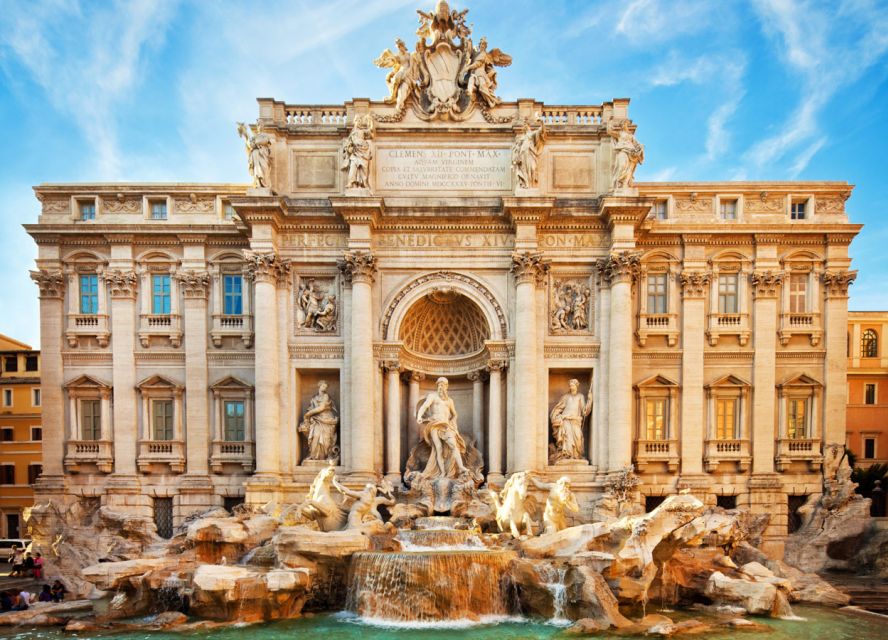
The walk then heads into the Trevi district and reaches the Trevi Fountain, set against the Palazzo Poli. This is the stop most people already know, but a guide gives you a reason to look beyond the famous front view.
The fountain is a grand Baroque display of water, stone, movement, and myth. Its scale can be hard to appreciate in a photograph because the surrounding streets are relatively tight and the crowd gathers close to the basin. Your guide can explain how the fountain works within the city and point out details that are easy to miss while you are arranging a picture.
You will also have the classic coin-toss tradition. The familiar belief is that throwing a coin into the water helps ensure that you return to Rome. It is a simple ritual, but it fits the spirit of the city: serious history often sits beside a small piece of everyday theater.
Do not expect a long private viewing here. The fountain is a public sight in a busy part of town, and the tour must keep moving to fit the full route into two hours. Still, this is a good place to hear the story, take in the scale, and then decide if you want to return later for more time.
More two-hour experiences in Rome:
- Vatican Museums & Sistine Chapel Express 2-Hour Guided Tour
★ 4.5 · 1,037 reviews - Rome: 2-Hour Gladiator School
★ 4.7 · 630 reviews - Cooking Class 2 Hour Spanish Steps – Fettucine and Tiramisù
★ 5.0 · 298 reviews - Rome: 2-Hour Golf Cart Sightseeing Tour at Night
★ 5.0 · 124 reviews
The Pantheon and its remarkable dome
The Pantheon brings a major change of mood. The fountains and piazzas are open-air works, while the Pantheon draws you toward one of Ancient Rome’s best-preserved monuments.
Inside, you can look up at the world’s largest non-reinforced concrete dome. The oculus at the center provides the building’s famous opening to the sky, allowing light into the vast interior. Even if you have seen photographs, the sense of space is difficult to grasp until you are beneath the dome.
This is one of the tour’s most valuable stops because it adds a strong ancient counterpoint to the later Baroque sights. You are not simply moving from one attractive square to another. You are seeing how Rome’s public architecture shifted across centuries while old structures remained part of the living city.
The supplied information identifies the Pantheon as part of the route and says you can marvel at the dome once inside. It does not list a separate admission ticket, and entrance tickets are not included in the tour price. That distinction matters when you compare this walk with tours that bundle paid entries.
Piazza Navona and the Stadium of Domitian
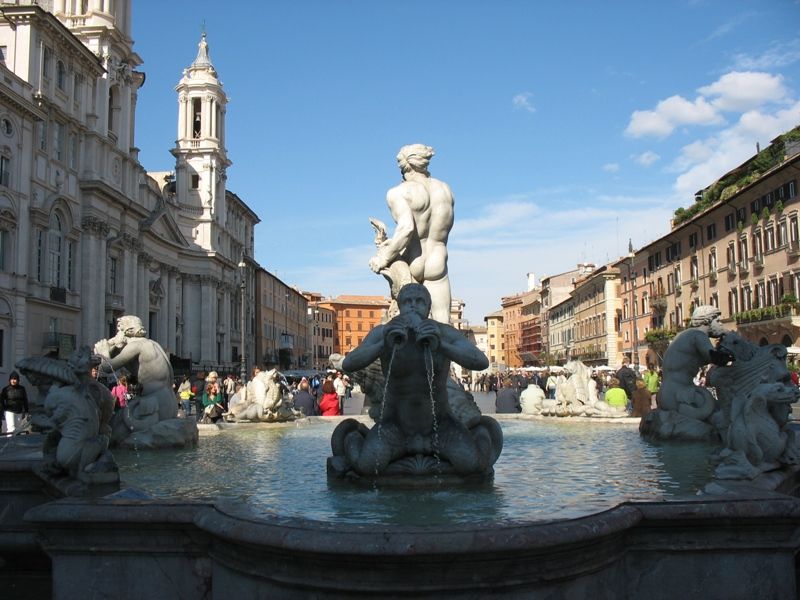
Next comes Piazza Navona, one of Rome’s grandest Baroque squares. Its long, open shape follows the footprint of the old Stadium of Domitian, so the square carries the outline of an earlier public venue beneath its later decoration.
This is a good stop for understanding how Rome reuses its past. The ancient stadium is no longer functioning as it once did, but its form still helps explain the shape of the piazza. A guide can make that connection clear in a few minutes, which is far more useful than seeing the square only as a backdrop for photographs.
The main artistic highlight is Bernini’s Fontana dei Quattro Fiumi, or Fountain of the Four Rivers. Its figures and flowing composition give the fountain a sense of movement that suits the large square. You can compare it with the Barcaccia and Trevi fountains: one is intimate and playful, one is theatrical and massive, and one turns a public square into a sculptural stage.
Piazza Navona is also a good place to notice how much the route depends on walking through active city streets. The experience is not a series of controlled museum rooms. You are crossing open squares, passing shops and cafes, and moving through the same urban spaces Rome has used for centuries.
Campo de’ Fiori and the darker final stop
The tour ends at Campo de’ Fiori, whose name means Field of Flowers. Today, its identity is linked to a market and a popular central square, but its past is less cheerful. It was once the site of a medieval market and later used for public executions.
At the center, a bronze statue honors Giordano Bruno, the Dominican friar and philosopher who was burned at the stake for heresy in 1600. Ending here gives the tour a needed change in tone. Rome’s squares are not only places of beauty and celebration. They also hold memories of punishment, argument, and public power.
Campo de’ Fiori is a useful ending because you can continue exploring from there, find food nearby, or make your own way back. The tour does not include a hotel transfer, and no return transportation is provided, so plan your next step before you arrive if you are tired or the weather changes.
One especially kind touch from a past tour was a guide helping a group find a cab when rain began at the end. That is not a promised service, but it suggests the small-group format can allow for practical help when circumstances change.
The guide can make or break the two hours
The route is familiar, so the guide’s approach matters a great deal. The strongest part of this experience is the chance to get more than a list of dates and names.
Felice has been particularly accommodating with questions and requests. Federica has handled family groups and older walkers with patience, keeping a comfortable pace. Luisa has brought historical detail together with lighter stories and small facts that make the material easier to remember.
Those individual guides may not be available for your departure, so do not book on the assumption that you will receive one specific person. The important point is what the small-group setup allows: a guide can respond to your interests, slow down when needed, and answer questions more easily than a large crowd tour.
Families may appreciate this flexibility. One guide adapted the visit to suit children and the family’s interests. That does not turn the walk into a children’s program, but it means the experience can work well when the guide reads the group correctly.
The tour is offered in English and Italian. If you need a different language, this activity is not the right fit based on the stated information.
Walking pace, shoes, and what to expect physically
Bring comfortable shoes. That advice is not filler here. You will cover several central locations on foot, encounter the 135 Spanish Steps, and walk over city surfaces that may be uneven or crowded.
The tour lasts two hours, so the pace needs to be steady. Past groups have included older people who could not walk much, and the guide adjusted the speed with patience. Still, the route is a walking tour rather than a seated sightseeing experience.
There is no information stating that the route is fully wheelchair accessible, nor is there a stated accessibility plan. If you have specific mobility needs, ask the provider before booking. The steps at Piazza di Spagna alone may be a concern.
The tour description includes legends and ice cream as part of the overall flavor of the experience, but it does not list a food tasting or ice cream serving among the inclusions. Treat that as atmosphere, not a guaranteed included item.
Is $74 a fair price?
At $74 per person, the tour sits in the costly range for a two-hour walk. Its value depends on how much structure and explanation you want.
You are paying for a live guide, a small-group setting, and a carefully arranged route through several major sights. If you are new to Rome, that can save time and give you a useful framework for exploring on your own afterward. A good guide also turns familiar places into connected history rather than a checklist.
The price feels less convincing if you mainly want to see the fountains and take photos. Most of the route’s sights are in public spaces, and the advertised inclusions do not cover hotel transportation or entrance tickets. One Italian booking described the experience as costly compared with other tours that include an admission ticket, which is a fair concern.
I would choose it for a first or early day in Rome, especially if you value context and personal guidance. I would skip it if you prefer a low-cost self-guided walk or want substantial interior time at the Pantheon and other monuments.
You can reserve now and pay later, which helps if your schedule is still shifting. Free cancellation is available up to 24 hours in advance for a full refund. Those terms add flexibility, but they do not change the basic price comparison.
Who should book this Rome fountain walk?
This tour suits you best if you want to:
- See several famous central sights in one organized walk
- Learn how fountains and squares fit into Rome’s history
- Have a guide who can adjust the pace and answer questions
- Give children or older family members a more supported introduction to the city
- Combine art, architecture, legends, and a little local tradition in two hours
It is less suitable if you want a quiet visit, dislike crowds, have difficulty with steps, or expect entrance tickets and transfers to be included.
Should you book the Fountains and Squares of Rome tour?
Book it if you want a compact, guide-led introduction to central Rome and care about the stories behind the fountains. The route covers a lot in two hours, and the best guides can make it feel personal rather than rushed.
Think twice if $74 feels high for an outdoor walk. You will need to pay attention to what is and is not included, arrange your own transport, and accept that the most famous stops can be crowded. For families, first-time visitors, and people who want a clear route with historical explanation, it is a sensible choice. For independent walkers, the same path can be explored without the tour fee.
FAQ
How long is the Fountains and Squares of Rome tour?
The walking tour lasts two hours.
What sights are included on the route?
The route begins at Piazza Barberini and continues to Piazza di Spagna, the Trevi Fountain, the Pantheon, Piazza Navona, and Campo de’ Fiori.
Where does the tour meet?
The guide waits in front of the fountain in Piazza Barberini. The specific meeting point information is sent 24 hours before the tour.
Where does the tour end?
The tour ends at Campo de’ Fiori.
Is hotel pickup or drop-off included?
No. Hotel pickup and drop-off are not included.
What languages are available?
The tour is available with a live guide in English or Italian.
Are entrance tickets included in the price?
No. Entrance tickets are not included.
Can I cancel the tour for a refund?
Yes. You can cancel up to 24 hours in advance for a full refund. You can also reserve now and pay later.
More walking tours in Rome
- Rome: Trastevere & Campo de Fiori Street Food Walking Tour
★ 4.9 · 2,768 reviews - Rome: Paranormal Night Walking Tour & Secret Backstreets
★ 4.9 · 1,921 reviews - Rome by Night Walking Tour – Legends & Criminal Stories
★ 4.5 · 1,003 reviews - Rome: Guided City Center Evening Sightseeing Walking Tour
★ 4.4 · 953 reviews
Newest Rome tours we have reviewed
- Private TikTok Video Making in Rome★ 5.0 · 7 reviews
- Assisi, Orvieto and Civita di Bagnoregio Full Day Tour from Rome★ 4.5 · 45 reviews
- Assisi & Saint Francis Path Tour from Rome★ 5.0 · 45 reviews
- Assisi and Cascia Private Day Tour from Rome with Lunch★ 5.0 · 10 reviews
- Art Class in the center of Rome!★ 4.0 · 4 reviews
- Art & Craft: Beer Tour with Street Art in Rome★ 4.5 · 6 reviews
- Arrival in Rome: Airport Transfer & Exclusive City Introduction★ 5.0 · 3 reviews
- From Rome: Private Day-Tour of Tuscany★ 5.0 · 16 reviews
Rome Squares and Fountains Tours, compared.
Pantheon, Trevi Fountain & Roman Squares Guided Tour
Read our review →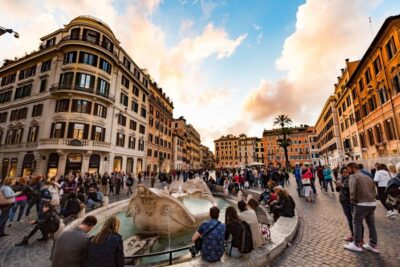


Early Morning Sightseeing and Piazzas with Breakfast
Read our review →Browse the lists this tour appears in