
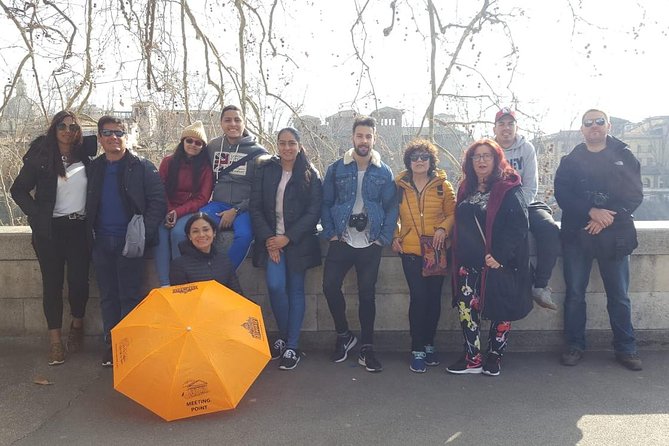
Reviewed · ROME SQUARES AND FOUNTAINS TOURS
Tour Squares of Rome and Vatican
Rome packs two thousand years into a few city blocks, and this walk gives you a useful route through the pileup. You begin at the Triton Fountain, move past the Pantheon and Trevi Fountain, then finish at St. Peter’s Square after seeing Rome’s grandest Baroque fountains and Castel Sant’Angelo.
I like the clear historical sweep, from imperial Rome to the papal city. I also like the low price, $17.44 per person, and the chance to enter the Pantheon rather than only admire its famous columns from outside. The main caution is the tour’s unclear timing, listed as anywhere from 2 to 45 minutes, and one serious value complaint: a customer paid through Viator while the rest of the group appeared to be on a free walking tour.
Key points at a glance
- Start at the Triton Fountain: Meet in Piazza Barberini, a handy central point near Rome’s major sights.
- Enter the Pantheon: The itinerary specifically includes admission to this remarkable ancient building.
- Follow Bernini’s Rome: See the Triton Fountain, Fountain of the Four Rivers, Neptune Fountain, and Moor Fountain.
- Finish in St. Peter’s Square: The walk ends in Vatican City, not at the beginning of the route.
- Sunday bonus: The tour may end with the papal Angelus blessing.
- Small-to-medium group: The maximum group size is 30 people, with mobile tickets and free cancellation up to 24 hours ahead.
A route from ancient Rome to St. Peter’s Square
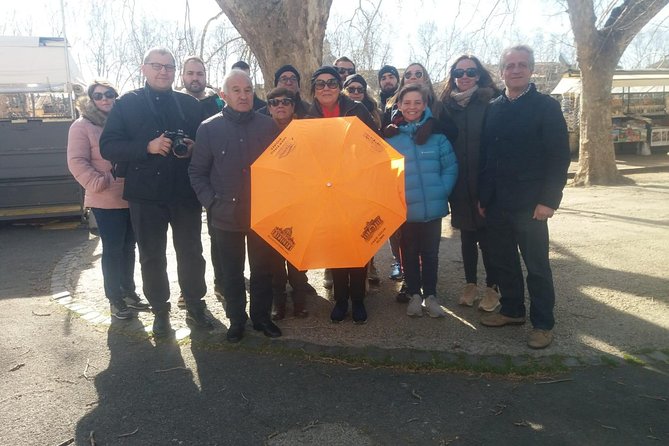
This experience is best understood as a city walk with a strong art-and-history theme. It links several famous places that are easy to visit on your own, but a guide can help you see how Rome changed from imperial capital to papal showpiece.
You start at the Fontana del Tritone in Piazza Barberini. The fountain is one of Gian Lorenzo Bernini’s lively Baroque works, showing Triton blowing a shell trumpet while rising from the sea. It is a good opening scene because the fountain immediately introduces the artistic style that appears again and again during the walk.
From here, the route heads into Rome’s historic center. The exact walking order between every sight is not spelled out, so you should expect a guided progression rather than a tightly timed attraction-by-attraction schedule. The route is more useful as an overview than as a deep visit to each monument.
More squares and fountains walks in Rome:
- Rome: Pantheon, Trevi Fountain & Roman Squares Guided Tour
★ 4.7 · 386 reviews - Rome: Fountains and Squares Small-Group Walking Tour
★ 4.7 · 335 reviews - Rome: Immersive Underground and Piazzas Tour
★ 4.7 · 133 reviews
The Pantheon gives the walk its strongest interior stop
The Pantheon is the most important included interior visit. Its huge concrete dome and central opening have made it one of Rome’s great architectural lessons for nearly two thousand years.
You are not simply looking at another ancient facade. Inside, the building’s scale makes sense. The oculus at the top lets in daylight and weather, and the round room shows how Roman builders used engineering as spectacle. The Pantheon later became a Christian church, which helps explain why it survived while many other ancient buildings disappeared or were dismantled.
The supplied description says the group will enter the Pantheon. That is a real advantage at this price, but keep your expectations sensible. An included entry does not necessarily mean an extended guided visit or a reserved skip-the-line arrangement. The tour details do not promise either one.
The Pantheon is also an active religious site, so quiet behavior and appropriate clothing are wise. Since the experience is described as mobile-ticketed, keep your confirmation ready on your phone.
Imperial Rome appears in fragments near the city center
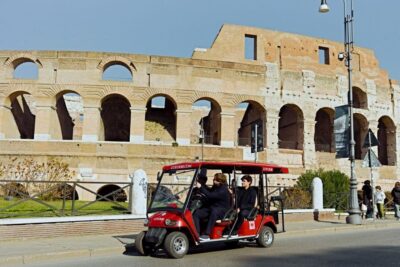
The route also points to the ruins of the Domitian-era Flavian Stadium, better known as the Colosseum. The wording suggests you will see the ruins rather than take a full Colosseum interior tour.
That distinction matters. If your main goal is to walk through the Colosseum, this experience does not promise that. You should book a separate Colosseum ticket if entering the amphitheater is essential to your Rome plans.
The useful part here is the larger story. Rome’s ancient monuments are not isolated museum pieces. They sit inside a living city, often beside churches, apartments, shops, and later monuments. A guide can connect the Roman imperial period with the Renaissance and Baroque city that grew around it.
The route also includes Castel Sant’Angelo. The cylindrical fortress began life as the mausoleum of Emperor Hadrian and later became a papal refuge and defensive stronghold. From the outside, its heavy walls and unusual shape tell you more about medieval and papal Rome than about the original imperial tomb.
The itinerary does not promise entry to Castel Sant’Angelo. Treat it as a sight along the route, with an explanation and a chance to view it, not as a museum visit.
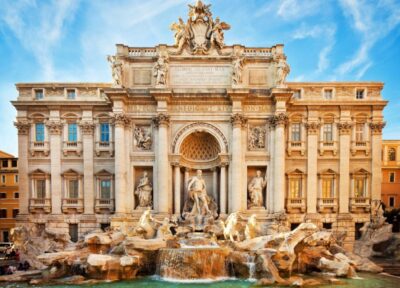
Trevi Fountain is the big crowd-pleaser
The Fontana di Trevi is the most famous fountain on the route and one of Rome’s unavoidable sights. It is a grand theatrical composition of water, stone, horses, and the sea god Oceanus.
The fountain is exciting, but it can also be the most crowded stop. Your guide may have to pause at the edge of the square rather than lead the group into a quiet viewing position. Keep your phone secure, listen for the meeting instructions, and do not expect the peaceful fountain scene shown in many photographs.
The usual coin toss tradition is not described as part of the tour, so you should not treat it as an included activity. The real value here is orientation and context. A guide can explain how the fountain fits into Rome’s papal building campaigns and why its theatrical design feels so different from the spare lines of the Pantheon.
Same city, a completely different half-day:
- Vatican Museums & Sistine Chapel Tour with Optional Basilica
★ 4.3 · 67,413 reviews - Vatican Museums, Sistine Chapel & St Peter’s Basilica Guided Tour
★ 4.5 · 39,149 reviews - Rome: Colosseum, Palatine Hill and Roman Forum Guided Tour
★ 4.8 · 32,814 reviews - Rome: Guided Tour of Colosseum, Roman Forum & Palatine Hill
★ 4.7 · 27,897 reviews
Bernini and Rome’s Baroque fountains
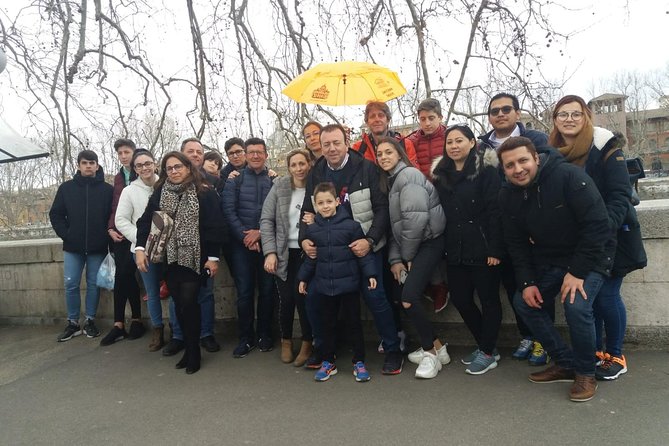
The route highlights several fountains tied to Bernini and other major Baroque artists. These stops are valuable because Rome’s fountains were not just decoration. They marked important public spaces, brought water into the city, and gave popes a way to display power and artistic taste.
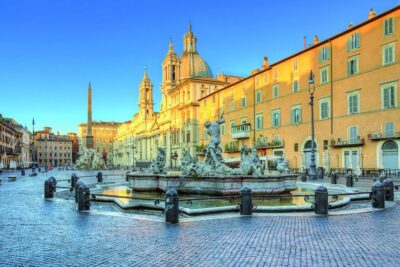
At the Triton Fountain, Bernini used movement and myth. At Piazza Navona, the Fountain of the Four Rivers is the grand centerpiece. Its sculpted river gods represent four major rivers from different parts of the world, while the tall obelisk rises above the composition.
Piazza Navona itself occupies the site of the ancient Stadium of Domitian. That makes it one of the best places on the route for seeing old Rome and papal Rome in the same frame. The long oval shape of the square preserves the outline of the ancient stadium, while Baroque churches and fountains give it a very different character.
The route also names the Neptune Fountain and the Moor Fountain, both at Piazza Navona. The Neptune Fountain anchors the north end of the square. The Moor Fountain sits at the south end. Seeing both helps you read the piazza as a complete urban design rather than stopping only at the more famous Fountain of the Four Rivers.
The experience also refers to Michelangelo’s work. No specific Michelangelo monument or interior visit is identified, so do not assume that you will enter a church containing one of his major sculptures. The tour’s emphasis appears to be on the wider Renaissance and Baroque setting, with particular attention to Bernini’s fountains.
St. Peter’s Square is the final payoff
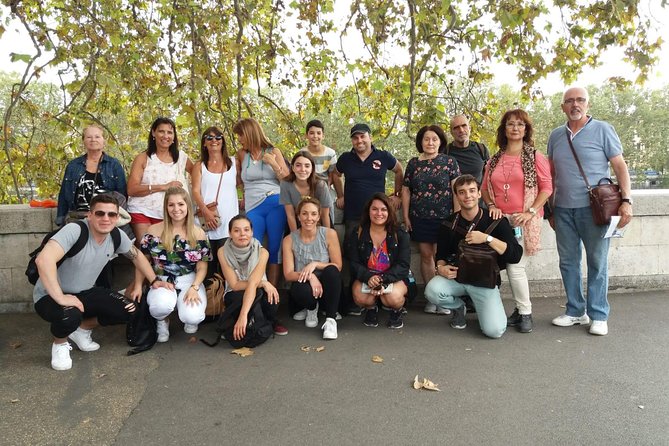
The walk ends in St. Peter’s Square, the enormous open space in Vatican City designed in large part by Bernini. Its curving colonnades create a dramatic embrace around the square, while the central obelisk links the Christian site to the ancient world.
Ending here gives the walk a strong sense of direction. You move from Rome’s imperial monuments through papal streets and public squares to the heart of the Catholic world. The route does not simply collect famous sights. It shows how successive rulers reused the city’s spaces and symbols.
The description mentions leaving the Vatican Museums, but the stated end point is St. Peter’s Square. It does not promise Vatican Museums admission, the Sistine Chapel, or a guided visit inside St. Peter’s Basilica. That is one of the most important points to understand before booking.
You can use the tour as a first look at the Vatican area, then return for a separate museum or basilica visit if those interiors are priorities. Do not count on this walk to cover them.
Sunday departures may include the Angelus
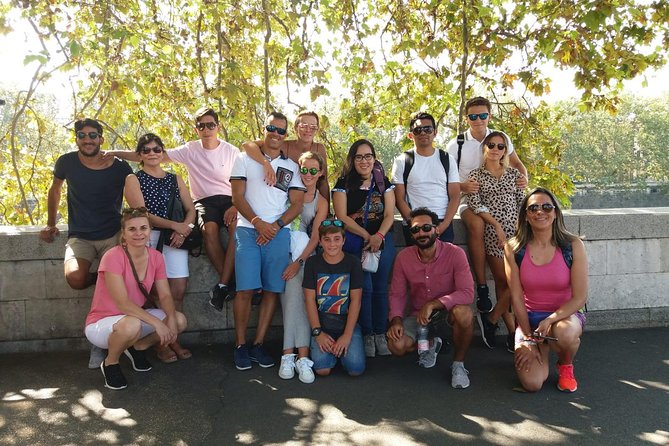
On Sundays, the experience is scheduled to end with the papal Angelus blessing. This can be a memorable way to finish, but the wording says Sundays, not every departure or every date, so check the timing when booking.
The Angelus is traditionally delivered by the pope from the Vatican on Sunday at noon when he is in Rome and the event is taking place. The tour data does not promise papal attendance at every Sunday departure, and it does not give a separate meeting time for this portion. You should confirm the start time and schedule if the blessing is a major reason for choosing this tour.
If the timing works, finishing in St. Peter’s Square with a large public gathering gives the Vatican stop a sense of occasion that a normal sightseeing walk may not provide. It can also make the square much more crowded, so stay close to your guide and know the end point in advance.
What the $17.44 price really means
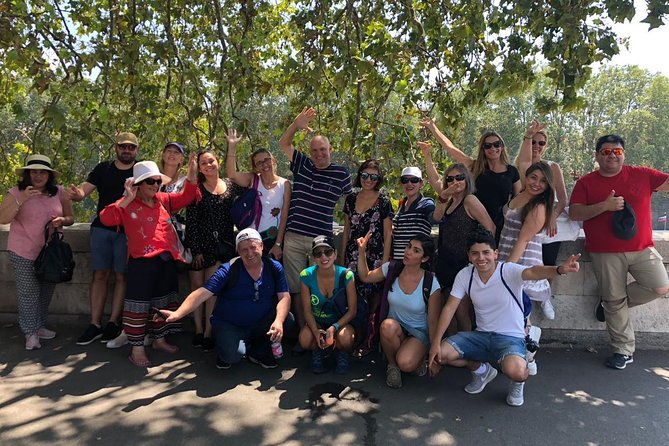
At $17.44, this is inexpensive for a guided route through central Rome, especially with Pantheon entry included. I see the price as good value if you want a broad introduction and do not need long stops inside every monument.
The price becomes less attractive if you expect a private tour, detailed museum guiding, or admission to the Colosseum, Vatican Museums, and St. Peter’s Basilica. None of those full interior visits is clearly included.
There is also a value issue you should take seriously. One poor account describes a customer who paid for the experience through Viator, then discovered that the other people in the group appeared to have joined a free walking tour. The guide reportedly could not explain the difference. One complaint does not establish that this happens routinely, but it is enough reason to confirm exactly what your payment covers.
Before you go, ask the provider or booking platform whether your fee includes the guide service, Pantheon entry, or both. Also confirm the meeting time, the expected length, and whether the group will be labeled with the RomaTourGratis name. That short check could prevent confusion at Piazza Barberini.
Group size, meeting point, and walking demands
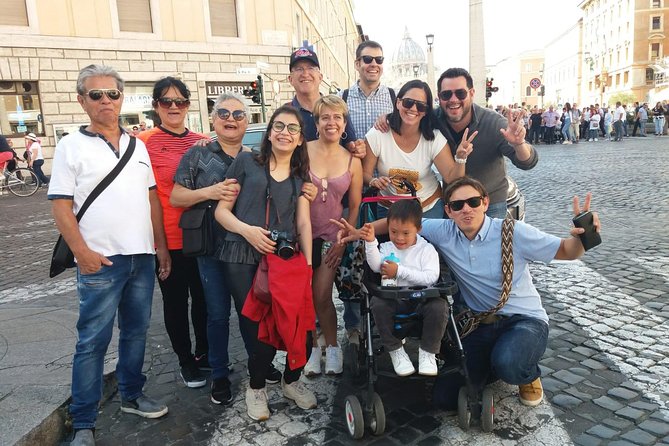
The group can include up to 30 people. That is not a private or intimate walk, but it is still manageable if the guide uses a clear meeting point and keeps the group together.
Start at the Fontana del Tritone in Piazza Barberini. The supplied meeting point gives no detailed instructions about a particular side of the fountain, sign, or guide clothing, so arrive early and keep your phone confirmation open. In a crowded square, the exact meeting spot matters.
The end point is St. Peter’s Square in Vatican City. Plan your next activity from there, not from Piazza Barberini. If you have a timed Vatican Museums entry, leave a generous gap. The listed duration of 2 to 45 minutes is unusually broad and does not provide a dependable planning window for a route covering this many sights.
The route takes place in Rome’s historic center, where you should expect city streets, squares, and time on your feet. The information says most people can participate and that service animals are allowed. It also notes nearby public transportation, which makes the start and finish practical for a larger Rome itinerary.
A mobile ticket keeps the booking simple. Save it before leaving your hotel, since phone service can be less dependable in thick crowds or stone-lined streets.
Who will get the most from this walk
I would choose this experience for a first visit to Rome when you want the city’s main center sights placed in a sensible historical order. It suits you if you like fountains, public squares, architecture, and a guide’s explanation more than long museum sessions.
It also works for anyone with only a short time in Rome. You can use the walk to identify places worth revisiting on your own, especially the Pantheon, Piazza Navona, Trevi Fountain, and the Vatican area.
I would be more cautious if you want a slow, detailed art tour. A maximum group of 30 and a very short listed duration suggest a brisk overview. You may hear useful background, but the information does not promise extended time at each monument.
Families and mixed-interest groups may find the route useful because the sights change often. History fans should note that the experience covers many eras but does not promise deep archaeological explanation or interior access at every stop.
Free cancellation is available if you cancel at least 24 hours before the start time. Changes made inside that window are not accepted, and the activity requires a minimum number of participants. If the provider cancels for that reason, you are offered another date or experience, or a full refund.
Should you book the Squares of Rome and Vatican tour?
Book it if you want a low-cost guided introduction to central Rome, value the Pantheon entry, and like the idea of finishing at St. Peter’s Square. The historical sequence is appealing, the fountain route is well chosen, and a Sunday Angelus ending could add something special.
Do not book it as your only Vatican or ancient Rome visit. The experience does not clearly include the Colosseum, Vatican Museums, Sistine Chapel, or St. Peter’s Basilica interiors. It is an overview walk, not a full Rome ticket.
My biggest advice is to verify the fee and timing before you commit. Ask what your $17.44 pays for, confirm the Pantheon entry, and make sure the guide will identify the paid group clearly at the Triton Fountain. With those points settled, this can be a useful and affordable way to get your bearings in Rome.
FAQ
Where does the tour start?
It starts at the Fontana del Tritone in Piazza Barberini, Rome.
Where does the tour end?
The tour ends at St. Peter’s Square in Vatican City.
Is the Pantheon included?
Yes. The tour description specifically says that the group will enter the Pantheon.
Does the tour include the Vatican Museums?
The information mentions departing from the Vatican Museums, but it does not list admission to the museums as an included feature. The stated end point is St. Peter’s Square.
Does the tour enter the Colosseum or Castel Sant’Angelo?
The tour includes views of the ruins of the Flavian Stadium and Castel Sant’Angelo, but it does not state that either monument includes an interior visit.
Can I take the tour on Sunday?
Yes. Sunday departures are described as ending with the papal Angelus blessing. The exact schedule should be confirmed when booking.
How large can the group be?
The maximum group size is 30 people. Mobile tickets are provided, and service animals are allowed.
Newest Rome tours we have reviewed
- Private TikTok Video Making in Rome★ 5.0 · 7 reviews
- Assisi, Orvieto and Civita di Bagnoregio Full Day Tour from Rome★ 4.5 · 45 reviews
- Assisi & Saint Francis Path Tour from Rome★ 5.0 · 45 reviews
- Assisi and Cascia Private Day Tour from Rome with Lunch★ 5.0 · 10 reviews
- Art Class in the center of Rome!★ 4.0 · 4 reviews
- Art & Craft: Beer Tour with Street Art in Rome★ 4.5 · 6 reviews
- Arrival in Rome: Airport Transfer & Exclusive City Introduction★ 5.0 · 3 reviews
- From Rome: Private Day-Tour of Tuscany★ 5.0 · 16 reviews
Rome Squares and Fountains Tours, compared.
Pantheon, Trevi Fountain & Roman Squares Guided Tour
Read our review →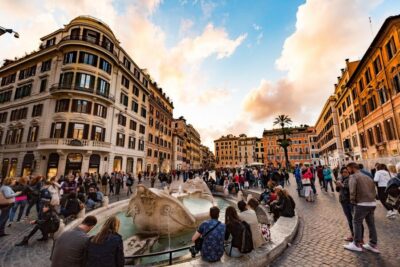
Fountains and Squares of Rome 2-Hour Walking Tour
Read our review →


Early Morning Sightseeing and Piazzas with Breakfast
Read our review →Browse the lists this tour appears in