
Reviewed · UNDERGROUND ROME TOURS
Rome: Immersive Underground and Piazzas Tour
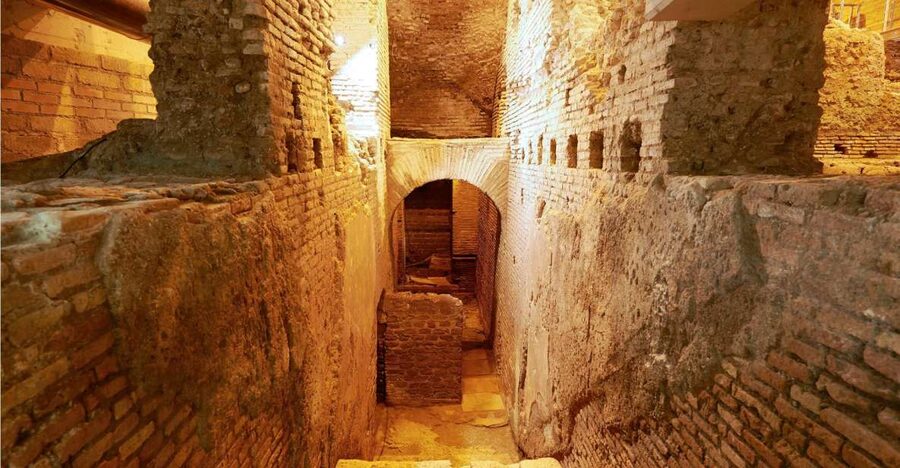
Rome becomes much more interesting when you look below street level. This three-hour walk links Piazza Navona’s Stadium of Domitian with Vicus Caprarius, a buried Roman neighborhood and water system near the Trevi Fountain. Along the way, you also visit the Pantheon and hear how modern Rome was built over its ancient past.
I like two things especially. First, the guides often have archaeology training, and guides such as Amanda, Francesca, Alex, and Maria have earned praise for making complex history easy to follow. Second, the tour gives you two very different underground stops: a sports stadium beneath a famous piazza and an ancient aqueduct below a modern building.
The main drawback is simple: the title promises underground Rome, but much of the three hours takes place outdoors between sites. You will walk through crowded city streets, and the tour is not suitable for wheelchair users.
Key points to know before booking
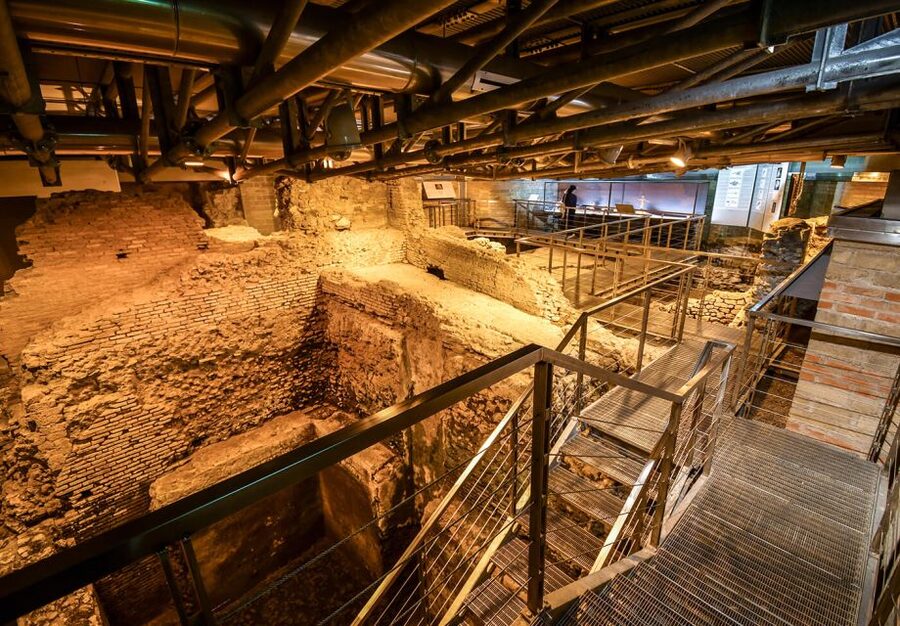
- The Stadium of Domitian lies beneath Piazza Navona, revealing the athletic arena hidden below one of Rome’s grandest squares.
- Vicus Caprarius preserves an imperial-era domus and the Aqua Virgo aqueduct, the water source linked to the Trevi Fountain.
- The Pantheon is part of the route, with a guided visit rather than a quick look from the doorway.
- Archaeology-trained guides are a major strength, with Amanda, Francesca, Alex, Maria, and others praised for clear explanations and lively storytelling.
- The tour covers a lot of ground in three hours, so wear comfortable shoes and expect regular walking above ground.
- Dress for the Pantheon, an active church: your shoulders and knees must be covered.
Why this tour shows Rome in layers
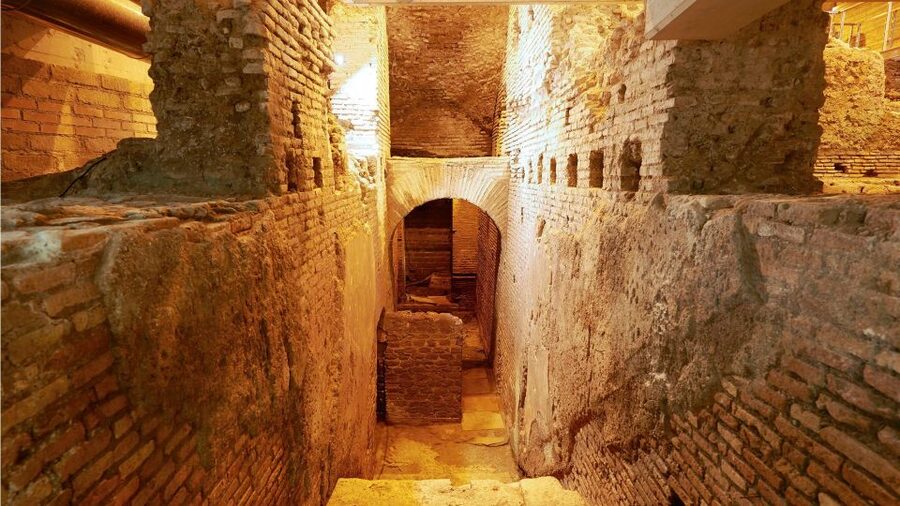
Rome is not a tidy archaeological park. It is a working city built on top of itself, century after century. A café, church, department store, or busy square may sit above walls and foundations from the Imperial period.
That idea gives this tour its purpose. You are not simply ticking off Piazza Navona, the Pantheon, and Trevi Fountain. You are seeing how these famous places connect to older structures below them.
The route also gives you a useful contrast. Piazza Navona is open, grand, and full of fountains. The Stadium of Domitian is enclosed and archaeological. The Pantheon is one of Rome’s most famous buildings, while Vicus Caprarius is a smaller site that many people would walk past without noticing.
The guide makes the difference. The best guides on this tour do more than recite dates. They explain how a site was used, why it ended up underground, and how it fits into Rome’s wider story. Amanda is repeatedly praised for her energy and humor. Francesca is noted for friendly, detailed explanations. Alex brings archaeology training and personal connections to the city. Those qualities matter here because the underground remains are easier to understand with a strong narrator beside you.
More squares and fountains walks in Rome:
- Rome: Pantheon, Trevi Fountain & Roman Squares Guided Tour
★ 4.7 · 386 reviews - Rome: Fountains and Squares Small-Group Walking Tour
★ 4.7 · 335 reviews - Tour Squares of Rome and Vatican
★ 4.5 · 133 reviews
Piazza Navona and the stadium beneath it
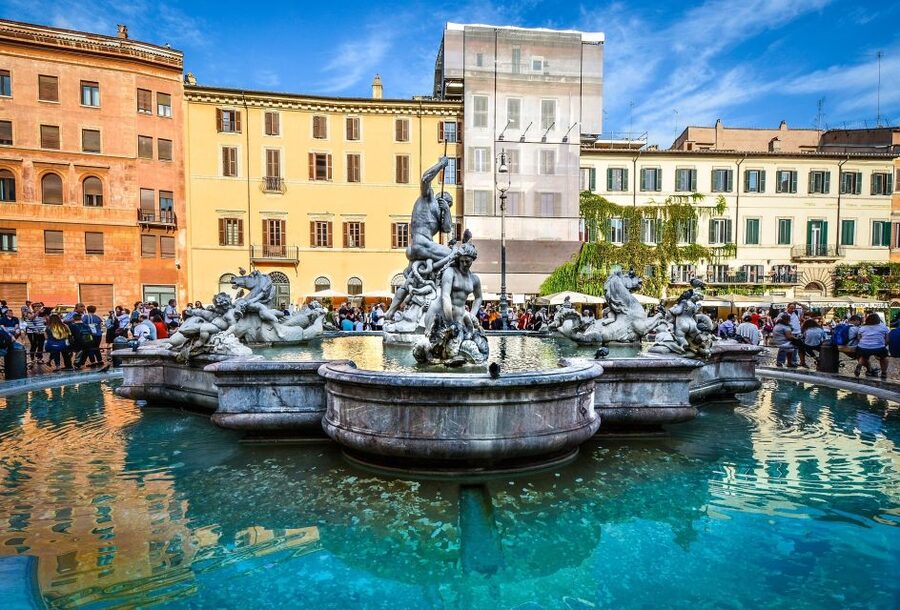
The tour begins at Piazza Navona, one of the most attractive squares in central Rome. Its long, oval shape is not accidental. The piazza follows the outline of the Stadium of Domitian, built in the first century AD for athletic contests.
Before the fountains and Baroque façades, this was a sports venue. Competitors took part in foot races, wrestling, boxing, and other contests. For a short period after fire damaged the Colosseum in AD 217, the stadium also hosted gladiator shows.
Above ground, your guide points out the square’s three fountains, including Bernini’s Fontana dei Quattro Fiumi at the center. The fountain dates from 1651 and represents four great rivers through sculpted figures and dramatic stonework.
This opening explanation helps you read the piazza properly. The fountains and churches belong to later Rome, but the shape beneath your feet comes from the ancient stadium.
You then walk about ten minutes to the underground section of the Stadium of Domitian. The visit lasts around 30 minutes. Here, you see archaeological remains below the current street level and get a clearer sense of the stadium’s scale and purpose.
This is one of the tour’s strongest stops because it changes your view of Piazza Navona. Afterward, the square is no longer just a place for fountains, restaurants, and photographs. You understand that the entire public space follows the footprint of an ancient arena.
The underground rooms may feel cooler than the streets, which makes this a useful stop during Rome’s hot months. Still, the area is not a huge cavern or a full reconstruction. You are looking at remains and interpreting them with help from the guide. If you want a long, extensive underground excavation, this visit may feel brief.
The Pantheon, where Roman engineering meets religious history
From Piazza Navona, the route continues toward the Pantheon. The walk gives your guide time to connect ancient Rome with the streets you are crossing. This part is above ground, and you should expect pedestrian traffic, uneven pavement, and stops to keep the group together.
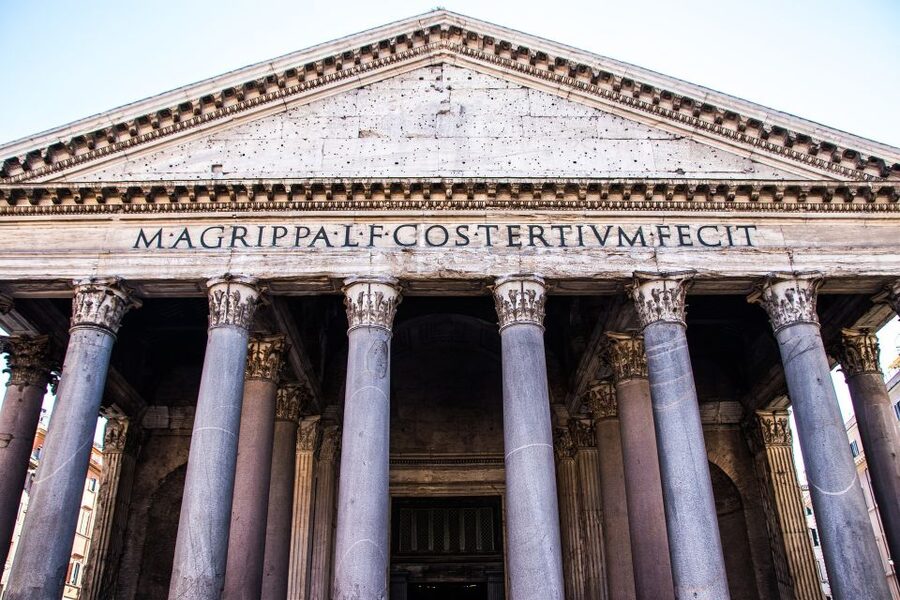
The Pantheon is the tour’s most famous building. Its huge concrete dome, broad portico, and unusual interior make it one of Rome’s essential sights. The building began as a temple and was later converted into a Christian church, which is why the site remains an active place of worship.
The guided visit usually lasts around 45 minutes. That is enough time for a proper explanation of the building rather than a quick glance upward and a photograph.
A guide can help you notice the details that are easy to miss. The dome draws the eye, but the building’s survival, structure, and changing religious use are just as important. The tour also includes Roman legends connected with the area. One story says that Romulus, Rome’s founder, was taken into the heavens by an eagle after his death.
The Pantheon visit is a real advantage for anyone who prefers context to independent wandering. Several guides, including Maria, Caterina, and Giuliana, are praised for answering questions and explaining the city through different periods.
There is one practical catch. The Pantheon is a church, so you must cover your shoulders and knees. Shorts, short skirts, and sleeveless shirts are not allowed for this tour. Wear clothing that meets the rule from the start, rather than hoping to borrow a covering at the entrance.
Religious functions can also limit access on some days. Restoration work connected with the Jubilee may change routes or affect some monuments. Check the messages sent before your visit so you know about any last-minute adjustment.
Trevi Fountain and the coin tradition
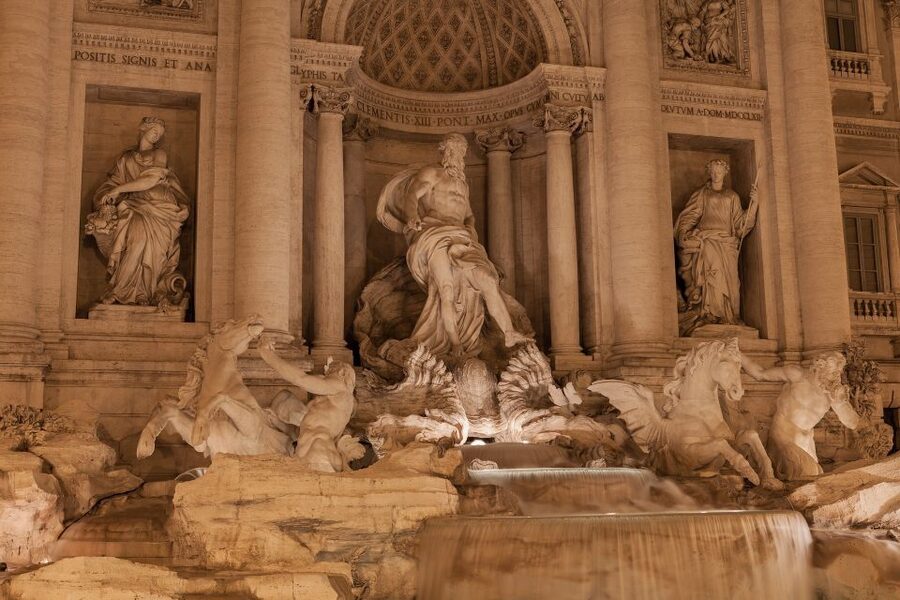
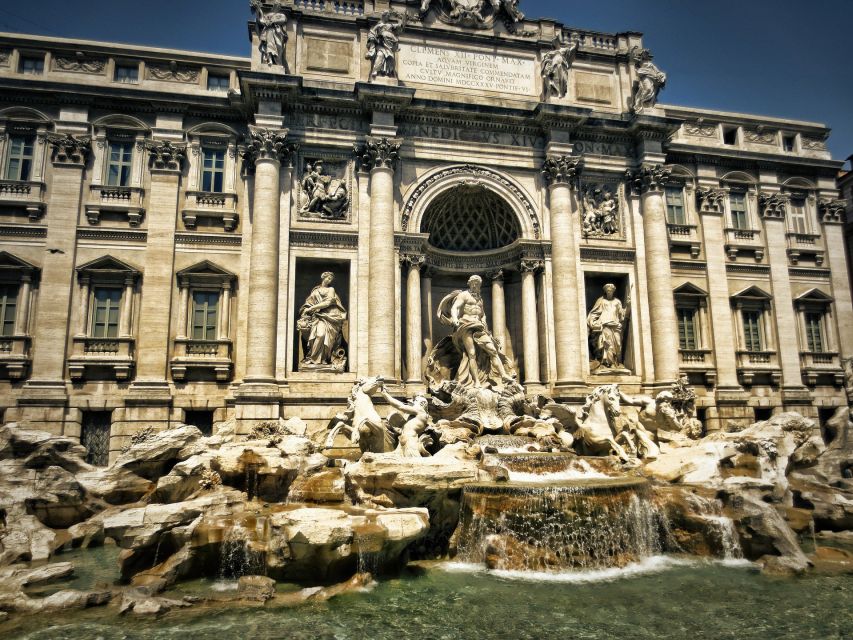
The walk continues toward the Trevi Fountain, one of Rome’s most photographed landmarks. The fountain is a natural place for a pause, and the tour includes about 20 minutes for explanation and photographs.
You will have a chance to follow the familiar tradition of throwing a coin into the water. The custom is usually linked with the hope of returning to Rome, though the guide can add local context and explain how the fountain connects with the ancient Aqua Virgo water supply.
Trevi can be crowded, and this is not a quiet stop. The fountain is large and theatrical, but the surrounding streets are tight and often packed. A group tour needs to stay organized here. One useful suggestion from past participants was for the guide to carry a more visible flag or marker, since it can be hard to spot a guide in a crowd.
That point is worth keeping in mind. The tour company may contact you if the meeting point changes, and one past group had some confusion at the start before the guide called with updated instructions. Read your messages carefully and arrive with the exact meeting details in hand.
The fountain itself is not the underground part of the visit. Its value here is as a link between the city you see and the water system you are about to visit below it.
More underground Rome tours:
- Colosseum: Underground and Ancient Rome Tour
★ 4.7 · 12,691 reviews - Rome: Crypts and Catacombs Underground Tour with Transfers
★ 4.6 · 5,341 reviews - Expert Guided Tour of Colosseum Arena OR Underground, and Forum
★ 4.5 · 5,041 reviews - Rome: Colosseum Underground Small Group Guided Tour
★ 4.7 · 4,844 reviews
Vicus Caprarius, the City of Water
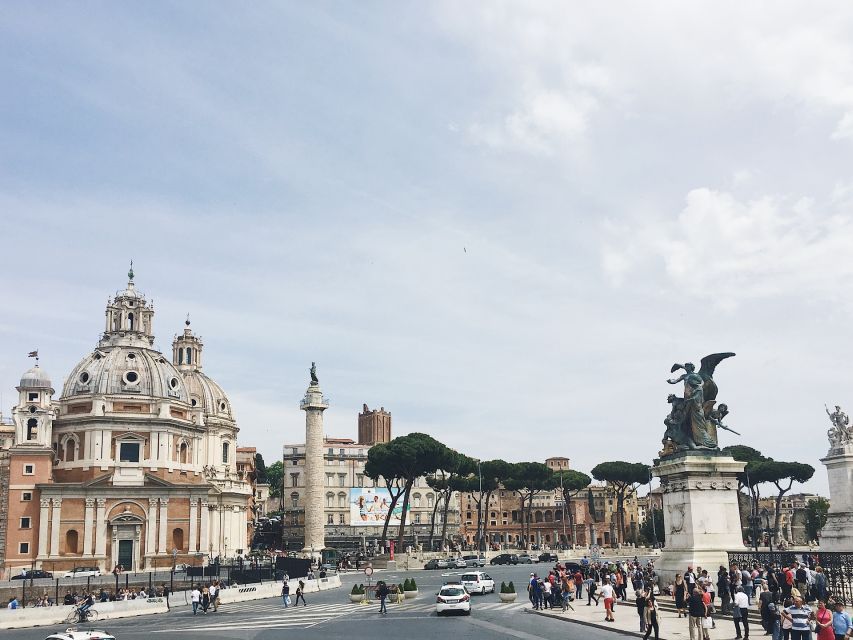
Near Trevi Fountain, you enter Vicus Caprarius, also called the City of Water. This archaeological area is the tour’s lesser-known highlight.
The underground complex contains remains from several periods, including an imperial-era domus and the castellum aquae of the Aqua Virgo aqueduct. A castellum aquae was a distribution point where water could be directed into the wider city network.
The site is especially interesting because it shows that Roman water engineering was not an abstract feat far outside the city. Water was carried, stored, and distributed within the urban fabric. The same aqueduct tradition is tied to the water that feeds the Trevi Fountain.
You may also see a mix of ancient walls, water channels, and later building layers. The point is not just that the remains are old. It is that they were reused and covered as Rome changed. The underground rooms show how a modern city can sit directly over Roman domestic and public life.
This stop lasts around 30 minutes. That is long enough to understand the layout, but not so long that the tour becomes a specialist archaeological visit. I like that balance. You get a clear story without spending the entire afternoon in a basement.
The cooler underground temperature is another practical benefit in summer. After walking through sunny streets, the change can be welcome. Bring comfortable shoes, though. The tour involves several walking sections, and underground archaeological areas may have uneven surfaces.
The order of the final stops can vary. The published route places Vicus Caprarius before the finish at Trevi Fountain, while the description presents the fountain before the underground visit. Access times and site conditions can affect the sequence. The important point is that both stops are part of the experience.
The guides are the real value
The strongest feature is the quality of the guiding. Most guides are archaeologists, and the repeated praise focuses on their ability to explain rather than simply lead.
Amanda is described as enthusiastic, funny, and deeply engaged with Rome. Francesca receives praise for friendly, patient explanations, especially at the Pantheon and the underground sites. Alex, also known as Alessandra, combines archaeology training with memories of growing up locally. Maria is praised for making the group feel at ease and for answering questions with passion.
Other named guides include Sabrina, Gloria, Caterina, Eleonora, Karolina, Martha, Giuliana, and Maria Rosella. The experience can depend on who leads your group, but the overall rating of 4.7 from 133 reviews points to a strong pattern of satisfaction.
I would choose this tour for the guide as much as for the sites. A good explanation turns a set of old walls into a story about housing, sport, water, religion, and city growth. Without that help, Vicus Caprarius in particular could feel like a confusing set of stones.
The group may be small, but the exact size is not given. Some participants have had a private or nearly private experience. That cannot be guaranteed, so book with the expectation of a guided group rather than a private tour.
On larger groups, hearing can be an issue in Rome’s noisy streets. One past participant appreciated the use of a microphone and headphones. If your guide offers that system, take it. It makes a real difference near traffic, fountains, and crowded squares.
Walking, timing, and comfort
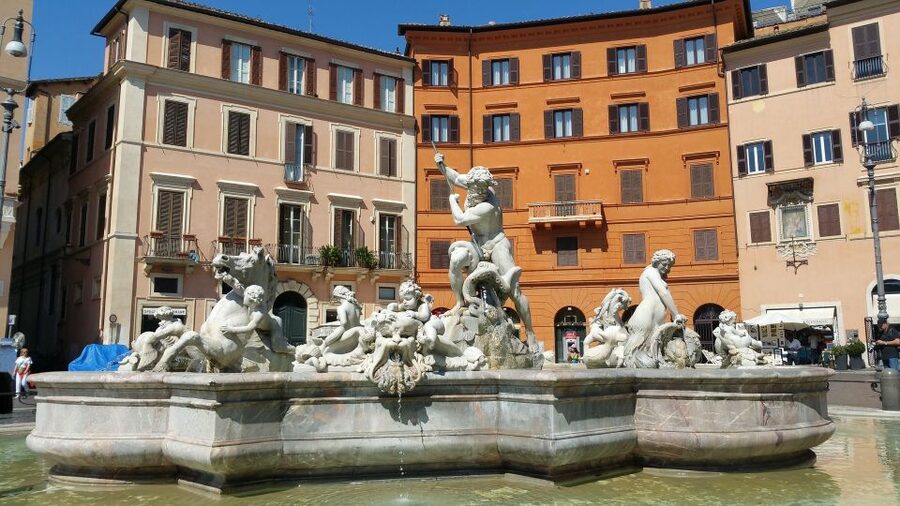
The tour lasts three hours and includes walking between the sites. The route is central, but the streets can be crowded and the pavement uneven. Comfortable shoes are essential.
This is a good morning activity, especially in summer. The underground areas offer a break from the heat, and an earlier start may mean lighter crowds at some stops. The exact start time depends on availability.
Allow a little flexibility at the beginning. There are two possible starting options, listed around the Fiumi Fountain and the National Academy of San Luca, and the meeting point can vary with the option you book. Check the final instructions rather than relying only on a map pin.
The tour finishes at Trevi Fountain. That makes it easy to continue toward other central sights, but it also means you should plan your next stop nearby if you want to avoid extra backtracking.
Rest stops and toilet breaks may be possible, but they are not presented as a fixed part of the route. If you need one, tell the guide early, especially on a hot day.
Value, cancellation, and who should book

No tour price is provided here, so I cannot judge the exact cost. The value depends on how much the operator charges, but the combination is stronger than a basic piazza walk: you receive a guided visit to two underground archaeological sites, a Pantheon visit, and historical explanations across three hours.
I consider it good value for someone who wants a connected story of Rome rather than isolated monument visits. The archaeological sites are small enough that a guide adds real value. The Pantheon visit also saves you from seeing the building without understanding its purpose or changes over time.
The tour is less suitable if you want a fully underground experience, a slow photographic walk, or a route with little outdoor walking. It is also not suitable for wheelchair users, and the Pantheon clothing rules are strict.
Free cancellation up to 24 hours before the start and reserve-now, pay-later booking make it easier to fit into a changing schedule. Those policies are useful, but the main reason to choose the tour is the content and guiding.
Should you book the underground Rome tour?
Book it if you have already seen the major Roman sights and want to understand what lies beneath them. It is also a smart choice for a first visit if you prefer a guide who can connect famous monuments with lesser-known archaeological remains.
I would especially recommend it to history-minded visitors, couples, families with older children, and anyone visiting Rome in hot weather. The underground stops are cool, unusual, and compact, while the outdoor sections keep the tour tied to the living city.
Skip it if the word underground makes you expect hours in tunnels. You will spend a good share of the tour above ground, walking between sites. But if you want Rome’s layers explained by an archaeology-trained guide, this route gives you a useful mix of famous sights, local legends, ancient water engineering, and places you might otherwise miss.
FAQ
How long does the Rome underground and piazzas tour last?
The tour lasts three hours.
Which languages are available?
The live guide service is available in Italian, English, and Spanish.
Where does the tour start?
There are two possible starting options around the Fiumi Fountain and the National Academy of San Luca. The meeting point may vary depending on the option booked, so check your final instructions.
Where does the tour finish?
The tour finishes at Trevi Fountain.
Does the tour include the Pantheon?
Yes. The route includes a guided visit to the Pantheon, usually lasting about 45 minutes.
Do I need to follow a dress code?
Yes. Since the Pantheon is an active church, your shoulders and knees must be covered. Shorts, short skirts, and sleeveless shirts are not allowed.
What underground sites are included?
The tour includes the underground Stadium of Domitian beneath Piazza Navona and Vicus Caprarius, also called the City of Water, near Trevi Fountain.
What can I see at Vicus Caprarius?
The archaeological area contains remains of an imperial-era domus and the castellum aquae associated with the Aqua Virgo aqueduct.
Is the tour suitable for wheelchair users?
No. The activity is not suitable for wheelchair users.
What should I bring?
Bring comfortable shoes for the walking sections. You should also dress appropriately for entry to the Pantheon.
Can I cancel the booking?
You can cancel up to 24 hours in advance for a full refund.
Can I reserve now and pay later?
Yes. The reserve-now, pay-later option lets you hold a place without paying at the time of booking.
Newest Rome tours we have reviewed
- Private TikTok Video Making in Rome★ 5.0 · 7 reviews
- Assisi, Orvieto and Civita di Bagnoregio Full Day Tour from Rome★ 4.5 · 45 reviews
- Assisi & Saint Francis Path Tour from Rome★ 5.0 · 45 reviews
- Assisi and Cascia Private Day Tour from Rome with Lunch★ 5.0 · 10 reviews
- Art Class in the center of Rome!★ 4.0 · 4 reviews
- Art & Craft: Beer Tour with Street Art in Rome★ 4.5 · 6 reviews
- Arrival in Rome: Airport Transfer & Exclusive City Introduction★ 5.0 · 3 reviews
- From Rome: Private Day-Tour of Tuscany★ 5.0 · 16 reviews
Underground Rome Tours, compared.
Colosseum: Underground and Ancient Rome Tour
Read our review →
Crypts and Catacombs Underground Tour with Transfers
Read our review →
Expert Guided Tour of Colosseum Arena OR Underground, and Forum
Read our review →
Colosseum Underground Small Group Guided Tour
Read our review →
St. Peter’s Basilica, Dome Climb, and Underground Tour
Read our review →
Colosseum Underground & Ancient Rome Guided Tour
Read our review →
Browse the lists this tour appears in