
Reviewed · ROME SQUARES AND FOUNTAINS TOURS
Rome: Squares and Fountains Walking Guided Tour
Rome’s grandest outdoor art is laid out like a treasure map, and this tour follows a fine section of it. You begin high above the Spanish Steps, pause at the Trevi Fountain, study Bernini’s work in Piazza Navona, and finish beside Castel Sant’Angelo. I like the way the route joins famous sights with smaller streets and stories you could easily miss alone.
I especially like the art-history and archaeology focus, which gives the fountains and churches more meaning than a quick photo stop. I also like the human touch reported by guests who had Sabrina or Martin as guides: both are praised for energy, clear storytelling, and keeping teenagers engaged. The main consideration is the walking. Hills, cobbled lanes, heat, and a 2.5-hour route make this a poor fit if you have mobility problems or want a relaxed, seated tour.
Key points to know before you book
- A strong first look at central Rome: The route connects the Spanish Steps, Trevi Fountain, Pantheon, Piazza Navona, and Castel Sant’Angelo in one continuous walk.
- Guides who bring the art to life: Sabrina is praised for enthusiasm and personal attention, while Martin is noted for linking Roman art to wider Italian history.
- A small-group feel with a private option: The experience is designed to feel personal, and private groups can be arranged.
- A gelato pause is built in: You have time to taste gelato during the walk, a welcome break on a warm Roman day.
- The route ends at a memorable viewpoint: Ponte Sant’Angelo gives you views toward Castel Sant’Angelo and St. Peter’s Basilica.
- Plan for real walking: Comfortable shoes, sunglasses, and a sun hat are sensible. This tour is not wheelchair accessible.
Why this route works for a first look at Rome
Rome can be hard to read at street level. One lane leads to a fountain, a fountain leads to a church, and a church may conceal a story that stretches from ancient emperors to Baroque artists. A good guide helps you connect those pieces instead of treating each stop as an isolated photo opportunity.
This route does that well. It begins at Trinità dei Monti, above the Spanish Steps, then moves through the historic center toward the Tiber. In 2.5 hours, you see some of the city’s most famous sights without spending the whole day inside a museum or waiting in admission lines.
The route is best understood as an outdoor introduction to Rome’s Renaissance and Baroque center. You will hear about artists, architects, myths, monuments, and the political and religious forces that shaped the city. It is not a deep interior visit to every monument, so book it for orientation and interpretation rather than for a long look inside each church.
At $85 per person, the price is not cheap for a walking tour. The value depends on what you want from your guide. If you only need directions between the major sights, you can walk this area yourself. If you want the stories, visual details, and a route that ties the monuments together, the fee is easier to justify, particularly if your guide is Sabrina or Martin and your group stays intimate.
More squares and fountains walks in Rome:
- Rome: Pantheon, Trevi Fountain & Roman Squares Guided Tour
★ 4.7 · 386 reviews - Rome: Fountains and Squares Small-Group Walking Tour
★ 4.7 · 335 reviews - Rome: Immersive Underground and Piazzas Tour
★ 4.7 · 133 reviews
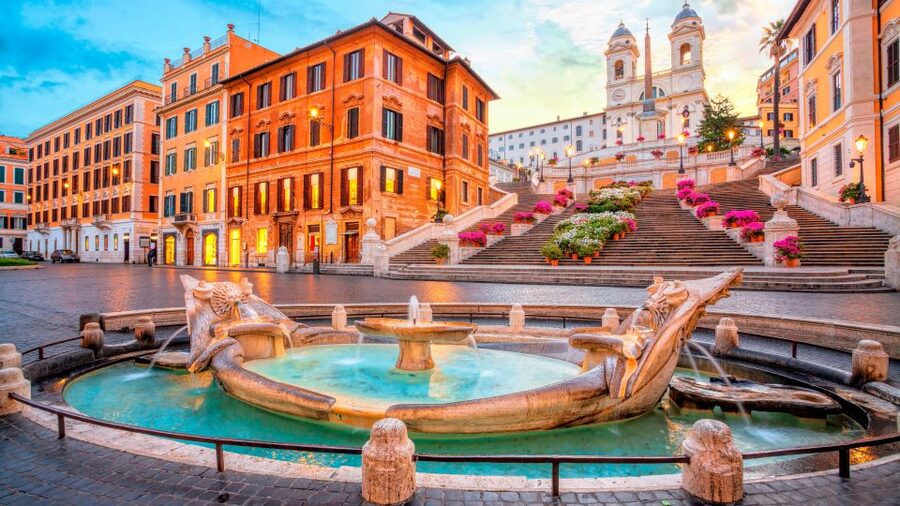
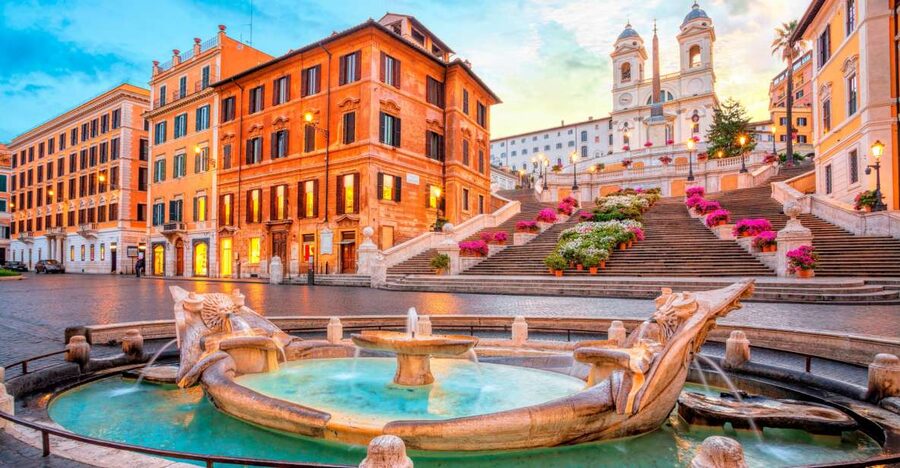
Starting above the Spanish Steps at Trinità dei Monti
Your meeting point is Trinità dei Monti, above the Spanish Steps. Arrive at least 15 minutes before departure. That matters here because the upper terrace is a busy meeting area, and you will want time to locate your guide before the walking begins.
The opening view gives you a useful orientation to Rome. From this height, you can look across the historic center before descending toward Piazza di Spagna. The guide begins with the church of Santissima Trinità dei Monti and the surrounding view, then leads you to the Spanish Steps below.
The stop at the steps is short, about 10 minutes. That is enough for photographs and an explanation of the setting, but not a long visit. The steps are a public landmark rather than a quiet monument, so expect other people, street activity, and plenty of photo-taking.
This opening section also sets the pace. You start on higher ground and walk downhill, but the rest of the route includes uneven paving and extended time on your feet. Wear shoes with good support rather than thin sandals or stiff new footwear.
Trevi Fountain and the stories behind the marble
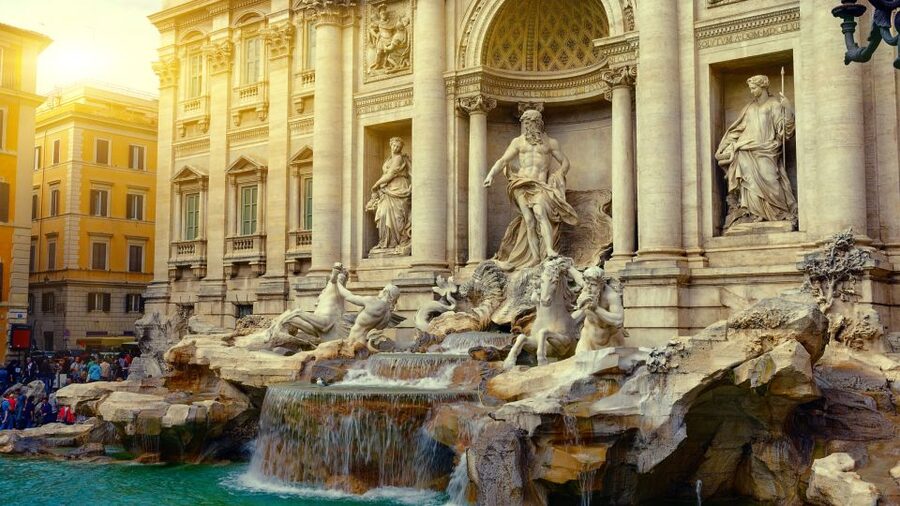
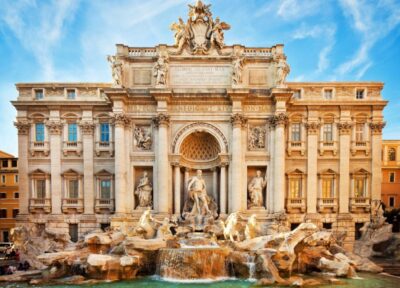
From Piazza di Spagna, the route heads toward the Trevi Fountain. The walk through the streets is part of the experience. Rome’s center is full of grand façades, narrow passages, and sudden openings, and the guide can point out details that disappear when you are focused only on the next major landmark.
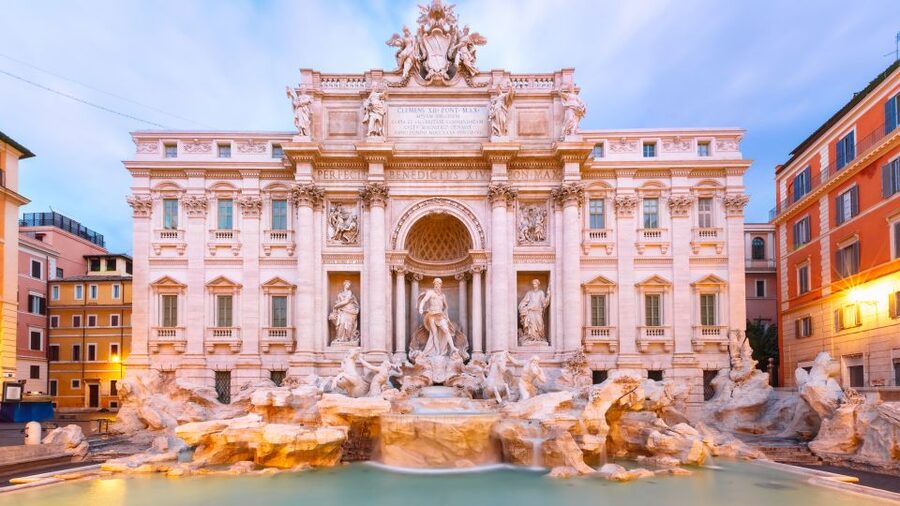
The Trevi stop lasts about 10 minutes, with time for a break, photographs, and the legends connected to the fountain. You will hear why this monument has become one of Rome’s essential rituals and how myth has helped shape its fame.
The fountain is one of those places where expectations need managing. It is beautiful, but it is also one of the most crowded points in central Rome. You may not get a peaceful, solitary view. A guide is useful here because you can pay attention to the sculpture and story instead of trying to work out where to stand.
The tour does not list a dedicated interior visit or a long private viewing. Think of Trevi as a guided outdoor stop. You get context, a chance to look closely, and a short pause before continuing.
The Pantheon, where ancient Rome meets the center
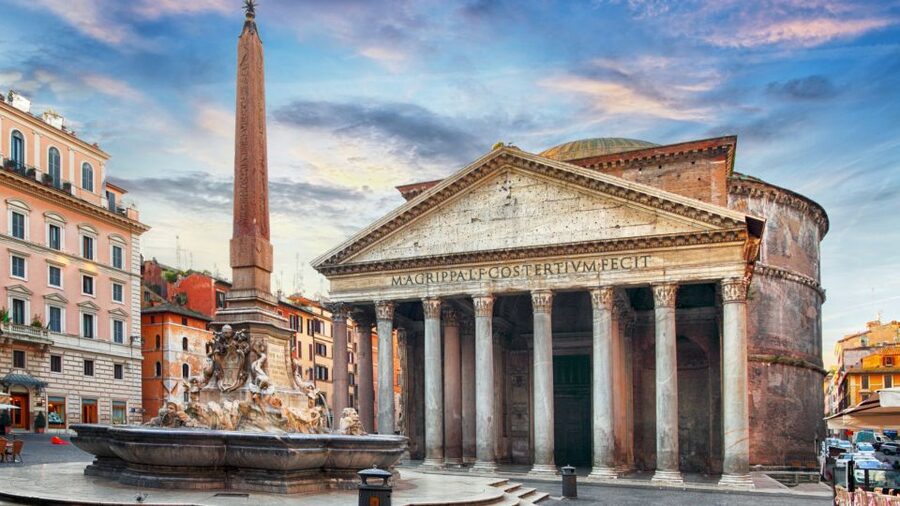
The next major stop is the Pantheon. Built as a temple dedicated to all the Olympian gods, it remains one of Rome’s most striking ancient structures. Its dome was the largest in the world from ancient times, an impressive fact, but the guide can make the building more understandable than a statistic alone.
The Pantheon is also a good place to see how Rome layers different periods in one neighborhood. The ancient monument sits within a later urban setting, close to cafés, shops, churches, and public squares. You are not simply looking at an old building. You are seeing how the city continued to use and reinterpret its past.
The planned stop is around 10 minutes. That makes this tour a useful introduction, but not a substitute for returning later if you want a slower visit. If the Pantheon is high on your list, you may want to come back independently with extra time.
I like the sequence here. Trevi gives you spectacle and legend. The Pantheon gives you engineering and ancient purpose. The tour keeps moving, but each stop offers a different way to understand Rome.
More walking tours in Rome:
- Rome: Trastevere & Campo de Fiori Street Food Walking Tour
★ 4.9 · 2,768 reviews - Rome: Paranormal Night Walking Tour & Secret Backstreets
★ 4.9 · 1,921 reviews - Rome by Night Walking Tour – Legends & Criminal Stories
★ 4.5 · 1,003 reviews - Rome: Guided City Center Evening Sightseeing Walking Tour
★ 4.4 · 953 reviews
Piazza Navona and Bernini’s Fountain of the Four Rivers
Piazza Navona is the centerpiece of the walk. The long, open square was used for theatrical events and festivals, and its shape reflects an earlier stadium. Today, it feels like a grand outdoor room framed by Baroque buildings, fountains, cafés, and artists.
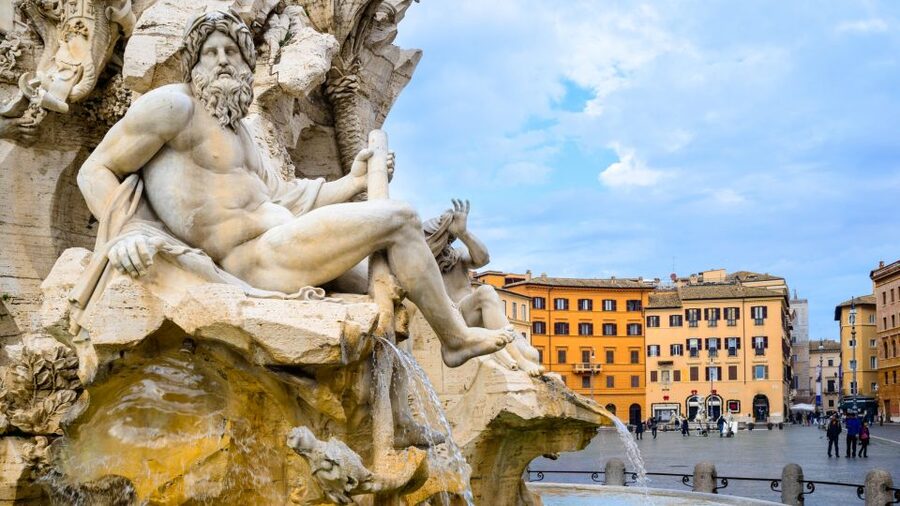
The guide spends about 15 minutes in the square, with a further stop at Bernini’s Fountain of the Four Rivers. This is where the tour’s art focus pays off. The fountain is not just a decorative centerpiece. Its figures, animals, rocks, and water were arranged to create movement and drama from several angles.
You will also see the church of Sant’Agnese in Agone, linked with Borromini. The church and fountain create a useful lesson in Baroque Rome, where architecture, sculpture, water, religion, and public space worked together to impress the eye.
Piazza Navona is often called Rome’s most elegant Baroque square, and it is easy to understand why. Still, it is not a quiet museum. You may find crowds, vendors, and restaurant prices aimed at the passing visitor. Use the guide’s explanation to look beyond the commercial surface, then take your own photographs.
The 15-minute square stop and 10-minute fountain stop are enough to learn the main story, but they will feel brief if you want to study every sculptural detail. That is a tradeoff built into the route’s broad coverage.
A gelato break in the middle of the walk
A gelato stop gives the tour a welcome change of rhythm. Food and drinks are not included, but you have time to taste one of Rome’s better ice creams during the walk.
This is a small detail, but it matters. A long walking tour can turn into a march from monument to monument. A short pause lets you sit or slow down, refresh yourself, and ask the guide questions. It also gives families a natural break, especially since Sabrina has been praised for keeping adolescents involved.
Do not treat the gelato stop as a full meal. The experience remains a walking tour, and the supplied details do not specify the shop, price, or the length of the break. Carry water, particularly in summer, and budget separately for anything you buy.
Rome’s smaller lanes and the walk to the Tiber
After Piazza Navona, the route leaves the broad square and moves through narrower streets toward the river. This is one of the better reasons to choose a guide. The famous monuments are easy to locate on a map, but the connections between them are less obvious.
You get a sense of Rome beyond its postcard views: old walls, side streets, changing building fronts, and historical traces tucked into the ordinary city. The route description calls this a city within the city, which is a fair way to think about the walk. The interest comes from small details and context rather than one single spectacular sight.
The pace may suit you if you prefer a steady introduction to the center. It may frustrate you if you want long stops at each landmark. With only 2.5 hours, the guide has to keep the group moving.
Groups of more than eight receive headsets, so you should be able to hear the guide even when the street is noisy. English and Italian tours are available. A private group option is also available if you want more control over the pace or a more personal format.
Ponte Sant’Angelo and Castel Sant’Angelo
The tour ends at Ponte Sant’Angelo, a bridge built in the second century AD. The bridge leads the eye toward Castel Sant’Angelo, one of Rome’s most recognizable buildings.
Castel Sant’Angelo began as Hadrian’s tomb and later became a fortress for the popes. That change tells you a great deal about Rome. Buildings were reused, defended, adapted, and given new meanings as power shifted through the centuries.
You do not enter the castle on this tour. Instead, you stop around the bridge and enjoy views of the fortress, the river, and, along the way, St. Peter’s Basilica. The final stop is about 15 minutes, with the magical atmosphere of the bridge providing a natural finish.
I like this ending because it feels more satisfying than returning to the same starting point. You finish beside a major monument with a clear sense of where you are in Rome. From here, you can continue exploring independently or use the area as a practical point for the rest of your day.
How the guides shape the experience
The guide can make or break a walking tour, and the strongest praise here centers on personal energy and storytelling. Sabrina is repeatedly singled out for passion, warmth, and an ability to keep both adults and teenagers interested. She also helps with photographs, which is useful when you want a group picture without handing your phone to a stranger.
Martin is praised for placing Rome’s art in the wider story of Italy. That approach suits this route, since fountains and churches make more sense when you understand the rivalry, religion, and artistic ambition behind them.
The guide is described as an expert in art history and archaeology, but the useful question is how that expertise reaches you. On this walk, it is applied to visible things: sculpture, domes, churches, bridges, fountains, and the changing uses of Rome’s monuments.
A private group is available. If you are traveling with family or friends and want more time for questions, this may be worth considering. A shared small-group format should offer better value if you mainly want a lively introduction and a set route.
Who should book this walk
I would recommend this tour to a first-time visitor who wants to get bearings in central Rome quickly. It also works well near the end of a longer stay, when you can use the walk to connect places and ideas you have encountered elsewhere.
Families may find it a good choice, especially with an engaging guide such as Sabrina. The mix of fountains, myths, churches, bridges, and gelato gives younger visitors several different points of interest.
Art lovers will appreciate the focus on Bernini, Borromini, Baroque design, and Renaissance Rome. History fans will enjoy the jump from ancient temples to papal fortresses. You do not need specialist knowledge beforehand.
This is not a good choice if you have back problems, difficulty walking, or a mobility impairment. It is not wheelchair accessible, and the route includes a moderate amount of walking. You should also reconsider it if you dislike busy public squares or prefer long, quiet visits inside monuments.
Bring comfortable shoes, sunglasses, and a sun hat. Casual clothing is suitable. Since food and drinks are not included, carry water and extra money for gelato or other purchases.
Is the $85 price fair?
At $85 per person, you are paying mainly for the guide’s interpretation, not for admissions or transportation. Hotel pickup and drop-off are not included, and this is a walking tour rather than a vehicle-based sightseeing trip.
The price makes the most sense if your guide gives you more than dates and names. Sabrina’s ability to engage teenagers, take photographs, and point out places you might otherwise pass suggests the kind of personal service that can justify the cost. Martin’s art and history connections offer a different reason to book.
If you are comfortable navigating Rome on your own, you can visit the same outdoor sights for less. But you will need to build the route, research the monuments, and manage the transitions yourself. For a first day in Rome, the time saved and the added context may make the fee worthwhile.
Free cancellation up to 24 hours before departure and the reserve-now, pay-later option add flexibility. Check the available starting times before booking, since the tour lasts 2.5 hours and timing can affect heat, crowds, and the rest of your day.
Should you book Rome’s Squares and Fountains walk?
Book it if you want a guided introduction to Rome’s central monuments, prefer walking to bus sightseeing, and care about art, architecture, and stories. The strongest reasons are the route’s range, the expert guide format, and the chance to see both famous squares and less obvious streets in one morning or afternoon.
Skip it if you need step-free access, cannot manage moderate walking, or want extended interior visits. You should also skip it if your main aim is simply to photograph the Trevi Fountain and Pantheon without commentary.
For most able-bodied first-time visitors, I would consider it a useful orientation tour. Ask for Sabrina or Martin if guide choice is possible, arrive 15 minutes early, wear sensible shoes, and keep the rest of your day flexible at the final stop by Castel Sant’Angelo.
FAQ
How long does the tour last?
The walking tour lasts 2.5 hours.
Where does the tour begin?
It begins at Trinità dei Monti, above the Spanish Steps.
Where does the tour end?
The tour ends at Piazza di Ponte Sant’Angelo, in front of Castel Sant’Angelo.
Which languages are available?
The tour is available in English and Italian.
Is gelato included in the price?
No. You have time to taste gelato during the walk, but food and drinks are not included unless specifically stated.
Is the tour wheelchair accessible?
No. The tour is not wheelchair accessible and is not suitable for people with mobility impairments or difficulty walking.
Newest Rome tours we have reviewed
- Private TikTok Video Making in Rome★ 5.0 · 7 reviews
- Assisi, Orvieto and Civita di Bagnoregio Full Day Tour from Rome★ 4.5 · 45 reviews
- Assisi & Saint Francis Path Tour from Rome★ 5.0 · 45 reviews
- Assisi and Cascia Private Day Tour from Rome with Lunch★ 5.0 · 10 reviews
- Art Class in the center of Rome!★ 4.0 · 4 reviews
- Art & Craft: Beer Tour with Street Art in Rome★ 4.5 · 6 reviews
- Arrival in Rome: Airport Transfer & Exclusive City Introduction★ 5.0 · 3 reviews
- From Rome: Private Day-Tour of Tuscany★ 5.0 · 16 reviews
Rome Squares and Fountains Tours, compared.
Pantheon, Trevi Fountain & Roman Squares Guided Tour
Read our review →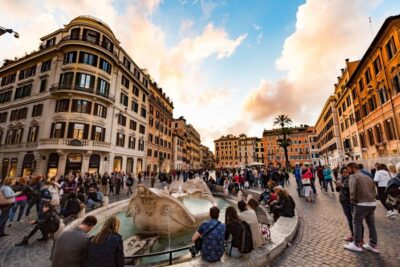
Fountains and Squares of Rome 2-Hour Walking Tour
Read our review →

Early Morning Sightseeing and Piazzas with Breakfast
Read our review →Browse the lists this tour appears in