
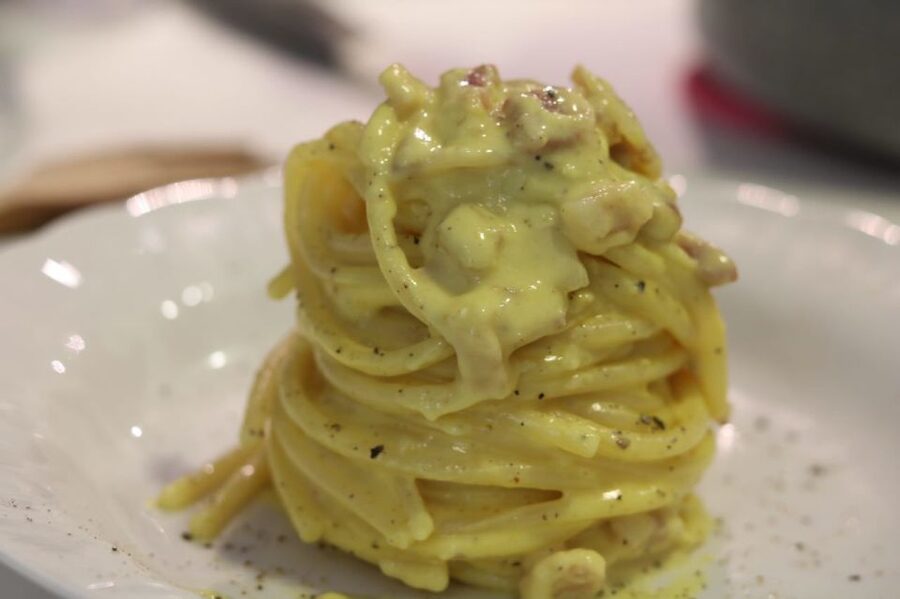
Reviewed · ROME
Testaccio: Home Cooking Cacio e Pepe, Amatriciana, Carbonara
Rome’s pasta lesson takes place in a real home in Testaccio, the Roman neighborhood where food feels like daily life rather than a staged show. With Milvia and Andrea guiding you, you’ll make pasta from scratch, prepare cacio e pepe, amatriciana, and carbonara, then sit down together for the meal.
I like the small group of up to 10 and the generous format: three pasta courses, dessert, wine, and coffee. I also like that you leave with recipes and practical tips, not just a full stomach. The main consideration is the private-home setting, which includes a dog and cats, so this is not a good choice if you have serious animal allergies.
Key points to know
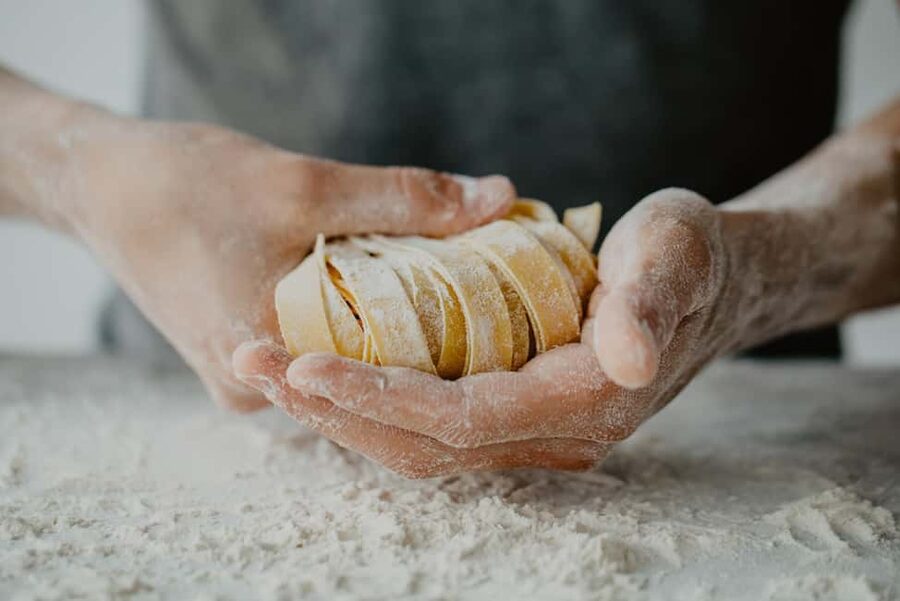
- Three Roman sauces in one class: Learn the methods behind cacio e pepe, amatriciana, and carbonara.
- A home kitchen in Testaccio: Milvia and Andrea host you in a warm, informal setting rather than a formal cooking school.
- Dinner is part of the lesson: You eat three pasta dishes, followed by homemade dessert, wine, and Italian coffee.
- Useful take-home skills: Recipe notes and clear explanations help you repeat the dishes at home.
- Dietary options are available: Vegetarian, vegan, and gluten-free versions can be arranged.
- Small and social: The group is limited to 10, with instruction in English or Italian.
Why Testaccio is the right neighborhood for Roman pasta
Testaccio is a strong match for a food-focused activity. It is known as one of Rome’s most traditional food neighborhoods, and the setting helps the lesson feel connected to ordinary Roman life. You are not simply watching a chef perform in a restaurant kitchen. You are entering a local home and learning how familiar dishes are made for family and friends.
That distinction matters. Roman pasta is built from a short list of ingredients, so technique carries much of the weight. The cheese must become a smooth sauce rather than a clump. The pork and tomato in amatriciana need balance. Carbonara needs careful handling so the eggs turn creamy without becoming scrambled.
This class gives you time to see those details up close. The hosts explain why each step matters, which is more useful than simply handing you a finished recipe. You can ask questions, work with your hands, and see how small changes affect the final dish.
The meeting point is Via Galvani, 4, Building C, Buzz 11, in Testaccio. Hotel pickup is not included, and local transport tickets are your responsibility, so allow time to reach the address before the start.
More cooking classes in Rome:
- 3 in 1 Cooking Class near Navona: Fettuccine, Ravioli & Tiramisu
★ 5.0 · 7,376 reviews - Rome: Pasta Making Class with Wine, Limoncello, and Dessert
★ 4.9 · 3,177 reviews - Rome: 3-in-1 Fettuccine, Ravioli, and Tiramisu Cooking Class
★ 4.9 · 2,704 reviews
Making pasta from flour, eggs, or water
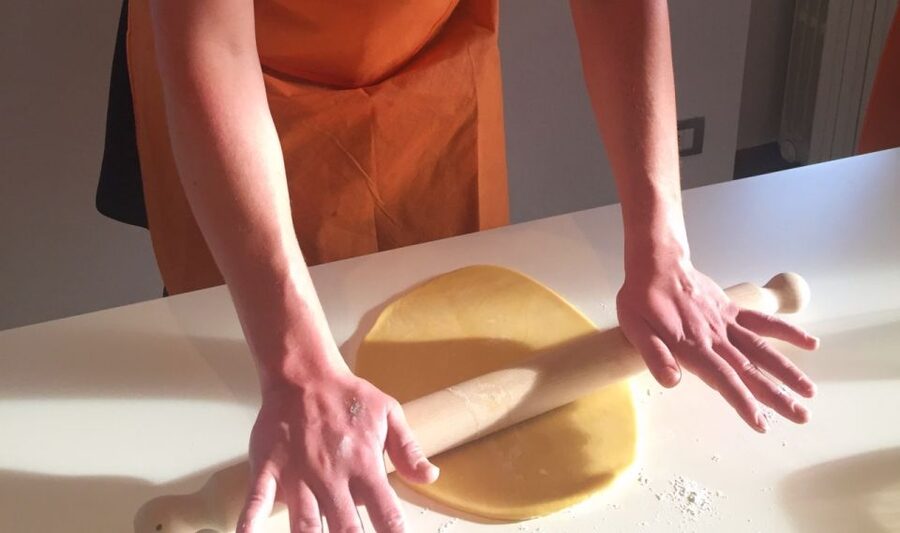
The class begins with fresh pasta. Depending on the recipe, you work with flour, eggs, or water to create the dough. This is a good place to learn the basics because the process looks simple, but the feel of the dough tells you more than a fixed set of instructions.
You’ll learn how to combine the ingredients, work the dough, and prepare it for cooking. The hosts focus on the practical clues that help you get better results: how the dough should feel, when it needs more work, and how to avoid common mistakes.
The experience is designed to be hands-on rather than overwhelming. That makes it suitable even if you have never made pasta. It also has enough detail for someone who has tried before but still wants a more reliable method.
Several people who attended with prior pasta-making experience found that they still picked up new tips. That is useful to keep in mind when deciding if the class is only for beginners. It is better understood as a friendly lesson for mixed skill levels.
Cacio e pepe: Rome’s test of restraint
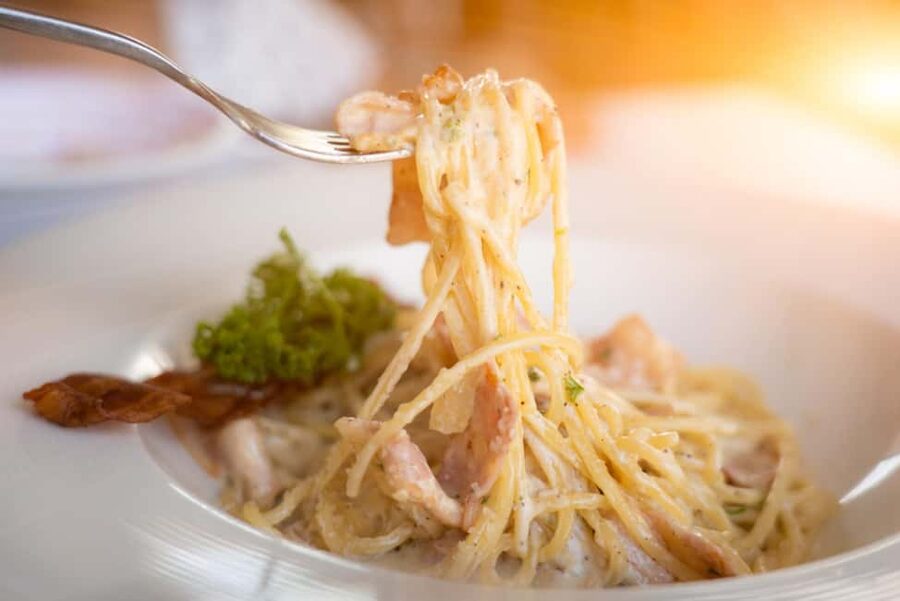
Cacio e pepe uses very few ingredients, which is exactly why it can be difficult. The dish depends on pasta water, cheese, and black pepper coming together in the right way. Add the cheese too quickly or use the wrong amount of water, and the sauce can turn thick and grainy.
Here, you learn how to create the sauce rather than simply taste it. That gives you a better sense of why a restaurant version can be so smooth while a home attempt sometimes fails.
This is likely the most technical of the three sauces, even though it looks the simplest. Pay close attention to the explanations about blending and timing. The lesson is valuable because the method can be used again with other cheese-based pasta dishes.
Amatriciana: tomato, pork, and Roman character
Amatriciana brings a different set of lessons. Its flavor comes from the relationship between tomato and cured pork, with the sauce kept direct and unfussy. You’ll see how a few strong ingredients can produce a full-flavored dish without a long list of additions.
The class presents amatriciana as part of Roman food tradition, not as a generic tomato sauce. That context helps you understand why ingredient choices matter and why the dish has such a clear identity.
You will eat the finished pasta as one of three courses. This is a practical advantage. You taste the result soon after making it, so you can connect the cooking method with the finished flavor.
Same city, a completely different half-day:
- Vatican Museums & Sistine Chapel Tour with Optional Basilica
★ 4.3 · 67,413 reviews - Vatican Museums, Sistine Chapel & St Peter’s Basilica Guided Tour
★ 4.5 · 39,149 reviews - Rome: Colosseum, Palatine Hill and Roman Forum Guided Tour
★ 4.8 · 32,814 reviews - Rome: Guided Tour of Colosseum, Roman Forum & Palatine Hill
★ 4.7 · 27,897 reviews
Carbonara: timing is everything
Carbonara is another dish that rewards careful technique. The sauce needs to be creamy, but the eggs must not overcook. Heat, pasta water, cheese, and timing all need to work together.
You’ll learn the steps in the same kitchen where the dish is prepared for the meal. That gives the lesson a useful rhythm: instruction, cooking, tasting, and a chance to ask questions while the details are fresh.
For many people, carbonara is the dish they most want to master in Rome. This class gives you more than a plate at a trattoria. You learn a method that you can try again at home, using the recipe notes provided afterward.
From cooking lesson to shared Roman dinner
Once the work is done, the class turns into a meal. Your handmade pasta is served in three courses, one for each sauce. This makes the experience feel generous, especially compared with a short demonstration where you taste only a small portion.
The meal is served with wine, and drinks are included. Coffee and a homemade dessert finish the evening. Past menus have included homemade sweets such as chocolate rum balls, although the exact dessert can vary.
The shared table is an important part of the experience. You are not rushed out after the final stir of sauce. The hosts have time to talk with you, and the evening can include stories about food, work, and travel. Several attendees described the atmosphere as similar to cooking with grandparents or visiting family.
That warmth is one of the strongest reasons to book this instead of a standard restaurant meal. You get food, but you also get a social evening built around making and eating it together.
Milvia and Andrea make the home setting work
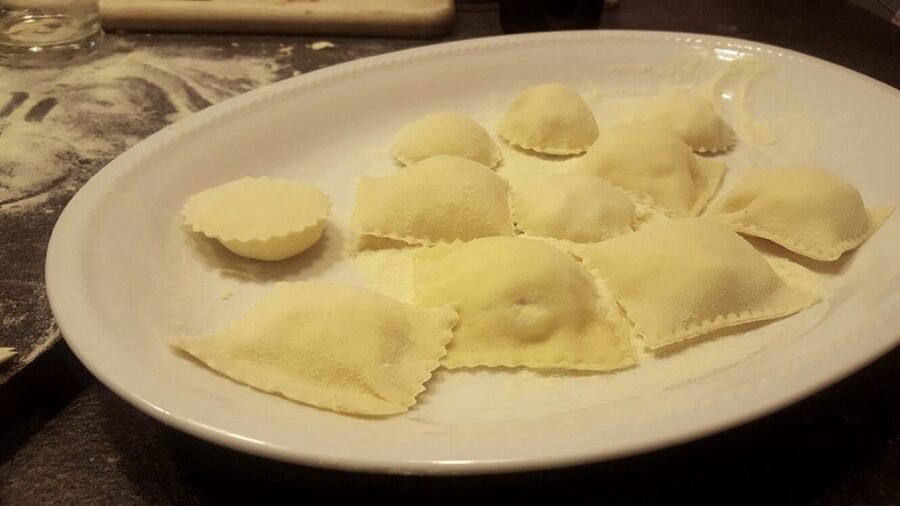
Milvia and Andrea are the hosts named for this experience. Their style is patient and personal, with explanations aimed at helping you understand the reasons behind each step. You can expect instruction in English or Italian.
The home setting is central to the experience. It is cozy and informal, and the kitchen becomes both classroom and dining room. That can feel much more personal than a commercial cooking studio, especially if you enjoy meeting local people and sharing a meal.
The tradeoff is that a private home is less controlled than a purpose-built school. You should not expect a polished restaurant presentation or a large professional kitchen. The appeal is the opposite: a relaxed setting, direct contact with the hosts, and food prepared in a domestic space.
There is also a dog and possibly other household animals. The dog has been a memorable part of the evening for many people, but anyone with a serious allergy to dogs or cats should choose another activity.
What the $105 price includes
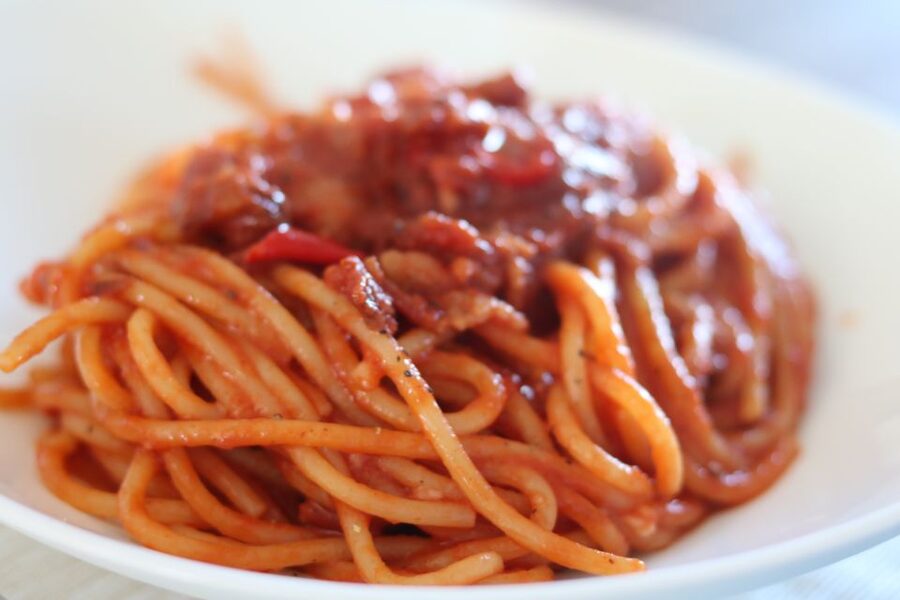
The cost is $105 per person. At first glance, that is more than paying for one bowl of pasta, but this is not a restaurant meal. The price covers a 3.5-hour cooking class, ingredients, three pasta courses, dessert, wine and other drinks, coffee, recipe notes, and personal instruction.
The value is strongest if you want both dinner and a skill you can use later. You are not paying only for the food. You are paying for the time spent learning, the small group, the home setting, and the chance to ask questions as you cook.
It is less compelling if you only want to eat Roman pasta and do not care about the lesson. Rome has many restaurants where you can enjoy these sauces for less money. This activity makes sense when the cooking and social side are part of what you want from the evening.
Unlimited wine is included, according to the activity details. Drink at your own pace, since the main pleasure here is the food and conversation rather than the amount served.
Who will enjoy this class most
I would recommend it to several kinds of visitors:
- First-time pasta makers who want clear instruction.
- Home cooks who already know the basics but want better Roman sauce techniques.
- Couples looking for a relaxed evening activity.
- Families or friends who enjoy sharing a table and working together.
- Food lovers who prefer a local home to a formal cooking school.
- People who want a useful souvenir, since the recipes can be made again at home.
The class may be less suitable for young children who need constant entertainment, though the available information does not set a minimum age. It may also disappoint anyone hoping for a sightseeing tour or a cooking demonstration with no participation. You will be involved in preparing the food.
It is also not the right choice for someone with serious dog or cat allergies. Ask about your dietary needs before booking if you require a strict gluten-free meal or have other food concerns.
Dietary changes and practical planning
Vegetarian, vegan, and gluten-free versions can be arranged using traditional Roman recipes. If you have celiac disease or a serious allergy, contact the provider before you book and make the requirement clear. The available information confirms that gluten-free options are possible, but it does not describe separate facilities or procedures for avoiding cross-contact.
The meeting point is in Testaccio at Via Galvani, 4, Building C, Buzz 11. Since transport is not included, check your route in advance and plan to arrive with enough time to find the building.
The group is limited to 10 people. That is small enough for personal help, but it does mean the date you want may not always be available. The duration is 3.5 hours, so avoid scheduling another major activity immediately afterward.
Cancellation is free up to 24 hours before the start for a full refund. You can also reserve now and pay later, which helps if your Rome plans are still changing.
Should you book this Testaccio pasta experience?
Book it if you want to do more than eat Roman food. The best parts are the home setting, the patient instruction from Milvia and Andrea, the chance to make three famous sauces, and the long meal that follows. The recipes and techniques give the evening value after you leave Rome.
Skip it if you have serious animal allergies, dislike group activities, or want a quick demonstration rather than three and a half hours of cooking and dining. For everyone else, the $105 price is fair for a full meal, drinks, dessert, a small group, and practical pasta skills you can take home.
FAQ
Where does the cooking class take place?
It takes place in a private home at Via Galvani, 4, 00153 Rome, Building C, Buzz 11, in Testaccio.
How long does the experience last?
The class and meal last 3.5 hours.
Which Roman pasta sauces will I learn?
You will learn cacio e pepe, amatriciana, and carbonara.
Is the pasta made from scratch?
Yes. The class includes preparing fresh pasta from flour, eggs, or water, depending on the recipe.
Are food and drinks included?
Yes. The experience includes three pasta courses, dessert, wine, other drinks, and Italian coffee.
Are vegetarian, vegan, or gluten-free options available?
Yes. Vegetarian, vegan, and gluten-free versions can be arranged using traditional Roman recipes.
What languages are spoken?
The instruction is available in English and Italian.
How many people are in the group?
The group is limited to 10 participants.
Are dogs or cats present?
The experience takes place in a home with animals. It is not recommended for people with serious dog or cat allergies.
Newest Rome tours we have reviewed
- Private TikTok Video Making in Rome★ 5.0 · 7 reviews
- Assisi, Orvieto and Civita di Bagnoregio Full Day Tour from Rome★ 4.5 · 45 reviews
- Assisi & Saint Francis Path Tour from Rome★ 5.0 · 45 reviews
- Assisi and Cascia Private Day Tour from Rome with Lunch★ 5.0 · 10 reviews
- Art Class in the center of Rome!★ 4.0 · 4 reviews
- Art & Craft: Beer Tour with Street Art in Rome★ 4.5 · 6 reviews
- Arrival in Rome: Airport Transfer & Exclusive City Introduction★ 5.0 · 3 reviews
- From Rome: Private Day-Tour of Tuscany★ 5.0 · 16 reviews