
Reviewed · CAPITOLINE MUSEUMS TOURS
Rome: Capitoline Museums Percy Jackson Mythology Tour
The most fun part of this Capitoline Museums tour is the bridge between Percy Jackson’s world and the real myths that shaped Rome. Your guide turns statues, gods, monsters, and ancient objects into characters your children already know, then adds the Roman setting that made those stories part of everyday life.
I like two things right away: the tour takes place inside one of Rome’s great art collections, and it is built for a private group, not a noisy crowd. I also like the mix of famous works, ancient games, a gladiator’s tomb, old calendars, and multimedia tools. The main consideration is the price, $243.56 per person, which makes most sense for families who want a focused guide rather than a simple museum visit.
Key points at a glance
- Percy Jackson meets real Roman art: Connect Polyphemus, Medusa, Jupiter, Athena, and Ares with the objects in the Capitoline Museums.
- Michelangelo’s hilltop setting: Begin in Piazza del Campidoglio, one of Rome’s most memorable public spaces.
- Famous works in one visit: See the She Wolf, the portrait of Constantine, the Boy with Thorn, Hercules, Venus, and other major pieces.
- Built for children: A specialist guide uses stories and multimedia tools to keep younger minds involved.
- A private 2.5-hour tour: Your group has a more personal format, with no need to follow a large public tour.
- Good practical setup: Entrance fees, gratuities, and the guide are included, while food, drinks, and transport are not.
Why mythology works so well at the Capitoline Museums
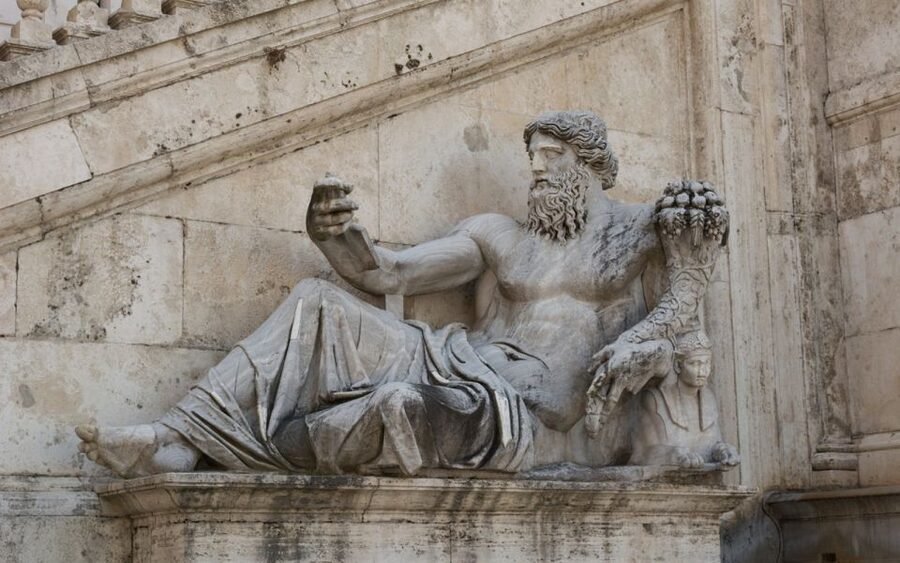
A museum can be a hard sell to children. Rows of marble figures and unfamiliar names do not always hold attention, especially after a long morning in Rome. This tour takes a smarter route by starting with stories your family may already know from Percy Jackson.
The Roman and Greek gods are not treated as distant textbook subjects. Jupiter, Athena, and Ares become recognizable figures with rivalries, powers, and bad habits. Monsters such as Medusa and Polyphemus give the statues a clear purpose. You are not only looking at an object. You are asking what it represents, who feared it, and why the ancient world kept telling its story.
That approach gives the visit a useful rhythm. Your children can begin with the character, then look for the details in the art. A helmet, weapon, animal, pose, or expression may suddenly matter. I like this kind of guided viewing because it gives young visitors a reason to stop in front of a work instead of rushing past it.
The theme also suits the Capitoline Museums better than a generic art tour. This is a collection where gods, heroes, emperors, animals, and legendary figures appear again and again. The myths are not added as decoration. They are a practical key to understanding much of the collection.
More Capitoline Museums tours:
- Rome: Capitoline Museums Experience with Multimedia Video
★ 4.3 · 1,093 reviews - Capitoline Museum Experience with Multimedia Video
★ 4.0 · 98 reviews - Private Tour – Capitoline Museums
★ 5.0 · 90 reviews
Meeting Michelangelo on Capitoline Hill
The tour begins outside, at the statue of Marcus Aurelius riding a horse in the middle of Piazza del Campidoglio. To reach it, you climb the steps from Piazza Ara Coeli to Piazza del Campidoglio.
Allow a little care on the approach. You are walking uphill and meeting in the center of a large square, so keep your group together and arrive with enough time to find the statue. Comfortable shoes are specifically recommended, and they are a sensible choice for both the climb and the museum visit.
The square itself is part of the experience. Capitoline Hill has long been tied to Rome’s political and religious life, and the present design is associated with Michelangelo. The geometric paving and grand buildings give the meeting point a clear sense of place before the museum doors open.
I like that the tour does not treat the museum as an isolated indoor attraction. You start in a major Roman setting, then move from the open square into the collection. That transition helps children understand that the objects are part of a much bigger city, not simply pieces arranged in glass cases.
The meeting point is also the ending point. Since transportation is not included, you are responsible for reaching Piazza del Campidoglio and continuing on afterward. The return to the same square makes the tour easy to fit into a day of sightseeing in central Rome.
The She Wolf and the story of Rome
One of the expected highlights is the bronze She Wolf, the famous image of Rome. The statue connects with the story of Romulus and Remus, the twin brothers linked to Rome’s foundation, and gives the family a quick entry into the city’s origin legends.
This is a strong early subject for children because the image is easy to read. A wolf nursing two infants is more immediately memorable than an inscription or a formal portrait. Your guide can use it to show how a city turns a myth into a public symbol.
The She Wolf also makes a useful comparison point for Greek mythology. Percy Jackson’s stories move between gods, monsters, and heroic quests, while Roman foundation stories focus on power, survival, and the birth of a city. The tour lets you see that ancient myths were not all used in the same way.
Do not expect every object to be explained at the same length. A 2.5-hour visit has to select its highlights. The value comes from having a guide choose a path through the collection and keep the family moving, rather than trying to cover every room.
Gods, heroes, and monsters in marble and bronze
The Capitoline Museums contain works connected with Hercules, Venus, Jupiter, Athena, Ares, Medusa, and Polyphemus. These figures provide the tour’s central cast, and the Percy Jackson connection gives each one a familiar hook.
Hercules brings heroic strength and impossible tasks. Venus offers a different kind of ancient ideal, tied to beauty and divine power. Jupiter, the Roman counterpart of Zeus, introduces the ruler of the gods. Athena and Ares let you compare wisdom and strategy with warlike force.
Medusa and Polyphemus add the danger that makes mythology memorable. Medusa’s frightening image gives children a clear example of how an ancient artist could turn a story into a face, pose, or monster. Polyphemus, the one-eyed Cyclops, links directly to one of the best-known episodes in modern retellings of Greek myth.
The names alone are not the main attraction. Ask your guide to point out what the artists chose to emphasize. A god may be identified through an object or posture. A hero may be shown through his body and equipment. A monster may be made frightening through scale, expression, or an unusual feature.
Because this is a private tour, you have a better chance to ask questions that match your children’s interests. If one child wants more monsters and another is drawn to emperors, the guide can adjust the conversation more easily than on a large group tour. The exact amount of flexibility is not specified, so think of this as a likely advantage of the private format, not a promised custom itinerary.
More museums and galleries in Rome:
- Vatican Museums & Sistine Chapel Tour with Optional Basilica
★ 4.3 · 67,413 reviews - Vatican Museums, Sistine Chapel & St Peter’s Basilica Guided Tour
★ 4.5 · 39,149 reviews - Rome: Vatican Museums, Sistine Chapel & Basilica Tour
★ 4.3 · 13,872 reviews - Vatican Museums & Sistine Chapel Skip-the-Line Entry Ticket
★ 4.4 · 13,838 reviews
Constantine, Homer, and the people behind the myths
The tour is not limited to gods and creatures. You can also expect important portraits and figures, including the portrait of Emperor Constantine and the bust of the poet Homer.
Constantine gives you a chance to shift from myth to Roman political power. His portrait represents a real ruler rather than a legendary character, which helps explain how the museum brings together religion, government, literature, and daily life.
Homer offers another useful link. The poet is closely tied to the great Greek epics, so his bust can help you connect the gods and monsters in the collection with the stories that carried them through the ancient world.
This mix matters for families. If the tour showed only mythical beings, the visit could feel like a themed scavenger hunt. By including portraits and literary figures, it gives you a broader view of how ancient people created images of rulers, writers, heroes, and gods.
The collection also includes the Boy with Thorn, a smaller and more human subject than the grand divine figures. The statue is a reminder that ancient art was not only about powerful gods and heroic bodies. A child dealing with an ordinary physical problem can make the collection feel closer and more varied.
Ancient games, calendars, and a gladiator’s tomb
Some of the most useful parts of the experience may be the details that do not appear in a list of famous statues. You will learn how ancient Romans played, examine an actual gladiator’s tomb, and decode ancient calendars.
These subjects help children see the Romans as people who lived, worked, competed, marked time, and buried their dead. Mythology becomes part of a society rather than a set of disconnected fantasy stories.
The ancient games are a good break from formal sculpture. They bring movement and play into the conversation. A child who is less interested in a marble god may respond much better to how Roman children spent their free time.
A gladiator’s tomb changes the mood again. It offers a direct link to a real person and the world of combat, honor, and death. The information provided does not identify the gladiator or describe the tomb’s exact design, so you should expect the guide to explain the object in the context available at the museum rather than count on a specific biography.
Ancient calendars can sound dry, but they answer a practical question: how did people organize the year before modern calendars? Decoding the system turns a written artifact into a puzzle. That kind of task is well suited to a family tour because children have something to work out instead of only something to hear.
How the multimedia tools help younger visitors
The tour includes a range of multimedia tools intended to support the family experience. The exact devices and activities are not specified, so you should not assume a particular app, headset, or game. The useful point is that the visit is not designed as a lecture alone.
Multimedia can help children move between the ancient object and the modern story. A myth may be easier to follow with a visual prompt, character reference, or interactive explanation. It can also give younger visitors a change of pace during a long museum stop.
I would still treat the technology as support, not the main reason to book. The real setting and original works are the strongest parts of the visit. If your children expect a fully digital attraction, they may find the museum itself more traditional than the Percy Jackson theme suggests.
The guide remains important. A screen can identify a figure, but a person can explain why the figure mattered, answer a question, or connect one work to another. The strongest use of the multimedia element will be the one that sends your child back to look more closely at the actual sculpture or object.
What $243.56 per person buys you
At $243.56 per person, this is a costly museum visit. The price is easier to justify if you are booking for a family that wants a private, child-focused experience and does not want to spend time figuring out the collection alone.
The fee includes entrance fees, gratuities, a professional guide, and the walking tour. You also receive skip-the-ticket-line access, which can matter in Rome when your sightseeing day is tightly planned. Food, drinks, and transportation to and from the sites are not included.
The private format is the key value question. A standard museum admission may cost less, but it will not provide the same focused storytelling or family-specific pace. If your children already enjoy Percy Jackson and mythology, the guide can turn a difficult museum visit into one with a clear purpose.
The price may be harder to defend for adults who want a quiet, art-focused visit or families with older children who prefer to read independently. It is also a poor fit if you are trying to keep costs low and can comfortably explore the museums without a guide.
The tour has a 5 out of 5 rating from six submitted ratings, with engaging listed as the central description. That fits the design of the experience: the aim is not to cover every gallery, but to keep the family involved through stories, questions, and selected objects.
Timing, language, and what to bring
The tour lasts 2.5 hours. That is long enough to move beyond a quick highlights visit, but short enough to fit around other Rome plans. You should still avoid placing a major appointment immediately afterward, since the exact starting time depends on availability.
Tours are offered in English and Italian. The experience is described as a private group, which is helpful if you want your own family together rather than sharing the visit with strangers.
Bring a passport or ID card and wear comfortable shoes. Pets are not allowed, and large bags or luggage are not allowed, so leave bulky items elsewhere before you arrive. Food and drinks are not included, so plan those separately rather than expecting a museum café stop to be part of the tour.
The activity ends back at the meeting point in Piazza del Campidoglio. Since no transport is provided, plan your route to and from the square yourself. This is easy to understand, but it matters when you are managing tired children or combining the tour with another part of Rome.
Who should book this Capitoline Museums tour?
I would recommend it most strongly to families with children who know Percy Jackson or already enjoy Greek and Roman mythology. The familiar characters provide a reason to look closely, while the museum supplies the real statues, portraits, and symbols behind the stories.
It also suits parents who want a private guide and a clear structure. You will not have to decide which rooms matter most or invent explanations for every god and monster. The guide, museum entry, and selected themes are already built into the experience.
Older children and adults interested in art may enjoy the tour too, especially if they like seeing how myths appear in sculpture. Younger children may respond best to the monsters, gods, ancient games, and multimedia material. The exact age range is not provided, so your child’s interest in stories matters more than a fixed age rule.
I would think twice if the price is a major concern, if you dislike guided visits, or if your family wants to spend a full day studying every gallery. This is a focused family tour, not a complete survey of the museums.
Should you book it?
Book this tour if you want the Capitoline Museums to feel approachable, story-led, and relevant to your children. The strongest reasons are the private format, the Percy Jackson connection, the carefully chosen famous works, and the mix of mythology with real Roman life.
Skip it if you are looking for the cheapest way into the museum or prefer to explore at your own pace. At $243.56 per person, the value comes from the guide and the family-centered interpretation, not from admission alone. For the right group, that focus can make the difference between a museum your children tolerate and one they remember.
FAQ
How long does the Capitoline Museums Percy Jackson tour last?
The tour lasts 2.5 hours.
Where does the tour begin?
It begins at the statue of Marcus Aurelius riding a horse in the middle of Piazza del Campidoglio. You reach the square by climbing the steps from Piazza Ara Coeli.
Where does the tour end?
The activity ends back at the meeting point in Piazza del Campidoglio.
What languages are available?
The live guide is available in English and Italian.
Is the tour private?
Yes. The activity is offered for a private group.
What is included in the price?
Entrance fees, gratuities, a professional guide, and the walking tour are included. Skip-the-ticket-line access is also provided.
Are food and drinks included?
No. Food and drinks are not included.
Is transportation included?
No. Transportation to and from the sites is not included.
What should I bring, and what is not allowed?
Bring a passport or ID card and wear comfortable shoes. Pets, luggage, and large bags are not allowed.
Newest Rome tours we have reviewed
- Private TikTok Video Making in Rome★ 5.0 · 7 reviews
- Assisi, Orvieto and Civita di Bagnoregio Full Day Tour from Rome★ 4.5 · 45 reviews
- Assisi & Saint Francis Path Tour from Rome★ 5.0 · 45 reviews
- Assisi and Cascia Private Day Tour from Rome with Lunch★ 5.0 · 10 reviews
- Art Class in the center of Rome!★ 4.0 · 4 reviews
- Art & Craft: Beer Tour with Street Art in Rome★ 4.5 · 6 reviews
- Arrival in Rome: Airport Transfer & Exclusive City Introduction★ 5.0 · 3 reviews
- From Rome: Private Day-Tour of Tuscany★ 5.0 · 16 reviews
Capitoline Museums Tours, compared.
Capitoline Museums Experience with Multimedia Video
Read our review →
Capitoline Museum Experience with Multimedia Video
Read our review →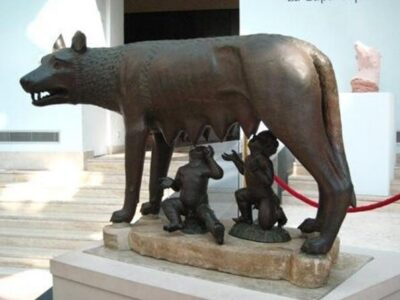


Capitoline Museum English Guided Tour & skip the line ticket
Read our review →

Browse the lists this tour appears in