
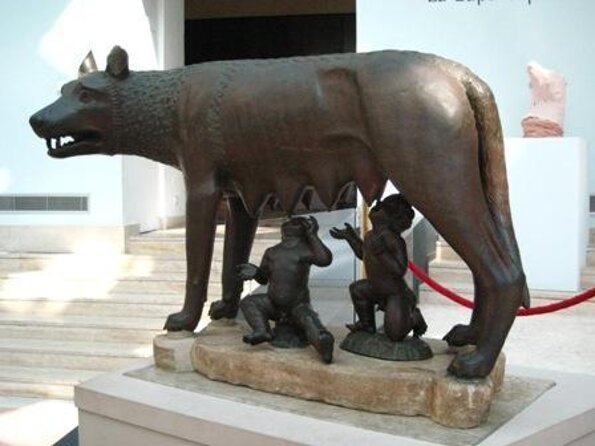
Reviewed · CAPITOLINE MUSEUMS TOURS
Private Tour – Capitoline Museums
The Capitoline Museums hold Rome’s story in a single hilltop visit: ancient bronze, marble portraits, frescoed rooms, and a Renaissance square designed by Michelangelo. I like the private format, which lets you ask questions and adjust the conversation, and I like that guides such as Vincenzo and Martina make the art easier to follow rather than simply listing dates.
The tour also gives you a fine view toward the Roman Forum and explains why the museum’s objects matter, not just what they are. The main consideration is price: at $157.22 per person, this is a serious spend for two and a half hours, though the value improves for a small group sharing the private guide.
Key points to know before booking
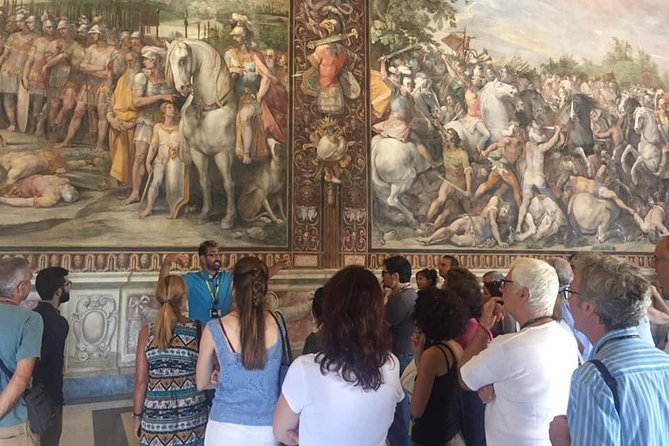
- The museum dates to the late 15th century: Pope Sixtus IV created what is described as Europe’s oldest public museum.
- The visit is private: Only your group takes part, with an English-speaking guide.
- The collection is especially strong in Roman antiquities: Expect bronze sculptures, marble portraits, archaeological objects, courtyards, and decorated rooms.
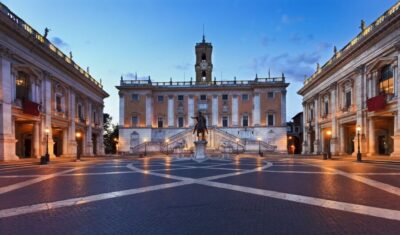
- Michelangelo’s square is part of the experience: The 20-minute visit to Piazza del Campidoglio explains the Renaissance design and the copy of Marcus Aurelius.
- Guide quality is central: Vincenzo receives especially warm praise for his energy, while Martina, Massimo, Victoria, and Max are also named as strong guides.
- Plan for the bag check: Backpacks and bags must be left in the museum checkroom.
Why the Capitoline Museums are worth your time
Rome has no shortage of famous museums, but the Capitoline Museums offer a useful middle ground. You get major Roman art without committing to an enormous half-day visit. The scheduled museum portion lasts about two hours, followed by roughly 20 minutes in Piazza del Campidoglio.
The museum was created at the end of the 15th century by Pope Sixtus IV, the same pope associated with the Sistine Chapel. That date matters because this is not simply a modern display space filled with old objects. The Capitoline Museums grew from a public collection intended to place Rome’s ancient heritage in a civic setting.
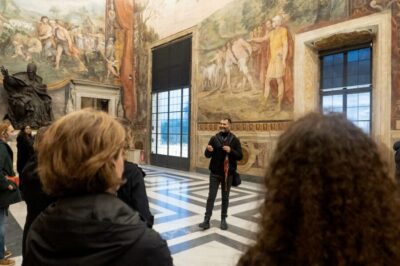
You will see Roman antiquities, bronze sculpture, decorated courtyards, and palace interiors with famous frescoes. The collection also includes later works, including Baroque statues by Bernini. A guide helps connect these objects to Roman politics, religion, family life, and public ceremony.
I find that especially useful here because ancient sculpture can look impressive while remaining hard to interpret. A good explanation tells you why a portrait was made, how a statue was used, or what a particular pose and symbol meant. The best guides on this tour, particularly Vincenzo and Martina, appear to use questions, stories, and conversation rather than delivering a speech at you.
More Capitoline Museums tours:
- Rome: Capitoline Museums Experience with Multimedia Video
★ 4.3 · 1,093 reviews - Capitoline Museum Experience with Multimedia Video
★ 4.0 · 98 reviews - Rome: Percy Jackson-Themed Tour of the Capitoline Museums
★ 4.5 · 36 reviews
Entering the Capitoline Museums with a private guide
Your meeting point is Piazza del Campidoglio, at the top of Rome’s Capitoline Hill. The tour ends at the same meeting point, so you do not need to arrange a separate pickup or figure out where the visit finishes.
The private setup is the main selling point. Your party has the guide to itself, which means you can ask for more detail on ancient Rome, art history, architecture, or particular objects. One guide, Victoria, is noted for adapting the visit to specific pieces requested by the couple she was leading. That kind of flexibility is difficult in a large group.
The same format can help families. Max reportedly made the collection engaging for a teenage visitor, while another guide made the material accessible to a 13-year-old. If someone in your group has limited patience for long museum talks, an interactive guide can make a real difference.
The tour is offered in English. The guide is described as both a professional and local guide, and the names associated with the experience include Vincenzo, Martina, Massimo, Victoria, and Max. You cannot assume which guide you will receive unless the booking allows you to request one, but the strongest pattern is clear: energy, clear speech, and enthusiasm for Roman art matter as much as academic knowledge.
You must leave bags and backpacks in the checkroom. Pack lightly and keep anything you need during the visit in a small item that the museum accepts. This is a practical point, but it can affect your arrival time if you show up carrying a large daypack.
Roman bronzes, portraits, and the museum’s strongest subjects
The Capitoline collection is particularly rewarding if you want to understand Roman art through actual objects rather than only through ruins. The museum brings sculpture removed from nearby archaeological sites into rooms where you can examine it at close range.
Bronze is one of the highlights. Bronze statues are less common than marble survivals because the material could be melted down and reused. That makes the museum’s bronzes especially important, and a guide can explain why they survived and what they reveal about Roman public life.
You will also encounter portraits of emperors and other figures. These are not merely handsome heads on pedestals. Roman portraiture could communicate age, authority, military power, family connection, or political legitimacy. A guide can help you read details that are easy to miss, from hairstyle to facial expression.
The collection also offers a way to make sense of Rome’s ruins. When you visit the Forum, you see foundations, columns, and fragments in an open archaeological area. At the Capitoline Museums, objects connected with that world are presented close up. The two experiences work well together, especially if you are trying to understand how Roman buildings and public spaces once looked.
The tour can also move beyond emperors. Specific subjects discussed by the guides have included the Roman view of the afterlife, the Vestal Virgins, and the story behind a rare bust of Commodus. These topics show the breadth of the visit. You are not limited to a parade of famous statues.
The architecture around the collection
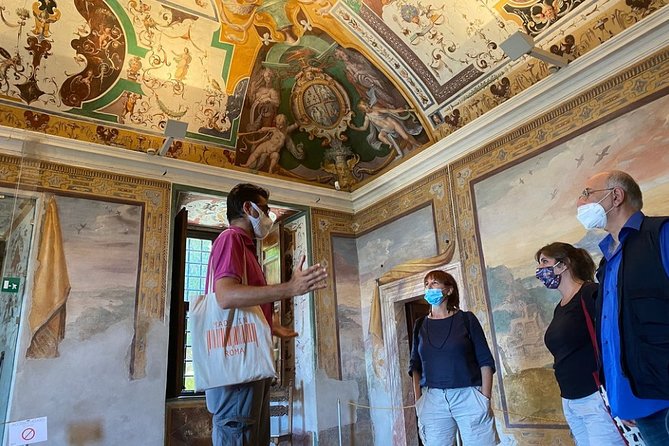
The setting is part of the attraction. The museums occupy historic palace buildings, with courtyards and rooms decorated with frescoes. You are moving through an architectural ensemble, not a plain white box built only to display art.
That setting gives the visit a useful Roman layering. Ancient objects are held inside Renaissance and later architecture, while the surrounding square reflects Michelangelo’s vision. The museum becomes a lesson in how later generations preserved, reorganized, and interpreted ancient Rome.
A guide can point out relationships between the rooms, courtyards, and collection. Without help, you might focus on individual statues and miss the way the buildings frame them. With a private guide, you can ask why a work is displayed in a certain setting or how the museum’s civic role developed.
The pace is also more manageable than a marathon museum visit. Two hours is enough time for a strong selection, but not enough to see every room slowly. That is a limitation if you want an exhaustive survey. It is an advantage if you want the main ideas without wearing yourself out.
More museums and galleries in Rome:
- Vatican Museums & Sistine Chapel Tour with Optional Basilica
★ 4.3 · 67,413 reviews - Vatican Museums, Sistine Chapel & St Peter’s Basilica Guided Tour
★ 4.5 · 39,149 reviews - Rome: Vatican Museums, Sistine Chapel & Basilica Tour
★ 4.3 · 13,872 reviews - Vatican Museums & Sistine Chapel Skip-the-Line Entry Ticket
★ 4.4 · 13,838 reviews
Piazza del Campidoglio and Michelangelo’s plan
After about two hours inside, the tour turns to Piazza del Campidoglio for roughly 20 minutes. This is not filler added at the end. The square explains the museum’s setting and gives you a clearer sense of Rome’s Renaissance ambitions.
Michelangelo designed the square as part of a major urban reorganization. Its geometry, buildings, and central focus create a carefully planned approach to the Capitoline Hill. The square is an example of Renaissance architecture, and the guide examines it in detail.
At the center is a copy of the statue of Marcus Aurelius. The original is inside the museum, protected from the weather. Seeing the copy outside and the original inside gives you a useful comparison between public monument and museum object.
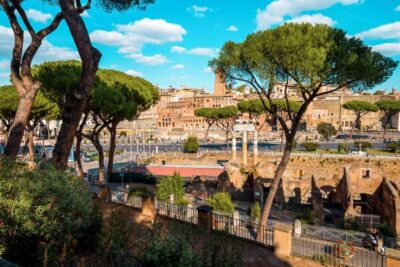
The square also offers a view toward ancient Rome and the Roman Forum. Several people who took the tour considered this closing view one of the memorable moments, and it is easy to see why. After spending time with sculpture and Roman political subjects, you can look out toward the ruins and connect the objects to the city below.
The short length of this stop is worth noting. You will receive an explanation of the square, but this is not a full architectural walking tour of the Capitoline Hill. If you want extended time for photographs or a longer discussion of Michelangelo, you may need to ask your guide early in the visit.
What the guides add to the experience
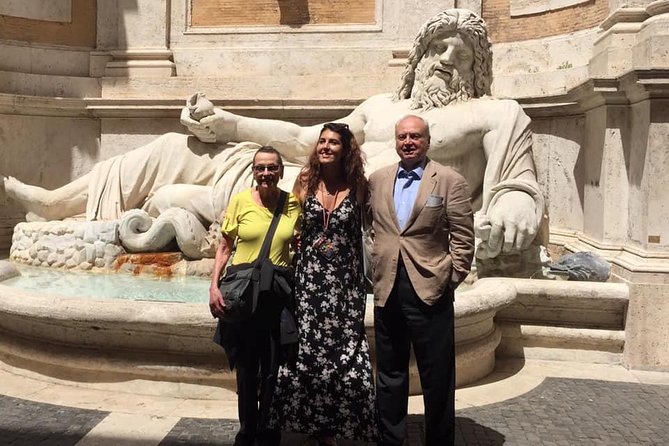
A private museum tour depends heavily on the person leading it. Here, the strongest descriptions point to guides who are animated, responsive, and able to explain complex material in ordinary language.
Vincenzo is repeatedly singled out for high energy and enthusiasm. He is described as interactive, entertaining, and able to make facts stick. That can be valuable after several days of Roman sightseeing, when your mind is full of emperors, popes, temples, and dates.
Martina is associated with a more conversational style. She has been described as a language expert and archaeologist, and her explanations have included the Roman afterlife, the Vestal Virgins, Commodus, and the Forum. Her clear English and willingness to answer questions make her a good fit if you prefer a discussion rather than a performance.
Massimo is described as friendly and well informed, while Victoria is noted for shaping the route around requested works. Max has been praised for bringing the collection to life for a younger visitor. These details suggest that the operator has several guides with different strengths.
I would make your interests clear at the start. Tell the guide if you care most about emperors, mythology, Roman daily life, architecture, sculpture, or archaeology. In a private tour, that small conversation can shape the next two hours.
Is $157.22 per person a fair price?
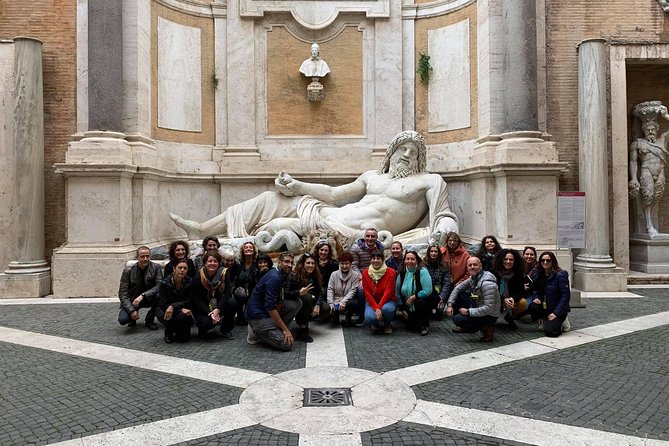
The listed price is $157.22 per person. That is not a bargain museum admission, since the price covers a private guide and tickets rather than entry alone.
For two people, the total is substantial. You are paying for direct attention, the chance to ask unlimited questions during the visit, and a guide who can choose an appropriate level of detail. For a group, the value may improve because the private experience can be shared among several people, and group discounts are available.
I would compare this price with your own museum habits. If you enjoy reading labels and moving at your own pace, a self-guided visit may be enough. If Roman art often leaves you wondering what you are looking at, the guide can turn a collection of statues into a connected account of Roman society.
The tour lasts about two and a half hours, including the square. That is a reasonable length for a museum visit, especially when you have other plans in Rome. You are not paying for transportation, hotel pickup, or hotel drop-off. There is no private vehicle included, so you must make your own way to Piazza del Campidoglio. The meeting point is near public transportation.
The tour is highly rated, with 90 reviews and 100 percent recommendation, but I would still judge it by your priorities. Its value comes from the guide’s ability to explain and adapt, not from the length of the itinerary.
Who should book this private museum visit?
I would recommend it most strongly to:
- First-time Rome visitors who want a clear introduction to Roman art and civic history
- Couples or families who prefer a private conversation to a large group
- People who have visited the Forum but found the ruins difficult to interpret
- Museum visitors who want help choosing the most important works
- Families with teenagers who need a more lively presentation
- Repeat visitors who want a focused look at objects they missed before
It may be less suitable if you prefer complete independence or want to spend four or five hours examining every gallery. The tour is selective by necessity. You will see important parts of the collection, but the guide cannot cover every object in two hours.
Most participants can take part, according to the tour information. You should still consider your own walking and standing needs, and tell the guide if you need pauses. One guide was praised for noticing when members of a group needed to sit or stretch, but that level of attention is not a formal promise for every departure.
Practical details that matter on the day
Confirmation is provided when you book. Meet at Piazza del Campidoglio, 00186 Rome, and expect to finish there as well.
Arrive with enough time to locate the guide near the meeting point. The tour information identifies the square clearly, but the Capitoline Hill can feel confusing if you are rushing between nearby sights. Since bags and backpacks must go to the checkroom, avoid arriving with a large load.
Free cancellation is available up to 24 hours before the start time for a full refund. Cancellations or changes made less than 24 hours before the start time are not accepted for a refund, and the cut-off follows local Rome time.
Should you book the Capitoline Museums tour?
Book it if you want Roman art to make sense rather than simply want to walk past it. The combination of ancient sculpture, palace interiors, Michelangelo’s square, and the Forum view gives you a compact but substantial visit.
The best reason to choose this experience is the private guide. Vincenzo appears to suit people who want energy and lively storytelling, while Martina may appeal to those who prefer detailed, question-led discussion. Massimo, Victoria, and Max are also associated with strong, personal tours.
Skip it if $157.22 per person feels too high for a two-hour museum visit, or if you prefer to explore alone. For everyone else, especially a small group with a real interest in Rome, this is a sensible way to understand one of the city’s most important collections without getting lost among labels and marble.
FAQ
How long does the private Capitoline Museums tour last?
The experience lasts approximately two hours and 30 minutes. About two hours are spent inside the Capitoline Museums, followed by about 20 minutes in Piazza del Campidoglio.
What is included in the price?
The price includes a professional guide, a local guide, the private tour, and museum tickets.
Is hotel pickup included?
No. Hotel pickup and drop-off are not included, and private transportation is not provided.
Where does the tour begin and end?
The tour starts at Piazza del Campidoglio, 00186 Rome, Italy, and ends back at the meeting point.
Is the tour available in English?
Yes. The experience is offered in English.
Do I need to check my backpack?
Yes. Bags and backpacks must be left in the museum checkroom.
Can I cancel for a full refund?
Yes, if you cancel at least 24 hours before the experience start time. Cancellations or changes made less than 24 hours before the start time are not accepted for a refund.
Newest Rome tours we have reviewed
- Private TikTok Video Making in Rome★ 5.0 · 7 reviews
- Assisi, Orvieto and Civita di Bagnoregio Full Day Tour from Rome★ 4.5 · 45 reviews
- Assisi & Saint Francis Path Tour from Rome★ 5.0 · 45 reviews
- Art Class in the center of Rome!★ 4.0 · 4 reviews
- Art & Craft: Beer Tour with Street Art in Rome★ 4.5 · 6 reviews
- Assisi and Cascia Private Day Tour from Rome with Lunch★ 5.0 · 10 reviews
- Arrival in Rome: Airport Transfer & Exclusive City Introduction★ 5.0 · 3 reviews
- From Rome: Private Day-Tour of Tuscany★ 5.0 · 16 reviews
Capitoline Museums Tours, compared.
Capitoline Museums Experience with Multimedia Video
Read our review →
Capitoline Museum Experience with Multimedia Video
Read our review →
Capitoline Museum English Guided Tour & skip the line ticket
Read our review →
Browse the lists this tour appears in