
Reviewed · CASTEL SANT’ANGELO TOURS
Rome: Castel Sant’Angelo Skip-the-Line Guided Tour
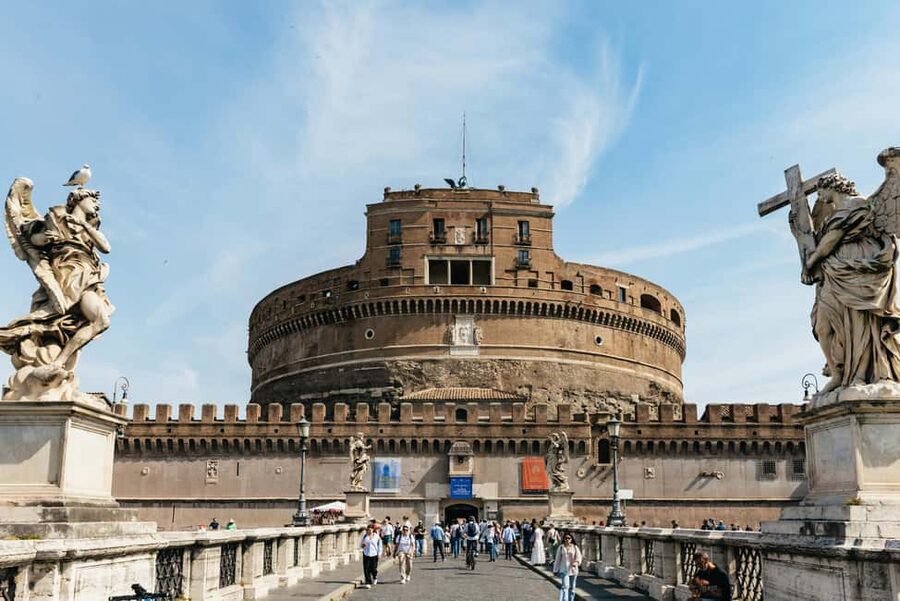
Castel Sant’Angelo is more than a round stone fortress beside the Tiber. It began as Emperor Hadrian’s tomb, then became a papal residence, state treasury, prison, execution site, and one of Rome’s most striking viewpoints. This guided visit takes you into areas usually closed to the public, including the Olearie, historic prisons, and Clemente VII’s theater.
I like two things here. First, the guide gives the building a clear sense of time and purpose, so you understand how one structure changed with Rome itself. Second, the terrace panorama ties the whole city together, especially if you have already visited St. Peter’s, the riverfront, or the historic center.
The main consideration is physical. You must climb several flights of stairs to reach the terrace, and the tour is not suitable for wheelchair users. The meeting time also matters: late arrivals and no-shows are not refunded.
Key points to know before booking

- Restricted rooms add real value: Visit the Olearie, old prisons, and Clemente VII’s theater, areas not normally open during a standard visit.
- A guide makes the fortress easier to understand: Guides including Alec, Alicia, Donatella, Oleg, and Agnese have been praised for clear explanations, humor, patience, and strong storytelling.
- The terrace is the payoff: Climb to the top for wide views across Rome and excellent photo opportunities.
- Expect a compact but active visit: The tour lasts about 1 to 2 hours and includes stairs, standing, and walking through historic interiors.
- Skip-the-line entry saves time: You use a separate entrance, though you still need to arrive promptly for your timed slot.
- The price reflects more than admission: At $66.05 per person, you are paying for guided access, special rooms, and help making sense of a complicated site.
Why Castel Sant’Angelo is worth your Rome time
Many Roman monuments tell one main story. Castel Sant’Angelo tells several, one after another, within the same thick walls.
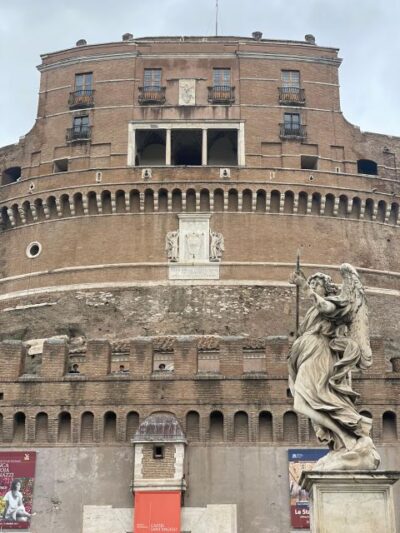
The building was commissioned by Emperor Hadrian as his tomb. Later, its strong circular form made it useful as a fortress. Popes adapted parts of it into private apartments, while other rooms held money and valuables. At different points, it also served as a prison and a place of public execution.
That changing role is the heart of the visit. You are not simply looking at old stone. You are moving through a building that was repeatedly reshaped to meet the needs, fears, and ambitions of Rome’s rulers.
I find a guided tour especially useful here because the castle can otherwise feel like a series of corridors, chambers, ramps, and staircases. A good guide explains what each area was for and links it to the larger story of the city. The best guides on this experience, including Alec and Alicia, are described as clear, engaging, and able to answer questions without burying the group in dates.
The tour is conducted in English. Headsets are provided if needed, which matters in a large stone building where voices can easily disappear into the room around you.
More Castel Sant’Angelo tours:
- Rome: Castel Sant’Angelo Skip-the-Line Ticket & Audio Guide
★ 4.4 · 3,500 reviews - Rome: Castel Sant’Angelo Skip-the-Line Ticket
★ 4.4 · 3,040 reviews - Rome: Castel Sant’Angelo Skip-the-Line Entry Ticket
★ 4.8 · 2,231 reviews
Meeting the guide at Lungotevere Castello
You meet in front of the main entrance on Lungotevere Castello. Look for a representative holding a Loving Rome flag.
Give yourself enough time to find the meeting point. The ticket is valid only for the date and time you selected, and late arrivals are not accommodated. That rule is strict enough to affect your planning, so I would avoid scheduling this tour immediately after another timed attraction.
The tour begins with skip-the-line admission through a separate entrance. This does not mean you can arrive whenever you like, but it should reduce the time spent waiting at the main entry area.
Bring your passport or another valid photo ID. The full name of each participant must be entered during booking exactly as it appears on the passport or valid ID, and the document may be checked on the day.
Seeing Hadrian’s tomb beneath the fortress
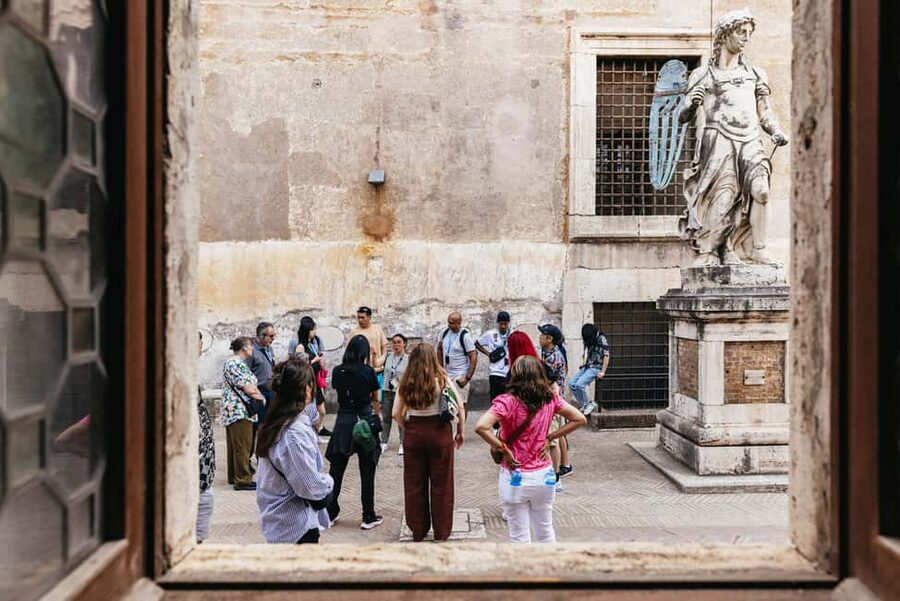
Your first major lesson is the building’s original purpose. Castel Sant’Angelo was erected as the mausoleum of Emperor Hadrian, giving the fortress a more ceremonial beginning than its later military appearance suggests.
The tomb helps explain the castle’s broad, circular shape. You are seeing a monument designed for an emperor before it became a defensive stronghold. The tour places that early purpose alongside the later alterations, making it easier to picture the building in different periods.
You also learn how the site developed into a place tied to papal power. The shift from imperial tomb to fortified papal residence is not a minor change. It shows how Rome repeatedly reused older structures instead of setting them aside.
The guide’s role is important here. A visit without context may leave you admiring the masonry without grasping why the building changed. With a live explanation, the rooms and passageways become part of a long chain of political and religious decisions.
The Olearie and the castle’s less familiar rooms
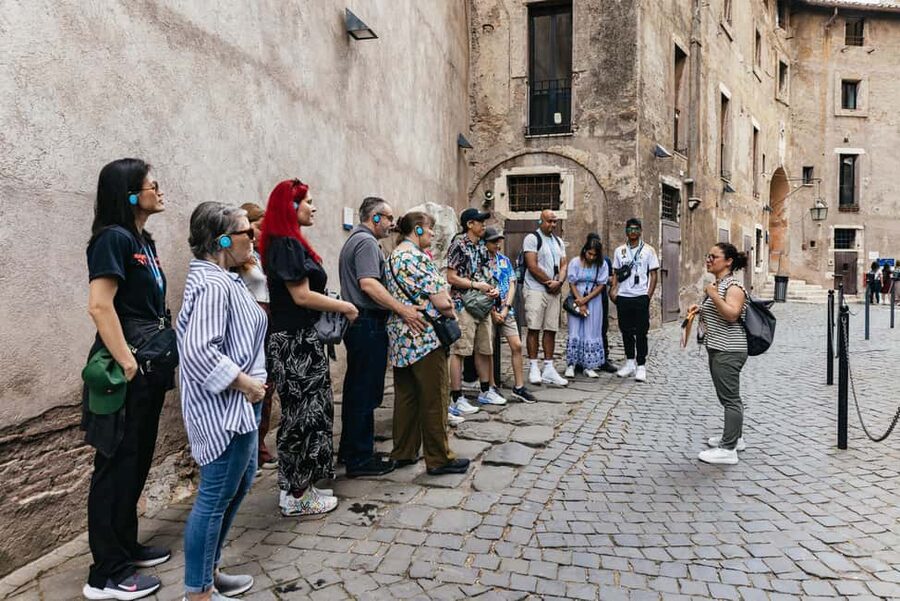
The Olearie are among the most interesting parts of the tour because they are not usually included in a basic public visit. Their restricted access gives this experience a stronger sense of discovery, without needing to exaggerate what you are seeing.
Your guide explains the purpose and history of these spaces as you move through them. The appeal is not just the room itself, but the chance to see the castle beyond its most famous corridors and terrace.
You should expect the setting to feel old, enclosed, and uneven in places. This is a historic fortress, not a modern museum built for easy circulation. Wear comfortable shoes, and keep your attention on the route rather than trying to rush from one stop to the next.
The tour moves at a steady pace. One highly praised guide, Alec, has been described as keeping the group interested while covering a large amount of material. That balance matters in a place like this, where too many facts can blur together.
More skip-the-line tickets in Rome:
- Vatican Museums & Sistine Chapel Skip-the-Line Entry Ticket
★ 4.4 · 13,838 reviews - Skip-the-Line Group Tour of the Vatican, Sistine Chapel & St. Peter’s Basilica
★ 4.5 · 12,779 reviews - Vatican, Sistine Chapel & St. Peter’s Skip-the-Line Tour
★ 4.5 · 7,770 reviews - Skip-the-Line Vatican, Sistine Chapel & St. Peter’s | Small Group
★ 5.0 · 7,060 reviews
Prisons, papal apartments, and the treasury
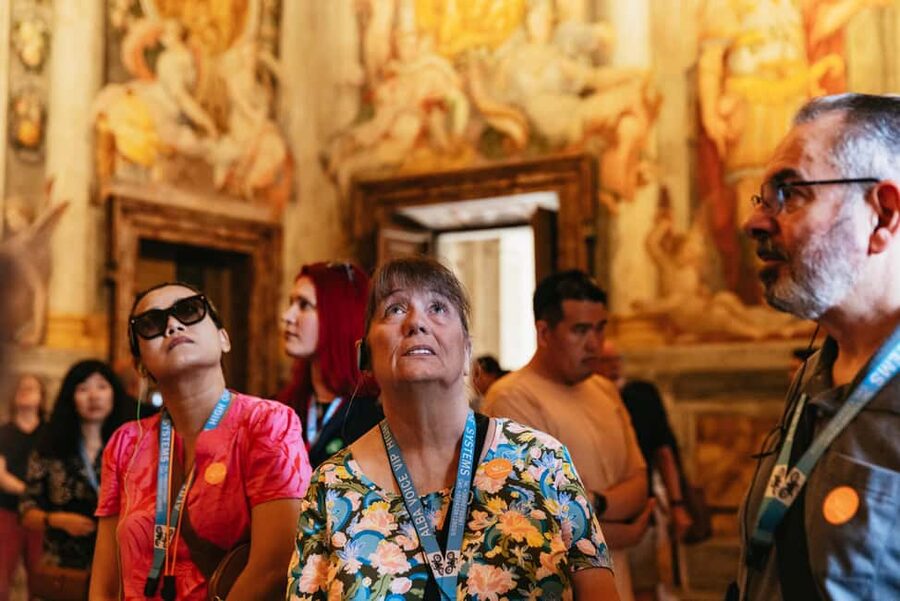
The historic prisons give the castle a darker edge. Castel Sant’Angelo was not only a residence and monument. It also held prisoners and was connected with public executions, reminders that the building served authority as well as ceremony.
The guide helps you place these rooms within the wider use of the fortress. You are not left with a romanticized picture of papal apartments and grand views. The tour includes the less comfortable parts of the castle’s past, too.
You also see the pope’s apartment and the treasury room. These areas show a different side of the building, one linked to wealth, residence, and status. The contrast between private rooms, storage spaces, prisons, and defensive areas is what makes the route feel varied.
Several guides on this experience have been praised for bringing together art, sculpture, architecture, and political history. That combination is useful because the castle is not one neatly labeled exhibit. Its meaning changes from room to room.
Do not expect every part of the visit to be lavish. Some rooms are valuable because of their function and age rather than decoration. If you want a tour focused only on paintings or grand interiors, this may feel more architectural and historical than artistic.
Clemente VII’s theater and the changing castle
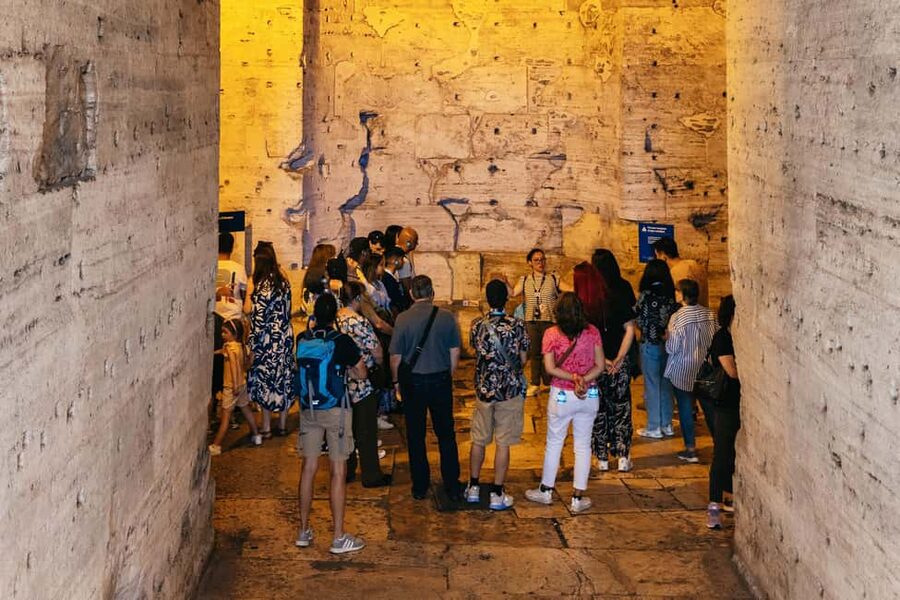
The theater of Clemente VII adds another unusual detail to the route. It helps show that the castle was not simply a place for soldiers and prisoners. Parts of it were adapted for papal life and courtly use.
This is where a guide can make the difference between seeing a room and understanding it. The building’s uses overlap: imperial tomb, fortress, residence, treasury, prison, and public site. The theater gives you another piece of that complicated picture.
The guides praised most warmly for this tour tend to make the information approachable. Alec is repeatedly singled out for a polished command of English, humor, and careful explanations. Alicia is described as personable and strong on the meaning of the art and sculpture. Donatella is noted for patience with a difficult group, while Oleg is described as friendly and entertaining.
Your guide will vary by date, so do not book with the assumption that one specific person is guaranteed. The consistent point is that the experience depends heavily on the live guide. You are paying for interpretation, not simply a faster entrance.
Climbing to the terrace for Rome’s big picture
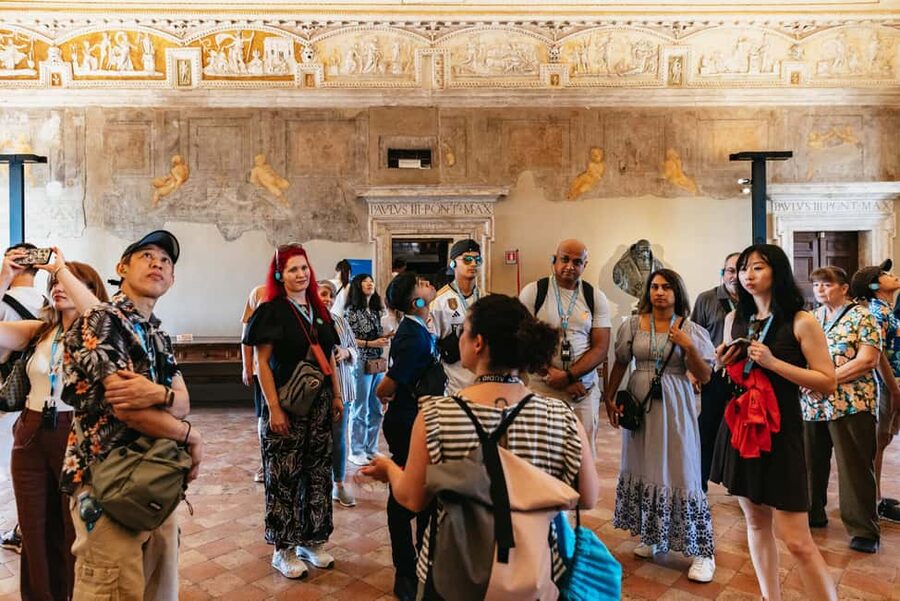
The final climb leads to the panoramic terrace, and this is the moment that makes the route feel complete.
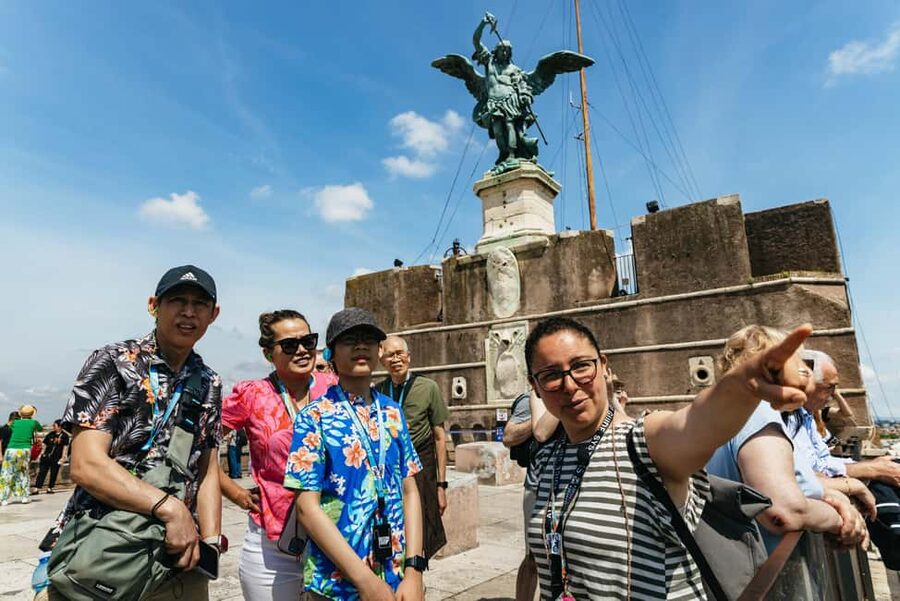
From above, you can admire Rome’s major sights in their setting rather than as isolated stops. The terrace helps you connect the river, bridges, domes, rooftops, and surrounding monuments. If you have already visited several parts of the city, the view can help you understand how they relate geographically.
The terrace is also the best place for photographs. One winter visit timed near the end of the day offered a sunset view over Rome, while other tour times will give you a different quality of light. The exact effect depends on your date and starting time, so check availability carefully if the view is a priority.
There is a practical tradeoff. You reach the terrace by climbing a series of stairs, and the route is not suitable for wheelchair users. Comfortable shoes are essential. Food, drinks, luggage, and large bags are not allowed, so pack lightly.
I would not treat the terrace as a quick add-on. Give yourself a few minutes to look around. The value is not only the photograph. It is the chance to see why this fortress mattered as a defensive and political position.
How the price compares with a self-guided visit
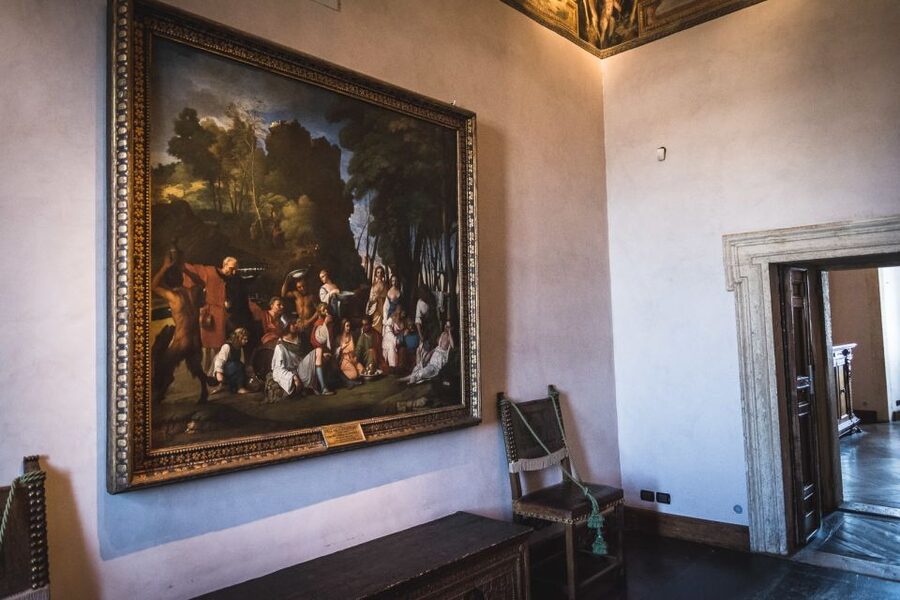
The cost is $66.05 per person. That is not the cheapest way to enter Castel Sant’Angelo, so the value depends on what you want from the visit.
If you are happy reading signs and exploring independently, admission alone may be enough. The building has plenty to see, and you can move at your own speed. But a self-guided visit will not provide the same access to the less familiar areas included here, nor will it give you a person to explain why each room matters.
For me, the price makes the most sense if you care about restricted access and historical context. The Olearie, prisons, and theater add substance, while the guide turns a complicated building into a readable sequence of changes.
The experience has also received a 4.7 rating from 1,665 reviews, which points to strong overall satisfaction. The most common strengths are consistent: clear English, lively storytelling, good pacing, and guides who answer questions. One small group even received a nearly private experience when other participants did not attend, though you should not expect that arrangement.
The tour can also run longer than the advertised duration, depending on the guide and group. That may be welcome if you enjoy the subject, but leave some space in your schedule rather than booking a tight connection afterward.
Choosing your time and preparing well

The activity lasts about 1 to 2 hours. Starting times vary, so check the available slot before you plan the rest of your day.
The final session can be especially appealing in winter if the timing reaches sunset, but you should choose based on your wider schedule and the available light. The terrace is worthwhile at any time, and the historic rooms remain the main reason to book.
Plan to arrive early at the Lungotevere Castello meeting point. Late arrivals and no-shows are not refunded, and timed tickets are valid only for the selected date and slot.
A simple preparation list works best:
- Wear shoes suitable for stairs and hard floors.
- Bring your passport or valid ID.
- Leave food, drinks, luggage, and large bags elsewhere.
- Do not book this route if you need wheelchair access.
- Allow extra time before and after the tour.
You may cancel for a full refund up to 24 hours in advance. The reserve now and pay later option also helps if your Rome schedule is still moving around.
Who should book this Castel Sant’Angelo tour
I would choose this tour if you want more than a quick look at the terrace and the main public rooms. It suits first-time visitors who want the castle explained, history fans interested in changing uses, and anyone who values access to spaces usually closed to the public.
It is also a good choice if you find large Roman monuments confusing without a guide. The route connects the emperor, popes, prisoners, treasury, art, and city views in one compact visit.
Families with older children may enjoy the fortress setting and stories of its different roles, though the stairs and serious historical material may not suit very young children. The tour is not for unaccompanied minors.
I would think twice if you dislike timed appointments, walking, or guided pacing. You cannot simply arrive late and join the group, and you may prefer a slower visit if you want to linger over every sculpture and painting.
Should you book it?
Book this experience if you want the full story of Castel Sant’Angelo, not just a quick climb to the top. The restricted rooms, English-speaking guide, separate entrance, and terrace views make it a strong choice for a short Rome visit.
At $66.05, it costs more than simple admission, but the added access and explanation justify the difference for many people. Skip it only if you are comfortable exploring alone, need wheelchair access, or want complete control over your pace.
FAQ
How long does the Castel Sant’Angelo tour last?
The tour lasts approximately 1 to 2 hours. Starting times vary, so check availability when booking.
What language is the guided tour in?
The live tour guide speaks English. An English audio guide option is also available.
Where does the tour meet?
Meet in front of the main entrance to Castel Sant’Angelo on Lungotevere Castello. Look for a representative holding a Loving Rome flag.
Does the ticket include skip-the-line entry?
Yes. The experience includes skip-the-line entrance through a separate entry route.
Which special areas are included?
The guided route includes the Olearie, historic prisons, and the theater of Clemente VII, along with the pope’s apartment and treasury room.
Do I need identification?
Yes. Bring your passport or valid ID for verification. Participant names must be entered during booking exactly as they appear on the document.
Are there stairs on the tour?
Yes. You need to climb a series of stairs to reach the panoramic terrace.
Is the tour suitable for wheelchair users?
No. The activity is listed as unsuitable for wheelchair users.
Can I cancel for a refund?
You can cancel up to 24 hours before the activity for a full refund. Late arrivals and no-shows are not accommodated or refunded.
Newest Rome tours we have reviewed
- Private TikTok Video Making in Rome★ 5.0 · 7 reviews
- Assisi & Saint Francis Path Tour from Rome★ 5.0 · 45 reviews
- Assisi, Orvieto and Civita di Bagnoregio Full Day Tour from Rome★ 4.5 · 45 reviews
- Assisi and Cascia Private Day Tour from Rome with Lunch★ 5.0 · 10 reviews
- Art Class in the center of Rome!★ 4.0 · 4 reviews
- Art & Craft: Beer Tour with Street Art in Rome★ 4.5 · 6 reviews
- Arrival in Rome: Airport Transfer & Exclusive City Introduction★ 5.0 · 3 reviews
- From Rome: Private Day-Tour of Tuscany★ 5.0 · 16 reviews
Castel Sant’Angelo Tours, compared.
Castel Sant’Angelo Skip-the-Line Ticket & Audio Guide
Read our review →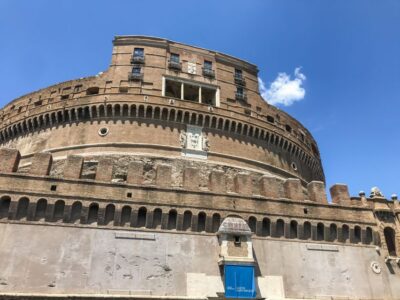

Castel Sant’Angelo Skip-the-Line Entry Ticket
Read our review →




Browse the lists this tour appears in