
Reviewed · CARAVAGGIO AND BAROQUE ART TOURS
The Genius of Caravaggio: Rome Private Tour
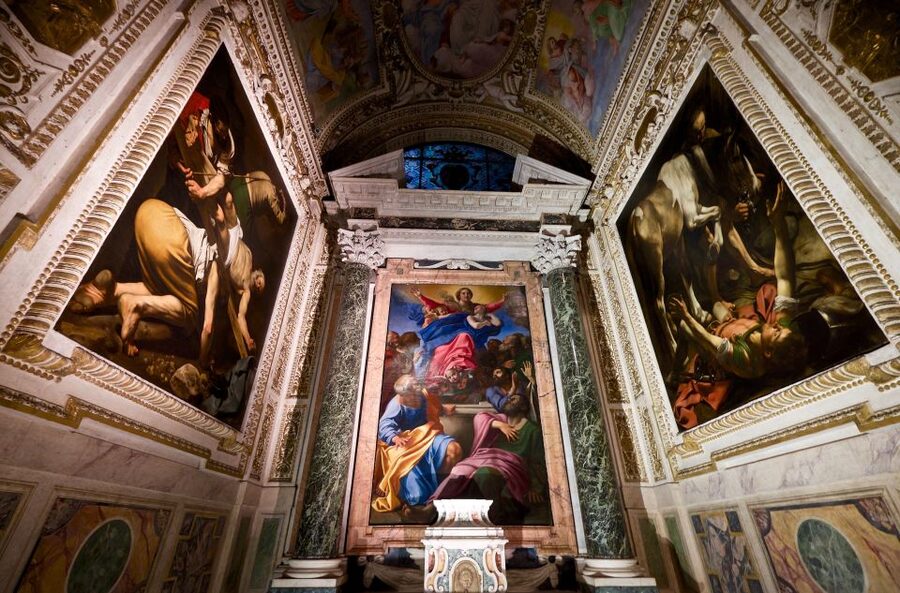
Caravaggio’s Rome is best understood with your nose pointed toward a church altar, not a museum label. This three-hour private walk links the places where he lived, worked, and made religious art feel startlingly human. You’ll see Saint Paul’s Conversion and The Crucifixion of Saint Peter at Santa Maria del Popolo, then finish with the great Saint Matthew paintings at San Luigi dei Francesi.
I like the original settings and the private format. These are not copies moved into a gallery. They remain in the churches that commissioned them, where light, architecture, and worship still frame the paintings. I also like the chance to ask direct questions. Guides who have led this tour include Chiara and Maria, both praised for clear, engaging explanations, with Chiara also able to point you toward a good gelato stop.
The main consideration is pace. You cover several churches in three hours, with roughly 165 minutes assigned to guided stops before allowing for walking and transitions. That is enough for a focused introduction, but not a slow, scholarly study of every canvas. Churches can also have changing opening conditions, so confirm the starting time and route details before you set off.
Key points to know
- Caravaggio’s paintings stay in their original churches: You see the art where it was commissioned and first displayed.
- Santa Maria del Popolo offers two major works: Study Saint Paul’s Conversion and The Crucifixion of Saint Peter in one stop.
- San Luigi dei Francesi contains the Saint Matthew cycle: Three paintings here were Caravaggio’s first altarpieces.
- The private guide changes the experience: You can ask questions and adjust the discussion to your level of interest.
- The route lasts three hours: It is a concentrated walking tour rather than a full-day art course.
- The price works best for a small group: At $456.21 for up to four people, the cost is easier to justify when shared.
Why Caravaggio’s churches matter more than a standard gallery visit
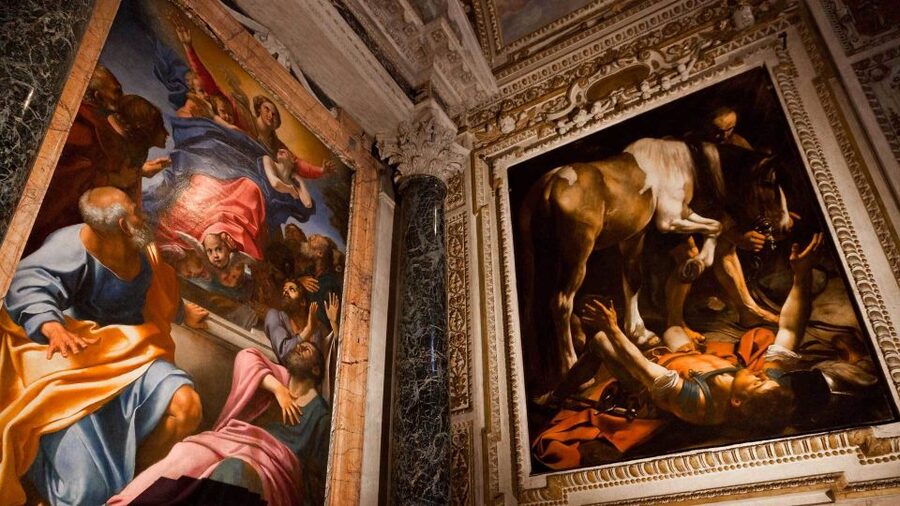
Caravaggio’s work can look powerful in a museum, but these Roman churches give it a different setting. His paintings were made for religious spaces, and the surrounding architecture helps explain their scale, drama, and purpose.
You are not simply moving from one famous image to another. You are following the artist through central Rome and seeing how his approach changed the way sacred stories could appear. His figures look close enough to touch, his light cuts into dark rooms, and his saints often seem like people pulled from the street rather than distant figures from a holy legend.
That setting also makes a private guide useful. A guide can point out how the paintings are positioned, explain the biblical episodes, and connect the works to Caravaggio’s years in Rome. You can stop to ask about technique, symbolism, or the stories behind the commissions instead of relying on a small wall panel.
The focus is on Michelangelo Merisi da Caravaggio, born in Milan in 1571 and present in Rome by the end of the 1580s. The tour looks at the period when Rome gave him the chance to make some of his most important religious paintings.
More Caravaggio and baroque art tours:
- Rome: Terrazza Borromini Open-Air Opera with Aperitif
★ 4.7 · 212 reviews - Borghese Gallery Max 6 People Tour: Baroque & Renaissance in Rome
★ 5.0 · 185 reviews - Guided Walking Tour of Rome: Top Sights & Baroque Treasures
★ 5.0 · 155 reviews
Beginning near Via del Governo Vecchio
The advertised meeting place is at the exit of the Altroquando bookshop at Via del Governo Vecchio, 82. This puts you in a useful central location, close to Rome’s historic core and within the area connected with Caravaggio’s working life.
Arrive with a few minutes to spare. The supplied directions identify the bookshop exit rather than a broad piazza, so the exact meeting point matters. Your guide should be easy to identify, but having the booking details ready is sensible, especially in a busy central street.
From here, the tour becomes a walking route through several churches and the Rione IV Campo Marzio district. No transport is included, and that is generally a strength for this particular subject. Caravaggio’s Roman story makes more sense when you move through the same compact city center instead of riding between isolated sights.
The route information identifies Piazza di Spagna as the finish. The meeting-point notes also say the activity ends back at the meeting point, which is not the same place. Confirm the final drop-off point when you book, especially if you have a restaurant reservation or train connection afterward.
Santa Maria del Popolo and two scenes of conversion and sacrifice
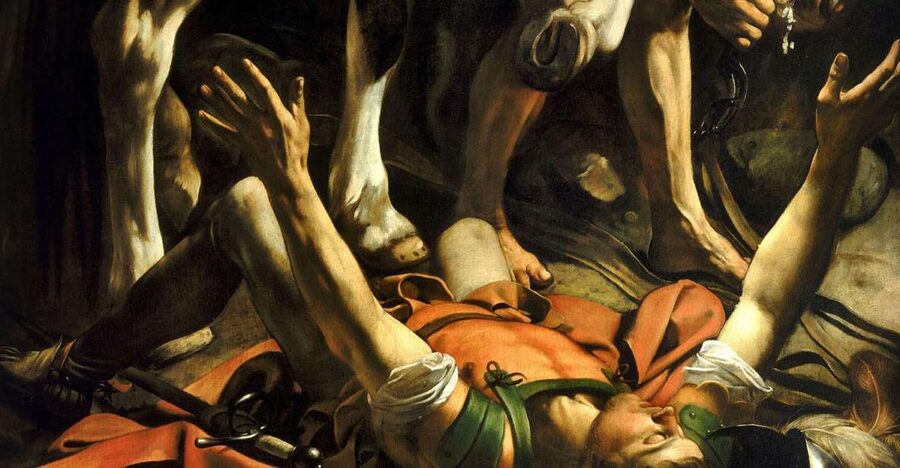
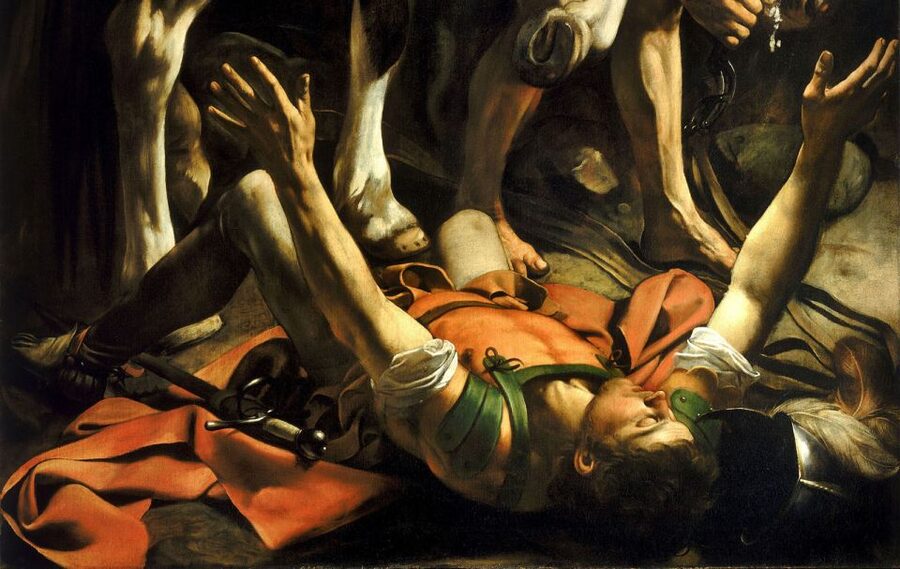
The Church of Santa Maria del Popolo receives about 45 minutes of guided attention. For many people, this is the strongest early stop because two important Caravaggio paintings are found here: The Conversion of Saint Paul and The Crucifixion of Saint Peter.
These works give you a useful introduction to his visual language. Saint Paul’s Conversion presents a dramatic religious turning point, while The Crucifixion of Saint Peter deals with physical effort, suffering, and the weight of the body. They are not gentle, decorative images. Caravaggio brings the action forward and uses light to control where your eye goes first.
I would give this stop your full attention. Churches can be quiet and dark, and the paintings may not reveal every detail at a quick glance. A guide can help you notice the human reactions, the direction of the light, and the way the figures occupy the space.
The 45-minute period is long enough to discuss both works without rushing from one altar to the next. It is still a short visit by art-school standards, so if you already know Caravaggio well, you may want to ask your guide in advance to focus on particular questions.
San Luigi dei Francesi and Caravaggio’s first altarpieces
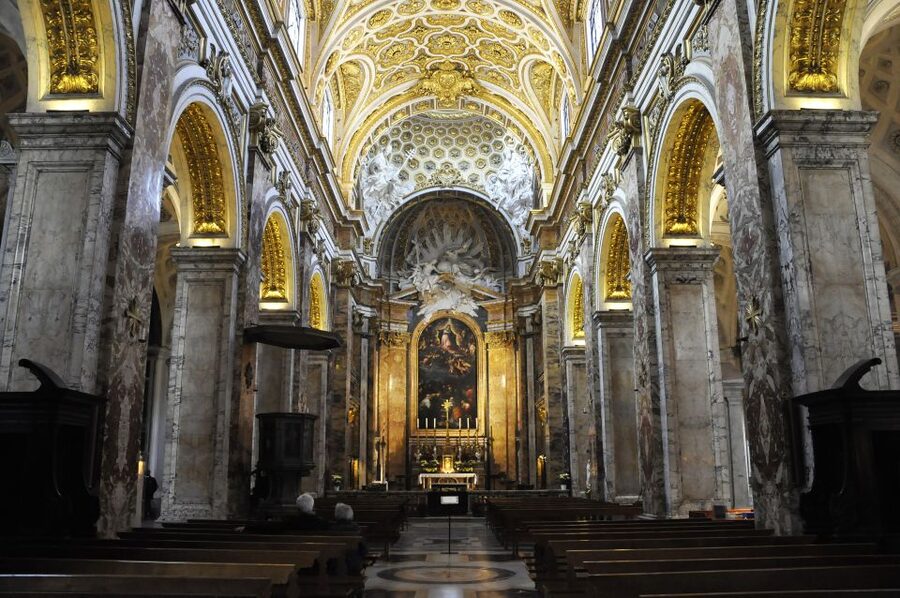
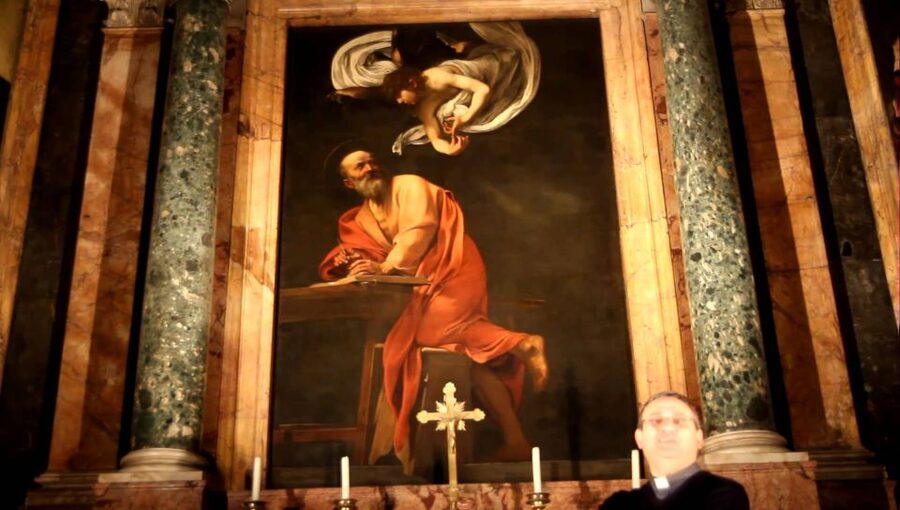
The Church of St. Louis of the French, or San Luigi dei Francesi, receives another 45-minute guided visit. This is one of the major stops because it contains three paintings representing stories from the life of Saint Matthew.
These were Caravaggio’s first altarpieces. That detail gives the church special importance, even if you know little about the artist. You are seeing the work that helped establish his name in Rome, not simply a later example selected because it is famous.
The three paintings form a natural group, so this is a good place to compare how Caravaggio handles narrative. Look at the figures, gestures, and use of darkness across the cycle. Your guide can help you see how the separate images work together and why the commission mattered.
This church may be the highlight for anyone especially interested in Caravaggio’s religious art. The drawback is the same as at Santa Maria del Popolo: the experience depends on being able to see the paintings clearly in their church setting. A live guide is helpful here because you can ask for repeated explanations or a closer reading of the individual scenes.
More private tours in Rome:
- Rome by Golf Cart Private Tour: Beyond the Landmarks
★ 5.0 · 4,361 reviews - Early Morning Vatican, Sistine, St. Peter’s Semi or Private Tour
★ 5.0 · 3,779 reviews - Rome on a Golf Cart Semi-Private Tour Max 6 with Private Option
★ 5.0 · 2,502 reviews - Rome Private Arrival Transfer: Fiumicino Airport to Hotel in Rome
★ 4.5 · 2,492 reviews
The Campo Marzio walk and Caravaggio’s Roman life
The itinerary gives 30 minutes to Rione IV Campo Marzio. This is the walking and context portion of the tour, not just filler between churches.
You’ll move through the district where Caravaggio lived and worked. That matters because his art is easier to place when you understand that these masterpieces were produced within the daily life of Rome, among streets, churches, workshops, and commissions.
I like this middle section because it breaks up the church interiors. Three hours of looking at dark paintings can become tiring, while a short walk gives you time to reset your eyes and absorb the story. The district also helps connect the paintings to the city rather than treating them as separate treasures.
Do not expect a full architectural tour of Campo Marzio. The stated focus is Caravaggio, his anecdotes, and his technical skill. If you want detailed information about every street or building, ask your guide whether the route can include that without cutting into the church visits.
Sant’Agostino and The Madonna of Pilgrims
The Basilica of St. Augustine, or Sant’Agostino, receives about 45 minutes. Here you see The Madonna of Pilgrims, one of the tour’s key works.
This painting is a good example of Caravaggio’s habit of giving sacred figures an immediate, human presence. The title itself points to pilgrims, and the picture lets you consider how ordinary people and holy figures meet within the same composition.
Your guide can explain the formal choices behind the work, including the handling of bodies, faces, and light. The tour description specifically calls attention to studying its form, so this stop should appeal to you if you want more than a quick photograph and a name.
Sant’Agostino also gives the route a useful change of scale. After the paired paintings at Santa Maria del Popolo and the three-part group at San Luigi dei Francesi, this is a chance to focus on one major image and examine how it works on its own.
What the private format changes
A private group of up to four people is a major part of the value. You do not have to follow a fixed discussion aimed at a large crowd, and you can ask for more or less detail depending on your interest.
If you are new to Baroque art, you can ask basic questions without feeling out of place. If you already know Caravaggio, you can spend more time on composition, lighting, commissions, or the differences between the three churches.
The guide service is described as a private official expert guide, and the available languages include English, Spanish, French, German, Italian, Arabic, Portuguese, and Russian. The named guides associated with this experience include Chiara and Maria. Chiara was praised for an engaging approach and for knowing a good gelato place, while Maria was described as an excellent guide. Guide assignment is not guaranteed, so treat those names as useful possibilities rather than a promise.
The language range is unusually helpful for a private experience. You can request the language that suits your group, but check availability before booking because not every guide or starting time will necessarily cover every language.
Is $456.21 good value for four people?
The price is $456.21 per group of up to four. That works out to about $114 per person if four people share the cost. For two people, the per-person figure rises to about $228, so the economics are much better for a small family or group of friends.
There are no required entrance tickets listed, which keeps the price easier to understand. Meals, drinks, and transport to or from the meeting point are not included. Since the churches are visited on foot, you mainly need to budget for getting to the start and leaving the route afterward.
I think the price is reasonable if you value personal guidance and want to see several important works in one organized walk. It is less attractive if you are comfortable using a guidebook and visiting churches independently. The strongest value comes when your group fills all four places and when you care about interpretation rather than simply locating the paintings.
A hotel drop-off by taxi can be arranged on request at your own expense. That is not a private vehicle transfer included in the price, so ask about the arrangement before relying on it.
Timing, walking, and practical comfort
The tour lasts three hours. The scheduled guided stops total 45 minutes at Santa Maria del Popolo, 45 minutes at San Luigi dei Francesi, 30 minutes in Campo Marzio, and 45 minutes at Sant’Agostino. The remaining time is used for walking, meeting, transitions, and the flow of the visit.
Wear comfortable shoes. The route is a walking tour through central Rome, and transportation is not supplied. You should also allow extra time before the start to find the bookshop meeting point.
The experience is listed as wheelchair accessible. If you use a wheelchair, confirm the exact route and church access when booking, since the tour moves through several separate religious buildings and streets.
A printed voucher is required. Bring it with you rather than assuming a phone screen will be enough. The tour is offered at set starting times, so check availability before arranging other plans.
You can cancel up to 24 hours in advance for a full refund, and the reserve-now, pay-later option keeps your plans flexible. Those terms are useful in Rome, where weather, transport delays, and shifting sightseeing plans can affect a tightly scheduled day.
Who will enjoy this Caravaggio walk most
I recommend this tour to you if you want a focused art experience without giving up a day to a museum. It suits first-time visitors who have heard of Caravaggio but want a clear introduction, as well as art lovers who want to see his Roman commissions in place.
It is especially good for a group of two to four people who can share the private cost. Families with older children may also find the strong light, bold gestures, and dramatic stories easier to follow than a long general art lecture.
You may want something else if your main goal is to see a broad range of Roman art. This tour concentrates on one artist and four locations. It also is not designed as a full biography of Caravaggio or a general tour of Rome’s churches.
Should you book the Genius of Caravaggio tour?
Book it if you want to understand why Caravaggio matters and prefer paintings in the churches that first commissioned them. The route gives you five major works across three churches, a short look at the Campo Marzio district, and a private guide who can adjust the discussion to your group.
I would book this for a small group, especially four people sharing the cost. Ask for your preferred language, confirm the guide and meeting details, and check the final stop because the supplied route information names both Piazza di Spagna and the original meeting point.
Skip it if you prefer to wander alone, need a very slow study of each painting, or want a wider survey of Roman art. For everyone else, this is a smart, compact way to meet Caravaggio where his Roman career took shape.
FAQ
How long does the Caravaggio tour last?
The tour lasts three hours.
How much does the private tour cost?
The price is $456.21 per group of up to four people.
Where does the tour start?
The meeting point is at the exit of the Altroquando bookshop at Via del Governo Vecchio, 82.
Which churches are included?
The route includes Santa Maria del Popolo, San Luigi dei Francesi, and the Basilica of St. Augustine, also called Sant’Agostino.
Which Caravaggio paintings are shown at Santa Maria del Popolo?
You see Saint Paul’s Conversion and The Crucifixion of Saint Peter.
What can I see at San Luigi dei Francesi?
You see three paintings representing stories from the life of Saint Matthew. They were Caravaggio’s first altarpieces.
Is the tour offered in English?
Yes. Available languages include English, Spanish, French, German, Italian, Arabic, Portuguese, and Russian.
Is this a private group tour?
Yes. The group is private and can include up to four people.
Are entrance tickets included?
No tickets are required according to the activity information. Meals, beverages, and transport to or from the tour are not included.
Is the tour wheelchair accessible?
Yes, the activity is listed as wheelchair accessible. Confirm the exact route and access arrangements when booking.
Can I cancel the booking?
Yes. You can cancel up to 24 hours in advance for a full refund.
Do I need to bring anything special?
A printed voucher is required. Bring it with you to the meeting point.
Newest Rome tours we have reviewed
- Private TikTok Video Making in Rome★ 5.0 · 7 reviews
- Assisi, Orvieto and Civita di Bagnoregio Full Day Tour from Rome★ 4.5 · 45 reviews
- Assisi & Saint Francis Path Tour from Rome★ 5.0 · 45 reviews
- Assisi and Cascia Private Day Tour from Rome with Lunch★ 5.0 · 10 reviews
- Art Class in the center of Rome!★ 4.0 · 4 reviews
- Art & Craft: Beer Tour with Street Art in Rome★ 4.5 · 6 reviews
- Arrival in Rome: Airport Transfer & Exclusive City Introduction★ 5.0 · 3 reviews
- From Rome: Private Day-Tour of Tuscany★ 5.0 · 16 reviews
Caravaggio and Baroque Art Tours, compared.
Terrazza Borromini Open-Air Opera with Aperitif
Read our review →
Borghese Gallery Max 6 People Tour: Baroque & Renaissance in Rome
Read our review →
Guided Walking Tour of Rome: Top Sights & Baroque Treasures
Read our review →
Renaissance Scarlet Ladies Tour: Caravaggio’s and Borgia’s Women
Read our review →
Rome’s Baroque Art Walking Tour: Who Killed Caravaggio?
Read our review →
Palazzo Barberini (Caravaggio Exhibition Is Not Included)
Read our review →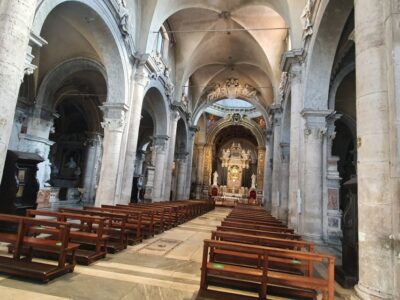
Browse the lists this tour appears in