
Reviewed · CASTEL SANT’ANGELO TOURS
Rome: Castel Sant’Angelo Skip-the-Line Ticket & Audio Guide
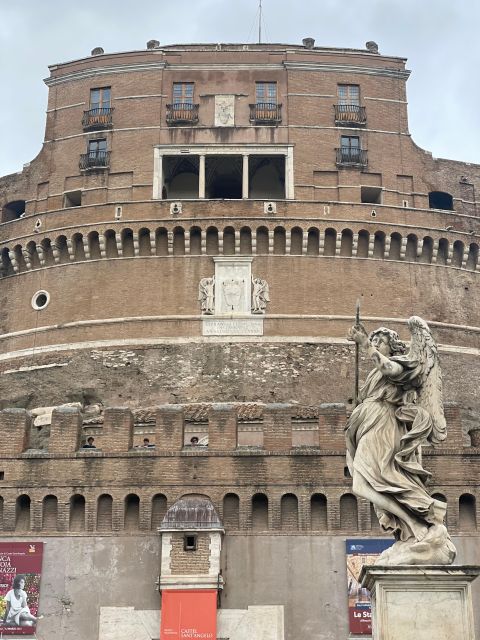
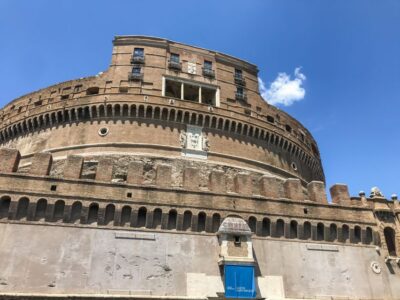
Castel Sant’Angelo is one of Rome’s best surprises. From the outside, it looks like a heavy round fortress. Inside, you find the tomb of Emperor Hadrian, papal rooms, old defensive spaces, art, and a rooftop terrace with broad views over the Tiber and St. Peter’s. The legend of Archangel Michael sheathing his sword above the building gives the castle its name and adds a fine bit of medieval drama.
I like the reserved entry because the ticket queue can be long, especially on a hot morning. I also like the freedom to explore at your own pace, with an optional phone audio guide rather than a fixed group schedule. The main catch is simple: you must arrive at your scheduled time, and the castle requires stair climbing, so this is not a good choice for wheelchair users or anyone with limited mobility.
Key points to know before you go

- The castle began as Hadrian’s tomb, then became a fortress and papal refuge over many centuries.
- Reserved entry can save real time, with some visitors finding the regular queue stretching around the corridor.
- The terrace is the payoff, with views of Rome, the Tiber, St. Peter’s, and Ponte Sant’Angelo.
- The audio guide is optional and app-based, so bring your own headphones and a charged phone.
- The visit is self-paced, which lets you stop for art, architecture, and views without waiting for a group.
- Stairs are part of the experience, especially if you want the highest panoramic terrace.
Why Castel Sant’Angelo is worth your time
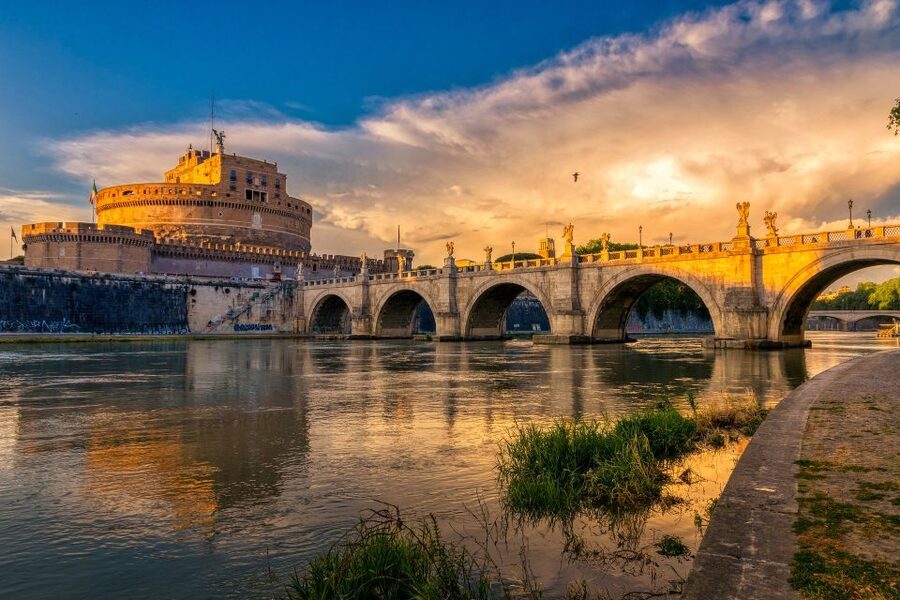
Rome has no shortage of ancient monuments, but Castel Sant’Angelo gives you several eras in one visit. It began as the Mausoleum of Hadrian, also called Hadrian’s Mole, built as the burial place of the Roman emperor Hadrian. Later, the structure became a military stronghold, a papal refuge, and a powerful symbol beside the road to the Vatican.
That changing purpose is what makes the building interesting. You are not simply walking through a single ancient ruin. You are moving through a place that was repeatedly altered to meet the needs of emperors, soldiers, and popes.
The castle sits on the right bank of the Tiber, a short walk from Vatican City. Its position gives the visit a useful place in a Rome day. You can pair it with the Vatican area, walk across Ponte Sant’Angelo, or use the castle as a quieter change of pace after crowded basilicas and museums.
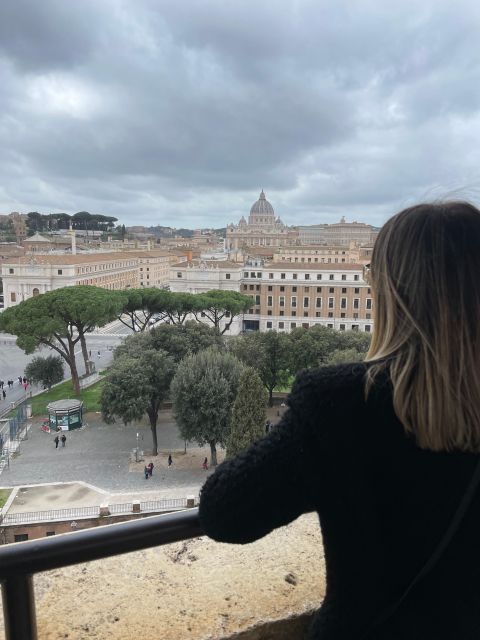
I especially like the way the castle reveals Rome from above. The terrace is not just a final photo stop. It helps you understand the city’s layout. The river, bridge, Vatican area, domes, rooftops, and streets all come together in one view.
More Castel Sant’Angelo tours:
- Rome: Castel Sant’Angelo Skip-the-Line Ticket
★ 4.4 · 3,040 reviews - Rome: Castel Sant’Angelo Skip-the-Line Entry Ticket
★ 4.8 · 2,231 reviews - Rome: Castel Sant’Angelo Skip-the-Line Guided Tour
★ 4.7 · 1,665 reviews
Entering with a reserved time slot
This is a ticketed entry experience rather than a traditional guided tour. You do not meet a guide at a street corner or travel as part of a group. Your ticket is sent by email or WhatsApp, generally about 24 hours before the visit or in the late afternoon of the day before.
That arrangement is convenient, but it puts more responsibility on you. Check your messages before leaving your hotel, download anything required, and keep the ticket easy to reach on your phone. Entry is tied to a scheduled time. Arriving late can mean being refused entry without a refund.
The skip-the-line feature is most useful when the regular ticket queue is long. At quiet times, particularly in February, you may find little or no line and wonder if the extra cost was necessary. At busy times, though, walking past a queue in the heat can make the price worthwhile.
The listed cost is about $20 per person, while the official ticket price is listed as €16. You are paying the difference for reserved access and the convenience of arranging the visit through a booking service. I would judge the value by your schedule. If you have a full Rome day planned, or you are visiting during a busy period, saving time may be worth more than the price difference. If you are visiting in a quiet season and can tolerate uncertainty, buying an official ticket may offer better value.
Hadrian’s mausoleum and the castle’s first layer
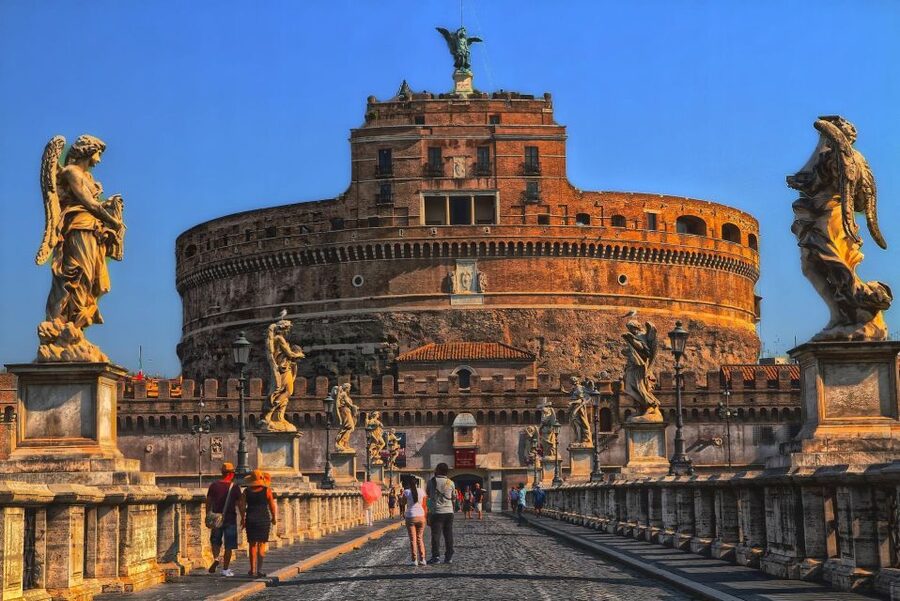
Once inside, begin by thinking of the building as a tomb before treating it as a castle. Hadrian’s original mausoleum was designed to make a strong statement about imperial power and remembrance. The massive circular form still feels different from Rome’s usual rectangular ruins.
The visit gives you a chance to see the structure as a complete building rather than a scattered archaeological site. As you move through it, look for the way thick walls, enclosed passages, and changes in level reveal the building’s defensive role.
The castle contains plenty of information panels and signs, so you can manage without the audio guide. That is useful if you prefer to look closely, read at your own speed, and pause whenever something catches your attention.
I would not rush this part. The building can feel plain from outside, but the interior has more variety than you might expect. Several levels open up different views and show how the original tomb was adapted over time.
Papal corridors, rooms, and changing uses
Castel Sant’Angelo is closely tied to the papacy. Its fortified position made it a safe retreat, and papal passages connected the castle with the Vatican area. Seeing these corridors helps explain why this otherwise imposing Roman monument remained important long after the imperial period.
The papal spaces add a different mood from the tomb and military areas. You may find decorated rooms, art, and architectural details that make the castle feel less like a bare fortress. The experience works best when you pay attention to the contrast between ceremonial rooms and defensive construction.
An audio guide can help here because the building’s history is not always obvious from the stonework alone. The optional app is available in English, Italian, French, Spanish, German, and Chinese. It includes text as well as spoken information, which is handy if you prefer to read or if you have forgotten headphones.
The phone format also lets you stop and restart sections. You are not tied to a guide’s pace. That freedom was one of the strongest reasons to choose this option for me, especially in a building where you may want extra time in one room and only a quick look at another.
There are practical limits. You need a compatible Android or iOS phone, at least 100 to 150 MB of free storage, and a charged battery. The app does not support older devices such as the iPhone 5 or 5C, older iPod Touch and iPad models, or Windows Phones. Bring your own headphones because they are not included.
More self-guided and audio tours in Rome:
- Rome: Colosseum & Forum with Audio Guide App -Optional Arena
★ 4.2 · 24,770 reviews - Rome: City Sightseeing Hop-on Hop-off Bus with Audioguide
★ 4.0 · 16,045 reviews - Rome: St. Peter’s Basilica & Dome Entry Ticket & Audio Tour
★ 4.2 · 7,537 reviews - Vatican & Sistine Chapel Ticket with Optional Audio Guide
★ 4.1 · 5,405 reviews
The Archangel Michael legend

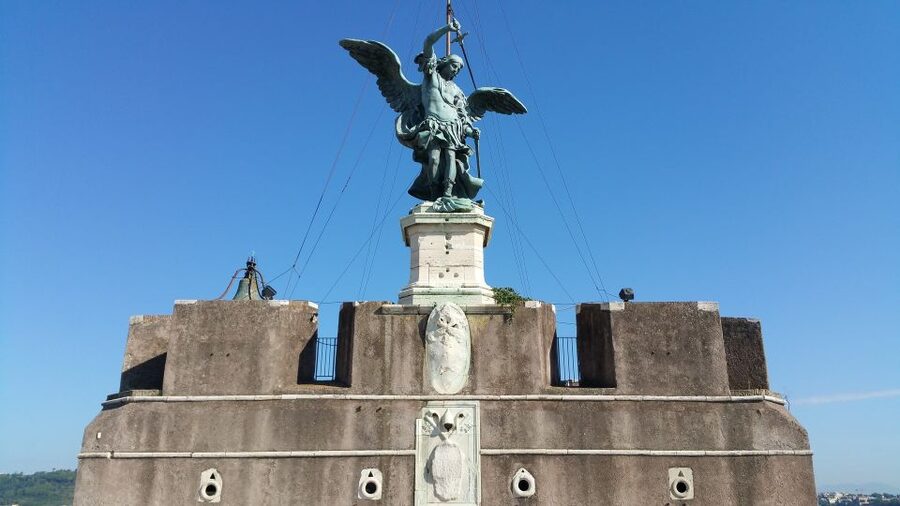
The castle’s present name comes from a story connected to the plague of 590. According to the legend, Archangel Michael appeared above the mausoleum and sheathed his sword, signaling that the plague had ended.
You do not need to treat the story as a historical fact to appreciate its effect on the building. It explains why a former imperial tomb became known as Castel Sant’Angelo, or Castle of the Holy Angel. It also shows how Christian Rome gave older Roman structures new meaning.
This is a good place to use the audio guide if you enjoy context. Without explanation, you may notice the castle’s shape and views but miss the reason the name matters. With the story in mind, the statue and the building’s later identity make more sense.
Climbing toward the panoramic terrace
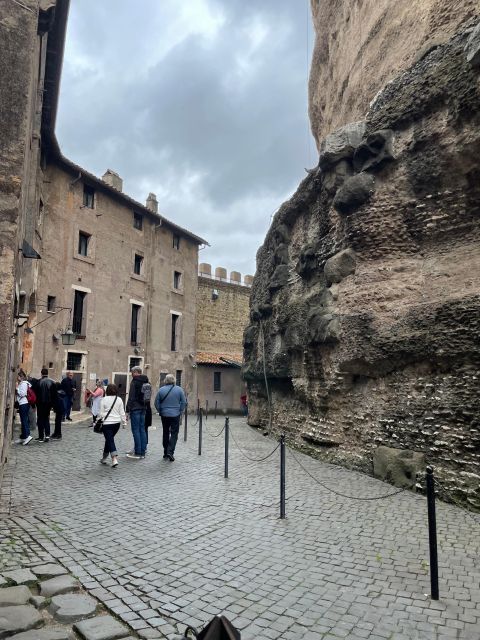
The highest part of the visit requires stairs. That is worth knowing before you book, especially if you have knee, balance, or mobility concerns. The activity is specifically not suitable for wheelchair users or people with mobility impairments.
The climb is rewarded by some of the finest views in this part of Rome. From the terrace, you can look across the city and along the Tiber. St. Peter’s and the Vatican area are especially important points to look for, and Ponte Sant’Angelo provides the classic view below.
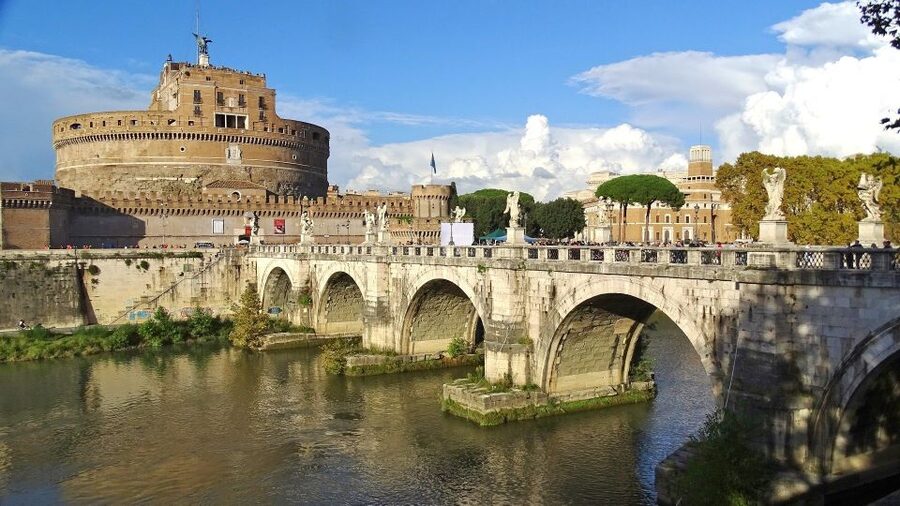
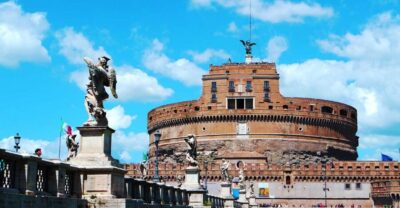
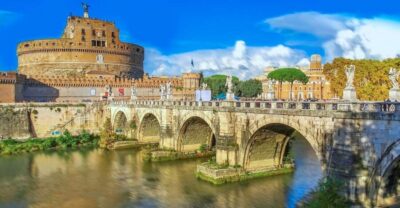
The bridge, also called the Bridge of Angels, leads toward the castle with a line of angel sculptures. From above, you get a better sense of how bridge, river, and fortress work together. Take your time with photographs, but remember that the terrace can be exposed to sun and weather.
There is also a café partway up, with views toward Vatican City. It can be a pleasant pause, though the rooftop restaurant or café may be busy. I would not build the visit around getting a table. Treat it as an optional break, not a guaranteed part of the ticket.
The terrace is the most praised part of the experience for good reason. You get open views in several directions, and the height gives Rome a different character from street level. Even in rain, the interiors and city views can still make the visit worthwhile, though clear weather will give you better photographs.
How long should you allow?
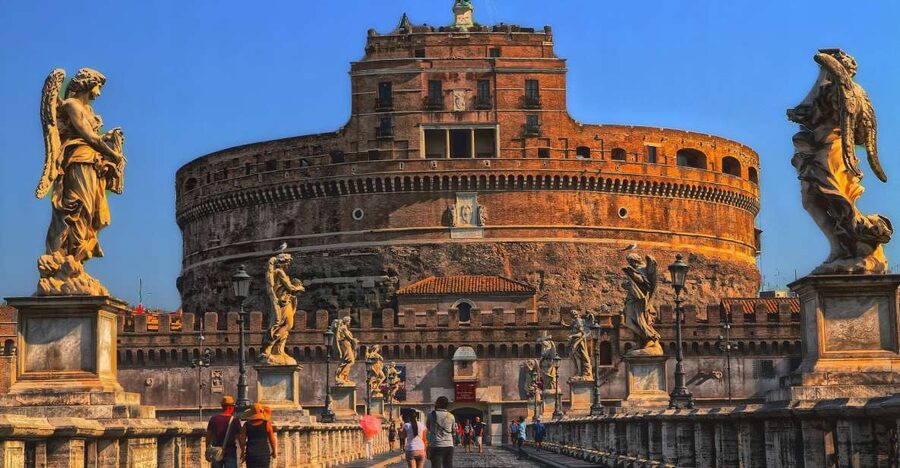
The ticket is valid for one day, but entry takes place at a scheduled time. The actual visit is self-guided, so the length depends on how much you read, how carefully you explore, and how long you spend on the terrace.
You could make a quick visit, but I would allow at least two hours if you want to see the main spaces without rushing. Some people spend three or four hours here, especially when they use the audio guide, read the information, stop for photographs, or take a break at the café.
The last entry is at 6:30 PM. Do not assume that a late arrival gives you enough time for the full experience. The building has several levels, and the terrace requires stairs, so an early or mid-day entry gives you more breathing room.
Early morning can be a smart choice. It may reduce queues and leave the rest of the day open for the Vatican or central Rome. Still, the reserved ticket remains useful at other times because conditions can change quickly.
What to bring and what to leave behind
Wear comfortable shoes. The castle involves uneven historic spaces and stairs, and the terrace is only reached by climbing.
Bring these essentials:
- Passport or ID card
- Charged smartphone
- Headphones
- Your digital ticket
- Enough phone storage for the audio guide, if selected
Large bags and luggage are not allowed, and pets are not permitted. Weapons and sharp objects are also prohibited. Pack lightly so the entry process stays simple.
I would download the audio guide before arriving rather than trying to manage the app at the entrance. You receive download instructions after booking, and a reliable phone battery matters more than usual when your ticket and guide are both digital.
Because restoration work and access routes can change during the Jubilee period, check any messages sent before your visit. A route inside the monument may not be exactly as expected.
Who will enjoy this visit most?
This experience suits you if you like history but prefer to set your own pace. You can read everything, skip sections, linger over the views, or use the audio guide only when a room needs explanation.
It is also a good choice for photographers and first-time visitors who want a clear view of the Vatican area from above. The bridge and terrace provide strong photo opportunities, while the interior gives you more substance than a quick viewpoint alone.
Families with older children may enjoy the fortress feel and the story of the angel. The stairs and long self-guided format may be less appealing to very young children, but the ticket does not impose a group schedule.
This is not the best choice if you need step-free access, dislike using your phone during sightseeing, or want a live guide to answer questions. You can visit without the audio guide, but you will need to rely on signs and your own reading.
Is the audio guide worth adding?
For most first-time visitors, I think it is a useful extra, provided your phone and headphones are ready. Castel Sant’Angelo has several identities, and an audio guide can connect the tomb, fortress, papal refuge, angel legend, and terrace into one story.
The main benefit is control. You can listen to a section while walking, pause it for photographs, and continue when you are ready. You are not waiting for a group, and you do not need to collect a separate headset.
Still, the audio guide is not essential. The castle has information to read, and some people prefer to look around without holding a phone. If you are comfortable exploring independently, choose the basic ticket and save the extra cost.
My verdict: book it or skip it?
Book this experience if you want a convenient entry time, expect queues, and like exploring without a live group. The best parts are the mix of Roman, military, and papal history, the bridge views, and the open terrace above the city.
Choose the audio guide if you want more context and have a compatible phone. Skip it if you prefer printed information or a screen-free visit.
I would be more cautious about booking at a premium during a very quiet season, when the normal queue may be short. Even then, Castel Sant’Angelo itself is worth seeing. The ticket mainly decides how much you value advance planning and saved time.
FAQ
Where is Castel Sant’Angelo?
It is on the right bank of the Tiber in Rome, a short distance from Vatican City.
Is this a guided tour?
No. It provides reserved entry, with an optional app-based audio guide. You explore the castle independently.
What languages are available for the audio guide?
The audio guide is available in English, Italian, French, Spanish, German, and Chinese.
When will I receive my ticket?
The ticket is sent by email or WhatsApp about 24 hours before the activity, generally in the late afternoon of the day before your entry date.
Do I need to arrive at a specific time?
Yes. Entry is allowed only at the scheduled time. Late arrival may lead to denied access without a refund.
Is the castle suitable for wheelchair users?
No. The activity is not suitable for wheelchair users or people with mobility impairments, and stairs are required to reach the panoramic terrace.
What is the latest entry time?
The last entry to Castel Sant’Angelo is at 6:30 PM.
More skip-the-line tickets in Rome
- Vatican Museums & Sistine Chapel Skip-the-Line Entry Ticket
★ 4.4 · 13,838 reviews - Skip-the-Line Group Tour of the Vatican, Sistine Chapel & St. Peter’s Basilica
★ 4.5 · 12,779 reviews - Vatican, Sistine Chapel & St. Peter’s Skip-the-Line Tour
★ 4.5 · 7,770 reviews - Skip-the-Line Vatican, Sistine Chapel & St. Peter’s | Small Group
★ 5.0 · 7,060 reviews
Newest Rome tours we have reviewed
- Private TikTok Video Making in Rome★ 5.0 · 7 reviews
- Assisi, Orvieto and Civita di Bagnoregio Full Day Tour from Rome★ 4.5 · 45 reviews
- Assisi & Saint Francis Path Tour from Rome★ 5.0 · 45 reviews
- Assisi and Cascia Private Day Tour from Rome with Lunch★ 5.0 · 10 reviews
- Art Class in the center of Rome!★ 4.0 · 4 reviews
- Art & Craft: Beer Tour with Street Art in Rome★ 4.5 · 6 reviews
- Arrival in Rome: Airport Transfer & Exclusive City Introduction★ 5.0 · 3 reviews
- From Rome: Private Day-Tour of Tuscany★ 5.0 · 16 reviews
Castel Sant’Angelo Tours, compared.

Castel Sant’Angelo Skip-the-Line Entry Ticket
Read our review →



Browse the lists this tour appears in