
Reviewed · CARAVAGGIO AND BAROQUE ART TOURS
Rome: Caravaggio and Baroque Art Private Guided Tour
Caravaggio’s Rome is best understood in the places where his paintings were made for worship, not behind museum glass. This private walk takes you from the shadowy drama of Santa Maria del Popolo to the Contarelli Chapel, the Pantheon, and Bernini’s fountain in Piazza Navona.
I especially like two things here: you see major Caravaggio paintings in their original churches, and a private guide can adjust the pace when a painting deserves more time. The guide also connects art to Caravaggio’s rough Roman life, including his former homes and the violent episodes that helped shape his legend.
The main consideration is pace. Three hours covers a lot of central Rome, so you will walk between churches and outdoor sights rather than linger at every stop. Modest clothing is also essential, since shoulders and knees must be covered inside places of worship.
Key points to know before you book
- Two powerful Caravaggio paintings begin the walk: The Crucifixion of St. Peter and The Conversion of St. Paul in Santa Maria del Popolo.
- The Contarelli Chapel is the artistic high point: See Caravaggio’s cycle on The Life of St. Matthew in the Church of St. Louis of France.
- A private art historian guide keeps the experience focused: English and Italian tours are available, with the freedom to ask questions as you go.
- The route links art with Rome’s political past and present: You pass Palazzo Madama, Giustiniani Palace, and Montecitorio Palace.
- Baroque Rome gets its grand finale: Piazza Navona brings together Bernini’s Fountain of the Four Rivers and Borromini’s Sant’Agnese in Agone.
- Plan for church dress rules: Shorts, short skirts, and sleeveless shirts are not allowed, and shoulders and knees must be covered.
Why Caravaggio makes this Rome walk special
Michelangelo Merisi, known as Caravaggio, spent an important and unsettled part of his life in Rome. His paintings changed religious art by bringing sacred scenes close to ordinary human experience. Saints look tired, shocked, poor, or frightened. Light cuts across the darkness like a spotlight, telling you where to look and what to feel.
That effect is much stronger in the churches for which the paintings were commissioned. You are not simply examining an artwork on a white museum wall. You are seeing it in a chapel designed to frame the scene, with the painting still connected to prayer, ritual, and the architecture around it.
This tour also helps you read Rome as a working city rather than a collection of isolated monuments. Former palaces now serve as government offices. Churches remain active places of worship. Grand squares still function as public spaces. The art comes alive because the city around it has not been cleared away.
More Caravaggio and baroque art tours:
- Rome: Terrazza Borromini Open-Air Opera with Aperitif
★ 4.7 · 212 reviews - Borghese Gallery Max 6 People Tour: Baroque & Renaissance in Rome
★ 5.0 · 185 reviews - Guided Walking Tour of Rome: Top Sights & Baroque Treasures
★ 5.0 · 155 reviews
Starting at Piazza del Popolo and Santa Maria del Popolo
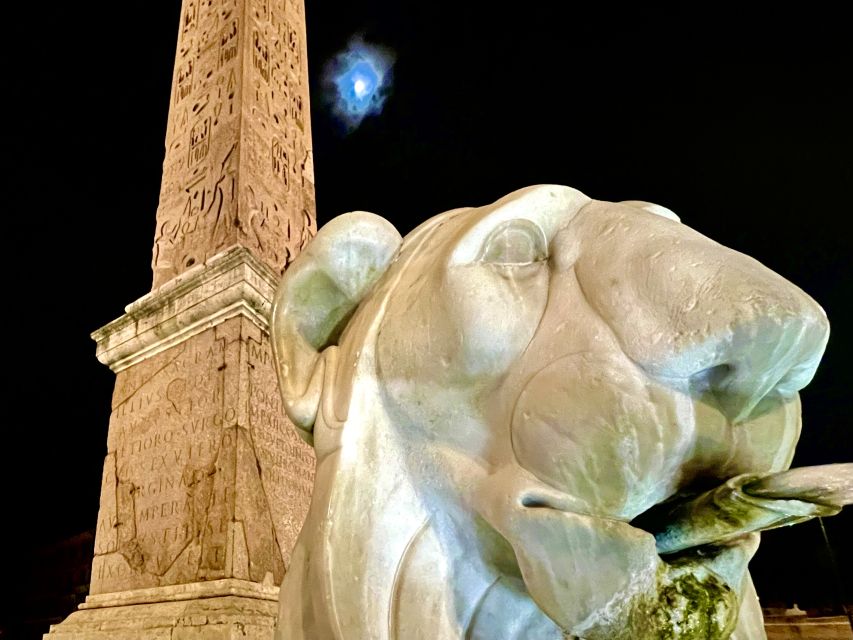
Meet your guide beside the obelisk in the center of Piazza del Popolo, near number 7. Arrive 10 to 15 minutes early. The guide will carry a sign with your name, which should make the meeting fairly easy in a large square.
Piazza del Popolo gives you a useful first look at Rome’s monumental scale. It is broad, formal, and built to impress visitors arriving from the north. Your guide spends about 10 minutes orienting you to the square before taking you into the nearby Basilica of Santa Maria del Popolo.
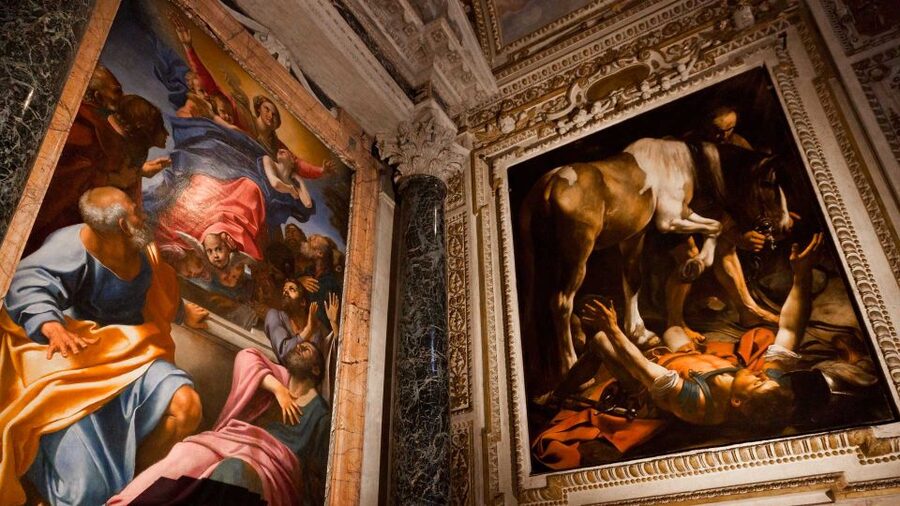
Inside, the focus turns sharply from open space to Caravaggio’s concentrated drama. In the Cerasi Chapel, you see The Crucifixion of St. Peter and The Conversion of St. Paul, two paintings that show his talent for physical force and sudden spiritual change.
The Crucifixion of St. Peter is deliberately awkward and heavy. Peter is not presented as a polished hero. His body twists under the effort of the executioners, and the scene feels close enough to touch. In The Conversion of St. Paul, the saint’s horse dominates the space while Paul lies stunned below. The divine event is shown through confusion, darkness, and a beam of light.
Your guide can help you notice how Caravaggio directs your eye. You might first see a face or hand, then recognize the larger scene around it. That slow reveal is part of the pleasure. Give these works a few quiet minutes if the church conditions allow.
Caravaggio’s former homes and Rome’s government palaces
After Santa Maria del Popolo, the walk continues through central Rome. You pass Palazzo Madama, now the seat of the Italian Senate, and Giustiniani Palace, which houses Senate offices. These are exterior stops, so you should not expect a palace interior visit.
Their value is biographical. Caravaggio’s Rome was not only churches and commissions. It was also a city of patrons, artists, officials, taverns, rivalries, and legal trouble. Seeing the locations connected with his life gives your guide a chance to explain the social world around his paintings.
You also pass Montecitorio Palace, another major government building. Its architecture and present-day role add a different layer to the walk. I like this part because it prevents the tour from becoming a simple checklist of paintings. Rome’s Baroque story is tied to power, religion, money, and public display.
Still, remember that the palaces are pass-by points. If your priority is entering historic buildings, the churches provide most of the interior time.
The Contarelli Chapel at St. Louis of France
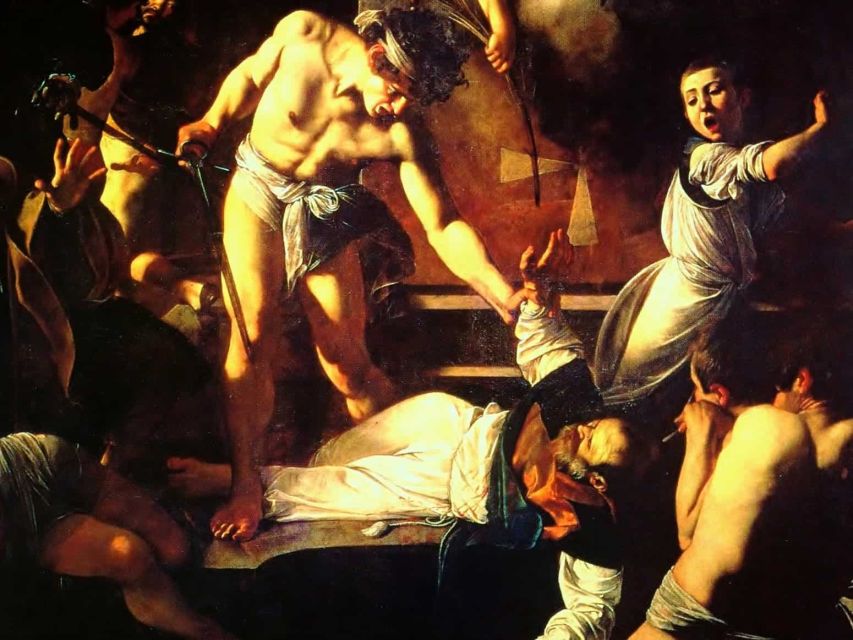
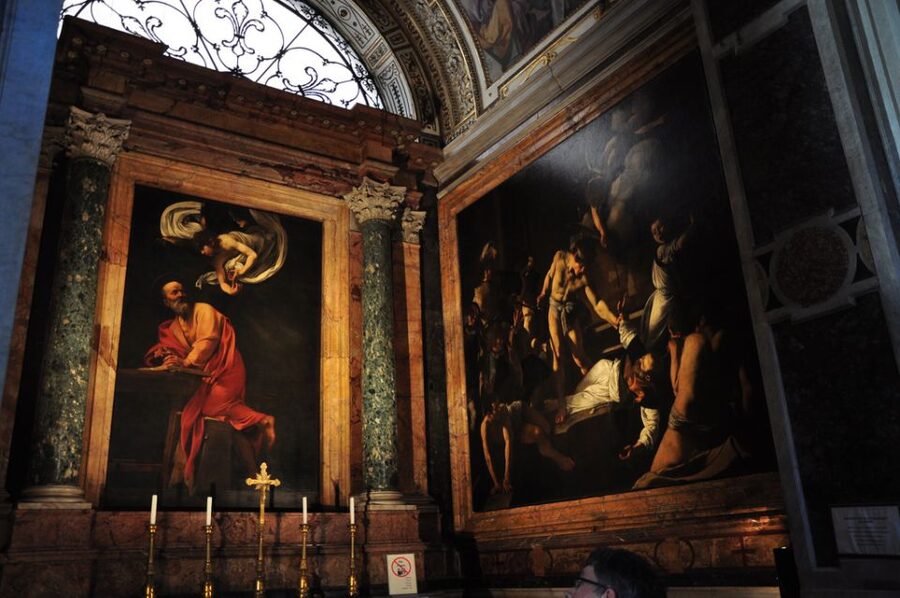
The Church of St. Louis of France is one of the tour’s most important stops. You spend about 20 minutes here, examining Caravaggio’s Life of St. Matthew cycle in the Contarelli Chapel.
This is where his storytelling becomes especially direct. In The Calling of St. Matthew, a shaft of light cuts into a dark room as Christ points toward Matthew. The setting feels less like a biblical scene and more like a group of men interrupted at work. That was one of Caravaggio’s great shocks: holy events could happen among people who looked like the people you passed on the street.
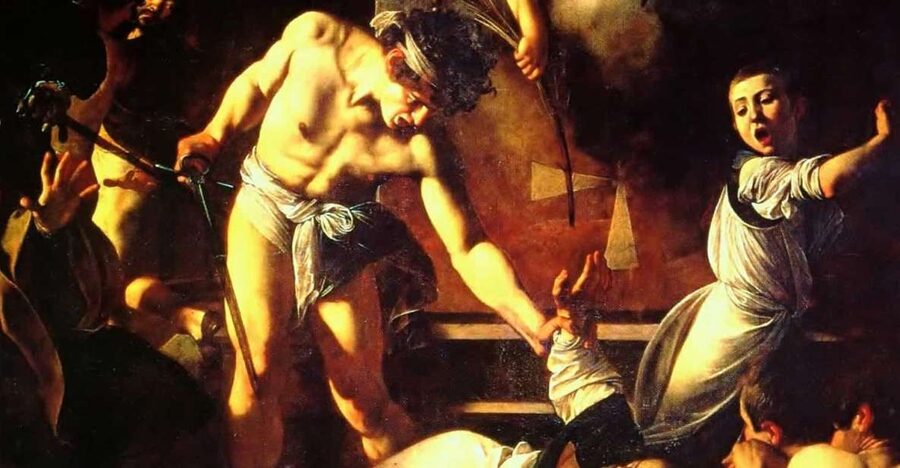
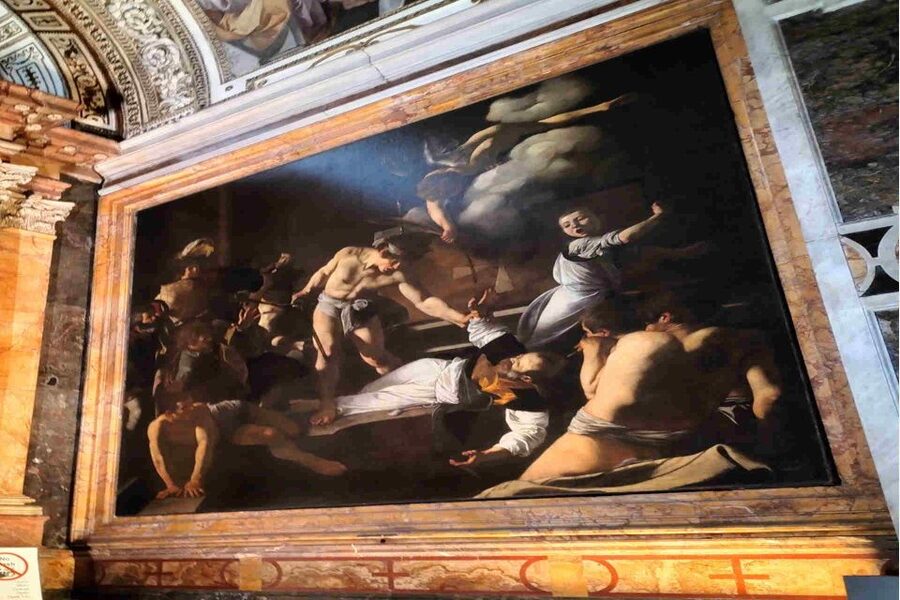
The cycle also includes The Inspiration of St. Matthew and The Martyrdom of St. Matthew. Together, the paintings show the saint’s calling, his writing, and his death. Your guide can explain how the three works are arranged and how the chapel’s architecture helps turn them into a single visual story.
This stop is especially worthwhile for anyone who has seen Caravaggio in a museum and wants to understand his original setting. The chapel changes the scale and mood of the paintings. You can also appreciate the contrast between the dark backgrounds and the bright, almost theatrical figures.
Because the church is an active place of worship, access and viewing conditions can change. The overall schedule may also shift because of logistical issues or unexpected closures. Flexibility matters here.
More private tours in Rome:
- Rome by Golf Cart Private Tour: Beyond the Landmarks
★ 5.0 · 4,361 reviews - Early Morning Vatican, Sistine, St. Peter’s Semi or Private Tour
★ 5.0 · 3,779 reviews - Rome on a Golf Cart Semi-Private Tour Max 6 with Private Option
★ 5.0 · 2,502 reviews - Rome Private Arrival Transfer: Fiumicino Airport to Hotel in Rome
★ 4.5 · 2,492 reviews
Madonna of the Pilgrims at Sant’Agostino
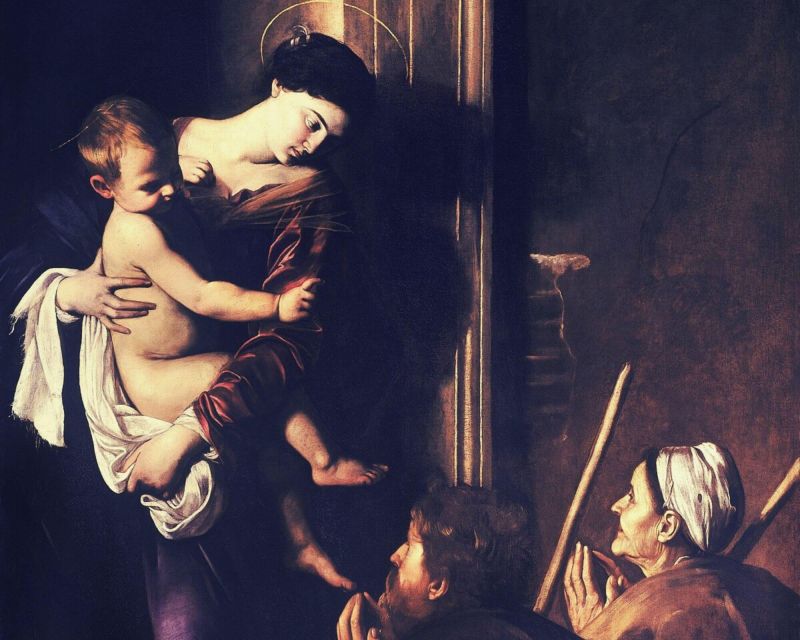
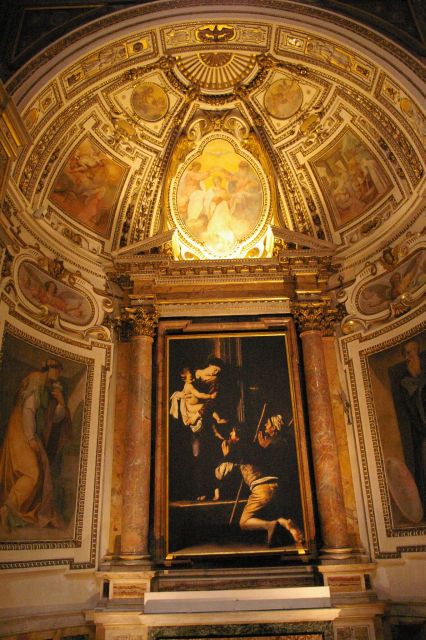
The Basilica of St. Augustine adds another major Caravaggio work, Madonna of the Pilgrims. The painting is often called the Madonna di Loreto, and it caused a stir because of the way Caravaggio portrayed the figures.
Mary appears at a doorway with the Christ child in her arms. Two tired pilgrims kneel before her, their dirty feet visible in the foreground. Instead of presenting religious figures as distant and flawless, Caravaggio gives the scene physical weight and human vulnerability.
Your guide can point out how the doorway works almost like a stage. The figures step into view, and the viewer becomes part of the encounter. The painting’s emotional force comes from that closeness.
This church stop lasts about 15 minutes. That is enough to understand the painting and its setting, but not necessarily enough for a long independent study. If you already know Caravaggio well, tell the guide what interests you most so the private format can work in your favor.
The illusion and grandeur of Sant’Ignazio
The Church of St. Ignatius of Loyola offers a change of mood. Here the main attraction is Baroque architecture and painted illusion rather than another Caravaggio canvas.
Sant’Ignazio is known for its dramatic interior effects. Baroque artists wanted architecture to feel active, theatrical, and full of movement. Your guide can explain how the church creates an impression of height and grandeur, even where the structure itself has limits.
This stop helps place Caravaggio within the wider Baroque world. Caravaggio’s dark realism is intense and personal. Sant’Ignazio shows another side of the period, with spectacle, grandeur, and visual tricks designed to lift the eye upward.
You spend about 15 minutes inside. Comfortable shoes matter because this is a walking tour, and the route includes several churches and outdoor stretches. The tour is not described as difficult, but it does involve a moderate amount of walking.
Passing the Pantheon on the way to Piazza Navona
The Pantheon is a pass-by stop, with about 10 minutes for its exterior and the guide’s explanation. You should not expect a dedicated interior visit as part of this experience.
Even from outside, the Pantheon is an important part of the route. Its ancient form influenced later Roman architecture, including the grand buildings and churches that came after it. Your guide can explain its place in the city’s long architectural story before the walk turns toward Baroque Rome.
This is also a good point to reset your expectations. The experience is about selected works and the connections between them, not full visits to every major monument along the route. If you want extensive time inside the Pantheon, you may need to arrange that separately.
Bernini, Borromini, and the finish at Piazza Navona
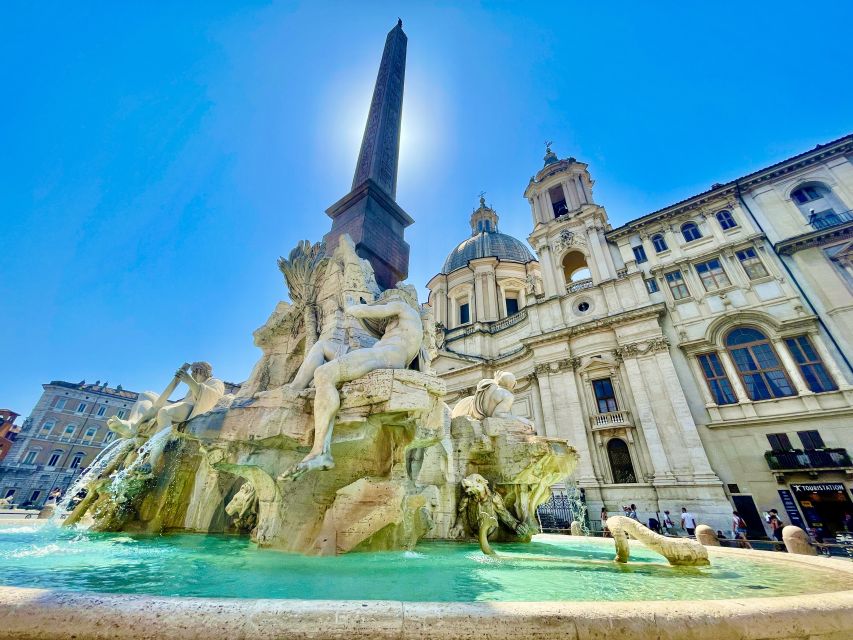
The tour ends in Piazza Navona, one of Rome’s great public spaces. The square’s long shape follows the outline of an ancient stadium, while its Baroque design turns the setting into a grand urban stage.
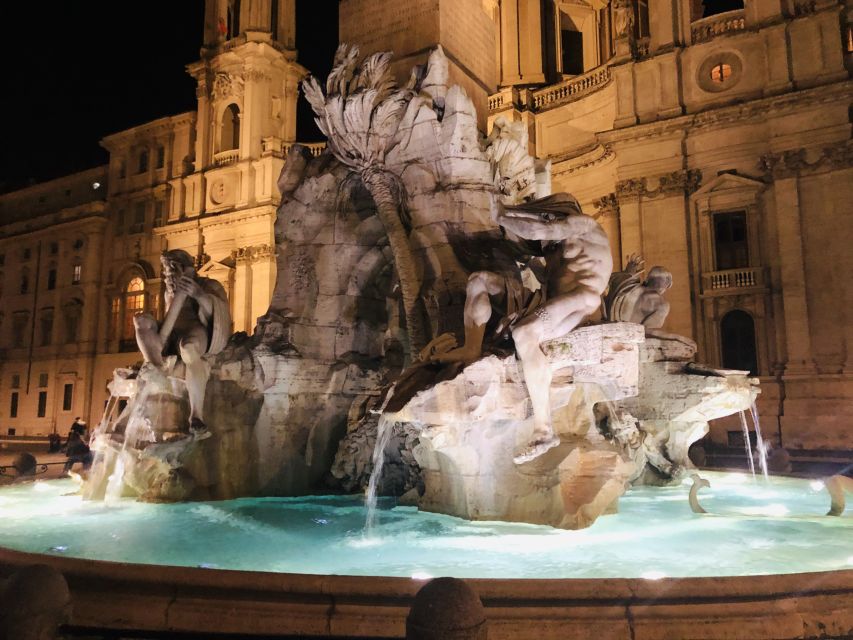
At the center is Bernini’s Fountain of the Four Rivers, with its bold figures, rocks, water, and towering obelisk. The fountain represents four major rivers from different parts of the world. Your guide can explain the symbols and the famous rivalry between Bernini and Francesco Borromini.
Facing the square is the Church of Sant’Agnese in Agone, with its striking façade designed by Borromini. The relationship between the fountain and church makes this a useful final lesson in Baroque art. Bernini works through movement and sculptural energy. Borromini uses curves, tension, and architectural complexity.
The guide also tells the final chapter of Caravaggio’s Roman life here. His time in the city ended in trouble and uncertainty, and the story gives a darker edge to the artistic triumphs you have just seen.
The listed finish is Piazza Navona. Another meeting-point note says the activity ends back at the meeting point, so confirm the exact end arrangement when you book. Either way, Piazza Navona is a convenient place to continue your own Rome walk.
What the private format is worth
The price is $158.60 per person, with a minimum booking of two people. For two people, that means $317.20 before any extra spending on food or drinks.
That is a serious price for a three-hour walk, but it buys more than simple entry. You get a professional art historian guide, a private group, and privileged skip-the-line admission. The main value is the explanation. Caravaggio’s paintings reward context, and a strong guide can show you details that are easy to miss when you enter alone.
The private setup is also useful if you have a specific interest in Baroque art, religious painting, or Caravaggio’s biography. You can ask questions without competing with a large group, and the guide can spend more time on the paintings that matter most to you.
The value is weaker if you prefer to wander slowly, take many photographs, or spend a long time at every church. Three hours and 12 listed points create a clear route, but not a leisurely one. Food, drinks, and hotel pickup are not included.
Past feedback gives particular praise to the informative nature of the experience, and Emilio is named as an outstanding guide. Guide assignments can vary, so you should not assume Emilio will lead your tour, but his name suggests the kind of art-focused presentation the experience aims to provide.
Practical details that can make or break the walk
Choose comfortable shoes. The route links Piazza del Popolo, several churches, the Pantheon area, and Piazza Navona on foot.
Dress for church entry from the beginning. Cover your shoulders and knees. Shorts, short skirts, and sleeveless shirts are not allowed, and you risk being refused entry if your clothing does not meet the rules.
Bring a passport or ID card, as requested for the activity. Food and drinks are not included, so carry water if you need it.
English and Italian tours are available. A headset is provided only for groups larger than eight people. Since this is a private group, you may not receive one, but the smaller format should usually make direct conversation easier.
The tour requires at least two people per booking. It lasts three hours, and starting times depend on availability. You can cancel up to 24 hours in advance for a full refund, and the reserve-now, pay-later option lets you hold a place without paying immediately.
Who should book this Caravaggio tour?
I would choose this experience if you already care about painting, church interiors, or the way art fits into a city. It is also a good choice for a first visit to Rome if you want a guided route through the historic center without spending a full day on one museum.
It suits couples, families with older children, and small private groups who value questions and personal attention. The guide’s art historian background is especially useful because the stops are selected for meaning, not just fame.
I would hesitate if your main goal is ancient Rome, shopping, food, or a relaxed sightseeing walk. The Pantheon is only passed by, and the government palaces are exterior views. You should also think twice if you dislike church dress rules or moderate walking.
Should you book it?
Book it if seeing Caravaggio in his original Roman churches matters to you. The strongest parts are Santa Maria del Popolo, St. Louis of France, and Sant’Agostino, while Piazza Navona provides a fine Baroque finish.
The price makes the most sense for two or more people who want a private guide and focused art commentary. If you prefer to explore independently, you can visit many of these churches on your own, but you will miss the connected story of Caravaggio’s work, life, patrons, and rivals.
FAQ
How long does the tour last?
The tour lasts three hours.
Where does the tour begin?
It begins at Piazza del Popolo, next to the obelisk in the middle of the square. The address provided is Piazza del Popolo, 7.
Where does the guide meet the group?
The guide meets you next to the obelisk and carries a signboard with your name.
Where does the tour finish?
The listed finish is Piazza Navona. Another meeting note says the activity ends back at the meeting point, so confirm the exact end arrangement when booking.
What languages are available?
The live tour guide is available in English and Italian.
Is this a private tour?
Yes. It is offered as a private group experience.
What Caravaggio paintings are included?
The route includes The Crucifixion of St. Peter and The Conversion of St. Paul in Santa Maria del Popolo, The Life of St. Matthew cycle in the Contarelli Chapel, and Madonna of the Pilgrims in Sant’Agostino.
Is skip-the-line admission included?
Yes. Privileged skip-the-line admission is included.
What should I wear?
Wear comfortable clothes and shoes, with shoulders and knees covered for entry into places of worship.
Are food, drinks, and hotel transfers included?
No. Food, drinks, hotel pickup, and hotel drop-off are not included.
Newest Rome tours we have reviewed
- Private TikTok Video Making in Rome★ 5.0 · 7 reviews
- Assisi, Orvieto and Civita di Bagnoregio Full Day Tour from Rome★ 4.5 · 45 reviews
- Assisi & Saint Francis Path Tour from Rome★ 5.0 · 45 reviews
- Assisi and Cascia Private Day Tour from Rome with Lunch★ 5.0 · 10 reviews
- Art Class in the center of Rome!★ 4.0 · 4 reviews
- Art & Craft: Beer Tour with Street Art in Rome★ 4.5 · 6 reviews
- Arrival in Rome: Airport Transfer & Exclusive City Introduction★ 5.0 · 3 reviews
- From Rome: Private Day-Tour of Tuscany★ 5.0 · 16 reviews
Caravaggio and Baroque Art Tours, compared.
Terrazza Borromini Open-Air Opera with Aperitif
Read our review →
Borghese Gallery Max 6 People Tour: Baroque & Renaissance in Rome
Read our review →
Guided Walking Tour of Rome: Top Sights & Baroque Treasures
Read our review →
Renaissance Scarlet Ladies Tour: Caravaggio’s and Borgia’s Women
Read our review →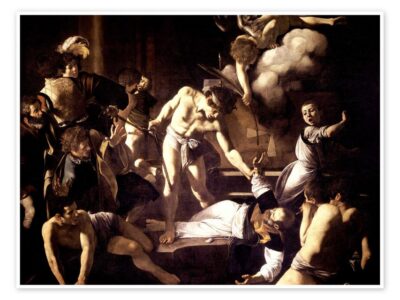
Rome’s Baroque Art Walking Tour: Who Killed Caravaggio?
Read our review →
Palazzo Barberini (Caravaggio Exhibition Is Not Included)
Read our review →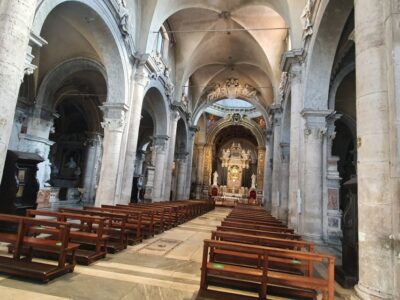
Browse the lists this tour appears in