
Reviewed · 2-HOUR EXPERIENCES
Rome: 2-Hour Gladiator School
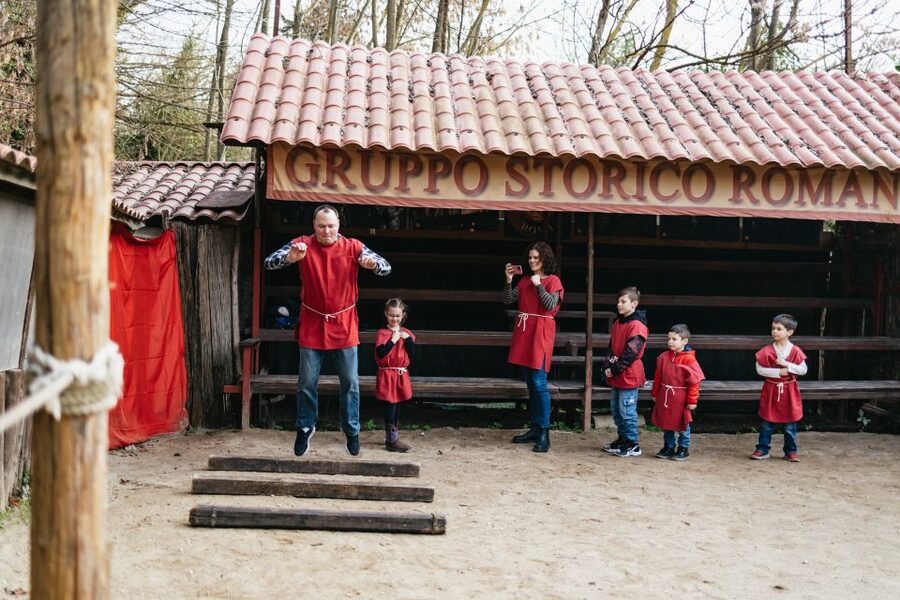
Roman gladiator school is exactly the sort of unusual Rome activity that can rescue a family trip from a long run of museums and ancient stones. At Gruppo Storico Romano on the Via Appia Antica, you put on a tunic, handle Roman-style weapons, learn basic sword movements, and work toward a staged battle with foam swords.
I like the steady mix of history and action. You are not parked on a bench for two hours listening to a lecture. I also like the instructors’ personal touch. Guides such as Mirko, Marko, Cena, Sina, Patriccio, and Olympus are described as energetic, patient, and good at adjusting the lesson for children and adults. The main caution is practical: this is outdoors, and Rome’s heat and mosquitoes can make insect repellent, water, and light clothing important.
Key points to know before booking
- Fight on the Appian Way: The school sits on Rome’s ancient Via Appia Antica, away from the central sightseeing crowds.
- A real activity, not just a costume photo: You learn basic sword-fighting movements and take part in safe mock combat.
- Useful Roman context: The lesson covers gladiator life, Roman weapons, soldiers, and the difference between historical fighters and Hollywood versions.
- Good for mixed ages: Children as young as five have taken part, while adults and even older family members can join or watch.
- A small museum comes first: The museum visit gives the weapons, armor, and training a clearer historical setting.
- Plan for the weather: Shady areas and drinks are available, but hot days and mosquitoes are possible.
Why this gladiator class works so well in Rome
Rome gives you ancient history almost everywhere you turn. That can be wonderful, but children do not always want another explanation of columns, emperors, and broken marble. Gladiator school changes the pace. You learn with your hands and feet, not only your eyes.
The activity is also more substantial than a quick photo opportunity. The two-hour session includes a museum visit, an introduction to Roman history, instruction in swordplay, descriptions of gladiator life, and practical work with Roman weapons. The action takes up a meaningful part of the class, so you should not expect a long safety talk followed by five minutes of posing.
I especially like the way this suits families with different interests. A child can focus on the final battle, while an adult pays closer attention to the social position of gladiators, their training, and Roman military equipment. Several guides are described as keeping both children and older adults involved, which matters when a family group includes grandparents as well as young children.
The setting helps, too. You are not doing this in the middle of a modern shopping street. The school is on the Appian Way, one of Rome’s oldest roads, so the location gives the activity a stronger connection to ancient Rome. The class itself is theatrical, but it is tied to Roman objects, weapons, and daily life rather than being only a make-believe sword fight.
More two-hour experiences in Rome:
- Vatican Museums & Sistine Chapel Express 2-Hour Guided Tour
★ 4.5 · 1,037 reviews - Cooking Class 2 Hour Spanish Steps – Fettucine and Tiramisù
★ 5.0 · 298 reviews - Rome: 2-Hour Golf Cart Sightseeing Tour at Night
★ 5.0 · 124 reviews
Arriving at the school on the Via Appia Antica
You meet the instructor at the Gladiator School of Rome on the Appian Way. The nearest bus stop is Appia Antica-Travicella, served by buses 118 and 218. Since the meeting point is not beside the Colosseum, leave enough time to reach the school and find your bearings.
The location is a plus if you want to see another side of Rome. The Via Appia Antica feels removed from the dense center, and the ancient road provides an appropriate backdrop for the lesson. The tradeoff is that this is not a quick walk from the Trevi Fountain or Pantheon. You will need to plan the bus connection or another way to reach the meeting point.
The activity ends where it begins, which keeps the logistics simple. You do not have to arrange a second pickup point after the battle. If you are combining this with a Colosseum visit, check the timing carefully. A family who paired gladiator school with an underground Colosseum visit found that the two activities worked well on the same day, but your schedule should allow time for transport and a break.
The museum visit sets the historical stage

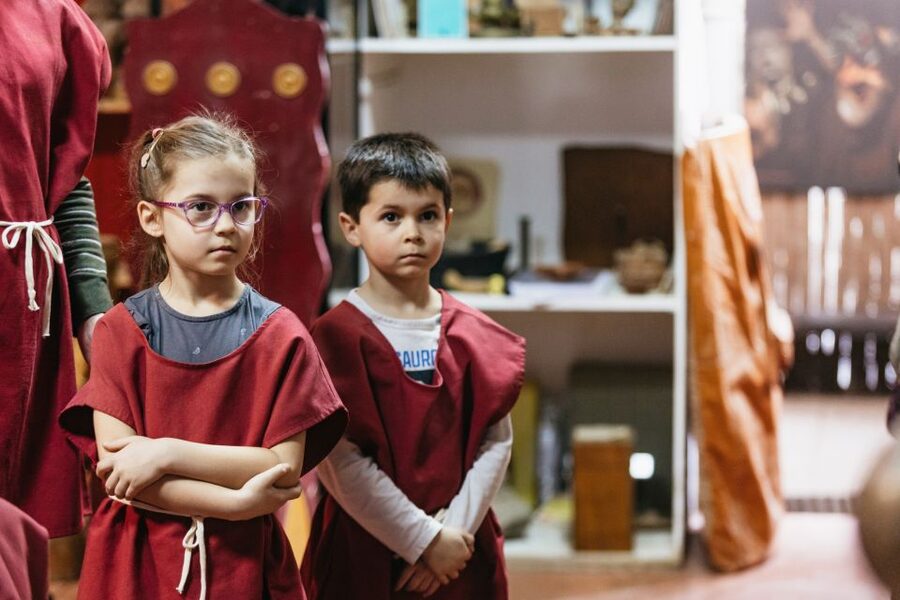
The session includes a visit to the school’s museum. It is small, but that can work in your favor. You are not trying to cover an enormous collection in ten minutes. Instead, the guide can point out objects connected to gladiators, Roman soldiers, armor, and weapons.
Olympus, one of the instructors, is praised for showing items that you may not see in a standard museum. That makes the museum stop more than a waiting area before the sword practice. It gives you a chance to ask questions and connect the objects to the movements you will soon learn.
The historical angle is one of the strongest parts of the class. You hear about the life of gladiators, not only their fights in the arena. The instruction also touches on Roman soldiers and military discipline. That broader context helps correct the usual movie version of gladiators as identical muscle-bound fighters in constant combat.
Do not expect a major museum with a long gallery sequence. The collection is described as small. If you need a large archaeological museum to justify a ticket, this part alone will not do that. Its value comes from the guide’s explanation and from seeing equipment before handling practice weapons yourself.
Tunics, sword movements, and safe combat
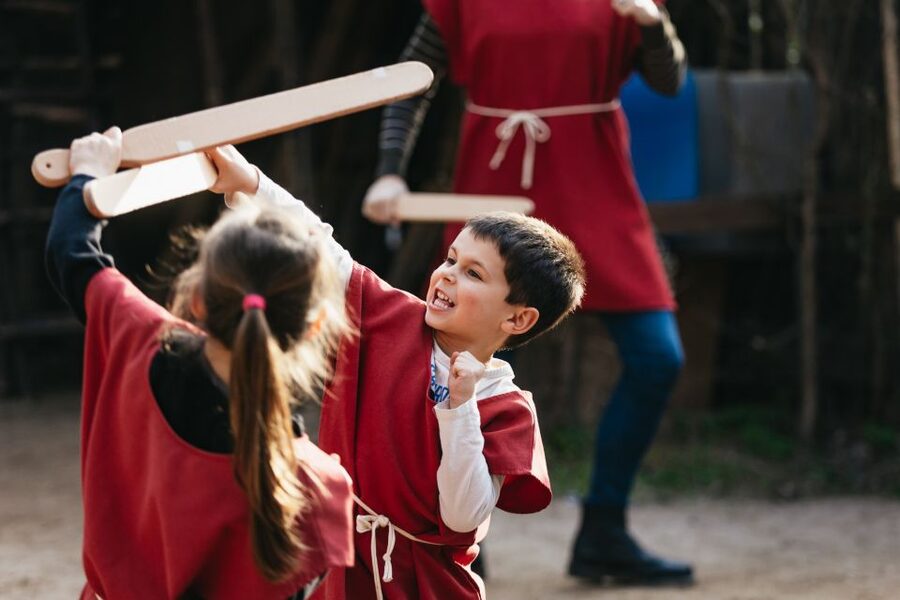
After the introduction, you put on a gladiator tunic and learn basic sword-fighting techniques. The training is designed for adults and children, and the weapons used for the final battle are foam swords. This is staged combat, not a test of strength or an actual martial arts course.
The instructor demonstrates the basic movements and gives tips on handling Roman weapons. You then practice the techniques in a way that keeps the class active. The guides are repeatedly described as patient and encouraging, especially with excited children who need help staying focused.
The best instructors make children feel capable without turning the lesson into a competition. Patriccio, for example, is praised for helping a child feel accomplished. That detail captures what you want from this kind of activity. A young participant should leave feeling that they learned a skill, not that they were simply dressed up for an adult’s photograph.
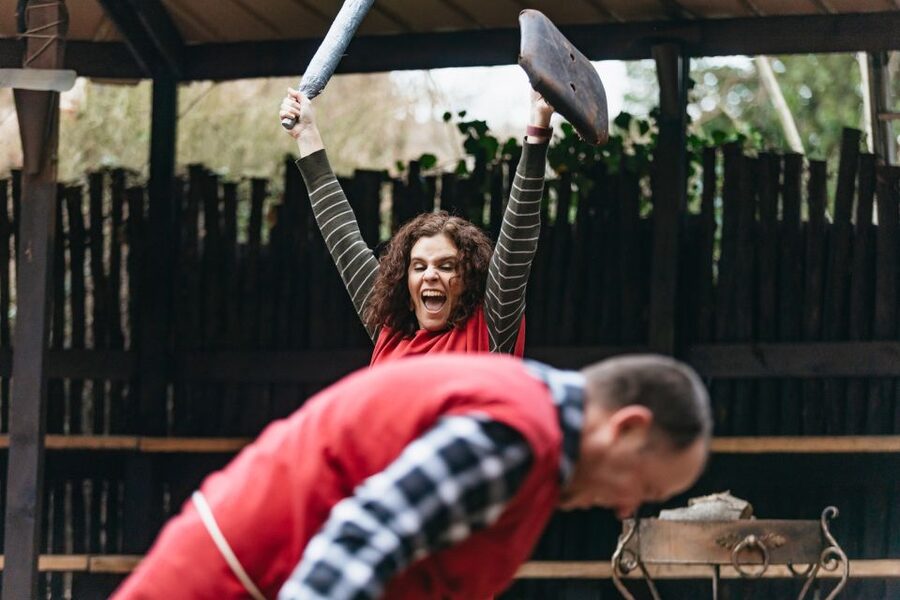
Adults are welcome to take part rather than stand on the sidelines. Parents can train with their children and face them in the final battle. One father enjoyed being defeated by his son in front of the group, which tells you something about the playful tone. You can take the lesson seriously enough to learn the movements, then enjoy the silliness of the showdown.
The session is not built around athletic ability. Still, you should be ready to move around for much of the two hours. Comfortable clothes under the tunic and sensible footwear will make the activity easier, although the supplied information does not specify a dress code.
Same city, a completely different half-day:
- Vatican Museums & Sistine Chapel Tour with Optional Basilica
★ 4.3 · 67,413 reviews - Vatican Museums, Sistine Chapel & St Peter’s Basilica Guided Tour
★ 4.5 · 39,149 reviews - Rome: Colosseum, Palatine Hill and Roman Forum Guided Tour
★ 4.8 · 32,814 reviews - Rome: Guided Tour of Colosseum, Roman Forum & Palatine Hill
★ 4.7 · 27,897 reviews
The final arena battle is the big payoff
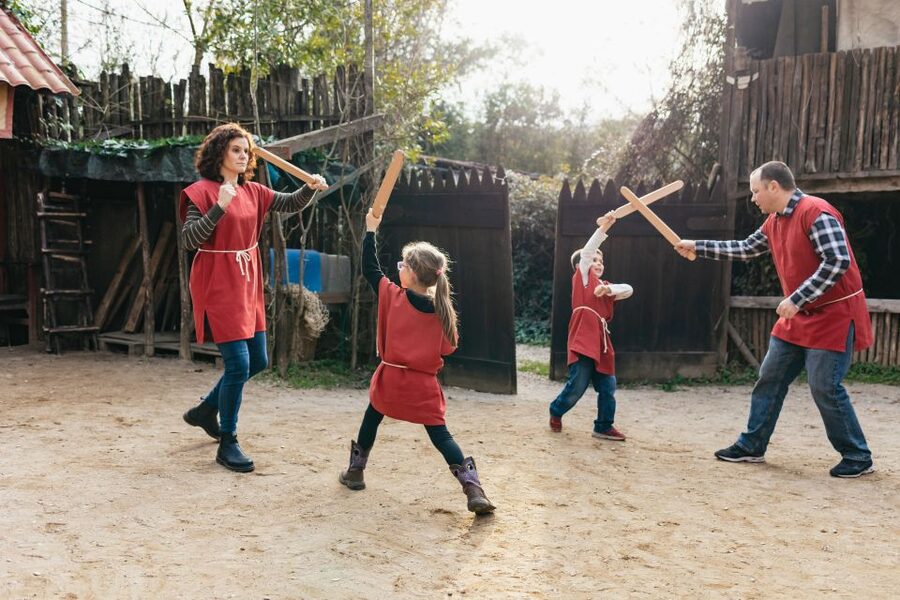
The training builds toward a final fight in the arena. Children and adults use foam swords, and the battle is staged in front of an emperor figure. That theatrical finish gives the lesson a clear story: you learn the basics, practice the moves, then use them in a friendly contest.
This is where the activity becomes especially memorable for children. They are not simply told what gladiators did. They get a safe version of the ritual, the costumes, the instructions, and the public contest. The battle also gives the adults something to do, so parents are not reduced to photographers.
You should keep expectations sensible. This is not a professional stunt show, historical reenactment tournament, or full Roman spectacle. It is a guided family activity with foam weapons and a playful arena scene. That is precisely why it works for a wide age range.
The mixed-age nature of the group can add to the fun. Families, children, and adults may all take part together, and the instructor keeps the action moving. If your child is shy, the guide’s encouragement matters. If your child is full of energy, the structured format gives that energy somewhere to go.
What the guides add to the experience

The guide can make or break a hands-on activity. Here, the teaching style is a major reason to consider booking. Instructors including Mirko, Marko, Cena, Sina, Patriccio, and Olympus are singled out for enthusiasm, humor, patience, and strong command of the subject.
Cena is described as especially passionate about Rome and its past, and as able to engage a group spanning three generations, from children to a 76-year-old. Marko is praised for keeping both children and older adults interested. Sina is described as fluent in English, energetic, and experienced.
Those details matter because a gladiator class could easily become too childish for teenagers or too technical for younger children. The strongest guides adjust the balance. They explain the historical material clearly, joke with the group, demonstrate the movements, and give children individual attention.
Instruction is available in English and Italian. If you need English, confirm your selected session when booking, since the stated instructor languages are English and Italian. The guide leads the entire activity, including the museum portion, training, and final battle.
Heat, mosquitoes, and other practical concerns

Rome can be hot, and the gladiator school is not presented as a fully indoor activity. One family attended on a day above 95 degrees Fahrenheit and appreciated the shaded areas and cold water. Drinks are included, but you should still dress for the weather and bring whatever sun protection you normally use.
Mosquitoes are another specific concern. Bring insect repellent, especially if you are sensitive to bites or attending during a warm season. This is a small detail, but it can make a noticeable difference during an outdoor lesson.
The activity is wheelchair accessible, which widens its usefulness. The exact physical demands and arena surfaces are not described, so if you need detailed mobility information, contact the provider before booking. Parents or companions who do not attend the course do not need to buy a ticket, so one adult can watch without paying for a training place.
The class lasts two hours, but allow extra time for getting to the Appian Way and returning to central Rome. Starting times vary, so check availability before building the rest of your day around it.
Is $135.94 per person good value?

At $135.94 per person, this is not a cheap filler activity. You are paying much more than you would for a basic museum entrance or a short photo stop. The price makes the most sense when you treat it as a two-hour guided class, museum visit, costume experience, history lesson, and group performance in one package.
For a family, the value depends on participation. If children and adults all join the training, the fee buys a shared activity that can hold everyone’s attention. If only one child takes part while the rest of the family waits, the cost feels harder to justify, although nonparticipating parents and companions do not need a ticket.
The included certificate helps give the activity a sense of completion, especially for children. Drinks are also included, which is useful on a hot day, though they are not the reason to book. The real value is the quality of the instruction and the amount of active time.
I would compare this with the cost of another guided attraction, not with a free walk through the city. If your family wants interactive history and your children are still talking about Roman soldiers and gladiators, the price can be fair. If your group prefers quiet archaeological sites and independent sightseeing, spend the money elsewhere.
Who should book this experience?
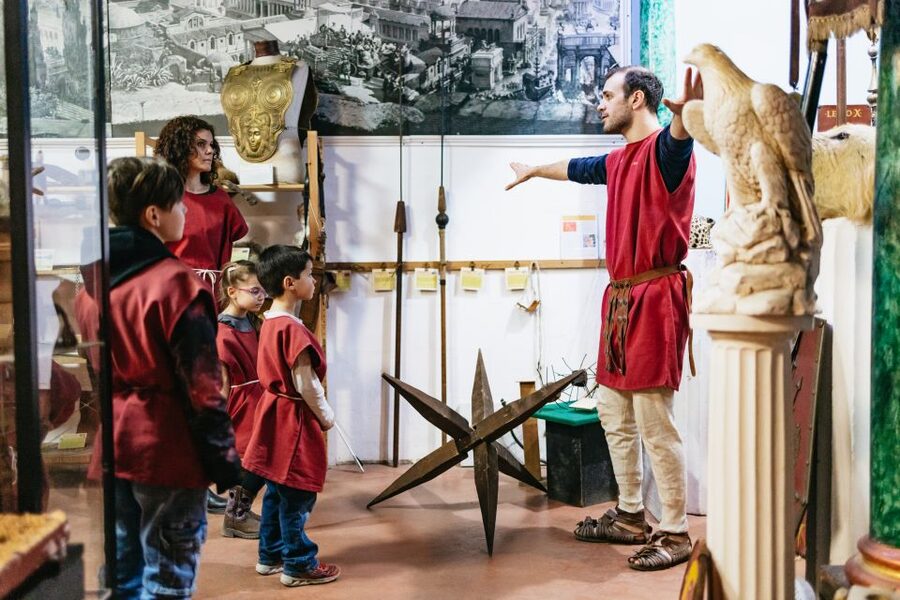
This is best for families with children roughly in the early school years through the teenage years, but adults can enjoy it too. Children as young as five have taken part, and older children around eight to fourteen have responded especially well. The activity also works for a mixed group of parents, grandparents, and children.
It is a smart choice after visiting the Colosseum. The Colosseum shows you the arena, while gladiator school gives you a feel for the training and public performance connected with it. The two experiences are different enough to complement each other.
Couples can enjoy it if both people are comfortable with a playful, physical activity. It is less suitable if you want a quiet, strictly academic lesson or a private tour with no group participation. The final battle is part of the appeal, so anyone who dislikes staged combat or dressing up may not get full value.
The experience is also useful for children who have tired of passive sightseeing. The structure gives them something to remember and a story to retell. At the same time, the Roman context keeps it from being just a generic sword-fighting game.
Should you book Rome’s gladiator school?
I would book this for a family that wants a lively break from Rome’s museums and ruins, especially if the children have shown interest in the Colosseum or Roman soldiers. The combination of a small museum, clear historical explanation, practical sword training, foam-sword combat, and a certificate gives the two hours a satisfying shape.
I would skip it if you are looking for an intimate archaeological tour, if the price is outside your budget, or if hot outdoor activities are a poor fit for your group. Bring repellent, plan around the heat, and remember that the Appian Way requires a little transport planning.
For the right family, this is more than a costume photo. It turns Roman history into something you can practice, laugh about, and carry home.
FAQ
How long does the gladiator school activity last?
The activity lasts two hours. Starting times vary, so check availability when choosing your date.
Where does the activity take place?
It takes place at the Gladiator School of Rome on the ancient Via Appia Antica in Rome.
How do I reach the meeting point by bus?
The nearest bus stop is Appia Antica-Travicella. Bus lines 118 and 218 serve the stop.
Does the activity include a museum visit?
Yes. The two-hour session includes a visit to the school’s museum, followed by gladiator training and the other activities.
What will I learn during the class?
You will learn about Roman history, the life of gladiators, Roman weapons, and basic gladiatorial sword-fighting techniques.
Are children allowed to participate?
Yes. The activity is suitable for children and adults. Children as young as five have taken part, according to the supplied experience details.
Do adults have to participate?
No. Parents or companions who do not attend the course do not have to pay for a ticket. Adults who wish to join the training can participate.
Is the final battle safe?
The final battle uses foam swords and is presented as safe, staged combat. It is part of the training experience in the arena.
Which languages are available?
Instruction is available in English and Italian.
Is the activity wheelchair accessible?
Yes, the activity is listed as wheelchair accessible. For specific mobility questions about the training area, contact the provider before booking.
Newest Rome tours we have reviewed
- Private TikTok Video Making in Rome★ 5.0 · 7 reviews
- Assisi, Orvieto and Civita di Bagnoregio Full Day Tour from Rome★ 4.5 · 45 reviews
- Assisi & Saint Francis Path Tour from Rome★ 5.0 · 45 reviews
- Assisi and Cascia Private Day Tour from Rome with Lunch★ 5.0 · 10 reviews
- Art Class in the center of Rome!★ 4.0 · 4 reviews
- Art & Craft: Beer Tour with Street Art in Rome★ 4.5 · 6 reviews
- Arrival in Rome: Airport Transfer & Exclusive City Introduction★ 5.0 · 3 reviews
- From Rome: Private Day-Tour of Tuscany★ 5.0 · 16 reviews
2-Hour Experiences, compared.

Vatican Museums & Sistine Chapel Express 2-Hour Guided Tour
Read our review →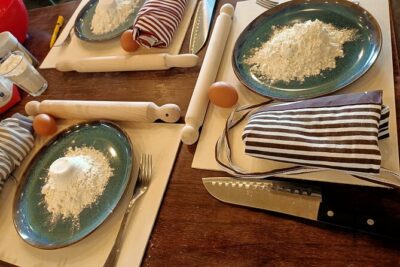
Cooking Class 2 Hour Spanish Steps – Fettucine and Tiramisù
Read our review →

2-Hour Vip Tuk-tuk tour with Hotel Pickup and Prosecco
Read our review →
Fountains and Squares of Rome 2-Hour Walking Tour
Read our review →


Browse the lists this tour appears in