
Reviewed · OSTIA ANTICA TOURS
Ostia Antica: Hidden City Guided ENGLISH Tour with Transfer
Ostia Antica gives you a rare look at ordinary Roman life, not just emperors and monuments. In a little over three hours, you ride from Rome to an ancient port town where apartment blocks, taverns, baths, temples, and a theater still map out daily life from 2,000 years ago. The short train ride and the generally quieter site make this an easy change of pace from Rome’s packed center.
I like two things right away: the tour shows you how working people lived, and the transfer is included, so you do not have to puzzle out the route yourself. Guides such as Sean, Janelle, and Mike bring plenty of humor and useful Roman background. The main drawback is the walking. This is not suitable for wheelchair users or people with mobility limits, and much of the site is outdoors.
Key points worth knowing
- A 25-minute train ride from Rome: Meet at Caffè Piramide beside Piramide Metro Station, then travel toward the Mediterranean.
- A real working town: See apartment buildings, a former restaurant, baths, taverns, temples, and public spaces rather than only grand imperial monuments.
- More than two and a half hours on site: The walking tour covers the major highlights, with time to stay longer on your own.
- English-speaking guides with personality: Sean, Janelle, and Mike are among the guides praised for humor, warmth, and strong knowledge of Roman life.
- A practical $68 package: The price includes round-trip train tickets, admission, and the live guide, but not food or drinks.
- A possible beach add-on: Afterward, you can remain at the ruins, eat at the on-site café, or continue by train toward Ostia Beach.
Why Ostia Antica makes sense from Rome
Pompeii gets more attention, but Ostia Antica is much easier to reach from Rome. The trip begins at Piramide Metro Station, where the meeting point is in front of Caffè Piramide under the BAR T sign. From there, the train ride takes about 25 minutes.
That short transfer matters. You do not spend much of your day getting to and from the ruins, and the ride itself gives your guide room to explain the area. You learn how Ostia served as Rome’s port, how the region relates to the Mediterranean, and why the town grew during the Imperial period.
Ostia also offers a different picture from Pompeii. Pompeii is famous for its sudden destruction and preserved homes, while Ostia shows a port town operating as part of Rome’s daily machinery. Here, you can picture residents living in apartment complexes, eating in casual establishments, visiting public baths, and worshipping at several different temples.
That working-class focus is the strongest reason to choose this outing. If you want only famous monuments, Rome already gives you plenty. If you want to understand how a large Roman town functioned, Ostia gives you more useful clues.
The location near the coast brings another small advantage. The air can feel cooler than in central Rome, and you can add Ostia Beach after the tour if you want a swim, lunch, or time among the shops and restaurants. That makes the outing flexible, though adding the beach will extend your day beyond the advertised three and a half hours.
More Ostia Antica tours:
- Ancient Ostia Antica Semi-Private Day Trip from Rome by Train with Guide
★ 4.5 · 579 reviews - From Rome: Ostia Antica Guided Half-Day Trip by Train
★ 4.8 · 486 reviews - Horse Sanctuary & Trail Ride in Ostia Antica
★ 4.5 · 276 reviews
Meeting at Caffè Piramide and riding toward the coast
The day starts at a simple, easy-to-find meeting point rather than with hotel pickup. You are responsible for reaching Caffè Piramide, next to Piramide Metro Station, and finding the guide beneath the BAR T sign.
Hotel pickup and drop-off are not included. That is worth noting if you are staying far from the metro or prefer door-to-door arrangements. On the other hand, the metro location keeps the start practical for anyone already using Rome’s public transport.
The train ride lasts about 25 minutes. It is not a scenic rail journey presented as a major attraction, but it saves you a long road transfer and gets you out of the city quickly. During the ride, your guide discusses the geography of the area and Ostia’s role as Rome’s harbor.
This introduction helps you arrive with a useful question in mind: how did a port town support a capital city? Instead of meeting the ruins as disconnected old stones, you begin to see them as part of Rome’s supply network and urban life.
Bring water before you leave Rome. You should also wear walking shoes, a hat, and sunscreen. The tour involves a moderate amount of walking, and the weather can change the comfort level of an outdoor archaeological site.
The first steps into a 2,000-year-old town
Once you reach Ostia Antica, the guided portion lasts about two and a half hours. That is enough time for the main sights without trying to inspect every corner of the huge site.
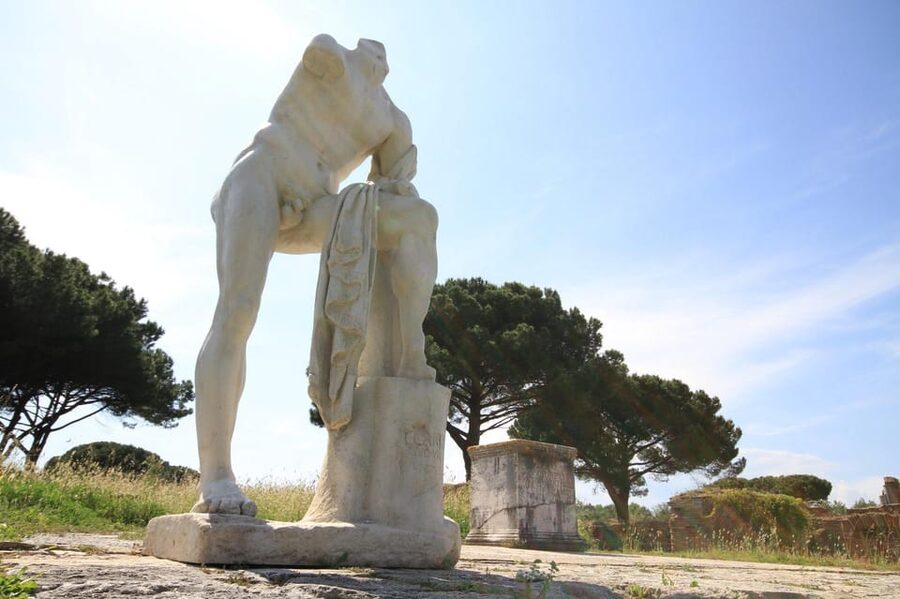
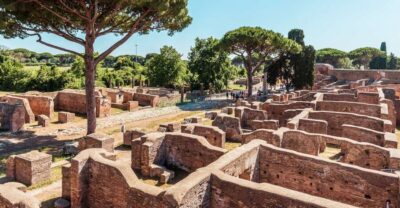
The ancient city is unusually helpful for understanding urban life because its remains include more than isolated temples. You move through streets and buildings that suggest how different parts of town fit together. Apartment blocks point to dense housing, while shops, taverns, baths, and public buildings show the services people used in an ordinary week.
Your guide’s role matters here. Ancient ruins can blur together when you visit alone. A good explanation turns a wall into part of a building and a building into part of a neighborhood. The guides on this tour use humor along with historical detail, which keeps the pace lively during a lot of walking.
Sean is praised for making Roman life feel present and understandable. Janelle is described as warm, enthusiastic, and full of stories about how people lived. Mike brings a strong command of Ostia and Roman history, with a sense of humor that helps the tour avoid becoming a long lecture.
The exact guide depends on the date and schedule, so you should not book expecting one particular person. You can expect an English-speaking, mother-tongue guide, but guide assignments may vary.
Baths, apartments, and the useful details of daily life
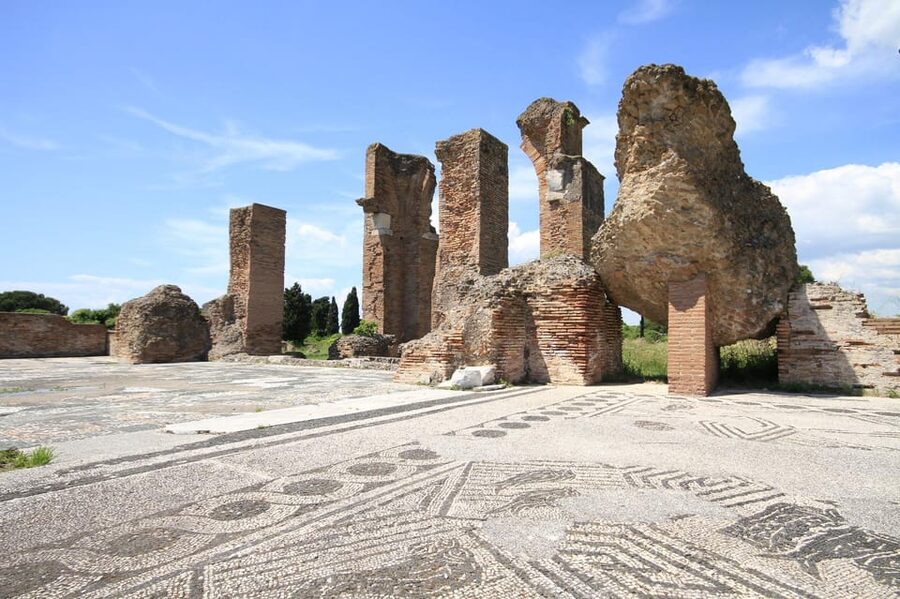
The baths are among the clearest highlights. Roman baths were not simply places to wash. They were part of public life, and the remains help you picture how residents spent time outside their homes.
At Ostia, the baths sit within a larger town setting. You are not looking at a single grand building and then leaving. You can connect the baths with nearby housing, religious sites, and commercial spaces, which gives the visit more social context.
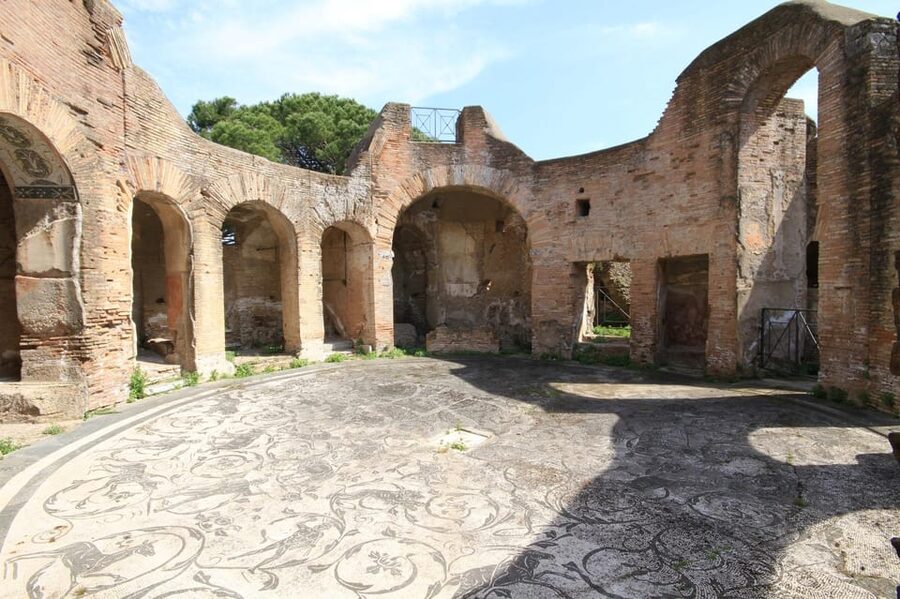
The apartment complexes are just as important. Grand villas often dominate popular images of ancient Rome, but apartments better represent the crowded reality of a working town. As you walk through the remains, your guide explains what these buildings tell us about residents and urban organization.
You should not expect intact rooms furnished like a museum. The pleasure comes from reading the surviving layout with help from the guide. Doorways, walls, courtyards, and street plans become evidence of how people used the town.
A former restaurant provides one of the tour’s most memorable stops. It is a small but powerful detail. Rather than thinking only about trade, taxes, and generals, you can imagine people stopping for food during an ordinary day.
The tour also points out taverns and brothels. These are not treated as sensational side notes. They help show the range of businesses that supported a port community, where people came and went for work, trade, travel, and military or administrative duties.
More airport transfers in Rome:
- Rome Private Arrival Transfer: Fiumicino Airport to Hotel in Rome
★ 4.5 · 2,492 reviews - Rome: Catacombs Guided Tour with Transfer
★ 4.2 · 1,808 reviews - Rome: Catacombs and Capuchin Crypt Guided Tour with Transfer
★ 4.6 · 1,606 reviews - Transfer Fiumicino Airport – Rome City Centre
★ 4.5 · 1,070 reviews
Temples, Mithraic sites, and the Roman spiritual mix
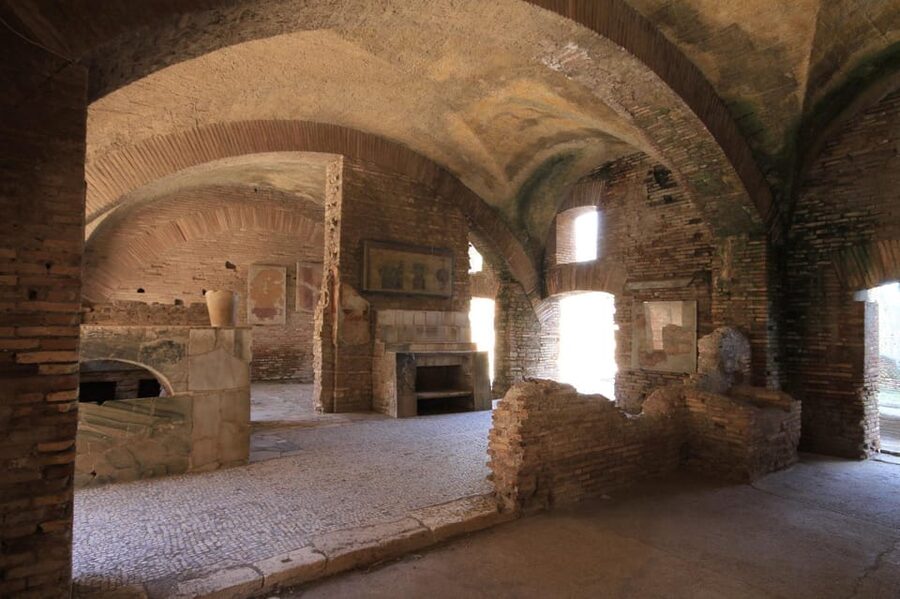
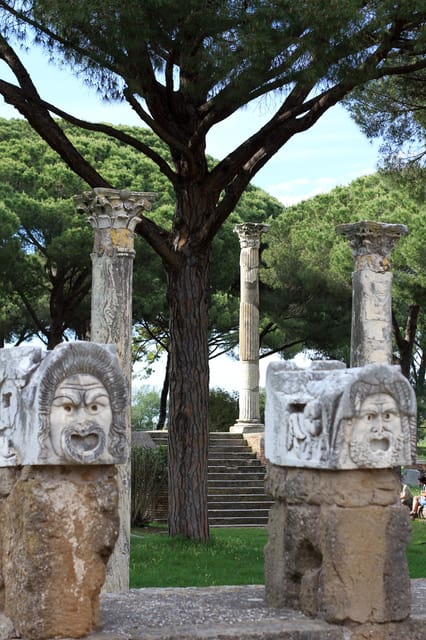
Ostia’s religious remains add another layer. The tour includes several Mithraic temples, along with temples in and around the forum.
Mithraism is one of the more unusual subjects covered on the visit. It was a religious cult with practices that can seem strange to modern eyes, and its presence at Ostia shows how varied Roman religious life could be. Your guide helps explain why a port town might contain several forms of worship side by side.
The forum gives you a more familiar civic setting. Temples and public spaces here show how religion and town government were closely linked. You get a sense of Ostia as a functioning city, not a remote religious or military outpost.
These stops are especially valuable if you enjoy questions without easy answers. The ruins do not offer a complete story of every resident, but they leave enough clues to raise interesting ones. Who used each space? Which gods mattered to different communities? How did travelers and workers bring beliefs from other places?
A guide can connect those clues far better than a quick walk with an audio guide. The explanations also keep the religious sites from becoming a list of unfamiliar names.
The theater and the scale of public life
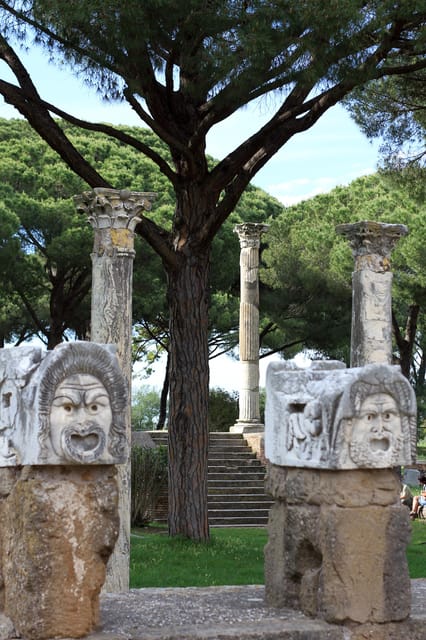
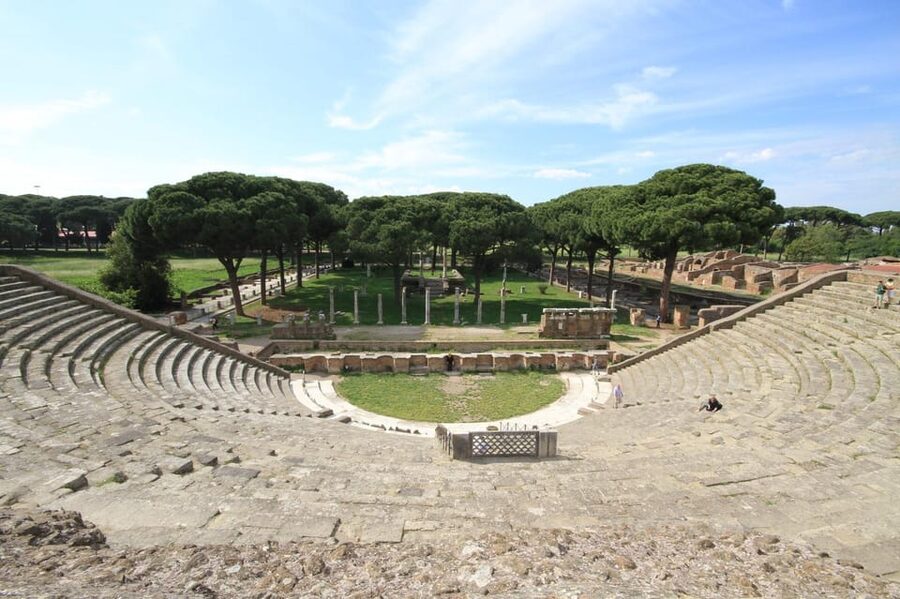
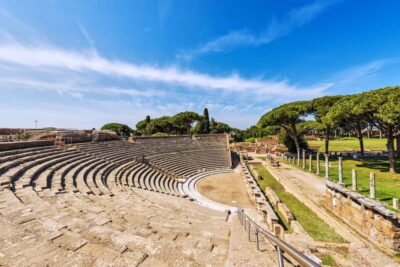
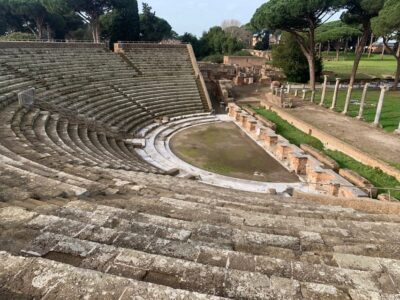
The theater is another major highlight. It gives you a sense of how the town gathered for public entertainment and how organized civic life could be in a Roman port.
The attraction here is scale and setting. After seeing apartments and smaller commercial spaces, the theater shows a more formal side of the city. It reminds you that ordinary residents still took part in public events and shared entertainment.
The tour also includes the amphitheater area and the forum. These are useful places to pause and picture the city as a community with common meeting points, public ceremonies, and shared spaces.
You will be walking over uneven archaeological ground, and the tour is not designed for visitors who need step-free access. Sightlines and surfaces can vary, so comfortable shoes matter more than stylish ones. If you have difficulty with moderate walking, this may not be the right outing.
What the small-group format changes
The experience is designed for small and private groups. That affects the visit in practical ways. You have a better chance of hearing the guide clearly, asking questions, and moving through the ruins without feeling tied to a large crowd.
A particularly quiet Sunday morning can make the site feel almost personal. One guest had a private-feeling visit with only two people, meandering through the ruins with few other visitors around. You should not assume every departure will be that empty, but Ostia is generally presented as less crowded than Pompeii.
That quieter mood is part of the value. You can stop to look at a wall or doorway without immediately being pushed along by a large group. At the same time, a small group does not guarantee silence or privacy, especially on a busy date.
The guide’s humor is another benefit. Mike is described as a walking talking guidebook with a lively sense of humor, while other guides bring warmth and enthusiasm. That tone suits Ostia, where the subject is serious but the daily-life details can be funny, odd, and surprisingly familiar.
How the $68 price works
At $68 per person, the price includes the round-trip train tickets, entrance to Ostia Antica, and the live English guide. Food and drinks are separate, as are hotel transfers.
I see solid value here because the tour combines transport, admission, and interpretation in one package. You avoid figuring out the train tickets and arrive with a guide who can explain the site’s layout and meaning.
The value is strongest if you want context. Independent visitors may pay less in total if they already know the route and prefer to read on their own, but the ruins can be hard to interpret without help. You are paying for time saved and for explanations that connect apartments, baths, temples, and port life.
The three-and-a-half-hour length also suits a Rome itinerary. It is long enough to see the main parts of Ostia without consuming an entire day. If you stay afterward or continue to the beach, your own schedule becomes more flexible.
Free cancellation up to 24 hours before the tour and a reserve-now, pay-later option make the booking less rigid. These details help if your Rome plans are still shifting.
Staying longer or adding Ostia Beach
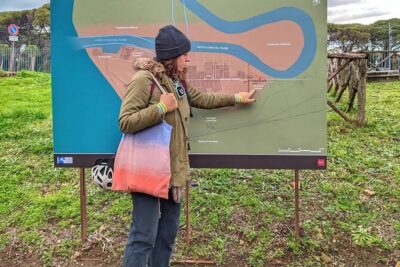
The formal tour ends back at Caffè Piramide, but you may choose to remain at Ostia Antica and explore more by yourself. This is useful if the guide has given you a clear map of the major areas and you want to revisit a favorite section.
You can bring a picnic, eat at the on-site café, or continue by train for several more stops to Ostia Beach. The beach option turns a focused archaeological visit into a fuller coastal day, with swimming, shops, and restaurants.
Food is not included, so plan ahead. A water bottle is particularly important, and a small picnic may be useful if you want to stay after the guided walk. You should also check the forecast and dress for the conditions, since the site is outdoors.
The beach add-on is not part of the advertised three-and-a-half-hour experience. Treat it as an optional extension, not as something included in the tour timetable.
Who should book this Ostia Antica tour
I would choose this tour if you want ancient Rome beyond the Colosseum and Forum, especially if you are curious about housing, food, religion, and work. It is also a smart choice for anyone who finds Pompeii too far for a Rome day trip.
The outing suits first-time visitors who want a clear introduction, as well as repeat visitors looking for a different Roman story. The English guide, included train tickets, and small-group format remove much of the practical friction.
You should think twice if you dislike outdoor walking, uneven ruins, or public transport. The tour is not suitable for wheelchair users or people with mobility impairments. It also does not include hotel pickup, food, or drinks.
Bring comfortable shoes, water, sunscreen, a hat, and a camera. Give yourself enough time to reach Caffè Piramide, then look for the guide beneath the BAR T sign beside the metro station.
FAQ
How long does the Ostia Antica tour last?
The experience lasts about three and a half hours, including the train transfer from Rome and the guided visit.
Where does the tour begin?
You meet the guide at Caffè Piramide, in front of the café under the BAR T sign next to Piramide Metro Station.
How long is the train ride to Ostia Antica?
The train ride from Rome takes about 25 minutes.
What does the price include?
The $68 price includes round-trip train tickets, entrance to Ostia Antica, and a live English-speaking guide.
Is food included?
No. Food and drinks are not included. You can bring a picnic, eat at the on-site café, or find shops and restaurants near Ostia Beach if you continue there afterward.
Is the tour offered in English?
Yes. The tour is conducted in English by a live English mother-tongue guide.
Can I stay at Ostia Antica after the guided tour?
Yes. You are welcome to remain at the site and continue exploring on your own.
Can I go to the beach after the tour?
Yes. You can take the train a few more stops toward Ostia Beach for swimming, lunch, shops, and restaurants. This is an optional extension beyond the guided tour.
Is the tour suitable for wheelchair users?
No. The activity is not suitable for wheelchair users or people with mobility impairments because it involves a moderate amount of walking through the archaeological site.
Should you book it?
Book this tour if you want a close, practical look at Roman daily life and prefer a guide who can make the ruins readable and entertaining. The short train ride, included admission, and small-group setup make Ostia Antica one of the more efficient ancient-site outings from Rome.
Skip it if you need accessible paths, hotel pickup, or a relaxed outing with little walking. For everyone else, the combination of apartments, baths, taverns, Mithraic temples, and the theater gives you a fuller picture of Rome than another grand monument alone.
Newest Rome tours we have reviewed
- Private TikTok Video Making in Rome★ 5.0 · 7 reviews
- Assisi, Orvieto and Civita di Bagnoregio Full Day Tour from Rome★ 4.5 · 45 reviews
- Assisi & Saint Francis Path Tour from Rome★ 5.0 · 45 reviews
- Assisi and Cascia Private Day Tour from Rome with Lunch★ 5.0 · 10 reviews
- Art Class in the center of Rome!★ 4.0 · 4 reviews
- Art & Craft: Beer Tour with Street Art in Rome★ 4.5 · 6 reviews
- Arrival in Rome: Airport Transfer & Exclusive City Introduction★ 5.0 · 3 reviews
- From Rome: Private Day-Tour of Tuscany★ 5.0 · 16 reviews
Ostia Antica Tours, compared.
Ancient Ostia Antica Semi-Private Day Trip from Rome by Train with Guide
Read our review →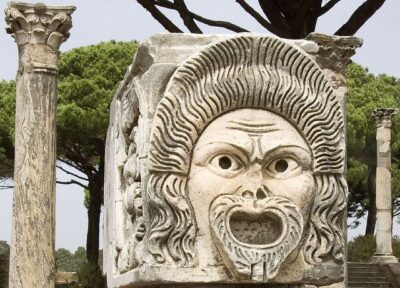

Ostia Antica Archaeological Park Ticket & Audio App
Read our review →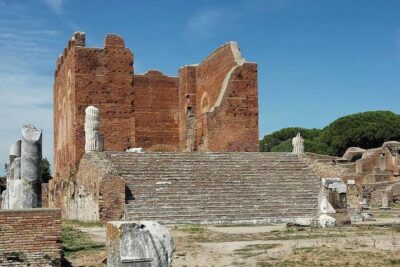
Browse the lists this tour appears in