
Reviewed · BORGHESE GALLERY TOURS
Borghese Gallery Private Guided Tour
The best part of this tour is its focus. In two hours, you move through the Borghese Gallery’s sculpture rooms and painting collection with a private guide who can point out the details you would likely miss on your own, from Bernini’s carved marble to Caravaggio’s dramatic faces.
I like the private format, since you can ask questions and set the pace instead of following a large group. I also like the fast-track admission, especially at one of Rome’s most visited museums, where a missed timed entry can spoil your day.
The main drawback is the price: $248.09 per person is a serious expense for a two-hour visit. This makes the tour best for art lovers and first-time visitors who want a focused explanation, not for anyone happy to wander through the gallery independently.
Key points to know before booking
- Bernini takes center stage: See the Rape of Proserpina, Apollo and Daphne, and David on the ground floor.
- Caravaggio and Raphael headline the paintings: The first floor includes David with the Head of Goliath, Young Sick Bacchus, and the Deposition of Christ.
- Your guide is there for your group alone: The private setup allows questions and a more flexible conversation.
- Admission is handled for you: Fast-track entrance tickets are included, so you do not wait in the regular ticket line.
- The visit lasts two hours: That is enough for a focused introduction, but not enough to study every artwork in twenty rooms.
- Pack light: Large bags are not allowed inside, though a cloakroom is available.
Why the Borghese Gallery rewards a guided visit
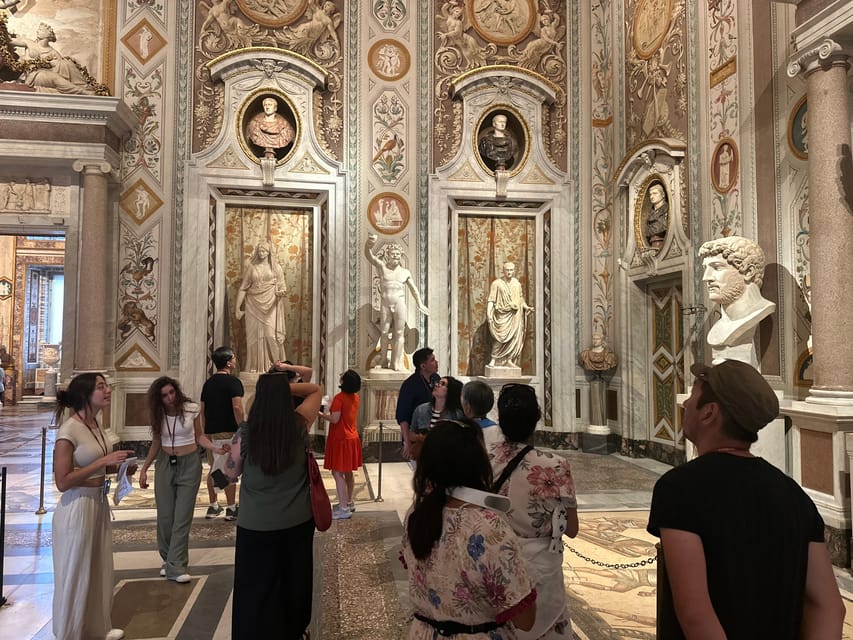
The Borghese Gallery is not a huge museum by world-capital standards, but it is packed with major works. Its twenty rooms spread across two floors, with hundreds of artworks in a setting that can feel almost too full of things to look at.
That density is both the pleasure and the problem. You may pause before a famous sculpture, then notice a painted ceiling, a portrait, or a small detail in the room behind you. Without some direction, it is easy to spend too long on one masterpiece and miss another important work nearby.
A private guide helps sort the collection into a clear story. You can ask why Cardinal Scipione Borghese commissioned certain works, how Bernini created movement from stone, or why Caravaggio’s use of light feels so forceful. You are not just checking famous names off a list. You are given a way to look.
The guide also provides the right amount of information for a short visit. That matters here. A two-hour tour can become exhausting if every room turns into a long lecture, but it can feel thin if the guide only points and names. The strongest parts of this experience are likely to be the explanations of small details you might otherwise pass by.
More Borghese Gallery tours:
- Rome: Borghese Gallery Guided Tour with Skip-the-Line Entry
★ 4.8 · 2,649 reviews - Rome: Borghese Gallery Skip-the-Line Tickets with Audioguide
★ 4.6 · 2,562 reviews - Rome: Borghese Gallery Entry Ticket & Optional Guided Tour
★ 4.5 · 2,237 reviews
Starting at Bernini’s marble masterpieces
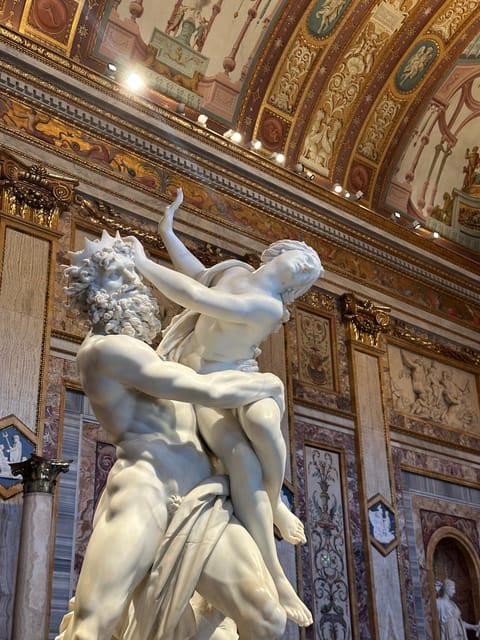
The tour begins on the ground floor, where sculpture takes the lead. This is the right place to start because the Borghese Gallery’s most memorable works are not simply objects placed in rooms. They are theatrical scenes in marble, designed to be viewed from several angles.
The first major stop is Bernini’s Rape of Proserpina. The title describes the Roman myth in which Pluto carries Proserpina into the underworld, but the sculpture’s power comes from the way Bernini makes hard marble appear soft and alive.
Look closely at Pluto’s hand pressing into Proserpina’s thigh. The marble seems to give way under his fingers. Look at her face, twisted in alarm, and at the movement of her body as she tries to escape. A guide can help you notice these details in the right order, rather than simply telling you that the statue is impressive.
This work was commissioned by Cardinal Scipione Borghese and became the first in a series of major pieces that helped fill the gallery. That commission also gives the tour a useful thread: the building was not assembled by accident. Its collection reflects the taste, ambition, and power of one of Rome’s great art patrons.
You will also see Bernini’s Apollo and Daphne. The scene captures the moment Apollo reaches for Daphne as she changes into a laurel tree. The branches, hair, fingers, and leaves seem to grow directly from the marble.
Apollo and Daphne rewards a slow look from several sides. From one angle, you see Apollo’s pursuit. From another, Daphne’s transformation becomes the main event. A private guide can help you move around the sculpture without rushing past the view that best explains the story.
Bernini’s David offers a different kind of energy. This is not the calm David after victory. Bernini shows him in action, twisting his body as he prepares to throw the stone at Goliath.
The figure’s movement reaches beyond the sculpture’s own space. David’s gaze and pose suggest an opponent somewhere in front of him, which means you are pulled into the scene. This is the sort of detail that makes a guided visit useful. A quick photograph rarely explains how the sculpture involves the person looking at it.
Canova’s polished portrait of Paolina Borghese
Another important ground-floor stop is Antonio Canova’s Paolina Borghese. Paolina, a member of the Borghese family, appears reclining on a couch as Venus Victrix, the victorious Roman goddess of love.
The statue is famous for its smooth finish and elegant pose, but it also carries a touch of family theater. Paolina’s relaxed expression and idealized body present her as both a real person and a classical goddess. A guide can help you understand how the portrait blends private identity with public image.
The sculpture’s polish is especially striking. Canova’s marble looks almost like skin, silk, and fabric at the same time. You might find yourself drawn to the surface first, then to the way the pose turns a formal portrait into something more relaxed and suggestive.
This stop also provides a useful contrast with Bernini. Bernini often captures an instant of violent movement or transformation. Canova gives you grace, balance, and a carefully controlled pose. Seeing both artists in the same museum makes the differences easier to grasp.
The first floor and the move from sculpture to painting
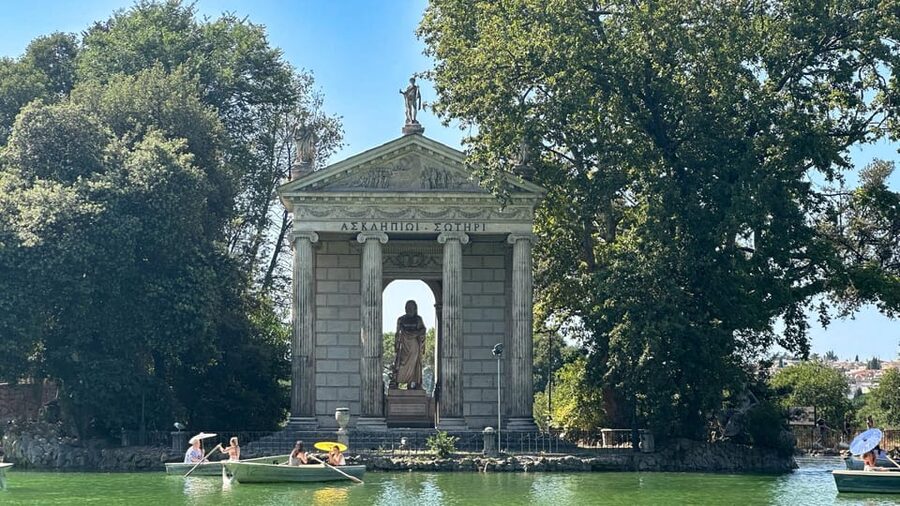
The first floor is devoted mainly to paintings. The change is immediate. On the ground floor, the figures occupy space around you. Upstairs, the effect comes from color, light, expression, and the way the painting directs your eye.
Raphael is one of the key artists here. You will see The Deposition of Christ, a large and carefully arranged work showing Christ being carried after his removal from the cross. The scene is filled with movement, grief, and figures who guide your attention through the composition.
You will also see Raphael’s Portrait of a Man. Portraits can be easy to hurry past in a museum filled with dramatic scenes, but this one deserves a pause. A private guide can direct your attention to the sitter’s expression, clothing, and the sense of presence that Raphael gives the figure.
The tour does not treat Raphael as an isolated name. It places his paintings alongside the sculptures and the collection’s broader display, helping you see how the gallery moves between ideal beauty, religious drama, myth, and portraiture.
More museums and galleries in Rome:
- Vatican Museums & Sistine Chapel Tour with Optional Basilica
★ 4.3 · 67,413 reviews - Vatican Museums, Sistine Chapel & St Peter’s Basilica Guided Tour
★ 4.5 · 39,149 reviews - Rome: Vatican Museums, Sistine Chapel & Basilica Tour
★ 4.3 · 13,872 reviews - Vatican Museums & Sistine Chapel Skip-the-Line Entry Ticket
★ 4.4 · 13,838 reviews
Caravaggio’s dark light and uneasy faces
Caravaggio is another major reason to visit the Borghese Gallery. His paintings are immediately recognizable for their strong light, dark backgrounds, and figures who often look startlingly human.
David with the Head of Goliath is one of the most powerful works on the route. David holds the severed head of Goliath, but the scene is not presented as a simple celebration of victory. The expression, the stark lighting, and the close arrangement of the figures create a mood that feels tense and personal.
You will also see Young Sick Bacchus. The image may first look like a portrait of a young man dressed as the Roman god of wine, but his pale appearance and tired expression give it an uneasy edge. The work asks you to consider beauty, illness, and the difference between a mythological role and a real human body.
Youngster with Basket of Fruit shows another side of Caravaggio. The youth faces you with a basket of fruit in front of him, and the fruit itself is painted with close attention. Yet the work is not just a study of produce. The figure’s expression and the sensual surface of the painting give it a mood that is more complicated than a simple still life.
Caravaggio’s paintings can reward a long, quiet look, but you may not have unlimited time in the gallery. A guide who knows which details matter can help you use those minutes well. The explanations are especially useful if this is your first close encounter with his work.
Frescoed ceilings and the gallery setting
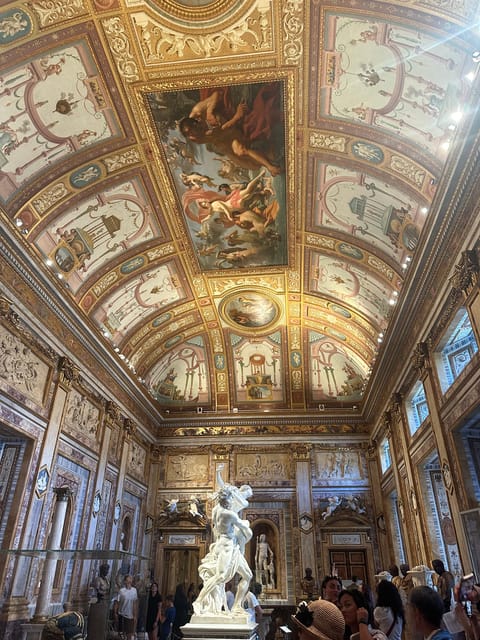
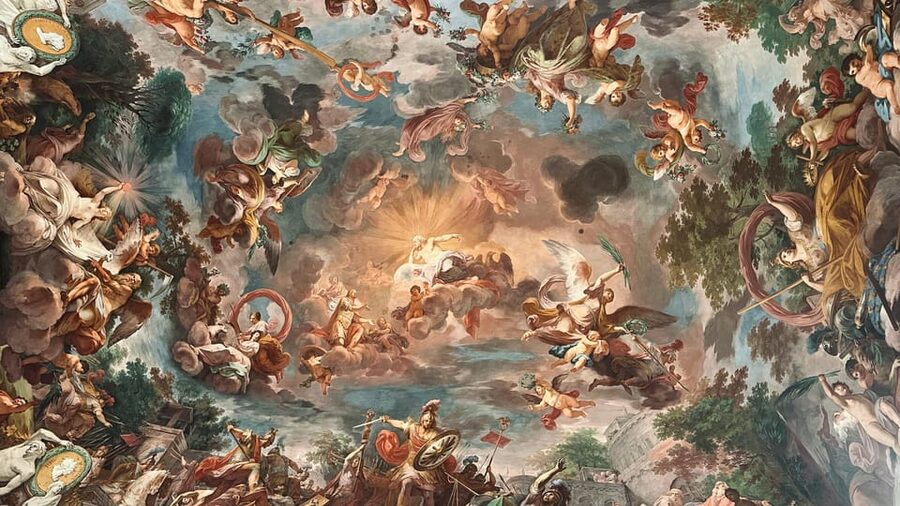
Do not keep your eyes only at wall level. The gallery ceilings are covered with frescoes, and they add another layer to the visit.
These painted ceilings make the rooms feel more elaborate than a standard museum gallery. They also remind you that the building itself was designed as a display of wealth and artistic ambition. The ceiling decoration, sculptures, paintings, and room design work together.
This is one of the easiest details to miss when you are concentrating on Bernini or Caravaggio. A guide can point upward at the right moment and explain how the room’s decoration shapes the way you see the artworks below.
The ceiling frescoes also make the two-hour route feel fuller. You are not moving through a plain sequence of white walls. Every room offers another visual layer, so give yourself a moment to look around before moving to the next major work.
What two hours can realistically cover
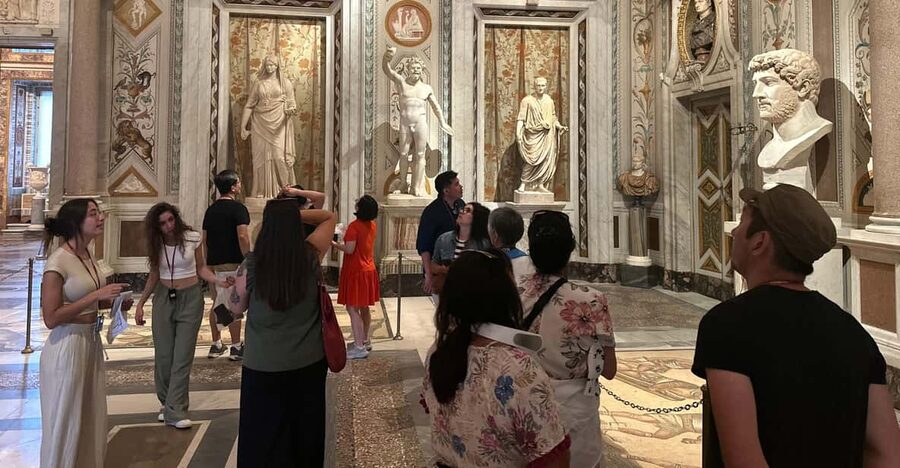
Two hours is a sensible length for a first visit with a guide. You can see the principal works without spending half a day in the museum, and the private format keeps the route focused.
You should not expect to study every one of the twenty rooms in detail. Hundreds of artworks are spread across the gallery, and the listed highlights alone could fill a full afternoon if you examined them closely.
Think of this tour as an informed introduction. You will see the best-known Bernini sculptures, key works by Caravaggio and Raphael, Canova’s Paolina Borghese, and the frescoed interiors. You will also have a chance to ask questions instead of simply following a fixed speech.
If you already know the collection well, two hours may feel brief. You might prefer to spend your time independently with less structure. If the Borghese Gallery is new to you, the time limit is more helpful than restrictive. It gives you a clear route through a museum where it is easy to lose track of time.
Private group, English guide, and audio support
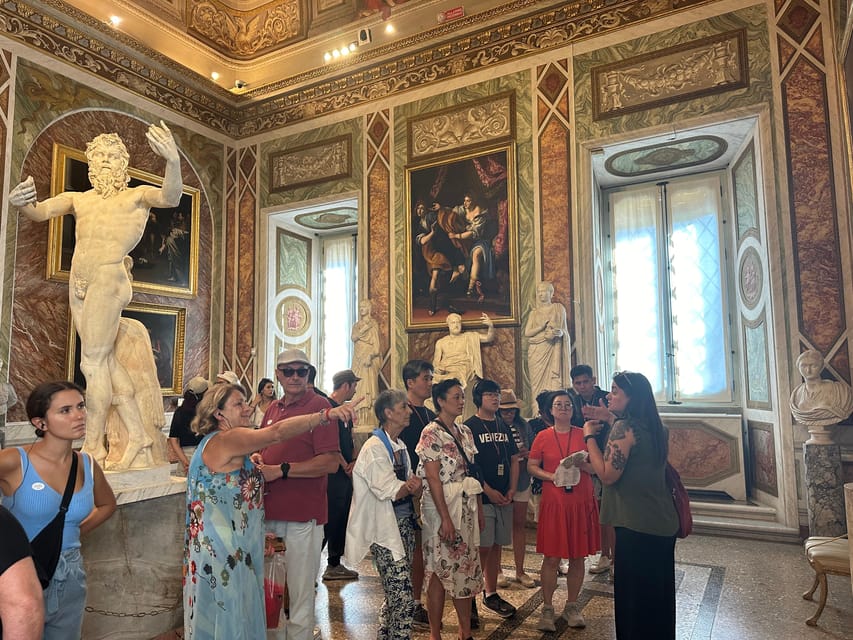
The tour is for a private group, with an English-speaking live guide. That arrangement is the main difference between this visit and a standard museum entry.
You can ask about a particular artist, return to a work you want to see again, or request a little more explanation when a myth or religious scene is unfamiliar. The guide can also adjust the amount of detail to match your interests, although the exact pace will depend on the group.
An English audio guide is included as well. The live guide is the central part of the tour, but the audio support may be useful if you want extra material or need help recalling names after the visit.
The strongest practical benefit is the explanation of details. One person who took the tour found that the guide pointed out many things that would otherwise have been missed. Another described the guide as one of the best parts of the Rome itinerary. That fits the nature of this museum: the artwork is already excellent, but the right observations can change how much you see.
No guide name is provided when booking, so you should not reserve this tour expecting a particular individual. The important details are the English language, private group format, and expert-led presentation.
Is $248.09 per person good value?
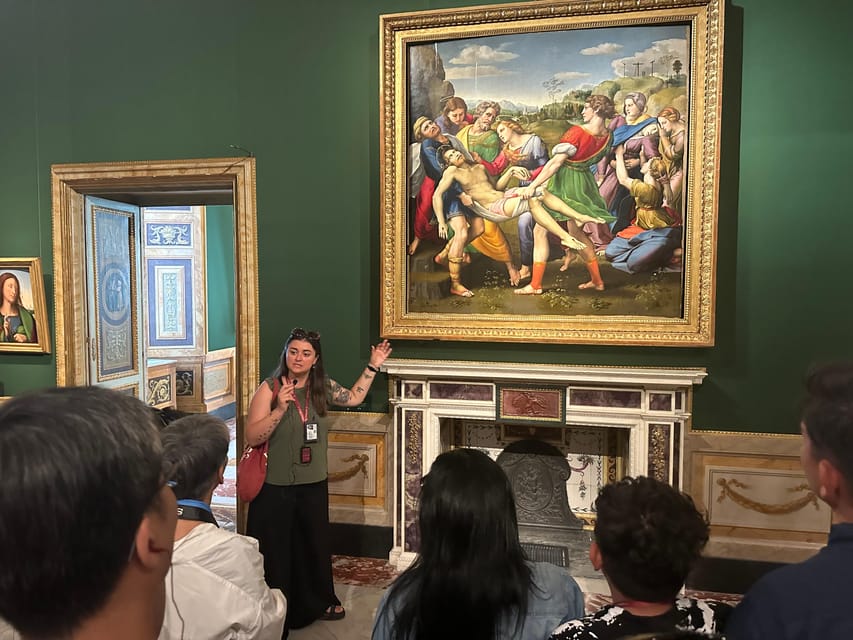
At $248.09 per person, this is not a budget museum visit. The cost includes fast-track entrance tickets and a private tour guide, but not hotel pickup or drop-off.
The value depends on how you want to use your time in Rome. If you are already comfortable reading museum information and prefer to set your own route, regular admission or an independent visit may make more financial sense. The tour price is hard to justify if you only want quick photographs of the famous sculptures.
I see more value if you care about art and have limited time. Fast-track entry removes one possible delay, while the private guide gives you two hours of direct attention. A private group can also be worthwhile for families or friends who want to ask their own questions rather than share the guide with a large crowd.
The tour is not cheap, but it bundles the two things that matter most here: getting inside efficiently and understanding what you are seeing. If those benefits would otherwise require separate planning, the higher price may be reasonable.
Meeting point, bags, and simple planning tips
You meet the guide in front of the main entrance of the Borghese Gallery. Look for a sign reading Inside Out Italy. The tour ends back at the same meeting point.
There is no hotel pickup or drop-off, so you need to arrange your own way to the gallery. Build a little extra time into your plans so you are not searching for the entrance at the exact start time.
Large bags and luggage are not allowed inside. A cloakroom is available if needed, but the easiest approach is to arrive with a small bag and only the essentials. This is particularly important if you are visiting Rome between accommodations or carrying a full daypack.
You can cancel up to twenty-four hours before the tour for a full refund, and the reserve-now, pay-later option lets you hold a place without paying immediately. Starting times vary, so check availability before arranging the rest of your day.
Who should book this Borghese Gallery tour?
I would choose this tour for a first visit to the gallery, especially if you want the major works explained rather than simply identified. It suits couples, families, and small groups who enjoy asking questions and moving at their own pace.
It is also a good fit for anyone who finds art museums overwhelming. The guide gives you a route and a short list of works to watch for, while still leaving room for the gallery’s surprises.
I would think twice if you are watching your budget, dislike guided visits, or want several hours for slow, independent study. The two-hour format is focused, not leisurely, and the private price is much higher than entering on your own.
Should you book it?
Book this Borghese Gallery private tour if Bernini, Caravaggio, and Raphael are high on your Rome list and you want help seeing the details. The guide’s strongest role is not merely naming the masterpieces. It is showing you where to look, from Bernini’s marble fingers to Caravaggio’s uneasy expressions and the frescoes overhead.
Skip it if you prefer wandering alone or if $248.09 per person would limit the rest of your Rome plans. For everyone else, the combination of fast-track admission, a private English guide, and a tightly planned two-hour route makes this a practical way to handle one of Rome’s most concentrated art collections.
FAQ
How long is the Borghese Gallery private tour?
The tour lasts two hours. Starting times vary, so you need to check availability when booking.
What language is the live tour guide?
The live tour guide speaks English. An English audio guide is also included.
Are entrance tickets included?
Yes. Fast-track entrance tickets are included in the tour price.
Where do I meet the guide?
Meet the guide in front of the main entrance of the Borghese Gallery. Look for a sign that reads Inside Out Italy.
Are large bags allowed inside the gallery?
No. Large bags and luggage are not allowed, but a cloakroom is available if needed.
Does the tour include hotel pickup and drop-off?
No. Hotel pickup and drop-off are not included. The activity ends back at the Borghese Gallery meeting point.
Newest Rome tours we have reviewed
- Private TikTok Video Making in Rome★ 5.0 · 7 reviews
- Assisi, Orvieto and Civita di Bagnoregio Full Day Tour from Rome★ 4.5 · 45 reviews
- Assisi & Saint Francis Path Tour from Rome★ 5.0 · 45 reviews
- Assisi and Cascia Private Day Tour from Rome with Lunch★ 5.0 · 10 reviews
- Art Class in the center of Rome!★ 4.0 · 4 reviews
- Art & Craft: Beer Tour with Street Art in Rome★ 4.5 · 6 reviews
- Arrival in Rome: Airport Transfer & Exclusive City Introduction★ 5.0 · 3 reviews
- From Rome: Private Day-Tour of Tuscany★ 5.0 · 16 reviews
Borghese Gallery Tours, compared.
Borghese Gallery Guided Tour with Skip-the-Line Entry
Read our review →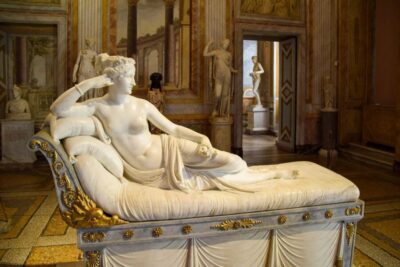
Borghese Gallery Skip-the-Line Tickets with Audioguide
Read our review →
Borghese Gallery Entry Ticket & Optional Guided Tour
Read our review →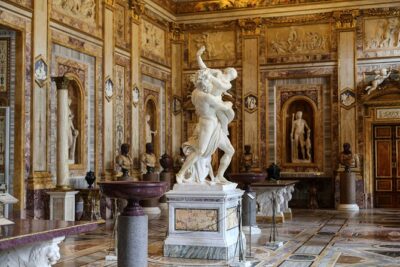
Borghese Gallery & Gardens Small Group Guided Tour
Read our review →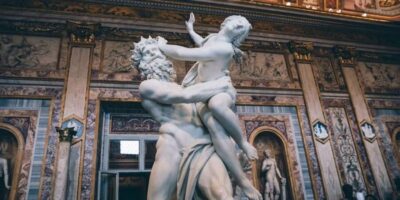
Borghese Gallery, Canova’s Masterpieces Skip-the-Line Guided Tour
Read our review →
Borghese Gallery Guided Tour with Skip-the-Line Entry
Read our review →Browse the lists this tour appears in