
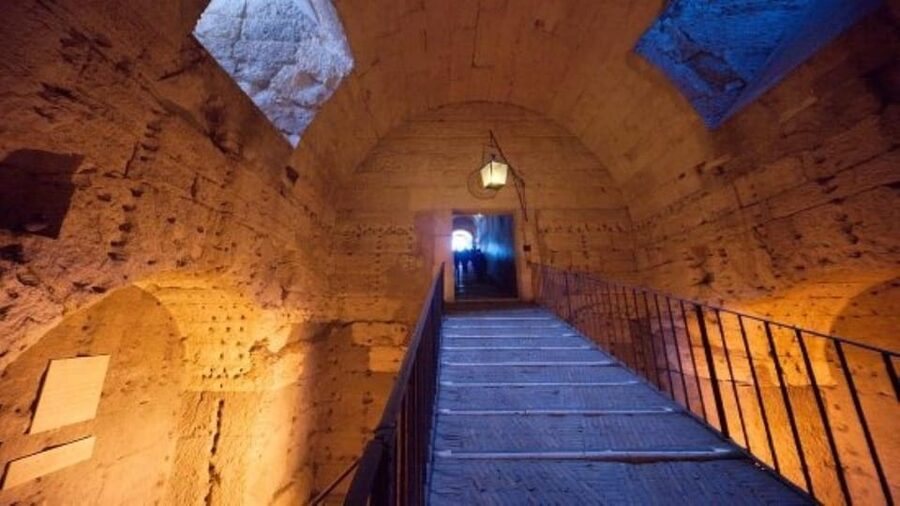
Reviewed · CASTEL SANT’ANGELO TOURS
Castel Sant’Angelo Skip-the-Line ticket
Castel Sant’Angelo gives you one of Rome’s best history lessons in a single building. It began as the Mausoleum of Hadrian, became a papal fortress and refuge, later served as a prison, and now works as a museum with a rooftop terrace. The skip-the-line ticket gets you inside without wasting part of your day at the ticket queue.
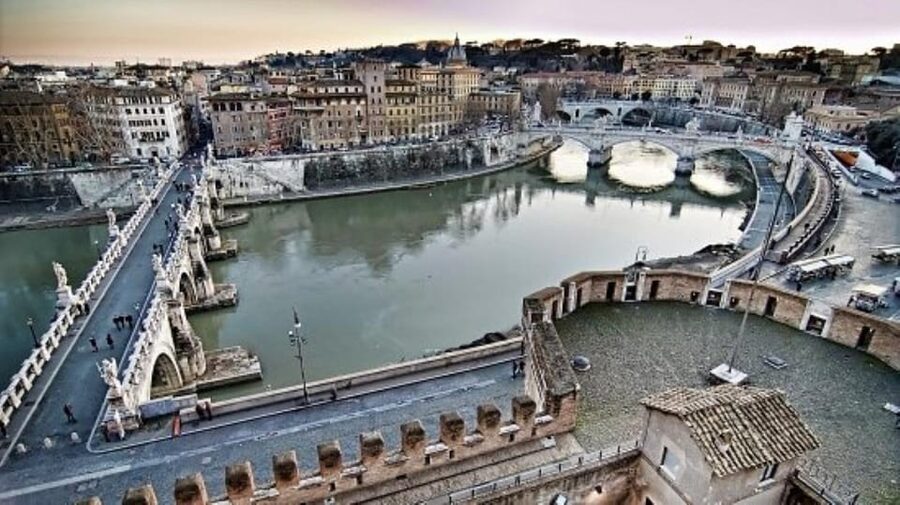
I like the $17 price for a major monument near St. Peter’s Basilica, especially if you have only an hour or two. I also like the terrace, where you can photograph the Tiber, Sant’Angelo Bridge, and the dome of St. Peter’s. The main drawback is practical: this ticket is not a guided tour, and the castle is not suitable for wheelchair users or people with mobility impairments.
Key points at a glance
- Start with Hadrian’s tomb: The building was designed as the Mausoleum of Hadrian before it became a fortress.
- Walk through a papal escape route: The Passetto di Borgo connected the castle with the Vatican and offered popes a way to flee during danger.
- Look for the prison rooms: Cells such as Sammalò, also called San Marocco, give the visit a darker edge.
- Save time near the Vatican: Castel Sant’Angelo is close to St. Peter’s Basilica and the Vatican Museums.
- Finish on the terrace: The rooftop view is the highlight for many people, especially for photos of the bridge and Vatican area.
- Check the ticket option carefully: An audio guide is included only if you select that option, and no guided tour is included.
Why Castel Sant’Angelo is worth your time
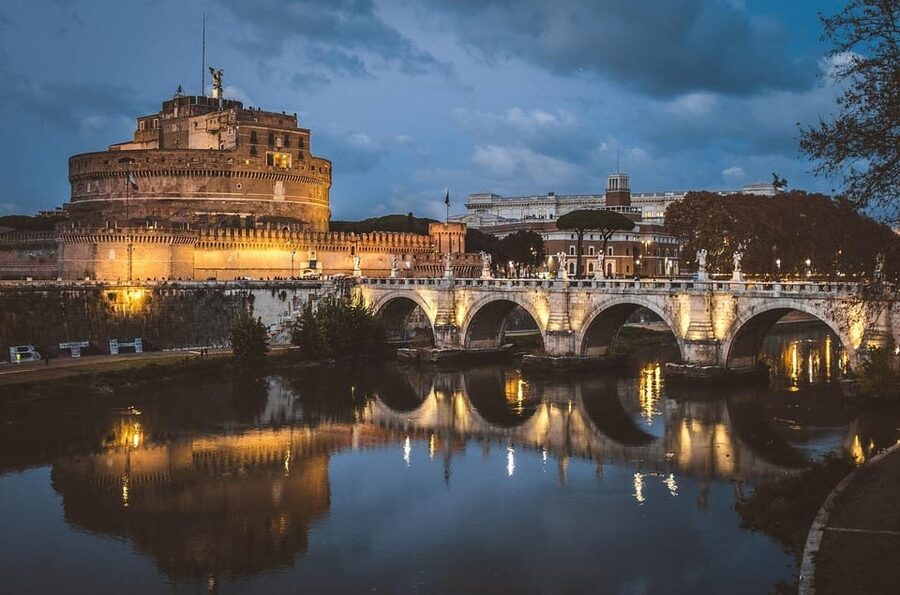
Rome has no shortage of grand churches, ancient ruins, and museums. Castel Sant’Angelo feels different because its purpose kept changing. You are not simply walking through one period of history. You are moving through a building that was planned as an imperial tomb, fortified for war, used as a papal refuge, feared as a prison, and finally turned into a museum in 1925.
That changing role gives the castle its character. The lower sections feel heavy and defensive. Higher levels become more open and ceremonial. At the top, the mood changes again, with fresh air and broad views over the city.
I find the location especially useful. The castle sits on the Tiber, within easy reach of the Vatican area. If you are planning St. Peter’s Basilica or the Vatican Museums, this can fit into the same day. It is also a sensible choice when you want a major sight that can be covered in roughly one to one and a half hours.
The skip-the-line entry matters most during busy periods. Rome’s queues can turn a short visit into a tiring one. Paying $17 for direct entry can be good value if it lets you protect time for another sight, lunch, or a walk across the historic center.
More Castel Sant’Angelo tours:
- Rome: Castel Sant’Angelo Skip-the-Line Ticket & Audio Guide
★ 4.4 · 3,500 reviews - Rome: Castel Sant’Angelo Skip-the-Line Ticket
★ 4.4 · 3,040 reviews - Rome: Castel Sant’Angelo Skip-the-Line Entry Ticket
★ 4.8 · 2,231 reviews
Beginning with the Mausoleum of Hadrian
Castel Sant’Angelo started life as the Mausoleum of Hadrian. The original purpose was grand and personal: it was built as a tomb for the emperor Hadrian and members of his family. Over time, the structure was altered so heavily that the present castle no longer feels like a simple tomb, but that first identity remains important.
As you move through the monument, try to keep that first purpose in mind. The thick circular form was not originally intended as a romantic viewpoint or a museum. It was a powerful imperial burial structure, designed to project authority.
The ticket does not come with a live guide. You receive entry, and an audio guide is available only when that option has been selected. That distinction matters. If you like a clear story told as you walk, choose the audio guide. If you prefer to read signs and move at your own pace, the basic ticket may be enough.
Please gather the full names of everyone in your group in English before booking. The tickets are sent by email and WhatsApp, normally the day before the activity. Keep the PDF ready on your phone, and contact the provider by email or WhatsApp if you have trouble downloading it.
From imperial tomb to papal fortress
The castle’s most interesting transformation came when popes began using it as a fortified refuge. Its massive structure gave the papal court a place to retreat when Rome was under attack.
The Passetto di Borgo is the key link in this story. This fortified passage allowed escape between the Vatican and Castel Sant’Angelo. It was not a decorative walkway. Its purpose was protection, giving the pope a route out of the Vatican during invasion or civil unrest.
The passage helps explain why the castle mattered so much in Rome’s political history. From the outside, it may look like a large round fortress beside the river. Inside, its value was tied to control, defense, and survival.
The ticket lets you explore the castle, but it does not promise access to every special area at all times. If the Passetto or a particular room has restricted opening arrangements, check on the day of your visit. The provided information identifies it as part of the castle’s story, so it is worth asking about when you enter.
The legend of the archangel Michael
Castel Sant’Angelo also carries one of Rome’s best-known supernatural stories. In the late sixth century, a plague struck the city. According to legend, the archangel Michael appeared above the castle and sheathed his sword, signaling that the plague had ended.
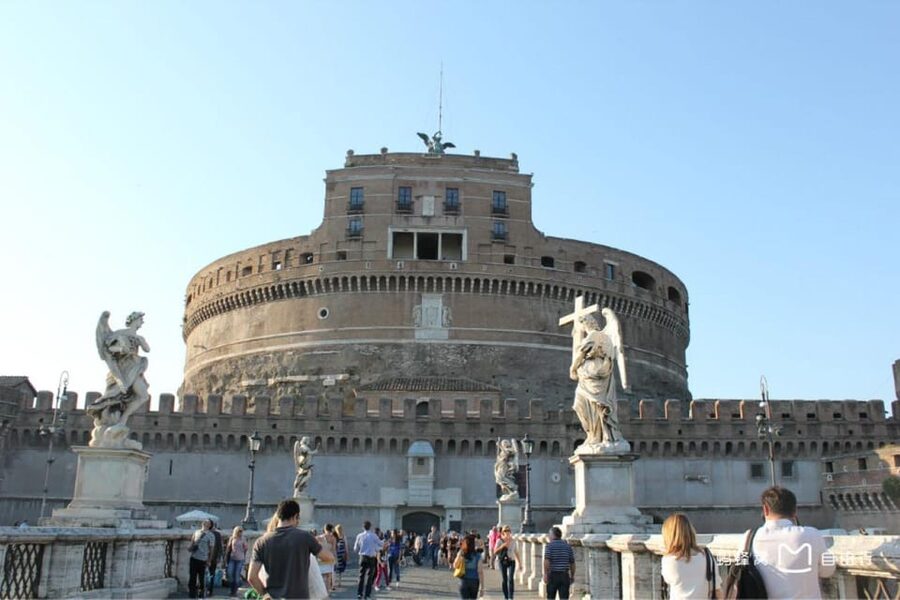
That vision gave the building its present name, Castel Sant’Angelo, or Castle of the Holy Angel. The legend is represented by the statue of the archangel at the top, which adds a striking finish to the fortress.
You do not need to be religious to enjoy this part of the visit. It shows how Rome layers legend onto older monuments. A Roman tomb became a fortress, the fortress became a papal refuge, and the building gained a new identity through a story of divine protection.
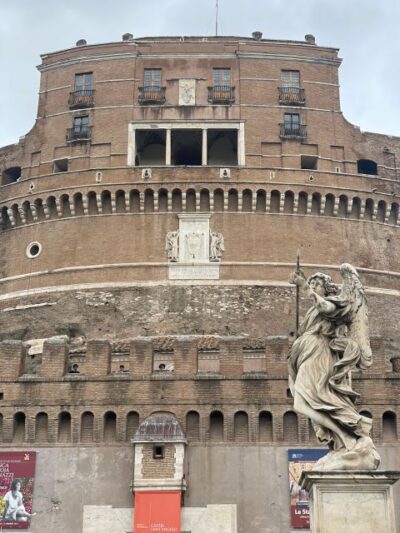
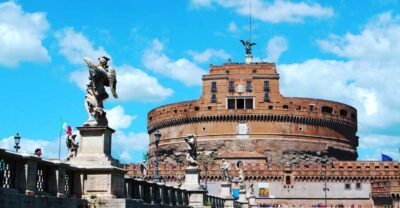
The archangel story also gives you a useful way to read the castle from outside. Look up as you approach and you can understand why the monument became linked to the city’s protection. The upper statue, the bridge, and the round mass of the castle form one of the most recognizable views along the Tiber.
More skip-the-line tickets in Rome:
- Vatican Museums & Sistine Chapel Skip-the-Line Entry Ticket
★ 4.4 · 13,838 reviews - Skip-the-Line Group Tour of the Vatican, Sistine Chapel & St. Peter’s Basilica
★ 4.5 · 12,779 reviews - Vatican, Sistine Chapel & St. Peter’s Skip-the-Line Tour
★ 4.5 · 7,770 reviews - Skip-the-Line Vatican, Sistine Chapel & St. Peter’s | Small Group
★ 5.0 · 7,060 reviews
The prison cells and the castle’s darker side
Castel Sant’Angelo was also used as a prison from the mid-fourteenth century. This changes the tone of the visit. The monument is not only about emperors, popes, and rooftop views. It also held people in frightening conditions.
Among the cells is one known as Sammalò, or San Marocco. These rooms help you picture the castle as a place of confinement rather than a grand residence. The prison sections may be especially meaningful if you want to understand how power worked in historic Rome. The same building that protected popes could also imprison their enemies.
I recommend slowing down in these areas. The cells do not have the open views or polished feel of the terrace, but they give the visit emotional weight. They remind you that architecture can serve very different people in very different ways.
Since the total visit is fairly short, you may be tempted to hurry toward the top. Resist that urge. The prison rooms are part of what makes Castel Sant’Angelo more than a photo stop.
Reaching the terrace above the Tiber
The terrace is the payoff. From above, you can enjoy one of the most evocative city views in Rome, with the Tiber below and the Vatican area nearby.
The position gives you excellent photo subjects. Look toward Sant’Angelo Bridge, with its statues and approach to the castle. Look toward St. Peter’s Basilica and the surrounding city. The view helps you understand the relationship between the fortress, the river, the Vatican, and the old streets of Rome.
The terrace also gives you a break from the enclosed rooms. After heavy walls, prison cells, and narrow interior spaces, the open air feels welcome. If you are visiting during the middle of a busy day, this can be the calmest part of the experience.
Do not treat the terrace as a quick final glance. Allow a few minutes to look in several directions and take your photographs. A phone camera can capture the bridge and skyline well, but the real value is the sense of place. You are seeing the same river route that helped shape Rome’s defenses and movement for centuries.
Photographing Sant’Angelo Bridge
The bridge is one of the main visual reasons to visit the castle. From the monument, you can frame the bridge from above. From street level, you can later walk across it and photograph the castle from the approach.
The bridge links the monument to the city, so it is not just a nearby prop. Its position explains how Castel Sant’Angelo controlled movement across this part of the Tiber. The angels along the bridge also connect with the building’s religious identity.
If you have time after the visit, take your bridge photographs from outside rather than ending your sightseeing at the castle exit. The ticket covers entry to Castel Sant’Angelo, not a guided city walk, so you are free to continue on your own.
This is also a good place to connect the castle with a Vatican visit. The walk between the two areas helps you see why the Passetto di Borgo was so useful. The castle and the Vatican are close enough to form one historical zone, even though they serve different purposes today.
How the $17 ticket compares in value
At $17 per person, this is a fairly modest way to see one of Rome’s major monuments. The value comes from three things: direct entry, the location near the Vatican, and the chance to see several layers of history in a compact visit.
The price is easiest to justify if you are short on time. A one to one and a half hour visit can fit before or after another appointment. It is also useful if you dislike standing in ticket queues or want a simple booking rather than a full guided package.
The price needs a closer look for families. Tickets for people under 18 are free, but the amount paid is only the service fee. Bring identification for every participant, including children. The requirement is stated clearly, so do not assume that a digital booking alone will be enough.
An audio guide costs more if you select that option, but it may improve the visit for you. Without a guide, the castle can be impressive but slightly confusing because its functions changed over many centuries. With audio commentary, you can connect the tomb, fortress, papal refuge, prison, and museum more easily.
Who should book this experience
I would recommend this ticket to you if you want history, architecture, and views in one compact stop. It works particularly well for a first visit to Rome, a Vatican-area sightseeing day, or a traveler who prefers independent visits to long guided tours.
It is also a good match if you like monuments with a slightly dark edge. The prison cells and escape passage make this more atmospheric than a simple palace visit.
You should think twice if your main goal is a detailed explanation from a live expert. A guided tour is not included, so the basic experience depends on your own reading or the optional audio guide. One positive account specifically praises a guide, but the listed ticket is not presented as a guided tour. Confirm the exact option before paying if personal commentary is important to you.
The castle is not suitable for wheelchair users or people with mobility impairments. Baby strollers are not allowed, and large bags or luggage are also prohibited. Pets, weapons, and sharp objects are not allowed.
Timing, entry, and useful preparation
The activity lasts about one to one and a half hours, but your exact starting time depends on availability. Build in extra time if you are connecting it with St. Peter’s Basilica or the Vatican Museums.
You do not meet a guide at a fixed street corner. Your tickets are sent directly by email and WhatsApp, usually the day before. With the PDF in hand, you can go straight to the entrance.
Bring a passport or identity card. Children need identification as well. Collect every participant’s full name in English before booking, since that information is required for the tickets.
Cancellation is flexible up to 24 hours before the activity for a full refund. You can also reserve now and pay later, which is useful if your Rome schedule is still changing. One serious caution remains: a booking has been cancelled by the company only 12 hours before the scheduled event in at least one case. That is not a reason to reject the experience, but it is a reason to keep your email and WhatsApp notifications open and avoid placing an unchangeable appointment immediately afterward.
Should you book Castel Sant’Angelo?
Book it if you want a short, well-located Rome visit with a strong mix of history and views. For $17, skip-the-line entry to Hadrian’s mausoleum, the papal fortress, prison rooms, and terrace is good value, especially when paired with a Vatican day.
Choose the audio guide if you want more help understanding the building’s many changes. Choose another option if you need wheelchair access, a stroller-friendly site, or a live guide included in the price.
My practical choice would be to visit in the same part of the day as the Vatican, leave room for the terrace, and keep your ticket PDF ready on your phone. Castel Sant’Angelo is at its best when you do not rush straight to the view. Give the old tomb, escape route, prison, and legend enough time to explain why this unusual building still matters.
FAQ
How long does the Castel Sant’Angelo visit take?
The activity lasts about one to one and a half hours. Starting times depend on availability.
Does the ticket include skip-the-line entry?
Yes. The ticket includes skip-the-line entrance to Castel Sant’Angelo.
Is a guided tour included?
No. A guided tour is not included. An audio guide ticket is available if you select that option.
How much does the experience cost?
The listed price is $17 per person. For visitors under 18, the ticket itself is free, but a service fee still applies.
How do I receive my ticket?
Your ticket is sent by email and/or WhatsApp, normally the day before the activity. You can go directly to the entrance with the ticket PDF.
What identification should I bring?
Bring a passport or identity card. Children must also have a passport or identity card.
Can wheelchair users or visitors with mobility impairments join?
No. The experience is not suitable for wheelchair users or people with mobility impairments. Baby strollers are also not allowed.
Newest Rome tours we have reviewed
- Private TikTok Video Making in Rome★ 5.0 · 7 reviews
- Assisi, Orvieto and Civita di Bagnoregio Full Day Tour from Rome★ 4.5 · 45 reviews
- Assisi & Saint Francis Path Tour from Rome★ 5.0 · 45 reviews
- Assisi and Cascia Private Day Tour from Rome with Lunch★ 5.0 · 10 reviews
- Art Class in the center of Rome!★ 4.0 · 4 reviews
- Art & Craft: Beer Tour with Street Art in Rome★ 4.5 · 6 reviews
- Arrival in Rome: Airport Transfer & Exclusive City Introduction★ 5.0 · 3 reviews
- From Rome: Private Day-Tour of Tuscany★ 5.0 · 16 reviews
Castel Sant’Angelo Tours, compared.
Castel Sant’Angelo Skip-the-Line Ticket & Audio Guide
Read our review →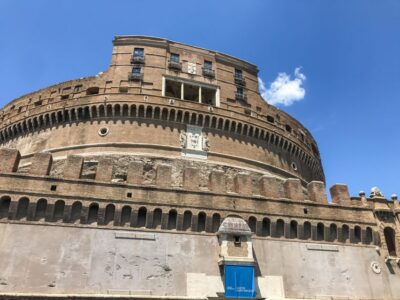

Castel Sant’Angelo Skip-the-Line Entry Ticket
Read our review →



Browse the lists this tour appears in