
Reviewed · OSTIA ANTICA TOURS
Ostia Antica: Archaeological Guided Private Tour
Ostia Antica lets you see Roman life beyond the usual parade of emperors and monuments. This ancient port city has apartment blocks, food shops, public toilets, villas, temples, and a theater, all spread along the old streets. An expert guide helps turn weathered stone into a city you can picture.
I like the private format, which allows the guide to adjust the pace for adults, children, or a group with special interests. I also like the graphic reconstructions, which help you understand what the buildings may have looked like when Ostia was active. The main drawback is the short two-hour duration. This is enough for a strong introduction, but not enough to explore every corner of a large archaeological park.
Key points to know before booking
- Ostia Antica was Rome’s first colony, founded in the seventh century BC at the mouth of the Tiber River.
- The Decumanus Maximus provides a clear route through the ancient city and links several major sights.
- The private guide can tailor the visit, a useful feature for families and groups with different interests.
- The route includes the Capitolium, theater, Baths of Neptune, and Piazzale delle Corporazioni, plus everyday buildings often skipped on standard sightseeing tours.
- Entry tickets and a private guided tour are included, with ticket-line access provided.
- Winter visitors should expect covered mosaic floors, so the famous mosaics may not be visible during that season.
Why Ostia Antica feels different from central Rome
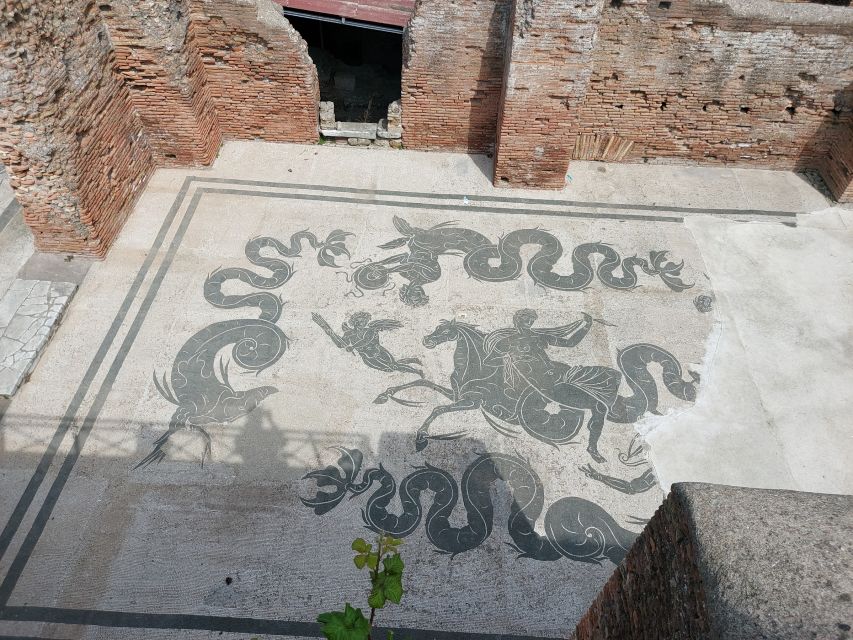
Rome’s famous ruins often focus on grand public power. Ostia Antica gives you something more ordinary and, in many ways, more revealing. Here you can follow a street past homes, workshops, toilets, eateries, temples, and public buildings. The city shows how Roman society worked at ground level.
Ostia was founded at the mouth of the Tiber in the seventh century BC. Its position gave Rome access to the river and the sea, making it important for trade and supply. The settlement later grew into a substantial Roman city before it was abandoned in the ninth century.
The site is often described as the largest archaeological site in the world. That claim gives you a useful sense of scale, but it also explains why a two-hour visit needs direction. If you wander without a plan, you can see plenty of stones without understanding what you are looking at. A private archaeological guide keeps the visit focused.
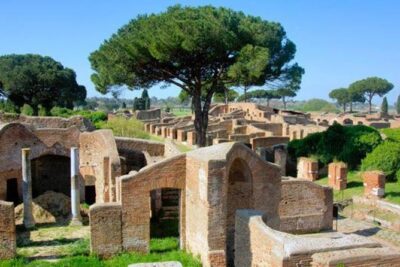
I find that especially useful at Ostia because many of the most interesting details are not immediately obvious. A row of rooms may be an apartment building rather than a temple. A counter may belong to a food shop rather than a workshop. A set of small stone openings may be public toilets. The guide’s explanations give these remains a practical purpose.
More Ostia Antica tours:
- Ancient Ostia Antica Semi-Private Day Trip from Rome by Train with Guide
★ 4.5 · 579 reviews - From Rome: Ostia Antica Guided Half-Day Trip by Train
★ 4.8 · 486 reviews - Horse Sanctuary & Trail Ride in Ostia Antica
★ 4.5 · 276 reviews
Walking the Decumanus Maximus
The tour follows the Decumanus Maximus, the main street of Ostia Antica. This is the natural backbone of the visit. Walking along it helps you understand the layout of the settlement and gives the tour a clear sense of movement instead of a series of disconnected ruins.
The street leads you through the parts of the city that best show its range. You may move from religious buildings to public entertainment, then to homes and commercial spaces. That change of setting is one of the strongest reasons to visit Ostia rather than only seeing Rome’s monumental center.
This is a walking tour, so comfortable shoes matter. The activity lasts two hours, and the guide may cover a good amount of ground within that time. The route is wheelchair accessible, though the experience still takes place in a large archaeological park and includes walking between sites.
The guide will meet you with a sign showing your name. The activity ends back at the meeting point, which keeps the start and finish simple. Food and drinks are not included, so plan those separately.
The Baths of Neptune and ancient Roman mosaics
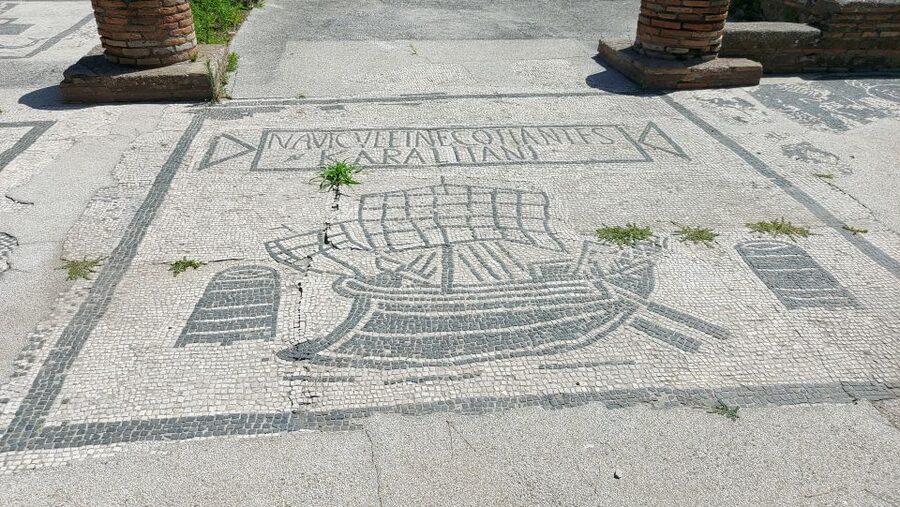
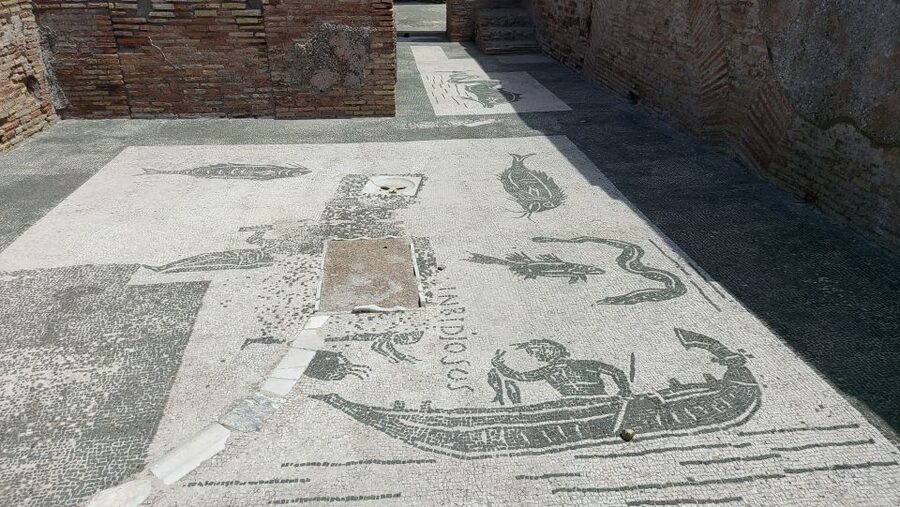
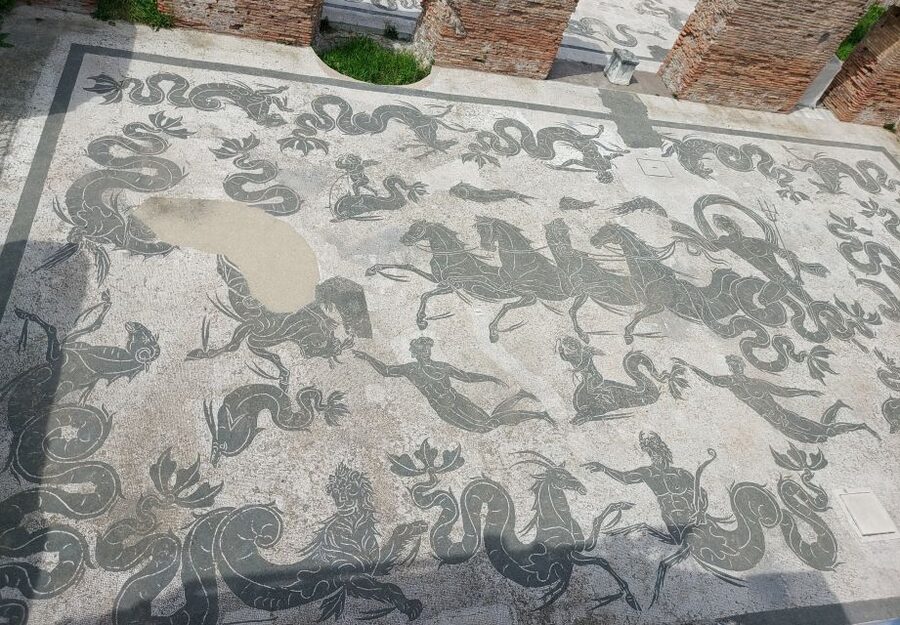
The Baths of Neptune are one of the visual highlights. Their mosaics help show how Roman public bathing complexes were decorated and how much attention went into floors and architectural presentation.
The mosaics are not just pretty patterns. They give you clues about the subjects Romans chose to display in public spaces. An archaeological guide can also explain how these floors fit into the wider bath complex and daily routine.
There is one important seasonal warning. During winter, the mosaic floors are covered for preservation. You can still visit the archaeological site and follow the guided route, but the mosaics will not be visible during winter visits.
That point may affect your booking decision. If the mosaics are a major reason you want to see Ostia Antica, check the season carefully. If your main interest is Roman city planning, architecture, and daily life, the visit still offers plenty to examine.
The theater and the public heart of Ostia
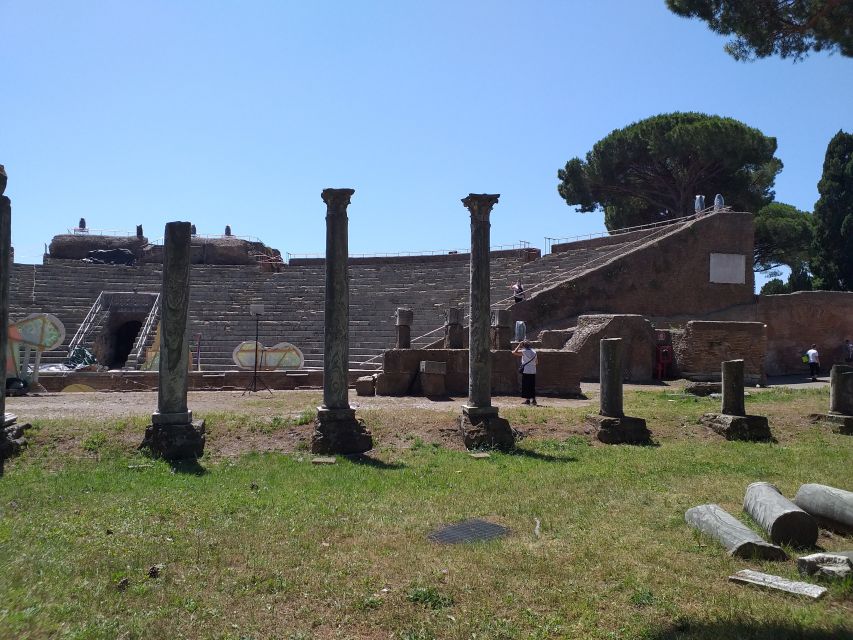
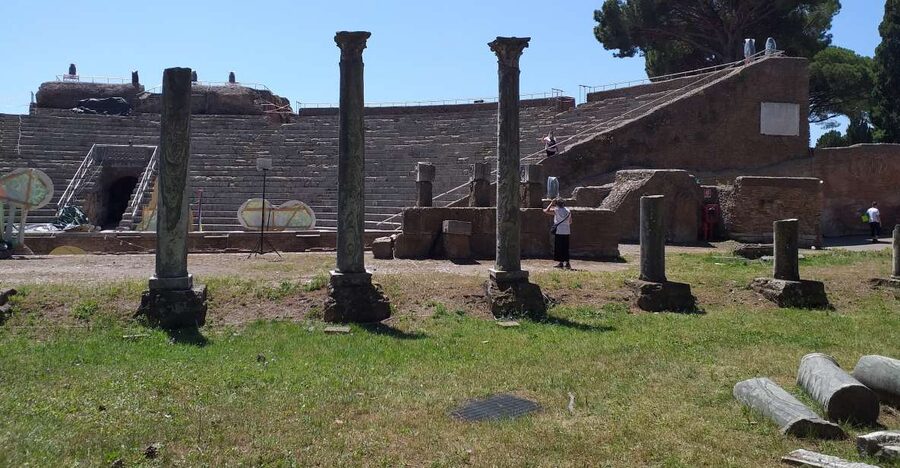
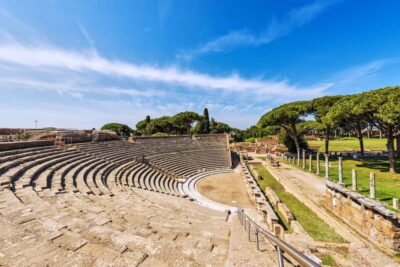
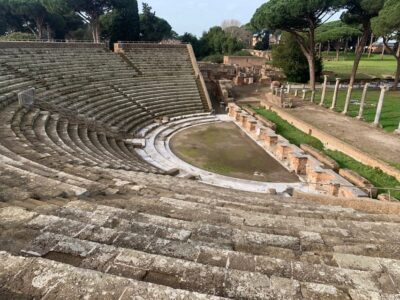
The Theater of Ostia is another major stop. It was decorated with marble masks and gives you a sense of how entertainment fit into civic life. The theater is more than a single impressive structure. It helps explain how people gathered, watched performances, and shared public space.
From here, the tour connects with the Forum Square, the civic center of the city. The square is dominated by the Capitolium, a large temple dedicated to Jupiter, Juno, and Minerva. These were among Rome’s most important gods, so the temple reflects Ostia’s place within the Roman religious and political order.
I like this pairing of theater and forum because it shows two sides of the city. The theater represents public leisure and spectacle. The forum and Capitolium represent civic identity, official business, and religion. You do not need to know Roman history in advance to see the contrast.
The guide’s graphic reconstructions are especially helpful here. Ruins rarely make the original height, color, and decoration of a building obvious. A reconstruction gives you a visual comparison between what remains and what the ancient city may have looked like.
More private tours in Rome:
- Rome by Golf Cart Private Tour: Beyond the Landmarks
★ 5.0 · 4,361 reviews - Early Morning Vatican, Sistine, St. Peter’s Semi or Private Tour
★ 5.0 · 3,779 reviews - Rome on a Golf Cart Semi-Private Tour Max 6 with Private Option
★ 5.0 · 2,502 reviews - Rome Private Arrival Transfer: Fiumicino Airport to Hotel in Rome
★ 4.5 · 2,492 reviews
Piazzale delle Corporazioni and the working city
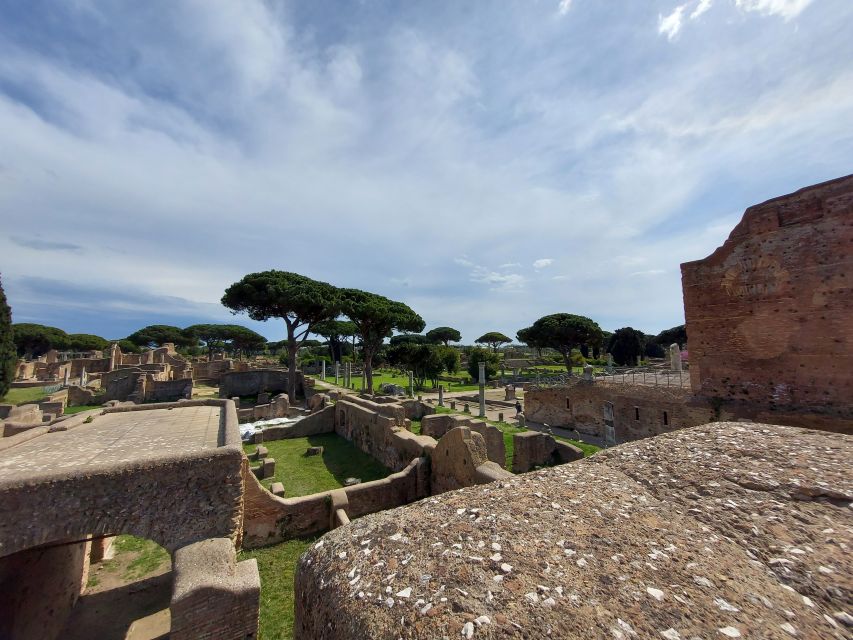
Piazzale delle Corporazioni offers another view of Ostia, one tied to commerce and organized work. The site is included among the tour highlights, and it helps balance the temples, theater, and wealthy homes.
Ostia was a port settlement, so trade was central to its purpose. At the Piazzale delle Corporazioni, you can think about the businesses and professional groups that supported the city’s economy. This is an important stop if you want more than a tour of impressive buildings.
I appreciate that the route includes working life alongside elite architecture. Roman cities were not made only of temples and villas. They depended on tradespeople, merchants, food sellers, laborers, and public services. Ostia makes those layers easier to see because so many different building types remain in one place.
The available information does not specify every individual building or organization the guide will explain at the piazzale. The exact emphasis may vary with the guide and your group’s interests. That is one benefit of the private format: you can ask for more attention to commerce, religion, architecture, or ordinary routines.
Apartment blocks, villas, shops, and public toilets
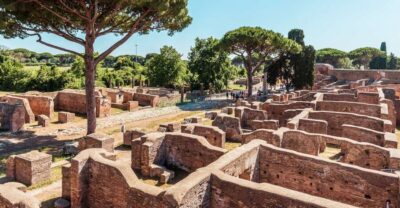
The most human part of the tour comes when you move away from the biggest monuments. Ostia preserves the remains of insulae, the ancestors of modern apartment buildings. These show that Roman urban life included shared housing and dense residential blocks, not only grand private villas.
You will also see domus, the homes of wealthier patricians. Comparing an insula with a domus helps you think about social differences in practical terms. The contrast is not just about size. It points to different levels of privacy, space, decoration, and comfort.
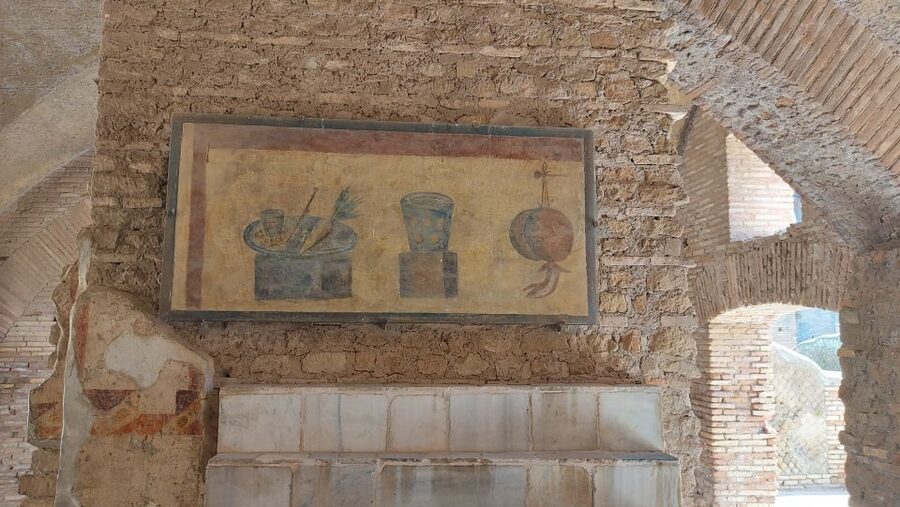
The tour also includes ancient shops and restaurants. A thermopolium functioned much like a fast-food restaurant, with food and drink served from a counter. This is one of those details that makes the ancient city feel surprisingly familiar. People still needed quick meals, places to buy goods, and convenient services.
Public toilets, known as latrinae, add another useful piece of the puzzle. They are not as glamorous as the Capitolium or the theater, but they reveal the systems that supported city life. I would pay close attention here, especially if you are visiting with children. Everyday infrastructure often makes ancient history easier to grasp than a long list of emperors and dates.
What the private guide adds
The tour is led by a live guide in English or Italian. The guide’s archaeological background is central to the experience because Ostia is too large and detailed for a quick self-guided walk to explain everything well.
Francesca is specifically noted for accommodating groups of adults and children and adjusting the tour to their needs and interests. That makes this a good choice if your party is mixed. Children may need shorter explanations and more concrete examples, while adults may want greater detail about urban planning, religion, or Roman society.
The private group format also gives you room to ask questions. You are not tied to the interests of a large group or forced to keep up with a preset lecture. If you want to know how an ancient restaurant worked, why the Capitolium mattered, or how apartment buildings fit into Roman society, you can direct the conversation.
The experience has a top rating from four reviews, including specific praise for Francesca’s flexibility and for the guide’s preparation and helpfulness. That is a small sample, so I would not treat it as a guarantee. Still, the comments match the main strength of the tour: personal guidance rather than a one-size-fits-all walk.
Is two hours enough for Ostia Antica?
Two hours is enough for an organized introduction to the main sights. You can see the central street, important religious and civic buildings, the theater, commercial areas, housing, and public facilities without spending the day on site.
It is not enough for a slow, complete exploration of the entire archaeological park. Ostia Antica is large, and the tour’s value comes from choosing the most useful route and explaining what you see. If you want to study every neighborhood, inscription, mosaic, and building, you will need more time than this activity provides.
I would choose the two-hour format if you are adding Ostia to a busy Rome itinerary or if you want a focused first visit. It also works well for families and anyone who prefers a clear introduction rather than several hours of unstructured ruins.
The private setting helps the time feel more productive. Your guide can spend less time on subjects that do not interest you and more time on the parts you care about. That flexibility matters when the clock is limited.
Price, tickets, and practical value
The price is $155.20 per person. That is not a low-cost archaeological visit, especially for a private two-hour tour. The price includes entry tickets and a private guided tour, however, so you are paying for personal attention, an archaeological guide, and a planned route through a very large site.
The value depends on how you like to sightsee. If you are comfortable reading site signs and finding your own way, a private tour may feel expensive. If you want the ruins explained clearly and prefer to make the most of a short visit, the cost is easier to justify.
Ticket-line access is included, which removes one practical concern at the entrance. You still need to check available starting times when booking. The tour offers free cancellation up to 24 hours in advance and a reserve-now, pay-later option, useful if your Rome plans are not fully settled.
No food or drinks are included. Since the activity is a walking tour, bring what you need for the duration, though the supplied details do not specify refreshment facilities or a recommended place to eat afterward.
Who will get the most from this tour?
I would recommend this experience to first-time visitors who want to understand Ostia rather than simply walk through it. It is also a strong fit for families, given Francesca’s reported ability to adjust the visit for adults and children.
History lovers should enjoy the range of subjects packed into the route. You get religion, entertainment, commerce, housing, food, sanitation, and urban design in one visit. That variety makes the site useful for understanding daily Roman life.
This is also a good option for visitors who prefer private tours and direct questions. The English and Italian language choices cover the two available tour languages, and the wheelchair-accessible format makes the activity available to more visitors.
I would think twice if you want a long, leisurely archaeological study or if mosaics are your main priority and you are visiting in winter. The covered floors are an important limitation, and two hours will feel brief to anyone hoping to see the entire park.
Should you book this Ostia Antica tour?
Book it if you want a focused introduction to Roman city life, personal guidance, and the freedom to shape the conversation around your group. The route covers the major monuments, but its real strength is the mix of ordinary places: apartment buildings, shops, a thermopolium, and public toilets.
The price makes the most sense for a small private group that values expert explanation and efficient sightseeing. Before booking, check the season if the mosaics matter to you, and remember that this is a walking tour lasting two hours.
For a first visit to Ostia Antica, I think the private format is a practical choice. You leave with more than a collection of ruins. You see how a Roman city functioned, from its Capitolium and theater to its kitchens, homes, businesses, and toilets.
FAQ
Where does the Ostia Antica tour take place?
The tour takes place in the Parco Archeologico di Ostia Antica in Lazio, Italy.
How long does the tour last?
The guided visit lasts two hours. Starting times depend on availability.
What language is the tour offered in?
The live guide can conduct the tour in English or Italian.
Is the tour private?
Yes. The activity is offered as a private group tour.
Are entry tickets included?
Yes. Entry tickets and the private guided tour are included in the price.
Is the tour wheelchair accessible?
Yes. The activity is listed as wheelchair accessible.
What happens during winter visits?
During the winter season, the archaeological site covers its mosaic floors for preservation. The mosaics are therefore not visible during winter visits.
Where does the tour start and end?
The guide meets you with a sign showing your name. The activity ends back at the meeting point.
Newest Rome tours we have reviewed
- Private TikTok Video Making in Rome★ 5.0 · 7 reviews
- Assisi, Orvieto and Civita di Bagnoregio Full Day Tour from Rome★ 4.5 · 45 reviews
- Assisi & Saint Francis Path Tour from Rome★ 5.0 · 45 reviews
- Assisi and Cascia Private Day Tour from Rome with Lunch★ 5.0 · 10 reviews
- Art Class in the center of Rome!★ 4.0 · 4 reviews
- Art & Craft: Beer Tour with Street Art in Rome★ 4.5 · 6 reviews
- Arrival in Rome: Airport Transfer & Exclusive City Introduction★ 5.0 · 3 reviews
- From Rome: Private Day-Tour of Tuscany★ 5.0 · 16 reviews
Ostia Antica Tours, compared.
Ancient Ostia Antica Semi-Private Day Trip from Rome by Train with Guide
Read our review →
Ostia Antica Archaeological Park Ticket & Audio App
Read our review →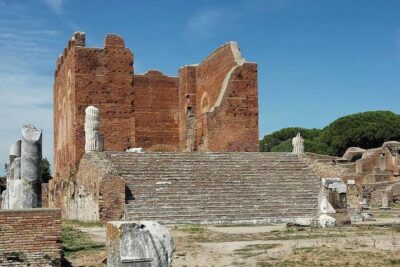
Browse the lists this tour appears in