
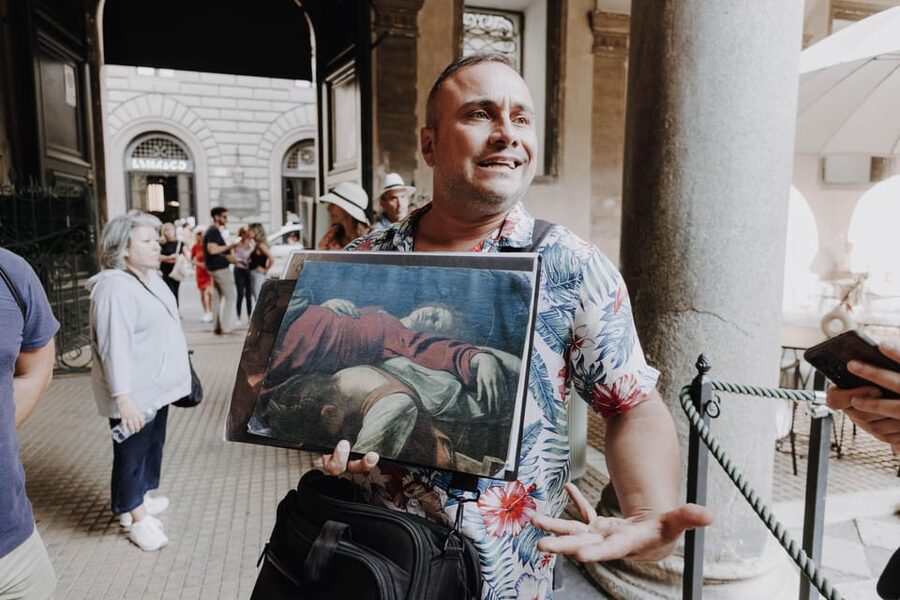
Reviewed · CARAVAGGIO AND BAROQUE ART TOURS
Renaissance Women of Caravaggio and the Borgia Family
The real hook here is Rome’s Renaissance women, not another march past the Colosseum. Massimo leads you through stories of courtesans, artists’ models, political players, and survivors whose lives shaped the paintings and scandals of 16th-century Rome. You see the city through women who were often praised, condemned, painted, and used by powerful men.
I like two things right away. First, the tour gives you a fresh reason to enter churches such as Santa Maria sopra Minerva and Sant’Agostino, where art and personal stories meet. Second, the route connects paintings and gossip to real streets, palaces, and homes, making central Rome feel less like a museum and more like a stage. The main consideration is the tone: this is lively, witty storytelling rather than a quiet, academic art lecture.
Key points at a glance
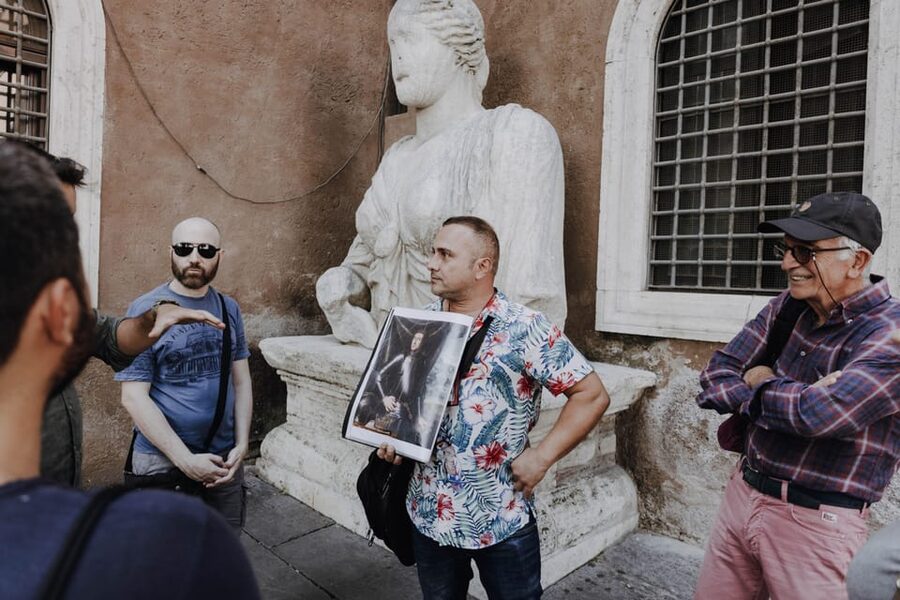
- Seven Renaissance women take center stage, with their links to Caravaggio, Raphael, and the Borgia family.
- Massimo leads the English tour, using humor, political intrigue, art, and personal drama.
- Central Rome provides the setting, from Trajan’s Column and Piazza Venezia to churches and Renaissance palaces.
- Three churches are part of the route, so you can see important interiors while hearing the stories behind them.
- A three-hour walk costs $44 per person, a fair price if you enjoy guided storytelling and want more than standard sightseeing.
- Dress carefully for church entry, with shoulders covered and skirts or shorts no higher than just above the knee.
Why these women make Rome feel different
Many Rome walks focus on emperors, popes, fountains, and painters. This one asks a more pointed question: who were the women appearing in the paintings, supporting artists, influencing men, and surviving a society that denied them formal education?
The answer is not a simple parade of tragic figures. The women presented here were courtesans, but that word can hide more than it explains. In Renaissance Rome, an elite courtesan might need beauty, literacy, wit, social skill, and political sense. With education closed to many women, some built influence through conversation, poetry, patronage, and access to powerful households.
That makes the tour useful even if you are not an art specialist. You do not need to recognize every Raphael or Caravaggio painting before you arrive. Massimo uses the artworks as doors into larger questions about class, sex, money, reputation, and survival.
The stories are intentionally bold. You will hear about forbidden love, ambition, political connections, and the double standard that let Rome admire these women in art while judging them in public. The humor keeps the walk moving, but the subject is not weightless. Some stories are empowering; others are moving and uncomfortable.
More Caravaggio and baroque art tours:
- Rome: Terrazza Borromini Open-Air Opera with Aperitif
★ 4.7 · 212 reviews - Borghese Gallery Max 6 People Tour: Baroque & Renaissance in Rome
★ 5.0 · 185 reviews - Guided Walking Tour of Rome: Top Sights & Baroque Treasures
★ 5.0 · 155 reviews
Meeting at Trajan’s Column near Piazza Venezia
The meeting point is easy to identify. Your guide waits beside Trajan’s Column, the 90-foot monument next to Piazza Venezia, holding a sign marked Renaissance Scarlet Ladies Tour.
This is a sensible starting place. Piazza Venezia sits at the center of Rome’s historic core, surrounded by major roads, monumental buildings, and layers of ancient and Renaissance history. You can reach the meeting point from several directions, but give yourself time to orient yourself. The square can feel confusing, especially when traffic and crowds are moving around it.
From here, the tour quickly shifts away from a standard monument checklist. Trajan’s Column provides a useful reminder that Rome has always used public monuments to tell stories about power. The Renaissance women on this walk did not get columns of their own, but their lives survive in paintings, church decoration, property records, rumors, and the homes associated with them.
That contrast is part of the appeal. You begin beside a huge imperial monument, then follow the less visible traces of women who influenced Rome without commanding armies.
Galleria Doria Pamphilj and the city’s palace world
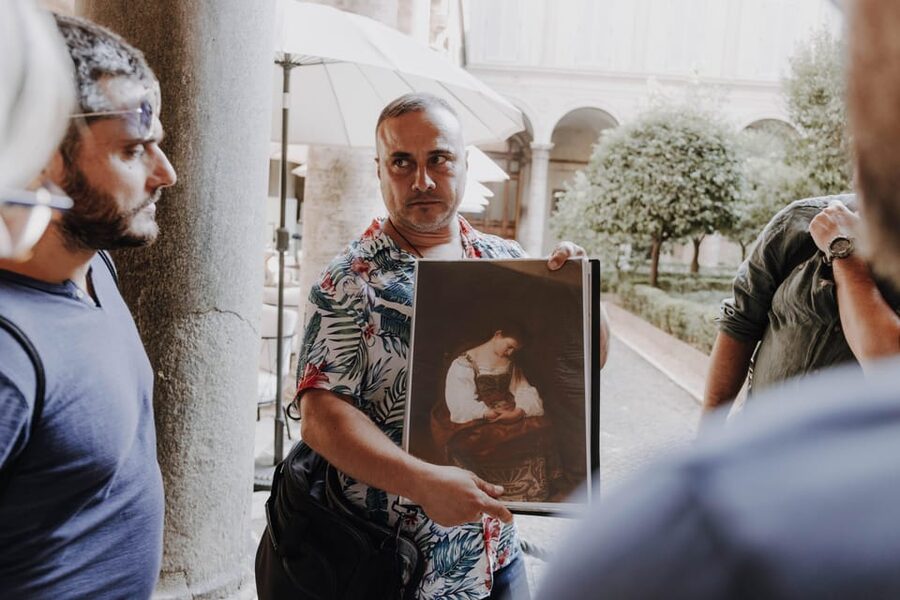
The route passes the Galleria Doria Pamphilj, one of central Rome’s grand art settings. The walk does not present itself as a full museum tour, so you should not expect a long gallery visit or a survey of every painting. Instead, the palace helps establish the world these women had to navigate.
Rome’s Renaissance and early modern palaces were places of patronage, diplomacy, gossip, and negotiation. Art was never only decoration. A portrait could signal status, loyalty, beauty, family connections, or cultural taste. A woman’s appearance in a painting could carry several meanings at once, and Massimo’s stories connect those images to the social world around them.
This is where the tour’s approach works best for me. A painting becomes more interesting when you ask who paid for it, who appeared in it, and what the subject’s public reputation meant at the time. You are not just looking at an attractive face. You are considering the power relationships behind the image.
The drawback is that the route’s art discussion depends on storytelling rather than a formal visual presentation. If you want detailed information about technique, restoration, or every symbol in a painting, a specialist museum tour would serve you better.
Santa Maria sopra Minerva and the women behind sacred art
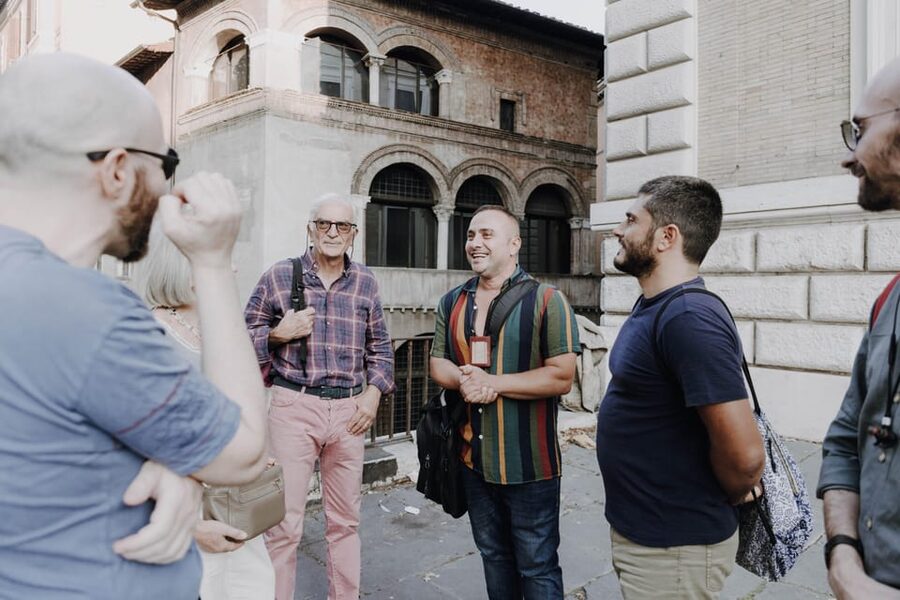
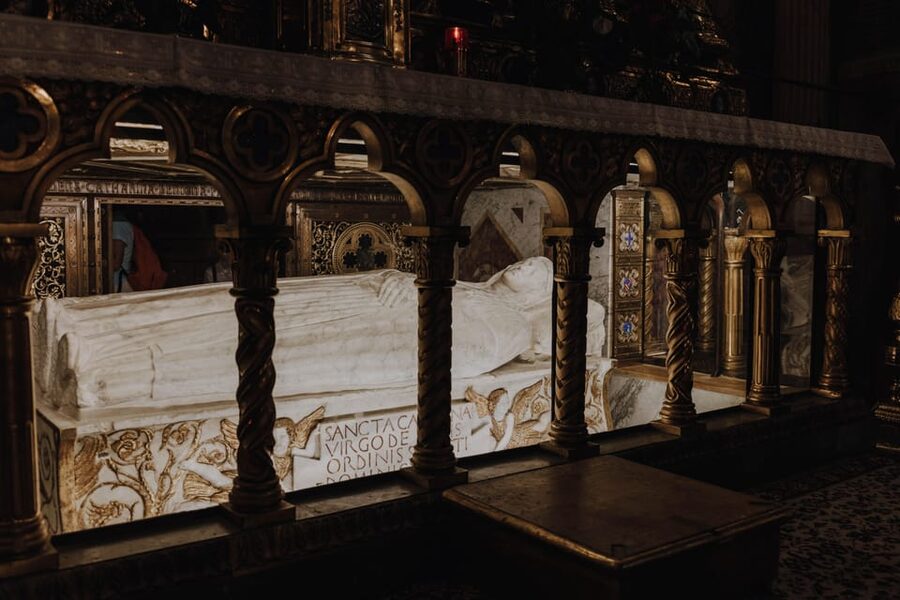
Santa Maria sopra Minerva is one of the important church stops. Its name refers to an ancient temple site, and the church offers a striking example of how Rome layers different eras in a small area. Here, the women’s stories meet the religious world that judged them and sometimes preserved their images.
Churches were central to public life in Renaissance Rome. They were places of worship, burial, patronage, charity, and display. A woman’s connection to a church could reveal family standing, a benefactor’s influence, or the complicated line between devotion and reputation.
You will need to be ready for a pause while Massimo explains the art and the people connected to it. This is not a quick photo stop. The value comes from hearing why a particular image or setting matters, then looking at the space with that story in mind.
Remember the dress code. Your shoulders must be covered, including the deltoids, and skirts or shorts should end no higher than just above the knee. Sleeveless shirts and short skirts are not allowed. Churches may refuse entry if your clothing is unsuitable, so carry a light cover-up even on a warm day.
Same city, a completely different half-day:
- Vatican Museums & Sistine Chapel Tour with Optional Basilica
★ 4.3 · 67,413 reviews - Vatican Museums, Sistine Chapel & St Peter’s Basilica Guided Tour
★ 4.5 · 39,149 reviews - Rome: Colosseum, Palatine Hill and Roman Forum Guided Tour
★ 4.8 · 32,814 reviews - Rome: Guided Tour of Colosseum, Roman Forum & Palatine Hill
★ 4.7 · 27,897 reviews
Sant’Agostino and Santa Maria della Pace
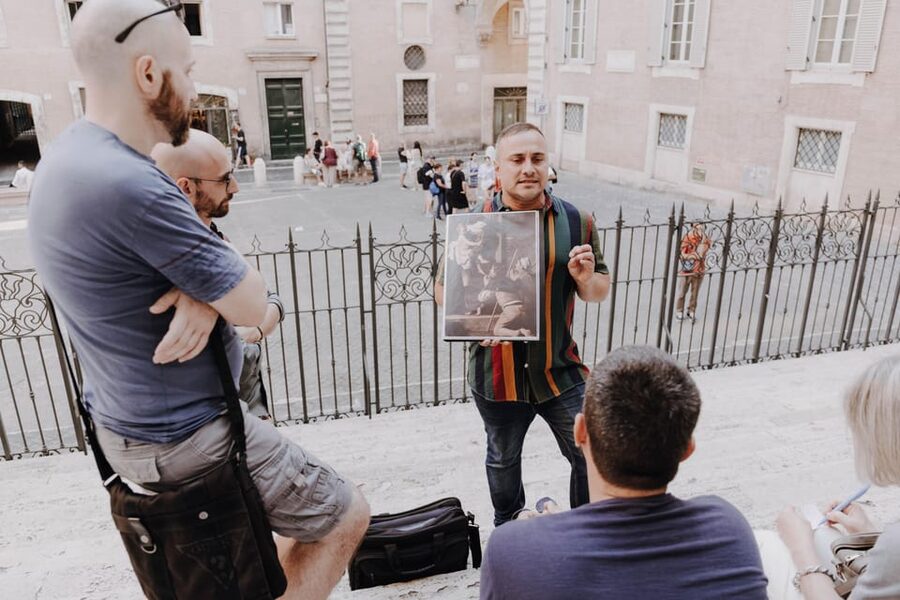
Sant’Agostino is another key stop, followed by Santa Maria della Pace. Together, these churches show how much art and social history are concentrated within a short walk of Rome’s center.
The churches are valuable not simply because they are old or beautiful. They help you see how religious spaces could also be stages for family status and artistic competition. The women in these stories existed in a world where sacred and scandalous were never entirely separate. A church might condemn sexual behavior while also preserving art connected to the same social circles.
At Sant’Agostino, expect Massimo to connect the church’s art and setting to the wider lives of the women being discussed. At Santa Maria della Pace, the compact interior gives the walk another change of mood. After busy streets, a church can slow the pace and sharpen your attention.
The tour covers a lot of central Rome in three hours. That is a strength if you want movement and variety. It is less suitable if you prefer to spend 20 minutes studying each artwork in silence. You are walking, listening, entering churches, and moving on before the city’s energy becomes tiring.
The 16th-century homes that make the stories personal
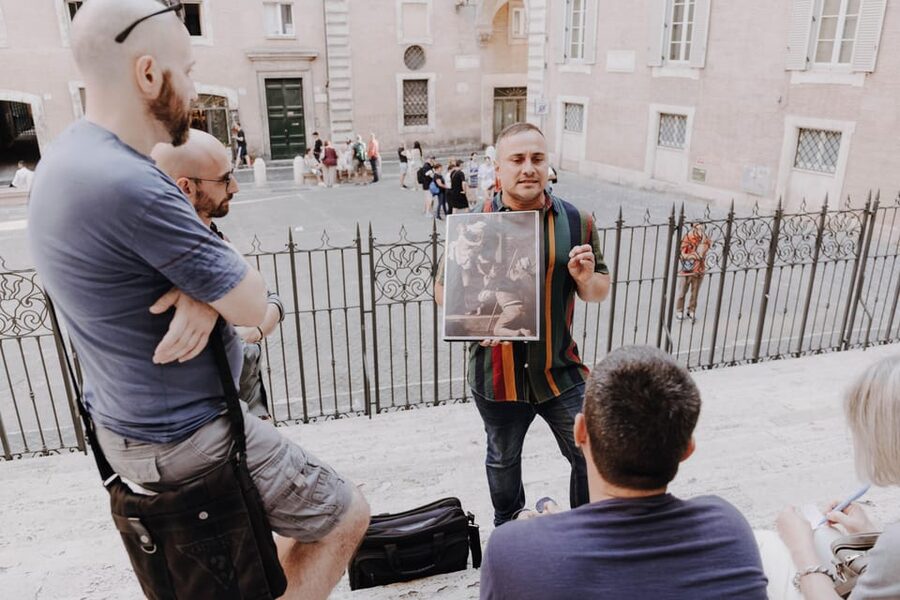
One of the more unusual parts of the route is its attention to surviving 16th-century homes. These are not just grand landmarks. They help turn the women from names in a painting into people who lived in specific neighborhoods and rooms.
A home can tell you something a portrait cannot. It suggests who had money, who lived near power, and who was accepted into a particular social circle. Even when you cannot enter a building, seeing it from the street gives the story a physical anchor.
This is also where the tour feels most different from a standard Rome walk. You are not only following famous artists. You are tracing women’s presence through the urban fabric, including places that can be easy to miss when you rush between major monuments.
Do not expect every building to look exactly as it did five centuries ago. Rome has changed constantly, and the surviving structures are part of a modern city. Their importance lies in the connection they provide, not in a perfectly preserved Renaissance scene.
Caravaggio, Raphael, and the faces behind the masterpieces
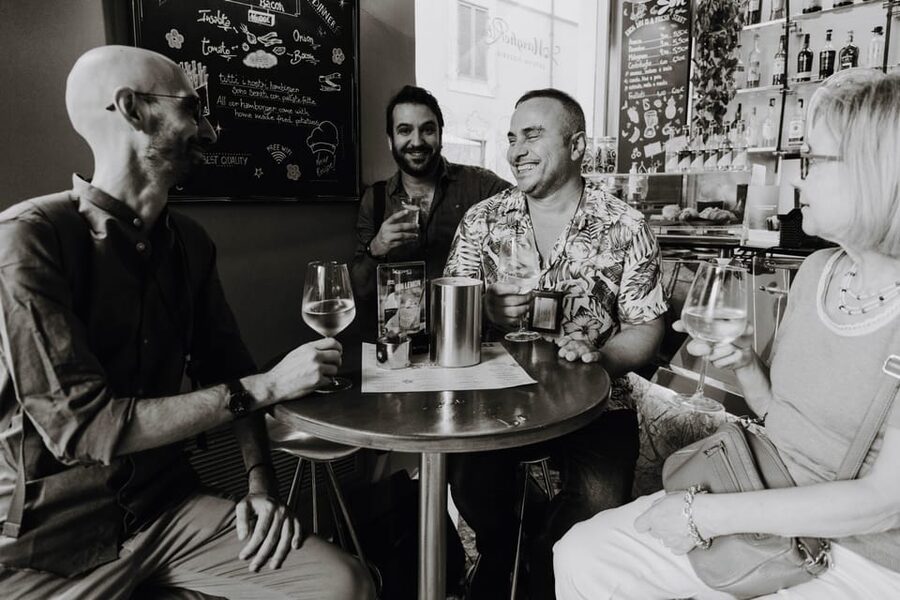
Caravaggio and Raphael are the famous names that attract many people to this tour. Their paintings are often discussed through style, technique, and religious subject matter. This walk shifts attention toward the women who may have served as models or inspired the stories surrounding the art.
That change in focus can be surprisingly powerful. A familiar painting looks different when you think about the person whose face or reputation helped shape it. The women were not simply decorative figures. They had their own ambitions, relationships, economic pressures, and methods of survival.
The tour also connects these stories to popular movies and television series. That does not turn the experience into entertainment alone. It shows how Renaissance Rome continues to be reworked for modern audiences, often with the women placed at the center of the drama.
You should keep an open mind about certainty. Stories from 500 years ago can mix documented events, interpretation, and long-running gossip. A good guide can make that uncertainty interesting rather than pretending every rumor is proven fact. Massimo’s strength, based on the information provided, is his energy and ability to bring art and social history together.
A short break, then the final stretch
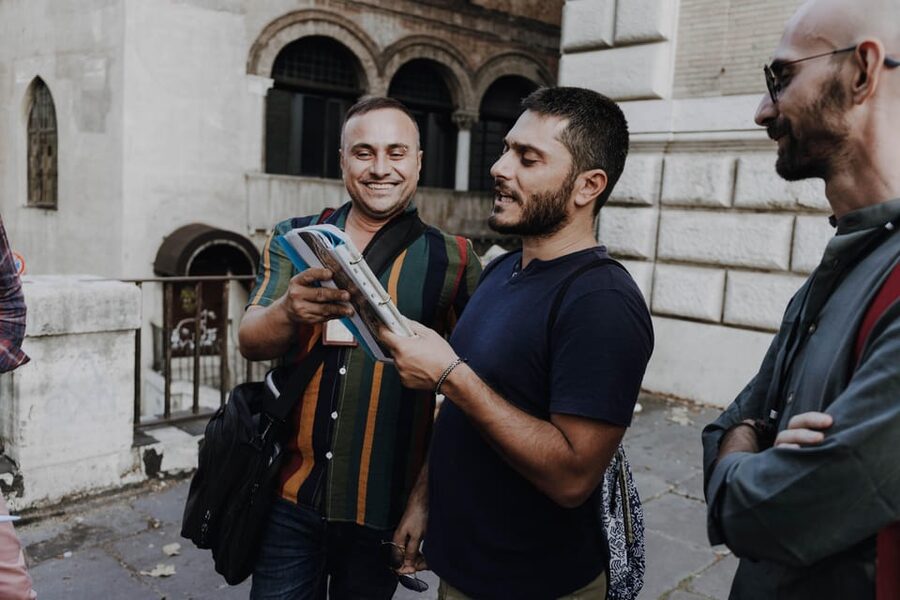
There may be a small break halfway through the walk. You can buy a snack or drink at your own expense, and the tour has included opportunities for gelato or a spritz along the way.
This pause matters more than it might sound. Three hours on Rome’s stone streets can be tiring, especially in warm weather. Comfortable shoes are essential, and you should not plan this as a polished fashion walk. The route includes churches and many central streets, so practical clothing will make the afternoon easier.
The walk ends in Piazza Farnese, according to the route information, a good place to stop for wine or dinner and watch the evening light. One account also places the final gathering near Campo de’ Fiori, so confirm the exact endpoint when booking if your restaurant plans depend on it. Both locations are useful for continuing an evening in central Rome.
The ending is well chosen in spirit. After three hours of stories about ambition, desire, art, and public reputation, you finish in one of the city’s best areas for sitting down and talking over what you have heard.
Is $44 a fair price?
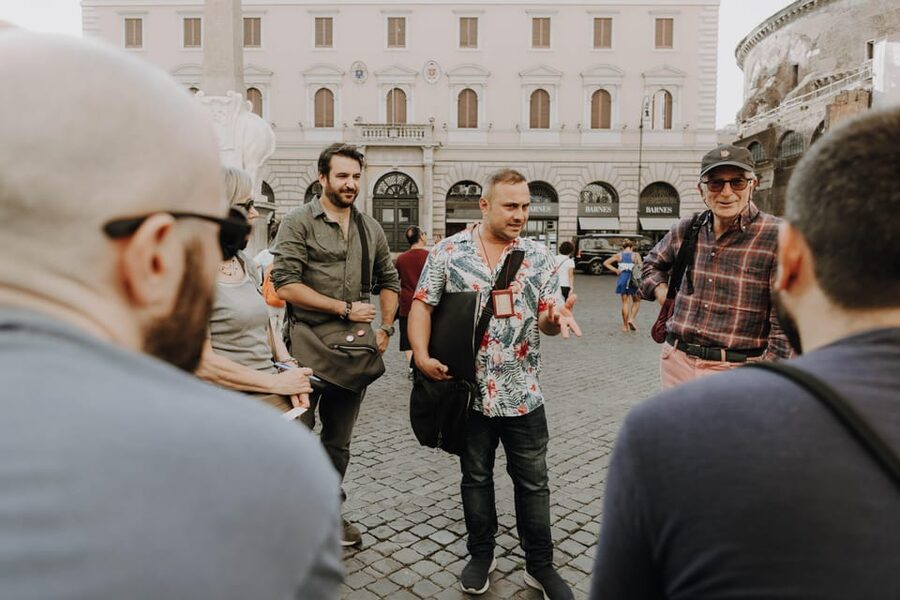
At $44 per person, this is not the cheapest way to spend three hours in Rome. You can walk through the same central streets for free. You can also visit some churches without paying an admission fee.
The price pays for interpretation. Massimo’s role is to connect scattered sites, paintings, old homes, and historical personalities into one story. That is the part you cannot easily reproduce with a map. You are also getting a themed route rather than a general introduction to Rome.
I consider the price fair for someone who enjoys guided walks and wants a specialized subject. It is particularly good value if you have already seen the basic sights and want a fresh way to understand the city center. It is less compelling if your main goal is to enter museums, see a large number of original paintings, or receive a formal art-history lecture.
The perfect comparison is not a free stroll. It is the cost of spending three hours with a guide who has built a focused narrative around seven women and several important sites. If that subject interests you, $44 is reasonable.
Who should book this walk?
I would recommend it to adults and older teenagers who enjoy stories with sharp edges. It suits people interested in women’s history, Renaissance art, Roman churches, political intrigue, and the social side of famous paintings.
You do not need to be an art lover. The storytelling approach is designed for anyone who likes a strong human story. At the same time, people who already know Rome may find extra value in the lesser-known homes, symbols, and personal connections.
The walk may not suit you if you dislike gossip, sexual themes, or an informal tone. It may also frustrate you if you want a precise academic lecture with extensive time inside each church. The word sassiest in the tour description is a fair warning: the personality is part of the product.
The tour is listed as wheelchair accessible, but Rome’s historic center and old churches can still present practical challenges. If you use a wheelchair, confirm the current route and church access before booking.
Should you book the Renaissance Women of Caravaggio and the Borgia Family tour?
Book it if you want Rome to feel personal rather than merely monumental. The best reason to go is the combination of Massimo’s lively storytelling, central Roman sites, and women whose lives have often been pushed to the edge of the art story.
Bring covered shoulders, sensible shoes, and an appetite for complicated characters. Keep your expectations clear: this is a fast-moving, entertaining walking tour, not a museum seminar. For $44 and three hours, it offers a distinctive way to see familiar streets, especially if you have already visited Rome’s headline sights.
FAQ
How long does the tour last?
The walking tour lasts three hours.
What language is the tour conducted in?
The tour is conducted in English by a live guide.
Where does the tour meet?
Meet the guide beside Trajan’s Column near Piazza Venezia. The guide will hold a Renaissance Scarlet Ladies Tour sign.
Which places are included on the walk?
The route includes the area around Piazza Venezia, Galleria Doria Pamphilj, Santa Maria sopra Minerva, Sant’Agostino, Santa Maria della Pace, several Renaissance-era homes, and other central Rome sites. The route information identifies Piazza Farnese as the ending point.
What should I wear?
Because the tour enters churches, your shoulders must be covered, including the deltoids. Short skirts and sleeveless shirts are not allowed, and shorts or skirts should end just above the knee or lower.
Is the tour wheelchair accessible?
The activity is listed as wheelchair accessible. Since the walk enters historic churches and uses Rome’s old city streets, confirm any specific access needs before booking.
Newest Rome tours we have reviewed
- Private TikTok Video Making in Rome★ 5.0 · 7 reviews
- Assisi, Orvieto and Civita di Bagnoregio Full Day Tour from Rome★ 4.5 · 45 reviews
- Assisi & Saint Francis Path Tour from Rome★ 5.0 · 45 reviews
- Assisi and Cascia Private Day Tour from Rome with Lunch★ 5.0 · 10 reviews
- Art Class in the center of Rome!★ 4.0 · 4 reviews
- Art & Craft: Beer Tour with Street Art in Rome★ 4.5 · 6 reviews
- Arrival in Rome: Airport Transfer & Exclusive City Introduction★ 5.0 · 3 reviews
- From Rome: Private Day-Tour of Tuscany★ 5.0 · 16 reviews
Caravaggio and Baroque Art Tours, compared.
Terrazza Borromini Open-Air Opera with Aperitif
Read our review →
Borghese Gallery Max 6 People Tour: Baroque & Renaissance in Rome
Read our review →
Guided Walking Tour of Rome: Top Sights & Baroque Treasures
Read our review →
Renaissance Scarlet Ladies Tour: Caravaggio’s and Borgia’s Women
Read our review →
Rome’s Baroque Art Walking Tour: Who Killed Caravaggio?
Read our review →
Palazzo Barberini (Caravaggio Exhibition Is Not Included)
Read our review →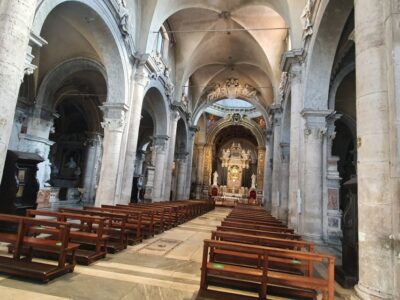
Browse the lists this tour appears in