
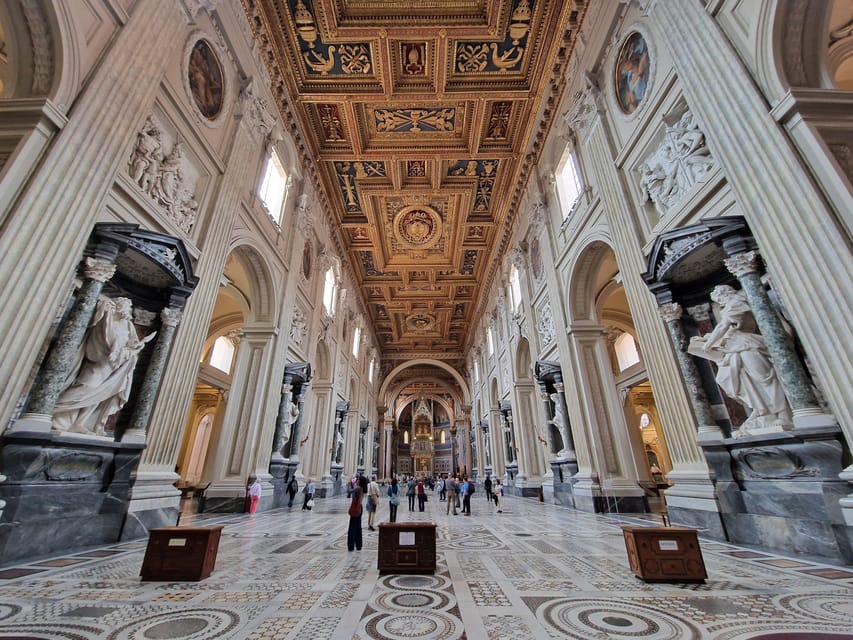
Reviewed · ROME CHURCHES AND BASILICAS TOURS
Rome: Ancient Jubilee in the 4 Major Basilicas
Rome’s four major basilicas are not all clustered around the Vatican, so this tour solves a real problem: in five hours, you can visit all four Holy Doors with transport between them. It is part sightseeing tour, part Catholic pilgrimage, and part lesson in how Rome’s churches fit into the story of Christianity.
I like the clear religious purpose and the access to places many visitors rush through, including St. Paul’s chains, the sarcophagus of St. Paul, and the relics linked to the Nativity crib. I also like having a guide explain the art, altars, and relics instead of trying to make sense of four enormous churches on your own. The main drawback is pace: about an hour at each basilica leaves little room for quiet prayer or extra exploration, and one past participant found it hard to hear the guide inside the churches.
Four Holy Doors, Four Very Different Basilicas
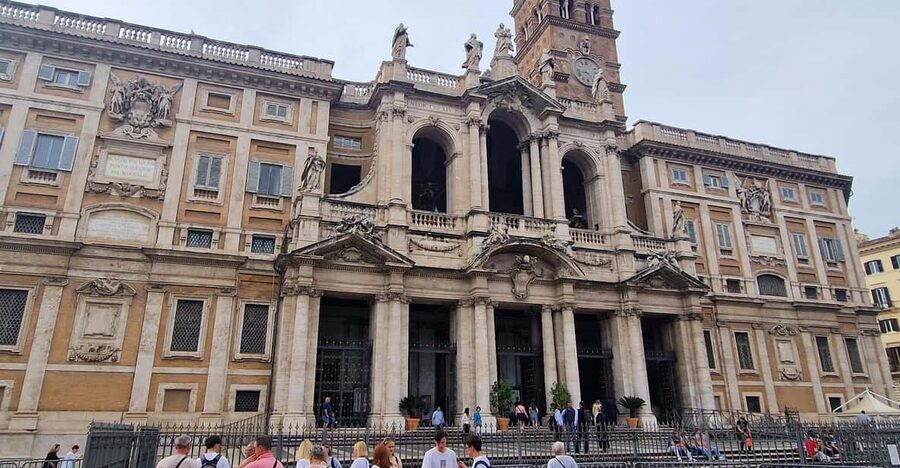
- St. Peter’s Basilica begins the pilgrimage above the traditional tomb of St. Peter, with Michelangelo’s Pietà and major Catholic altars included in the guided visit.
- St. Paul Outside the Walls adds rare early-Christian sights, including the chains associated with St. Paul and his newly excavated sarcophagus.
- St. John Lateran is Rome’s cathedral, not St. Peter’s, and ranks as the mother church of the Catholic world.
- St. Mary Major closes the route with its golden interior, Marian icon, Nativity relics, and papal tombs.
- Private air-conditioned transport connects the churches, saving you from piecing together several cross-town journeys.
- The five-hour schedule is efficient but full, so wear proper church clothing, arrive early, and expect a steady pace.
Why This Pilgrimage Matters
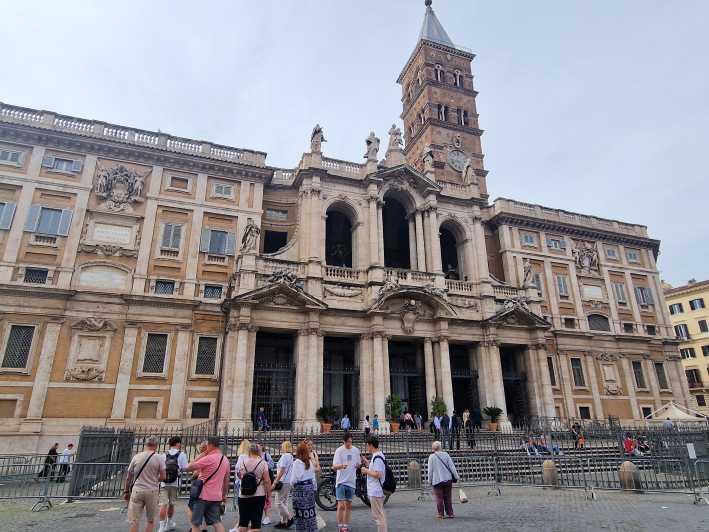
The practice began in 1300 under Pope Boniface VIII, when the Church encouraged pilgrims to visit Rome’s four most important churches and pass through their Holy Doors. These are the four Papal Major Basilicas, the highest-ranking churches in the Catholic world, and all four are in Rome.
That gives the experience a focus that a standard church tour often lacks. You are not simply checking off famous buildings. You are following a route tied to Jubilee tradition and to centuries of Catholic pilgrimage.
The tour is especially meaningful during a Jubilee year, when Holy Door visits carry special religious importance. The experience description refers to the possibility of preparing for the indulgences associated with the pilgrimage. If that spiritual purpose matters to you, pay close attention to the post-booking instructions about the pilgrim’s card and Holy Door entry.
If you are mainly interested in architecture, painting, and Roman history, the route still offers plenty. But you should know what you are booking. This is not a general Rome highlights tour with four church stops added on. The religious purpose comes first.
More churches and basilicas in Rome:
- Vatican Museums, Sistine Chapel & 4 Papal Basilicas Full Day Tour
★ 4.5 · 1,068 reviews - Vatican: Pope Francis Tomb and Papal Basilicas Tour
★ 4.7 · 340 reviews - Rome: Santa Maria Maggiore Upper Areas Skip-the-Line Ticket
★ 3.8 · 223 reviews
Starting at the Vatican and Entering St. Peter’s
Meet at the fountain on the wall of Piazza Giovanni XXIII, near Lungotevere Vaticano. Look for the guide holding an orange sign with a lion head. Arrive 15 minutes early. The tour leaves promptly, and a late arrival can mean missing the group without a refund.
St. Peter’s is the natural starting point. The basilica was built over the traditional burial place of St. Peter, and the tour gives attention to the area beneath the high altar where his body is believed to lie.
Your guide covers the interior, including Michelangelo’s Pietà, the relics and altars connected with major Catholic saints, and the building’s religious story. With only about an hour here, expect an orientation rather than an exhaustive look at every chapel and monument.
The practical challenge is that St. Peter’s can be crowded and noisy, even inside. Guides may need to speak softly, and one participant reported missing parts of the explanation because there was no communication device. Stay close to the guide and position yourself where you can see the guide’s face. If you have hearing concerns, ask at the start whether the group can gather in quieter spots when possible.
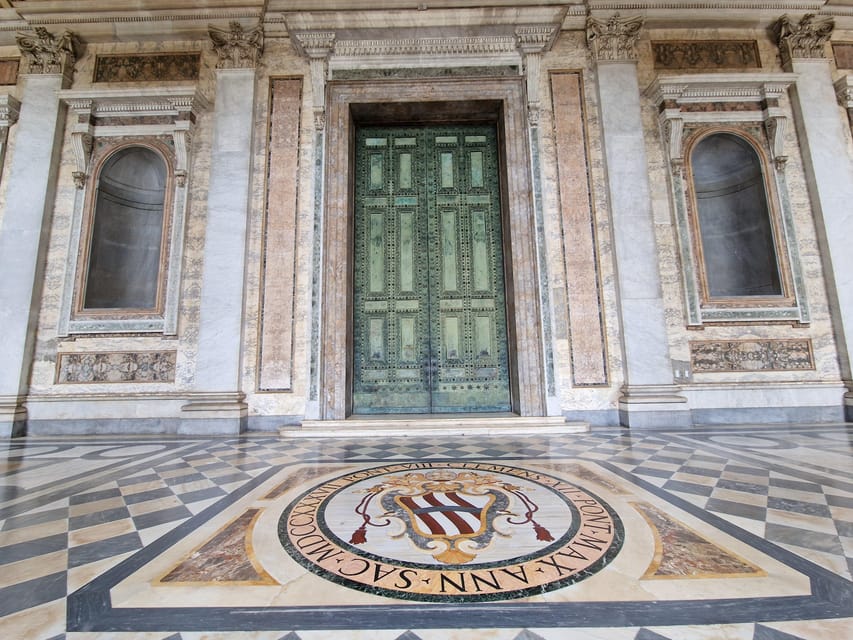
Passing through the Holy Door is the key moment for pilgrims. The exact arrangements can change, so the operator sends detailed instructions about the pilgrim’s card and Holy Door entry after booking. Read those instructions carefully rather than assuming the process will be obvious on the day.
St. Paul Outside the Walls and the Apostle’s Tomb
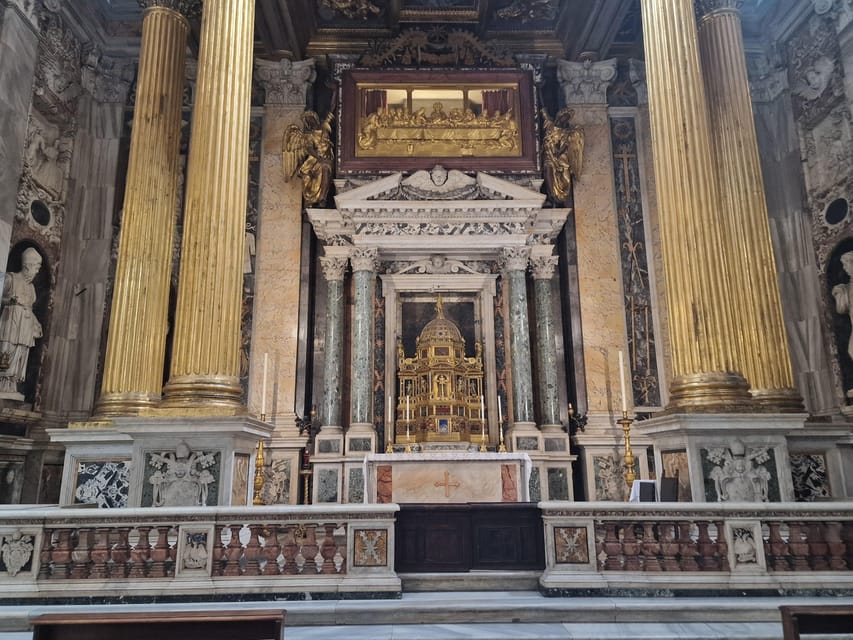
After St. Peter’s, private air-conditioned transport takes the group to St. Paul Outside the Walls. This is one of the tour’s strongest practical features. The four basilicas are spread across Rome, and traveling by private car avoids a chain of metro rides, bus connections, and walks in between.
The basilica is associated with St. Paul, the Apostle of the Gentiles. The visit includes the chains said to have bound him during his imprisonment and house arrest in Rome, along with his newly excavated sarcophagus.
Those details give the stop a more direct, physical quality than a general church visit. You are looking at objects connected to a specific person and episode, not only grand decoration. The guide also explains the Theodosian basilica and takes you through the rest of the building.
St. Paul’s is outside the city center, so many short Rome itineraries leave it out. That is exactly why this tour is useful if your goal is to complete the four-basilica pilgrimage. You do not have to sacrifice half a day figuring out how to reach it.
The transport is also where traffic can affect the schedule. The order of the basilicas may change because of traffic, access problems, temporary closures, or special events. The tour promises the four sites, but not always in the exact order shown.
San Giovanni in Laterano, Rome’s Actual Cathedral
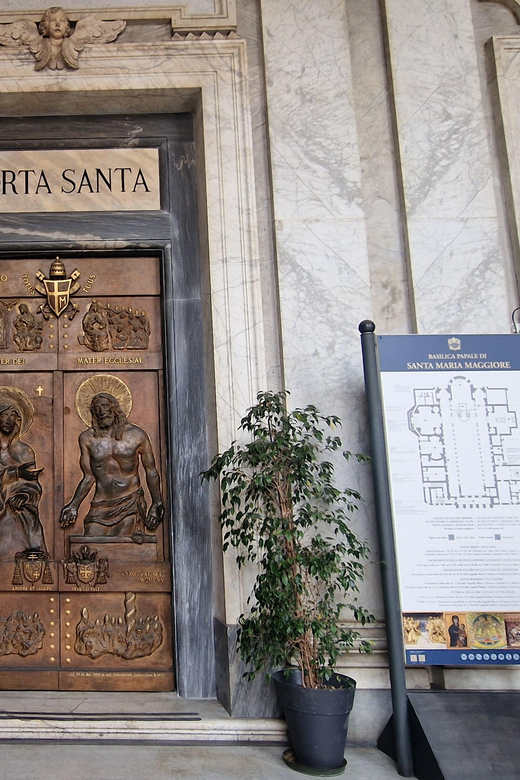
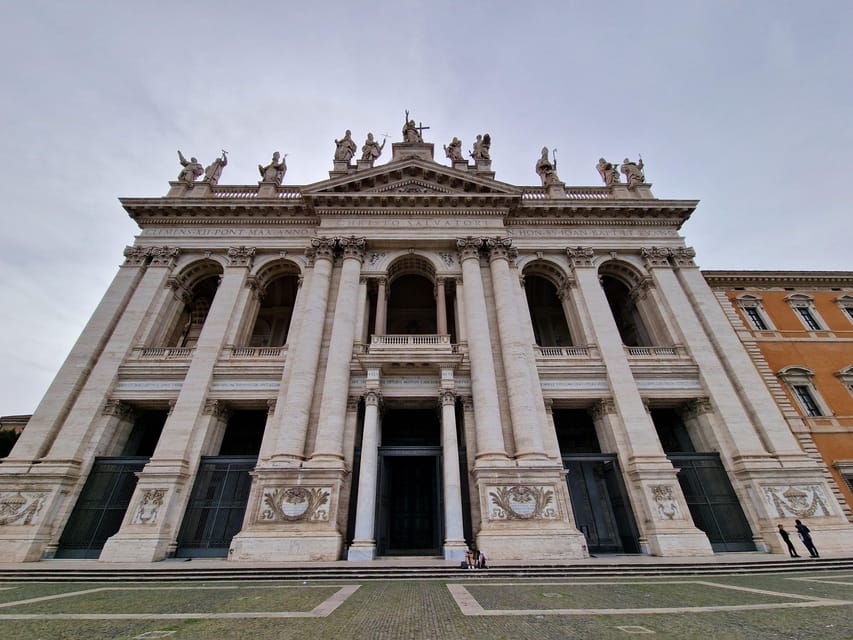
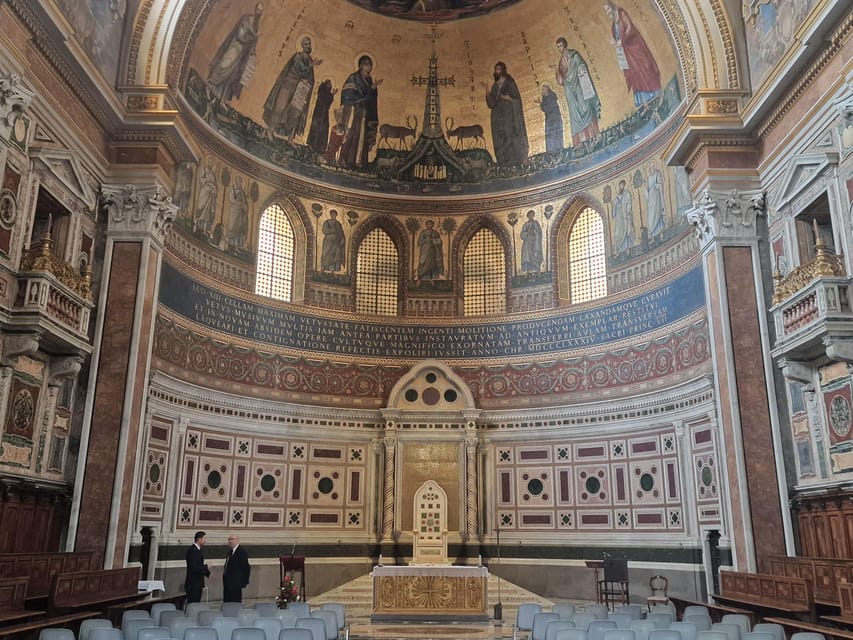
The next major stop is the Arch-Basilica of St. John Lateran, usually called San Giovanni. Many visitors assume St. Peter’s is Rome’s cathedral, but San Giovanni is the cathedral of Rome and the mother church of the entire world in Catholic tradition.
That distinction makes this stop especially worthwhile. It gives you a better grasp of the Church’s structure and explains why the four basilicas are not simply four attractive old churches.
The guided visit includes the interior, its history, and the ancient mosaics. You also stand before the heads of St. Peter and St. Paul, which were brought into the basilica and placed above the altar in 1300.
The one-hour visit should help you notice the major features without getting lost in the scale of the building. Still, do not expect time to study every mosaic or chapel. If you are an art specialist or a serious church historian, you may want to return independently after the tour.
This is also a place where modest dress matters. Shoulders and knees must be covered in all four basilicas. Avoid short skirts and sleeveless shirts, and do not treat the clothing rule as a minor detail. You can be refused entry to religious sites if you arrive dressed for a hot Roman afternoon rather than a church visit.
More Jubilee Year tours in Rome:
- Highlights of Rome Bike Tour (Including Jubilee Sights)
★ 5.0 · 239 reviews - Private Sacred Relics Jubilee Bike Tour
★ 5.0 · 58 reviews - Rome: Jubilee Year Papal Basilicas Tour by Private Car
★ 4.8 · 57 reviews - Private Jubilee Tour: 3 Papal Basilicas with Santa Maria Maggiore
★ 5.0 · 53 reviews
Santa Maria Maggiore and the End of the Route
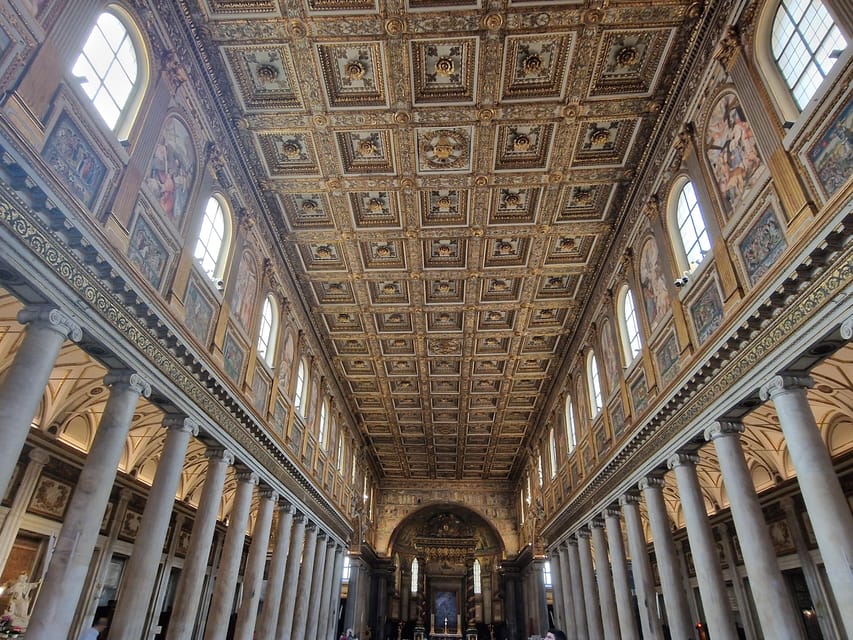
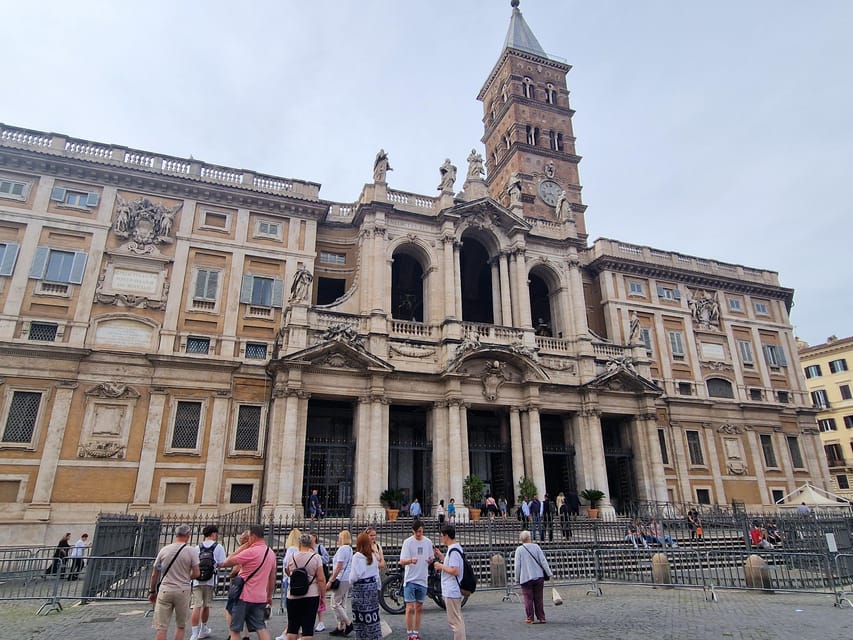
The final basilica is St. Mary Major, or Santa Maria Maggiore. It is associated with the Virgin Mary and is described as perhaps the oldest church dedicated to Mary in Rome, as well as the most important Marian church in the city.
The visit focuses on its golden interior, the popes buried there, the relics associated with the crib of Christ, and the icon known as Salus Populi Romani. The basilica brings together art, devotion, relics, and papal history in one final stop.
This last hour may be the most visually ornate part of the route. After the scale of St. Peter’s, the solemn associations of St. Paul’s, and the cathedral role of San Giovanni, Santa Maria Maggiore gives the pilgrimage a strongly Marian finish.
The listed itinerary ends at St. Mary Major. The meeting information also says the activity ends back at the meeting point, so confirm the final drop-off details when you receive the instructions after booking. Do not assume you will be returned to the Vatican unless the operator confirms it.
What the Five-Hour Schedule Really Feels Like
The tour gives you roughly an hour inside each basilica, plus transfers. That is enough for a guided introduction, the Holy Door visits, and the main religious highlights. It is not enough for a slow, private experience in every church.
I would think of this as a structured pilgrimage with sightseeing added, not as four separate museum tours. The guide keeps the day moving, which is valuable in Rome, but the schedule leaves limited time for sitting quietly, lighting a candle, taking photographs, or using the restroom.
One participant had to stop the guide to ask for a restroom break. The practical lesson is simple: use facilities before departure and ask early if you need a stop. The tour runs to a schedule, and transfers between basilicas are part of the five-hour limit.
Crossing busy Roman streets also requires attention. One past participant described a stressful crossing where the guide moved ahead of the group. Stay together, wait for clear instructions, and do not assume everyone will cross at the same moment.
The tour operates in all weather unless authorities close a site for safety. Bring water, sunscreen, a hat, and an umbrella. You may not need all four, but Rome’s weather can change your comfort quickly, especially during a long day of standing and walking.
Guide Quality and Hearing the Commentary
The strongest praise is directed at the guides’ command of Catholic history and the basilicas. Stefano was singled out for giving a very strong explanation of the sites. Daniel also led the route, though the practical organization drew more criticism, particularly the lack of a clearly visible orange sign at the meeting point.
That mixed picture matters. The subject knowledge appears to be a major asset, but the delivery may depend on the individual guide and on how close you remain to the group.
Inside churches, guides often lower their voices out of respect for worship. That is appropriate, but it can make commentary hard to follow. No listening device is promised, and one participant found the guide difficult to hear for much of the visit.
I would stay near the front of the group, especially inside St. Peter’s and San Giovanni. If you cannot hear, say so immediately instead of waiting until the next basilica. A good guide can repeat a point or gather the group in a better position.
Is $283.21 a Fair Price?
At $283.21 per person, this is not a cheap church tour. The price makes more sense when you separate the inclusions from the purpose of the experience.
You receive entry to all four basilicas, an English-speaking expert guide, and transport during the tour in a private air-conditioned vehicle. You also avoid arranging transport between sites that are spread around Rome. If you were determined to visit all four in one day, those logistics would take time and planning.
The value is strongest for a religious pilgrim who wants the Holy Door route handled in one organized experience. It is also useful for a first-time Rome visitor who wants context at each church and does not want to spend the day navigating public transport.
The value is weaker if you want long visits, independent photography, or detailed art commentary. At this price, you may expect headsets, clearer meeting-point organization, and more flexibility. Those expectations are understandable, especially given the hearing problem reported inside the basilicas.
Food and drink are not included. Plan to eat before or after, since the schedule is built around the four churches rather than a meal break.
Who Should Book This Experience?
I would recommend it to:
- Catholic visitors who want a formal Jubilee pilgrimage
- Anyone who wants to enter all four Holy Doors with guidance
- First-time Rome visitors who prefer organized transport
- People interested in relics, saints, papal history, and church architecture
- Visitors who want St. Paul Outside the Walls included without handling the route alone
I would hesitate to recommend it to:
- Visitors who prefer to explore at their own speed
- Anyone who needs frequent breaks
- People who want a broad secular overview of Rome
- Travelers who find quiet, low-volume guiding difficult
- Those unwilling to follow church dress requirements
The religious focus is not decoration. It shapes the route, the commentary, and the pace. If that matches your interests, the four-basilica structure gives the day a clear purpose. If you mainly want famous artwork, you may prefer separate visits where you can spend longer at St. Peter’s and Santa Maria Maggiore.
Booking Details to Keep in Mind
The tour is conducted in English and lasts about five hours. Starting times vary, so check availability for the date you want.
Entry to each site, the local guide, and transport are included. Temporary exhibitions and special events may not be included. A valid photo ID may be requested for each person, so bring one.
You can cancel up to 24 hours before the scheduled start for a full refund, and the reserve-now, pay-later option keeps your plans flexible. After booking, watch for the detailed message about the pilgrim’s card and Holy Door access.
FAQ
Where does the tour begin?
Meet at the fountain on the wall of Piazza Giovanni XXIII, near Lungotevere Vaticano. Look for the guide with an orange sign showing a lion head.
Where does the tour finish?
The itinerary lists the Papal Basilica of Saint Mary Major as the finishing point. The meeting information also says the activity ends back at the meeting point, so confirm the return details after booking.
Which basilicas are included?
The tour visits St. Peter’s Basilica, St. Paul Outside the Walls, the Basilica of San Giovanni in Laterano, and the Papal Basilica of Santa Maria Maggiore.
Is transport included between the basilicas?
Yes. Transport during the tour is included, using a private air-conditioned chauffeured car.
What should I wear?
Your shoulders and knees must be covered. Short skirts and sleeveless shirts are not allowed, so wear suitable clothing for church visits.
What happens if the order of the basilicas changes?
The order may change because of traffic, access conditions, temporary closures, or unforeseen events. The tour still aims to visit the four major basilicas.
Should You Book the Four-Basilica Pilgrimage?
Book this tour if entering the four Holy Doors is your main goal and you want an expert guide and private transport to handle the difficult parts of the route. The chance to connect St. Peter, St. Paul, San Giovanni, and Santa Maria Maggiore through one historic pilgrimage tradition is the real value.
Go in with practical expectations. The pace is firm, the guide may be hard to hear inside a basilica, and the price is high for a five-hour experience. Arrive early, dress properly, stay close to the guide, ask for restroom breaks before they become urgent, and read the Holy Door instructions after booking. For a faith-centered visit to Rome, this is a focused and memorable way to cover ground that is otherwise easy to miss.
Newest Rome tours we have reviewed
- Private TikTok Video Making in Rome★ 5.0 · 7 reviews
- Assisi, Orvieto and Civita di Bagnoregio Full Day Tour from Rome★ 4.5 · 45 reviews
- Assisi & Saint Francis Path Tour from Rome★ 5.0 · 45 reviews
- Assisi and Cascia Private Day Tour from Rome with Lunch★ 5.0 · 10 reviews
- Art Class in the center of Rome!★ 4.0 · 4 reviews
- Art & Craft: Beer Tour with Street Art in Rome★ 4.5 · 6 reviews
- Arrival in Rome: Airport Transfer & Exclusive City Introduction★ 5.0 · 3 reviews
- From Rome: Private Day-Tour of Tuscany★ 5.0 · 16 reviews
Rome Churches and Basilicas Tours, compared.
Vatican Museums, Sistine Chapel & 4 Papal Basilicas Full Day Tour
Read our review →
Santa Maria Maggiore Upper Areas Skip-the-Line Ticket
Read our review →
San Clemente Underground and Basilica Guided Tour
Read our review →
Santa Maria Maggiore and Panoramic Dome Guided Tour
Read our review →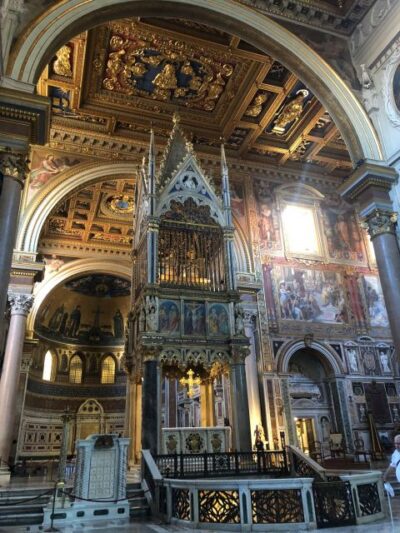
Basilica of St John Lateran & Holy Steps 1-Hour Tour
Read our review →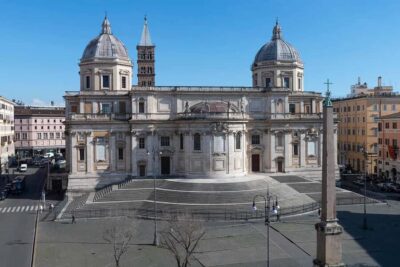
Basilica of St. Mary Major Priority Entrance Ticket
Read our review →Browse the lists this tour appears in