
Reviewed · BORGHESE GALLERY TOURS
Rome: Borghese Gallery Small Group Guided Tour
The Borghese Gallery packs an astonishing amount of art into a short visit. In about two hours, you move from Bernini’s marble drama to Caravaggio’s dark, human paintings, while a guide explains what you are seeing and why it matters. Apollo and Daphne alone is worth the trip.
I like the intimate small-group format and the skip-the-line entry, especially since the gallery limits admission. I also like that the tour does not treat the building as a plain container for paintings. The frescoes, carved details, and Cardinal Borghese’s collecting ambitions are part of the story.
The main drawback is the fixed pace. A guide-led visit gives you a clear path through the highlights, but you may want more time to linger. Finding the guide can also take patience, since the meeting point is in front of the gallery and the identifying sign may not always be easy to spot.
Key points to know before you book

- Bernini takes center stage: See Apollo and Daphne and David, two sculptures that reward close attention to movement, expression, and marble technique.
- Caravaggio adds a sharp contrast: Boy with a Basket of Fruit and St. Jerome Writing bring a darker, more intimate mood to the visit.
- The rooms are part of the attraction: Frescoes and ornate decoration turn the gallery into a work of art in its own right.
- English commentary keeps the visit focused: Guides including Felicity, Andrada, Barbara, Ellie, and Fabio have been praised for clear explanations and lively storytelling, but your assigned guide may differ.
- The tour runs 1.5 to 2 hours: That is enough for the main works, though not enough for every corner of the collection.
- Pack light: Bags of any size are not permitted inside, and the tour is not suitable for wheelchair users or people with mobility impairments.
Why the Borghese Gallery deserves a place in your Rome plans
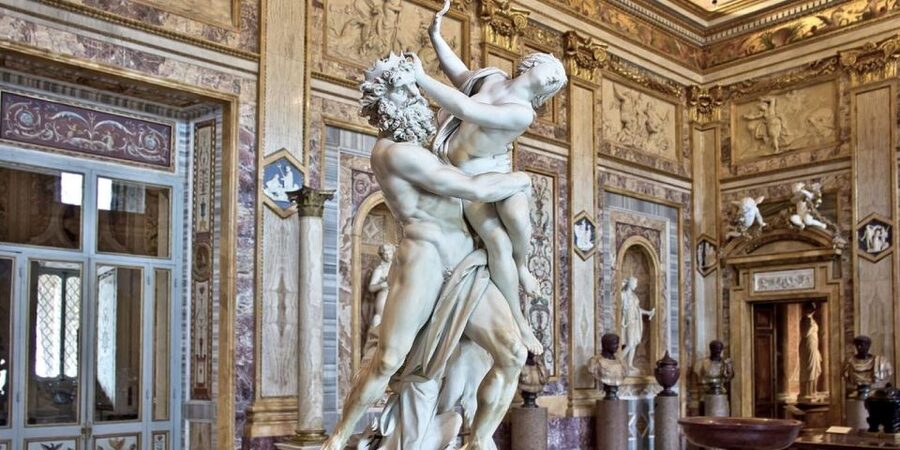
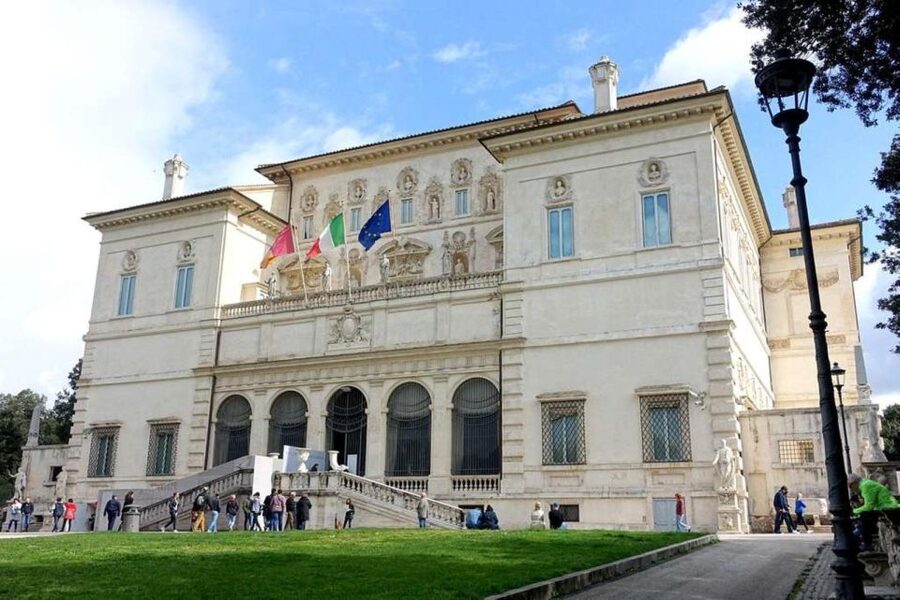
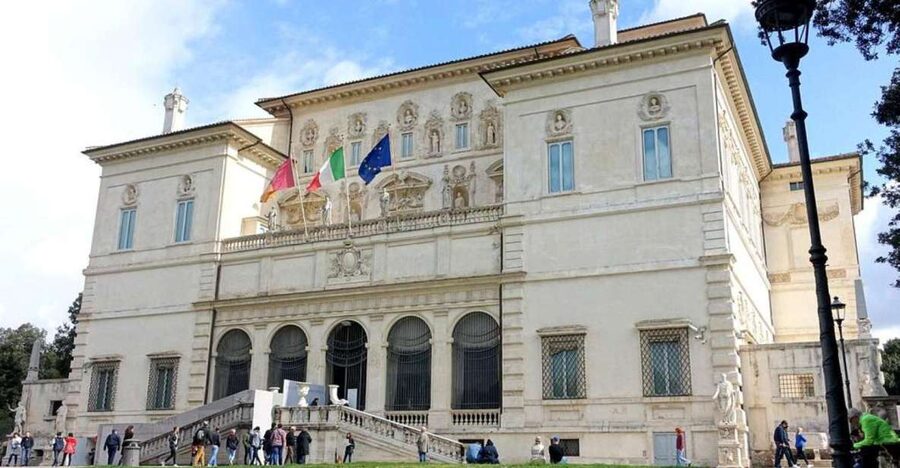
Many Rome museums can feel sprawling. The Borghese Gallery is different. Its collection is concentrated inside an ornate villa, so a short guided visit can bring you face to face with some of Italy’s most important Baroque sculpture and painting.
That concentration is the key advantage. You are not spending half the morning walking between distant wings or searching for the famous works. Instead, the route moves through decorated rooms where sculpture, painting, architecture, and ceiling decoration work together.
I especially like this setting for first-time art museum visitors. Bernini’s sculptures are easy to appreciate at a glance, but a good guide helps you notice the details that make them remarkable: the twist of a body, the turn of a head, the treatment of hair, and the way hard marble suggests soft skin or flowing fabric.
The visit also gives you a useful introduction to Cardinal Borghese’s legacy. His taste, ambition, and collecting helped shape the gallery you see today. That context matters because the art is not displayed as a random group of famous names. The villa reflects a particular period, a particular collector, and a strong preference for theatrical works that command attention.
More Borghese Gallery tours:
- Rome: Borghese Gallery Guided Tour with Skip-the-Line Entry
★ 4.8 · 2,649 reviews - Rome: Borghese Gallery Skip-the-Line Tickets with Audioguide
★ 4.6 · 2,562 reviews - Rome: Borghese Gallery Entry Ticket & Optional Guided Tour
★ 4.5 · 2,237 reviews
Meeting at the gallery entrance
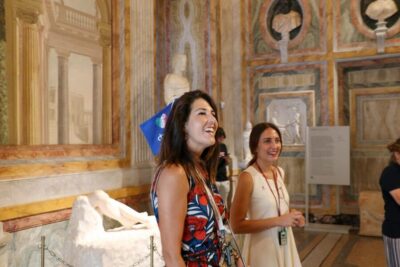
You meet the guide in front of the Borghese Gallery and Museum. Look for the City Walkers sign, but give yourself extra time to locate the correct person. The entrance area can be confusing, and the guide or greeter may not always be immediately obvious.
This is one of the few practical weak spots in an otherwise well-organized experience. A clearly visible sign or a more precise meeting instruction would make the start easier. If you arrive late, do not assume the group can wait. One late couple was kindly admitted after arriving a few minutes behind, but that should be treated as good fortune rather than a promise.
The tour ends back at the meeting point. There is no hotel pickup or drop-off, so you need to make your own way to the gallery and arrange your onward transport.
Once the group is together, you enter with skip-the-line tickets. This does not mean you ignore all museum security or entry procedures, but it does save you from dealing with the regular ticket line. Since admission is limited, having a reserved entry connected to the tour is a meaningful part of the price.
First rooms: an ornate setting for serious art
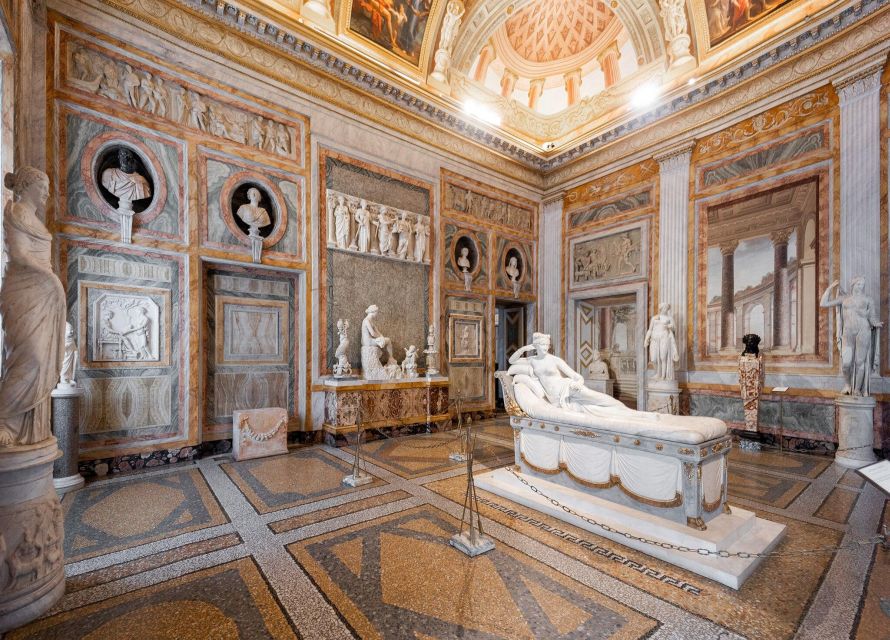
The first part of the route takes you through the villa’s decorated interiors. Expect frescoes, intricate ornament, and rooms designed to impress before you even reach the best-known sculptures.
One practical point matters here: some groups move quickly through the first three rooms to reach the main starting point. That can feel rushed, especially if you want to study the decoration. Once the guide begins the main commentary, the pace usually becomes more measured.
I think the building deserves this attention. The villa is not just a neutral museum space. Its grand rooms help explain the setting in which the collection was assembled and displayed. Painted ceilings and elaborate walls create a theatrical frame for the works below, so you should look up as well as straight ahead.
Your guide may also use these opening rooms to introduce Renaissance and Baroque styles. That comparison is useful. It gives you a visual map for the rest of the visit, helping you understand why Bernini’s art feels so different from earlier, more restrained approaches.
Bernini’s Apollo and Daphne
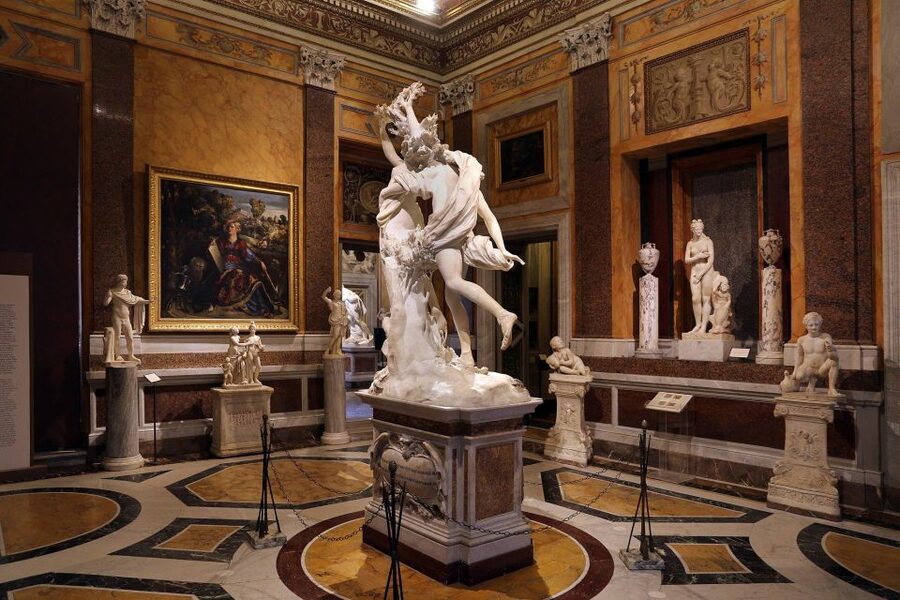
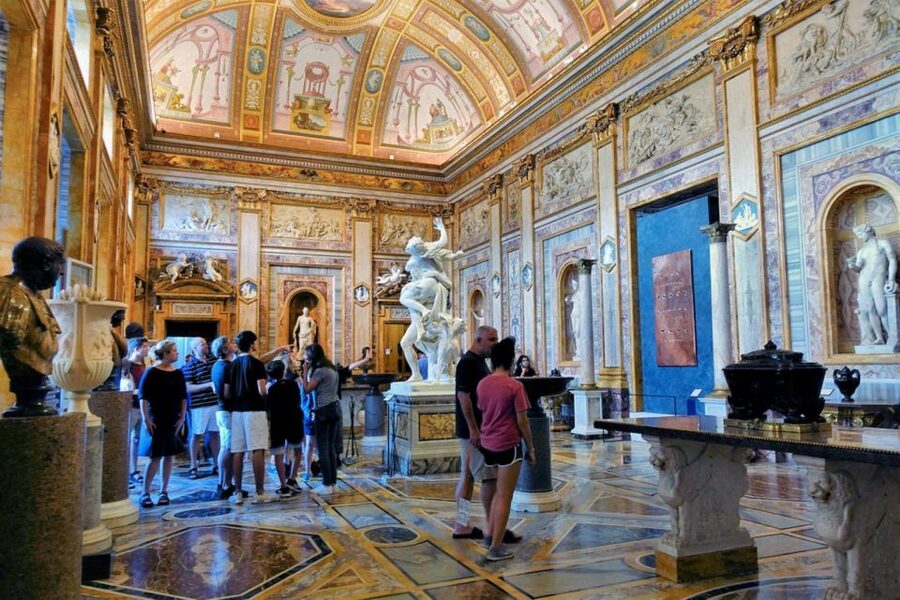
Apollo and Daphne is one of the tour’s essential stops. The subject comes from an ancient story in which Daphne escapes Apollo by transforming into a laurel tree. Bernini captures the change at the very moment it happens.
From a distance, the sculpture looks like a frozen chase. Up close, you can follow the transformation through the marble. Daphne’s fingers extend into branches, her hair spreads outward, and the lower part of her body changes into bark and roots. Apollo’s hand reaches toward her, but the story has already slipped beyond his control.
This is where a guide adds real value. Without explanation, you can admire the technical skill. With clear commentary, you begin to see how movement, emotion, and storytelling are built into the composition.
The work also benefits from the gallery’s arrangement. You can walk around the sculpture and see the scene change from different angles. The marble does not look the same from every side, so resist the urge to plant yourself in front and move on.
Guides such as Felicity, Andrada, and Donatella have been praised for bringing these works to life through stories and comparisons. The quality of the experience depends heavily on the individual guide, but this is the kind of sculpture that rewards an informed explanation.
More museums and galleries in Rome:
- Vatican Museums & Sistine Chapel Tour with Optional Basilica
★ 4.3 · 67,413 reviews - Vatican Museums, Sistine Chapel & St Peter’s Basilica Guided Tour
★ 4.5 · 39,149 reviews - Rome: Vatican Museums, Sistine Chapel & Basilica Tour
★ 4.3 · 13,872 reviews - Vatican Museums & Sistine Chapel Skip-the-Line Entry Ticket
★ 4.4 · 13,838 reviews
Bernini’s David and the power of a single moment
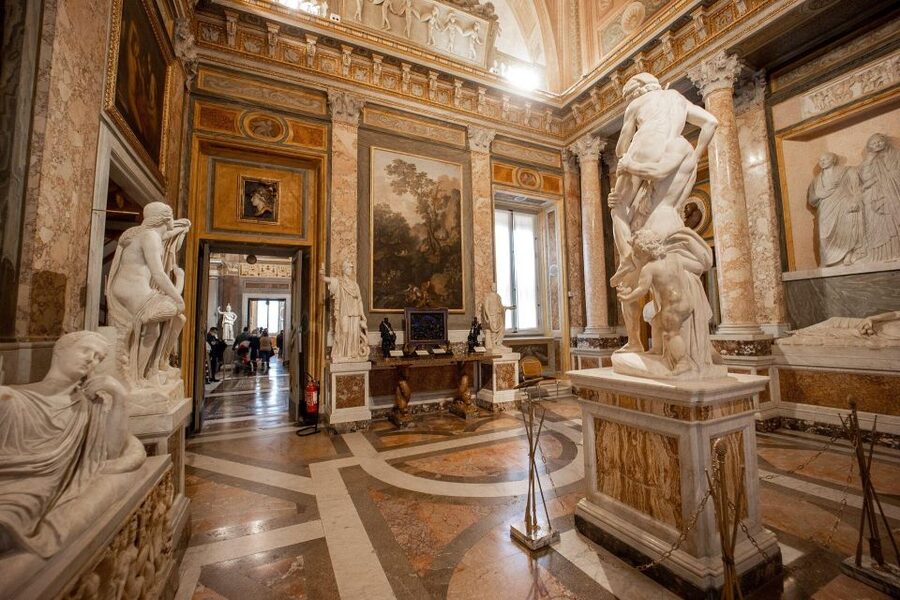
Bernini’s David gives you another view of the sculptor’s skill. Rather than showing David after victory, the sculpture catches him in action, turning his body as he prepares to strike.
The pose creates a direct relationship with the viewer. You are not looking at a calm hero placed on a pedestal. You are positioned near the imagined target, sharing the tension of the moment.
Your guide will likely point out the physical details that make the sculpture feel so active. The bent torso, concentrated face, and gathered limbs suggest effort and danger. It is a useful work to compare with Apollo and Daphne because both sculptures rely on movement, but they tell very different stories.
This part of the tour suits you if you enjoy learning how artists solve technical problems. Marble is rigid, yet Bernini makes bodies appear ready to move. The explanation of carving methods and artistic choices helps you see more than the polished surface.
You may find that the guide pauses longer at Bernini than at less famous pieces. That is sensible on a short tour. The collection contains more than these two works, but they are among the clearest examples of why the gallery is a priority for art lovers in Rome.
Caravaggio’s paintings bring a darker mood
The tour shifts from white marble to Caravaggio’s intense paintings. Boy with a Basket of Fruit offers a quieter scene, but it is not as simple as it first appears. The boy looks directly outward, while the fruit is rendered with enough care to make you notice color, texture, and signs of decay.
St. Jerome Writing has a more serious tone. The figure’s concentration, aged body, and stark lighting draw your attention to the act of writing and reflection. Caravaggio’s use of light creates a strong focus, leaving other parts of the scene in shadow.
These paintings help balance the grand spectacle of Bernini. The sculptures fill space and demand that you walk around them. Caravaggio pulls you toward a controlled patch of light and asks you to study a face, a hand, or a still-life detail.
I find this contrast one of the strongest reasons to take a guided tour. A quick walk through the gallery might leave you with a list of famous names. A good guide connects the works by explaining differences in mood, style, and technique. Several guides, including Ellie, Barbara, Felicity, and Fabio, have been praised for making these explanations clear and engaging.
The gallery’s limited size also helps here. You can move from a dramatic Baroque sculpture to a Caravaggio without losing the thread of the visit.
How much art can you see in two hours?
The stated duration is 1.5 to 2 hours. That is a practical length for a busy Rome itinerary, but you need realistic expectations.
You should expect a highlights tour, not a complete study of every painting and room. The best guides make choices, spending time on major Bernini and Caravaggio works while giving you a sense of the wider collection. Some commentary may also cover Raphael and other artists, and one extended visit included access to the second floor for additional paintings. Do not count on seeing every area, since parts of the museum may be closed for maintenance.
The short duration is both a strength and a limitation. It keeps the visit manageable and prevents information overload. It also means you may leave wanting more time with the art.
If you already know the collection well, you may prefer an independent visit with more freedom to set your pace. If you are visiting Rome for the first time or do not feel confident reading art on your own, the guide is likely worth the trade-off.
Headsets are provided so you can hear the commentary clearly. That matters in rooms where people are moving around or standing at a distance. The setup lets you look at the work rather than crowding close to the guide.
What the $51.24 price really buys you
At $51.24 per person, this is not the cheapest way to enter an art museum. You are paying for more than admission, though. The price includes a licensed English-speaking guide, skip-the-line Borghese Gallery tickets, and headsets.
The strongest value comes from combining limited museum access with interpretation. If you only want to step inside and look around, the guided format may feel restrictive. If you want to understand why Apollo and Daphne is more than a technically impressive statue, or why Caravaggio’s lighting changes the emotional force of a scene, the added cost makes more sense.
I would call it good value for a first visit, especially if the available entry times fit your schedule. The tour is short enough to combine with other plans, yet substantial enough to give you a working understanding of the gallery.
The price does not include hotel transportation. You also need to leave bags behind, since bags of any size are not permitted inside. Food, drinks, video recording, weapons, sharp objects, and pets are not allowed.
Who will enjoy this guided visit most?
This tour fits you best if you want a focused introduction to the Borghese Gallery and prefer a guide to select the important works. It is also a good choice if you appreciate stories, artistic technique, and historical context more than simply checking off famous sights.
Families and mixed-age groups may find the storytelling style useful. Guides have adjusted their presentation for different ages and levels of interest, and several have been praised for humor, energy, patience, and clear explanations.
Art students and experienced museum visitors should think more carefully. You may appreciate the guide’s analysis, but the fixed route and short duration could leave you wishing for more independent time.
The experience is not suitable for wheelchair users or people with mobility impairments. The museum may also have closures for maintenance, which can affect what you see on the day.
Practical advice for a smoother visit
Arrive early enough to identify the City Walkers guide without rushing. Since the meeting point is outside the entrance and the sign may be difficult to spot, check the exact location before leaving your hotel.
Bring as little as possible. Bags of any size are not allowed, so do not arrive with a daypack expecting to store it inside. Food and drinks are also prohibited.
Wear something comfortable for standing and walking through the rooms. The tour takes place rain or shine, and the activity ends where it begins.
Finally, keep your expectations clear. You are buying a guided introduction, not an afternoon of solitary museum study. Let the guide set the pace, then return another time if the gallery leaves you wanting a longer look.
Should you book the Borghese Gallery tour?
I would book this tour if you want to see Bernini and Caravaggio with clear English commentary and do not want to wrestle with limited museum admission on your own. The guides praised most warmly, including Felicity, Andrada, Barbara, Ellie, and Fabio, bring energy and strong storytelling to the visit, though the assigned guide can vary.
I would skip it if your top priority is complete independence or extended time with each artwork. For most first-time visitors, though, the combination of reserved entry, a compact route, headsets, and expert explanation offers a sensible way to experience one of Rome’s most rewarding museums.
FAQ
How long does the Borghese Gallery tour last?
The tour lasts between 1.5 and 2 hours. Starting times vary, so check availability when booking.
What language is the tour conducted in?
The live tour guide and commentary are in English.
Does the tour include skip-the-line entry?
Yes. Skip-the-line Borghese Gallery tickets are included.
Where does the tour meet?
The guide waits in front of the Borghese Gallery and Museum with a City Walkers sign. The tour ends back at the same meeting point.
Are headsets provided?
Yes. Headsets are included so you can hear the guide clearly during the visit.
Can I bring a bag into the gallery?
No. Bags of any size are not permitted inside the Borghese Gallery. Food and drinks, video recording, weapons, sharp objects, and pets are also not allowed.
Is the tour suitable for wheelchair users?
No. The activity is not suitable for wheelchair users or people with mobility impairments.
Newest Rome tours we have reviewed
- Private TikTok Video Making in Rome★ 5.0 · 7 reviews
- Assisi, Orvieto and Civita di Bagnoregio Full Day Tour from Rome★ 4.5 · 45 reviews
- Assisi & Saint Francis Path Tour from Rome★ 5.0 · 45 reviews
- Assisi and Cascia Private Day Tour from Rome with Lunch★ 5.0 · 10 reviews
- Art Class in the center of Rome!★ 4.0 · 4 reviews
- Art & Craft: Beer Tour with Street Art in Rome★ 4.5 · 6 reviews
- Arrival in Rome: Airport Transfer & Exclusive City Introduction★ 5.0 · 3 reviews
- From Rome: Private Day-Tour of Tuscany★ 5.0 · 16 reviews
Borghese Gallery Tours, compared.
Borghese Gallery Guided Tour with Skip-the-Line Entry
Read our review →
Borghese Gallery Skip-the-Line Tickets with Audioguide
Read our review →
Borghese Gallery Entry Ticket & Optional Guided Tour
Read our review →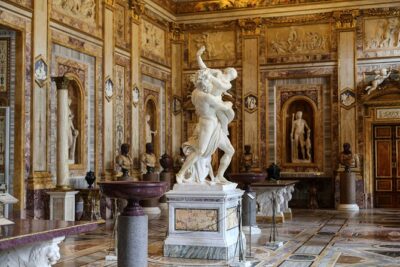
Borghese Gallery & Gardens Small Group Guided Tour
Read our review →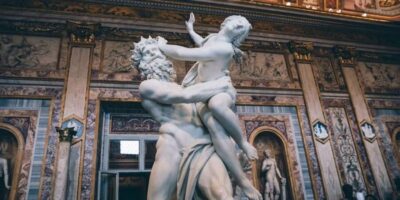
Borghese Gallery, Canova’s Masterpieces Skip-the-Line Guided Tour
Read our review →
Borghese Gallery Guided Tour with Skip-the-Line Entry
Read our review →Browse the lists this tour appears in