
Reviewed · CASTEL SANT’ANGELO TOURS
Rome: Castel Sant’Angelo and Hadrian’s Tomb Guided VIP Tour
Castel Sant’Angelo is not simply an old castle. It began as Emperor Hadrian’s Tomb, then became a papal residence, fortress, treasury, prison, and site of public executions. This 90-minute tour gives you a clear route through that long, often surprising story, ending with wide views over Rome and the Tiber.
I like the small maximum of 10 people, which makes it easier to hear an art historian guide and ask questions. I also like the focus on the building itself: you see the tomb, papal rooms, Michelangelo’s courtyard, bastions, and the terrace rather than rushing past the castle for a quick photo.
The main drawback is the short duration. Castel Sant’Angelo has plenty to examine, so a 90-minute visit works best if you want a guided introduction, not a slow, independent look at every room. The castle is also not wheelchair accessible and involves a moderate amount of walking.
Key points to know before booking
- Hadrian’s Tomb became a fortress: The building’s changing purpose is the heart of the tour, from imperial mausoleum to papal stronghold.
- Small group, maximum 10: You get a more personal guide experience than on a large scheduled walk.
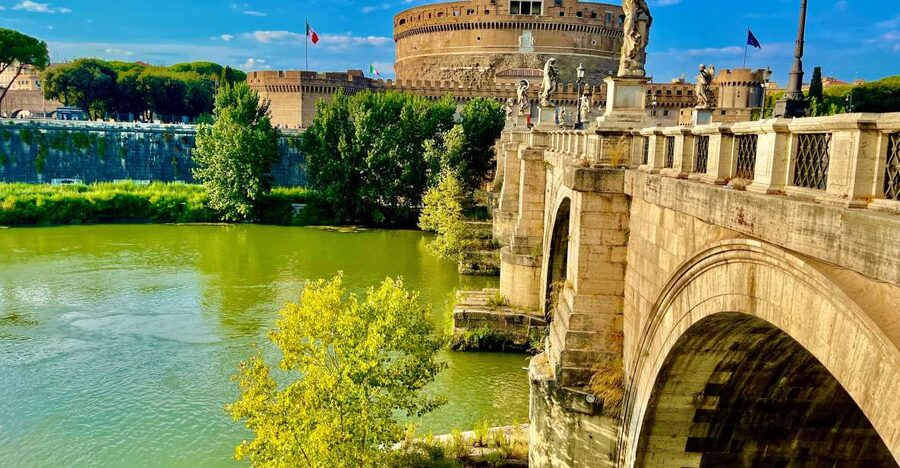
- The terrace is the payoff: Plan to look across the Tiber, toward Rome’s historic center, and down at Sant’Angelo Bridge.
- Art and architecture are part of the visit: The route includes papal apartments, Michelangelo’s courtyard, bastions, and works inside the monument.
- Swift access is included: Entrance fees and priority entry are covered, which saves time at a major Rome sight.
- Pack light and wear good shoes: Large bags, luggage, walking frames, pets, smoking, weapons, and sharp objects are not allowed.
Why this fortress tells Rome’s story so well
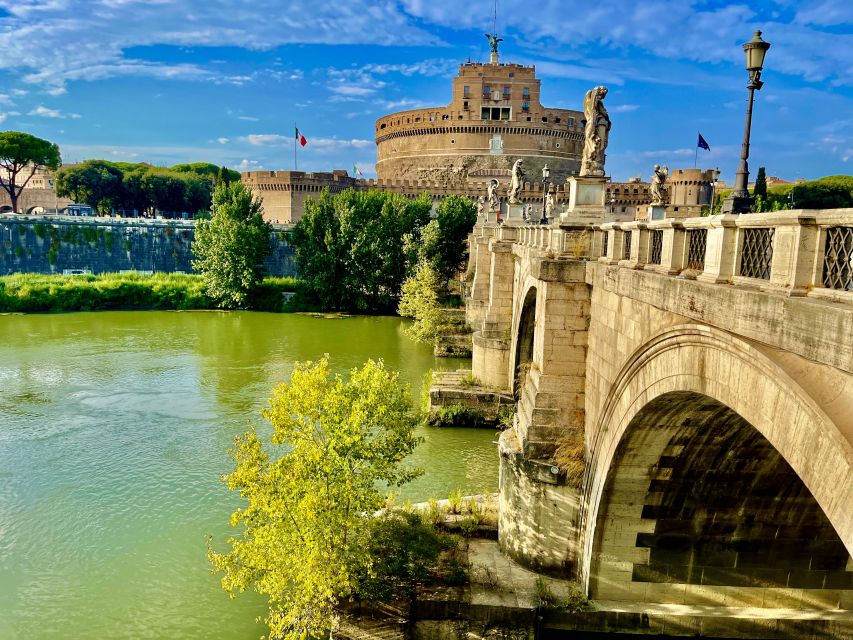
Castel Sant’Angelo is useful for understanding Rome because its walls were repeatedly given new jobs. It was first built as the mausoleum of Emperor Hadrian, a grand Roman burial monument. Later, the structure was adapted for defense and tied closely to the papacy.
Your guide explains how one building could serve as a tomb, private residence, military refuge, treasury, prison, and place of execution. That sequence gives the visit its shape. You are not only looking at stone corridors and grand rooms. You are following the city’s political changes through one sturdy building.
I find that context especially valuable here because the castle can seem confusing if you visit alone. Its rooms, ramps, courtyards, and military additions do not all belong to the same period. A guide helps you separate the Roman core from later work and shows why the monument looks more like a layered fortress than a single palace.
The tour is conducted in English and led by a professional art historian. No individual guide name is supplied, so you should not expect to request a particular person. What you can expect is a guide who focuses on art, architecture, and the castle’s role in Rome.
More Castel Sant’Angelo tours:
- Rome: Castel Sant’Angelo Skip-the-Line Ticket & Audio Guide
★ 4.4 · 3,500 reviews - Rome: Castel Sant’Angelo Skip-the-Line Ticket
★ 4.4 · 3,040 reviews - Rome: Castel Sant’Angelo Skip-the-Line Entry Ticket
★ 4.8 · 2,231 reviews
Meeting your guide beside the Tiber
You meet outside Castel Sant’Angelo, where the guide waits with a sign marked Tour in the City. Arrive 15 minutes before departure. That extra time matters in Rome, where a busy street, a delayed bus, or confusion around a large monument can quickly make you late.
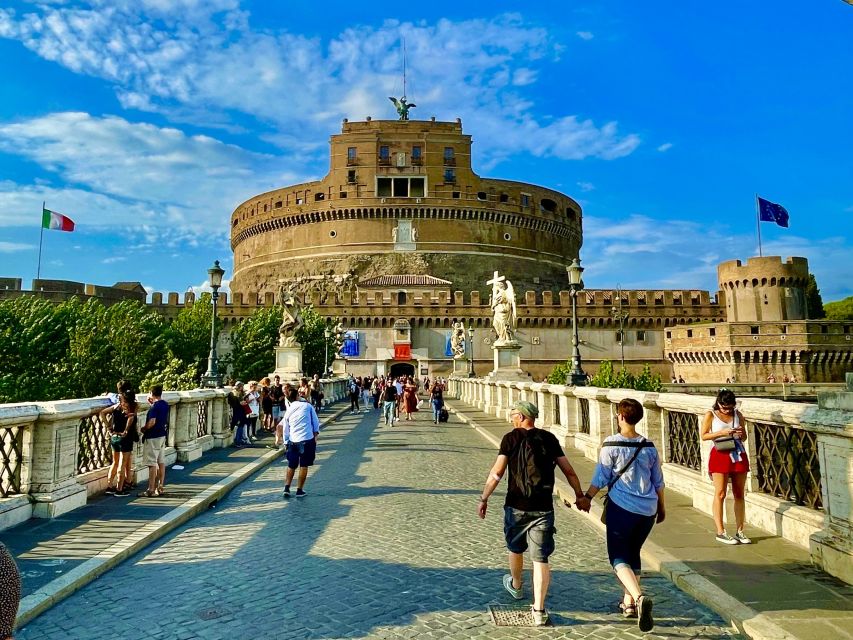
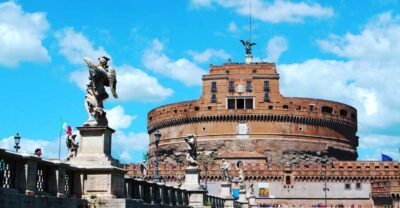
The castle’s setting gives the tour a good start. It sits beside the Tiber, close to Sant’Angelo Bridge, with Rome’s historic center nearby. Before you enter, take a moment to look at the massive exterior and the bridge. The contrast is striking: a Roman imperial tomb converted into a military structure, approached across a bridge lined with angel sculptures.
Swift access is included with your entrance ticket. This does not mean you skip every possible security check, but it does mean the tour is designed to get you inside without spending your limited time sorting out admission.
Bring a passport or identity card, even though the information does not specify that it will always be checked. Comfortable shoes are important. You will walk through a large historic building, and the route is not suitable for wheelchair users.
Inside Hadrian’s original tomb
The first major story is the building’s Roman beginning. Hadrian’s Tomb was designed as an imperial mausoleum, giving the monument a funerary purpose long before it became a castle. Your guide helps you see the structure as a burial monument rather than only as a medieval fortress.
This part is important because the later walls can hide the original idea. The castle’s great bulk and defensive character tend to dominate the eye. Hearing about the imperial tomb gives you a different way to read the building, especially when your guide points out how later alterations changed the site.
The experience is best for you if you enjoy connecting physical details with historical events. If you mainly want a quick photo stop, the tour may feel too detailed. One review specifically praised the guide’s clear English and large amount of historical information, while another noted that you should bring a real interest in history to get the most from the visit.
That is a fair warning. This is not a light sightseeing loop built around a few famous names. The building’s story is long, and the tour makes room for it.
Papal apartments and the castle’s private side
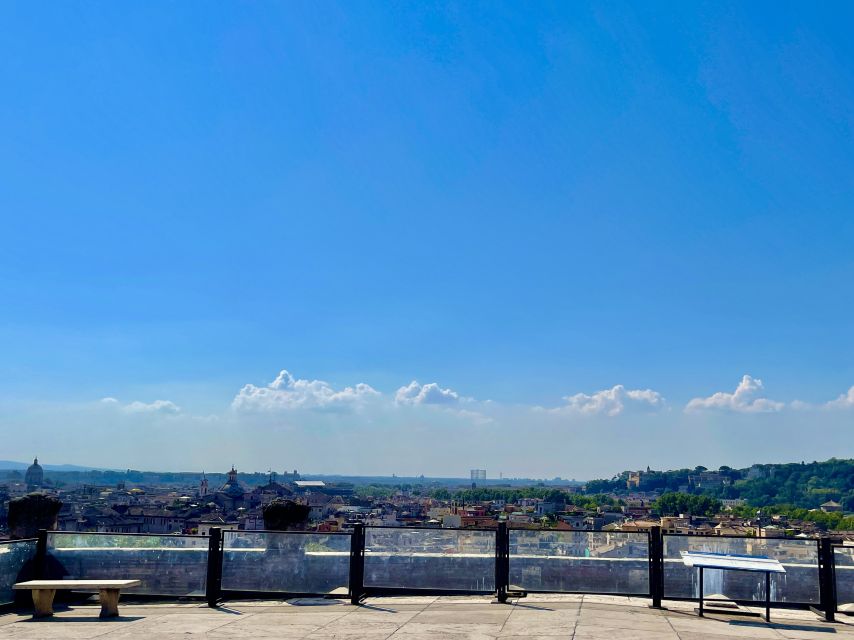
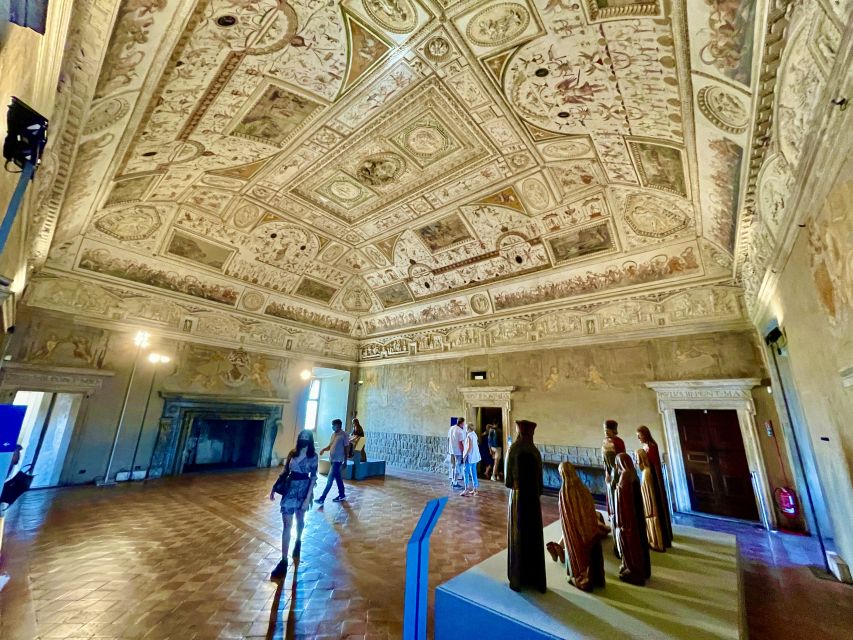
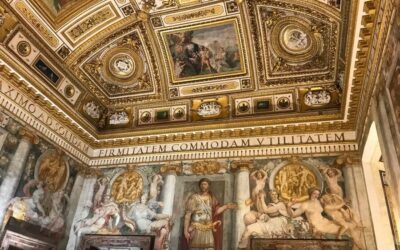
The route continues to the papal apartments, where Castel Sant’Angelo appears less like a burial monument and more like a fortified residence. The popes used the castle as a private home and defensive refuge, giving the rooms a more personal side than the heavy exterior suggests.
These spaces help explain the building’s importance in papal Rome. A powerful religious leader needed protection, but also needed rooms suitable for daily life, ceremony, and administration. The castle brought those functions together inside thick defensive walls.
Your guide also discusses the state treasury. That detail adds another layer to the monument’s role. Castel Sant’Angelo was not only a place to live or fight. It protected money and power, making it an important part of Rome’s political machinery.
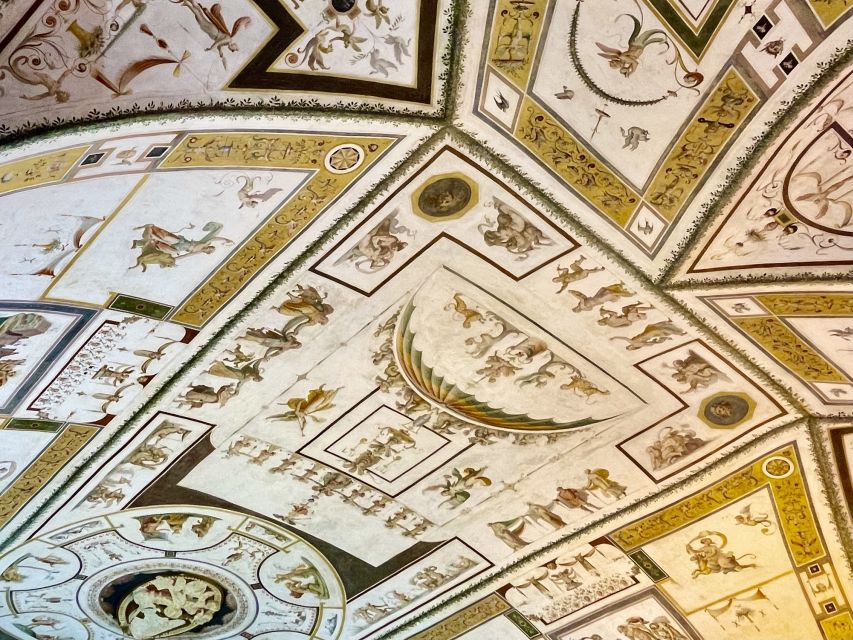
The art inside is another reason to choose a guided visit. The tour description promises incredible masterpieces hosted in the monument, and an art historian guide can point out what deserves your attention. You should not expect the kind of broad museum collection found in the Vatican Museums. Instead, the interest lies in seeing art and decorated rooms within a fortress that had very practical military purposes.
More guided tours in Rome:
- Vatican Museums, Sistine Chapel & St Peter’s Basilica Guided Tour
★ 4.5 · 39,149 reviews - Rome: Colosseum, Palatine Hill and Roman Forum Guided Tour
★ 4.8 · 32,814 reviews - Rome: Guided Tour of Colosseum, Roman Forum & Palatine Hill
★ 4.7 · 27,897 reviews - Rome: Colosseum & Forum with Audio Guide App -Optional Arena
★ 4.2 · 24,770 reviews
Michelangelo’s courtyard and the bastions
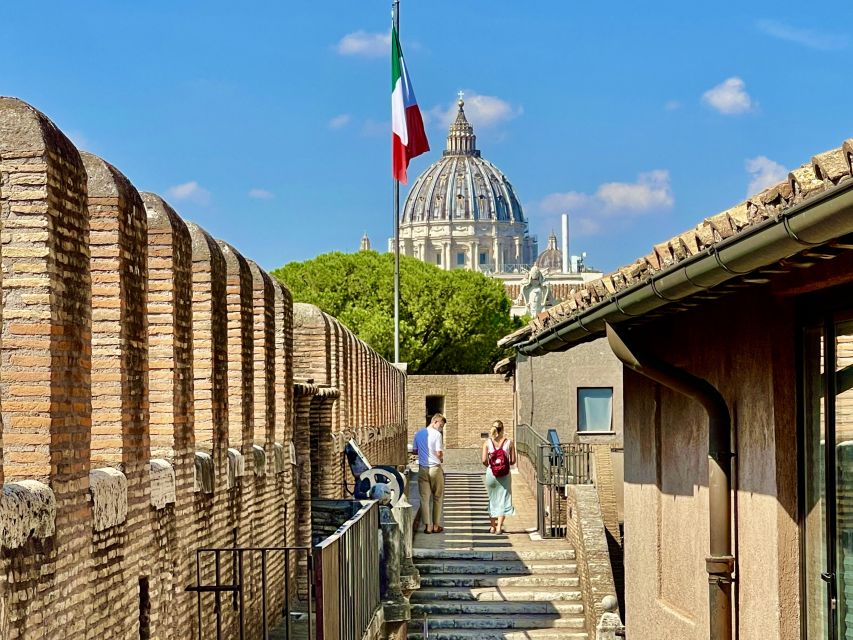
Michelangelo’s courtyard is one of the named stops. It gives the visit a more refined architectural note after the severe military sections. Your guide can help you understand how Renaissance taste entered a building that was still built around defense and control.
The bastions show the castle’s harder side. These defensive structures remind you that Castel Sant’Angelo was not only a grand residence. It was built and adapted to withstand threats, guard important people, and control access to Rome.
The mix of courtyard, apartments, and bastions is what makes this tour more interesting than a simple walk through palace rooms. You move between art, politics, religion, burial customs, and military history. The topics are varied, but they all connect to the same question: how did this building keep serving Rome as the city changed?
Expect moderate walking and some uneven historic surfaces. The supplied information does not give a full breakdown of stairs or the exact route through every room, so anyone concerned about mobility should contact the provider before booking. Walking frames are not allowed, and wheelchair users cannot take the tour.
The terrace view over Rome
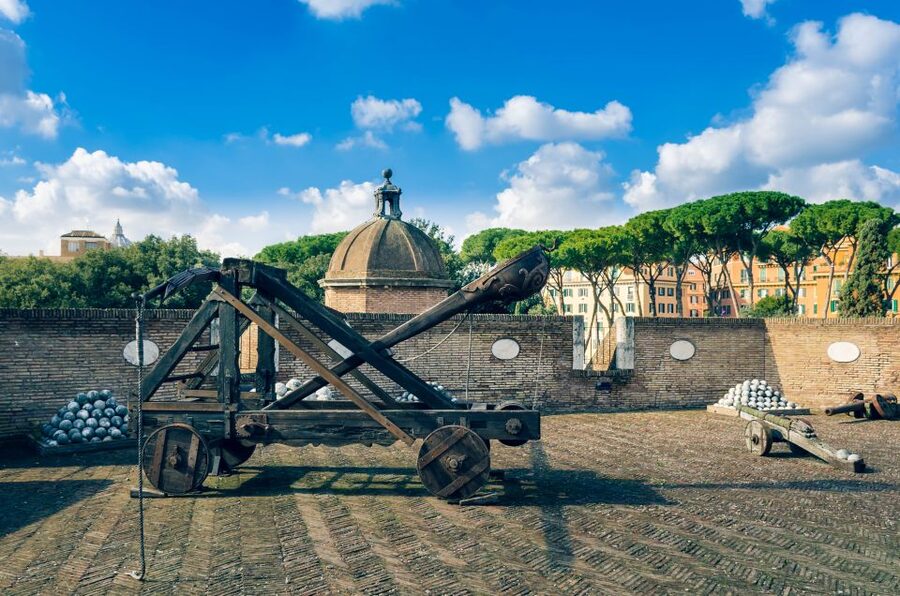
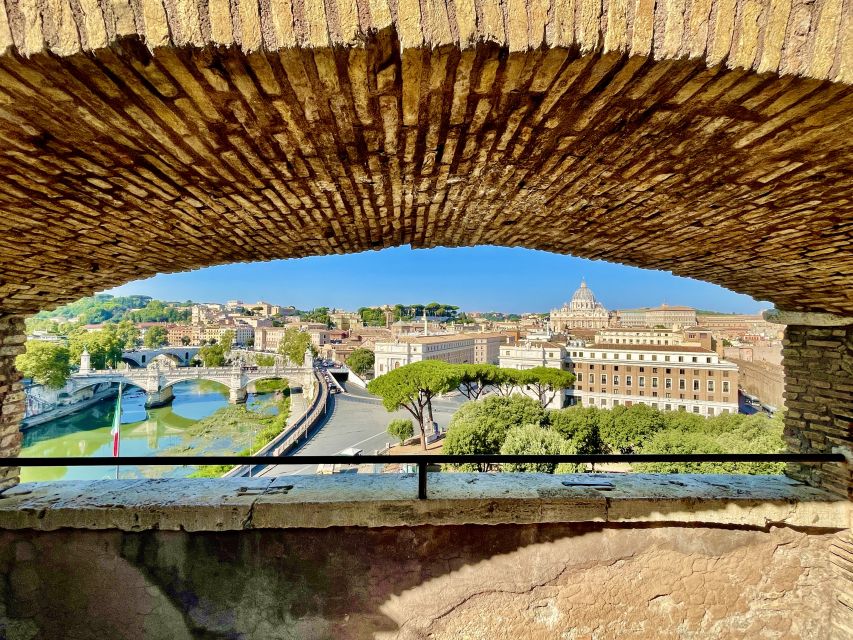
The terrace is the natural high point of the visit. From here, you get panoramic views of Rome and the Tiber, along with a useful look back at the city you have been exploring.
A rooftop view is especially helpful after an interior-heavy tour. From above, the fortress’s position makes more sense. You can see why this spot mattered for defense, why the river was important, and how closely the castle sits within central Rome.
The terrace also gives you one of the tour’s best photo opportunities. Several reviews praise guides for knowing good places and lighting for photographs, and for taking pictures of groups. That is a pleasant extra, though it should not be treated as a guaranteed professional photography service. Your guide may help position your group or take a photo, but the core service remains the history tour.
Give yourself time to enjoy the view rather than treating it as a quick final stop. The terrace is one reason the $94 price can make sense for some visitors. You are paying not only for entry, but also for a guide who connects the panorama to the building’s past and helps you use a short visit well.
Sant’Angelo Bridge and what is not included
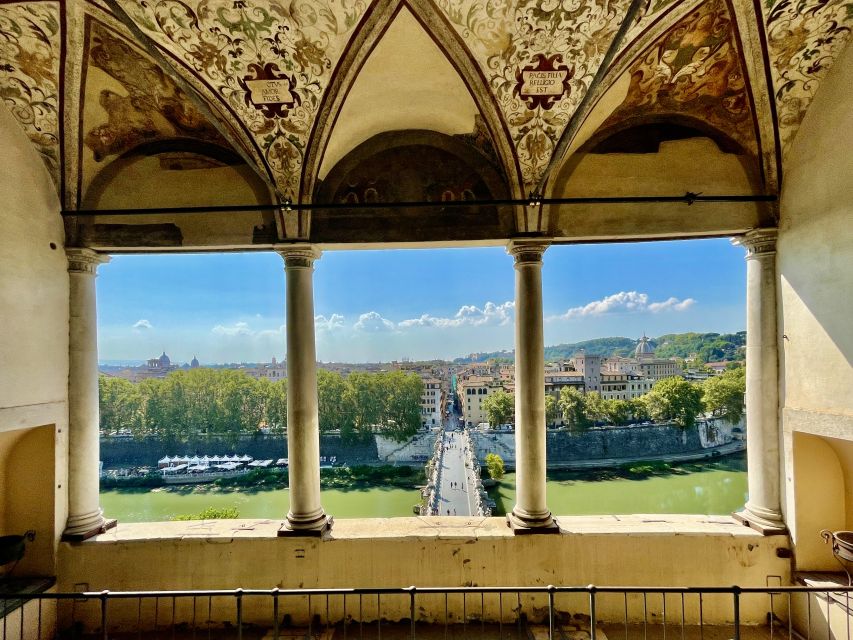
Sant’Angelo Bridge is part of the experience, at least as a feature you see during the visit. Its position beside the castle makes it a natural point for understanding the monument’s setting. You can admire the bridge and the river as part of the castle experience, though the tour is centered inside Castel Sant’Angelo.
Do not confuse this tour with a Vatican and Castel Sant’Angelo connection. The Passetto di Borgo, the corridor linking Vatican City to the castle, is not included. That is an important distinction for anyone drawn to the famous escape route used by popes.
If the Passetto is your main reason for visiting, this is not the correct booking. The tour instead concentrates on Hadrian’s Tomb, the castle’s interior, papal apartments, bastions, Michelangelo’s courtyard, the terrace, and the nearby bridge.
Is $94 a fair price for 90 minutes?
At $94 per person, this is not the cheapest way to enter Castel Sant’Angelo. The value comes from the combination of entrance, swift access, a professional art historian, and a group capped at 10 people.
That price makes more sense if you are visiting Rome for a short stay, prefer guided sightseeing, or want help making sense of a complicated monument. A small group can also feel worth paying for when you want to hear every explanation and ask a question without competing with a crowd.
The value is less convincing if you enjoy reading signs at your own pace or already know the castle’s history. Ninety minutes is enough for an organized overview, but not enough for an unhurried examination of every artistic and architectural detail.
The available score is 4.4 from 14 ratings. The strongest praise centers on guides who explain history clearly, speak excellent English, show enthusiasm, and help with photographs. Several people describe the experience as professional, friendly, enjoyable, and worth the cost. One German-language review gives the clearest caution: the tour includes many historical details, so genuine interest helps.
Who should book this Castel Sant’Angelo tour?
I would choose this tour if you want a focused introduction to one of Rome’s most layered monuments. It suits first-time visitors who would rather understand what they are seeing than wander through a maze of rooms with limited context.
It is also a good fit for couples, families with older children, and solo visitors who value a small group. The 10-person limit creates a more intimate setting, while headsets are provided when more than eight people are present so you can hear the guide clearly.
You may want to skip it if you need wheelchair access, dislike guided pacing, or want to visit the Passetto di Borgo. It is also a poor match if you are carrying luggage or large bags, since those are not allowed.
Book with comfortable shoes, smart-casual clothing, and a light day bag. Food, drinks, hotel pickup, drop-off, and transportation to or from the castle are not included, so plan your route to the meeting point yourself.
Should you book it?
Book this tour if you want the castle’s full story in a compact, well-organized visit, with an art historian guide and a small group. The terrace views, papal rooms, Roman tomb, and bastions give you plenty to see in 90 minutes.
Skip it if you prefer a long self-guided visit or if the Passetto is your priority. For most visitors who want a clear, personal introduction to Castel Sant’Angelo, the price is reasonable when you value expert explanation and swift entry more than extra time inside.
FAQ
How long does the Castel Sant’Angelo tour last?
The tour lasts 1.5 hours, or 90 minutes.
What language is the tour conducted in?
The live tour guide conducts the experience in English.
How many people can join the group?
The group is limited to a maximum of 10 participants.
What does the tour include?
The price includes entrance fees, swift access, and a professional art historian guide. Headsets are provided when the group has more than eight people.
Is the Passetto di Borgo included?
No. The Passetto di Borgo corridor linking Vatican City with Castel Sant’Angelo is not part of this tour.
Where do I meet the guide?
Meet outside Castel Sant’Angelo. The guide waits with a signboard marked Tour in the City. Arrive 15 minutes before the scheduled departure.
Is the tour wheelchair accessible?
No. The tour is not suitable for wheelchair users. Walking frames are also not allowed.
What should I bring and wear?
Bring a passport or identity card and wear comfortable shoes. Smart-casual clothing is the stated dress code. Pets, smoking, luggage, large bags, weapons, and sharp objects are not allowed.
Newest Rome tours we have reviewed
- Private TikTok Video Making in Rome★ 5.0 · 7 reviews
- Assisi, Orvieto and Civita di Bagnoregio Full Day Tour from Rome★ 4.5 · 45 reviews
- Assisi & Saint Francis Path Tour from Rome★ 5.0 · 45 reviews
- Assisi and Cascia Private Day Tour from Rome with Lunch★ 5.0 · 10 reviews
- Art Class in the center of Rome!★ 4.0 · 4 reviews
- Art & Craft: Beer Tour with Street Art in Rome★ 4.5 · 6 reviews
- Arrival in Rome: Airport Transfer & Exclusive City Introduction★ 5.0 · 3 reviews
- From Rome: Private Day-Tour of Tuscany★ 5.0 · 16 reviews
Castel Sant’Angelo Tours, compared.
Castel Sant’Angelo Skip-the-Line Ticket & Audio Guide
Read our review →

Castel Sant’Angelo Skip-the-Line Entry Ticket
Read our review →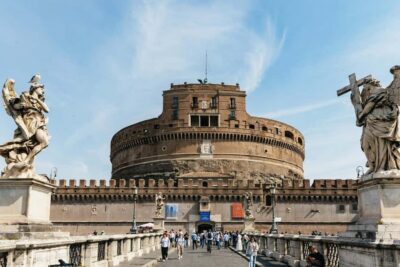


Browse the lists this tour appears in