
Reviewed · ROMAN FORUM AND PALATINE HILL TOURS
Rome: Roman Forum, Palatine, and Circus Maximus Tour
Rome’s ancient center is easier to understand with a guide who can connect the broken columns, temples, and broad stone streets to real people and events. This tour follows Rome from its legendary beginnings through the Roman Republic and imperial age, with time at the Forum, Palatine Hill, and an optional terrace view toward Circus Maximus.
I like the small-group format and clear headsets, which make it easier to hear while taking photographs or moving through the ruins. I also like the chance to remain inside the Roman Forum after the formal tour ends, giving you extra time to revisit the Senate House, temples, and viewpoints at your own pace.
The main consideration is the pace. You will walk over uneven archaeological ground and climb Palatine Hill, so this is not a gentle stroll. The basic option does not include a full Circus Maximus visit, and security queues cannot be skipped even though the ticket-entry line is arranged in advance.
Key points to know before booking
- A story-led route through the Forum: Learn how the Senate, temples, basilicas, and public spaces shaped Roman political and religious life.
- Palatine Hill adds the big views: Look over the Colosseum and Circus Maximus while hearing how the hill changed from legendary birthplace to imperial address.
- Guides make a real difference: Francesca, Giovanni, Helena, and Tom are among the guides praised for clear explanations, strong storytelling, and thoughtful answers.
- Optional Circus Maximus extension: Add a 30-minute explanation from the Palatine terrace if you want more than a distant view.
- Allow for serious walking: Comfortable shoes, water, and an official passport or identity card are essential.
- Good value for history-minded visitors: At $78.17 per person, the fee covers admission, a live guide, headsets, and assistance, but not the Colosseum.
Starting beside the Arch of Constantine
The meeting point is at the green kiosk on the right as you leave the Colosseo metro station. Look for a staff member carrying a yellow Touriks sign, and use the downstairs metro exit rather than the upper exit.
Arrive 15 minutes early. The instructions also say to arrive at least 10 minutes before the start, and late arrivals may not be accommodated or refunded. That is worth taking seriously in Rome, where a missed metro connection or crowded pavement can quickly eat up your buffer.
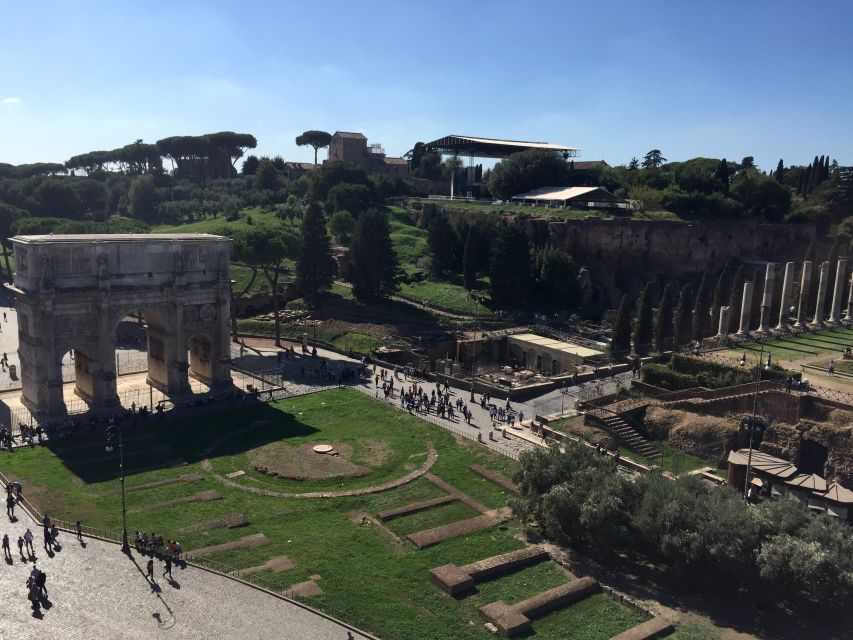
The tour opens at the Arch of Constantine, one of Rome’s largest triumphal arches. You spend about 10 minutes here with the guide before moving toward the Forum. This is a smart opening stop because the arch gives you an immediate sense of Roman power, ceremony, and scale.
The arch also sets up the central question of the tour: how did Rome move from a small settlement to an empire that controlled much of the known Mediterranean world, and why did that system eventually break apart? A good guide can make the answer feel less like a list of dates and more like a chain of political choices, military victories, social tensions, and religious changes.
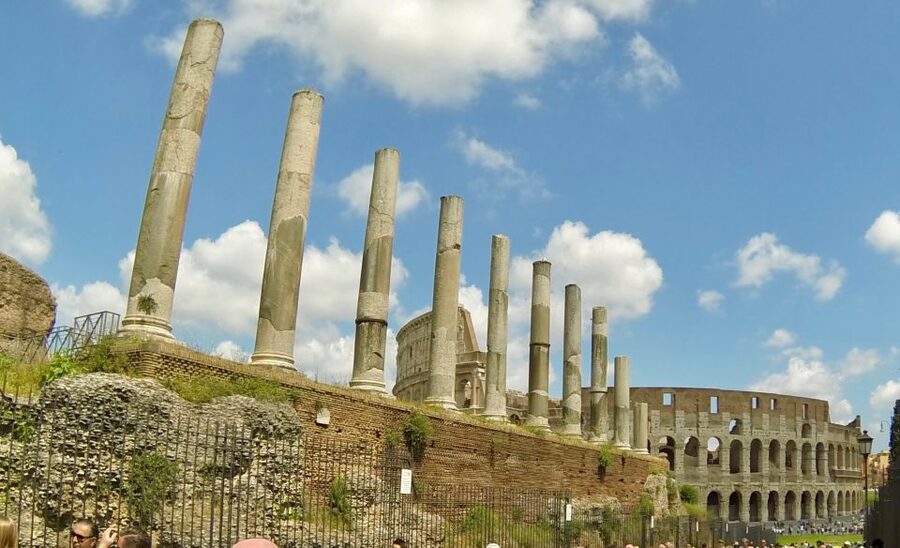
You do not enter the Colosseum on this experience. The amphitheater is nearby, but Colosseum admission is not included. That makes this tour useful for people who already have separate Colosseum plans or who want to focus their money and time on the Forum and Palatine.
More Circus Maximus tours:
- Rome: Caracalla Baths & Circus Maximus — Private or Shared
★ 4.7 · 835 reviews - Rome: Small-Group Tour of Caracalla Baths and Circus Maximus
★ 5.0 · 140 reviews - Rome: Colosseum, Circus Maximus, Forum & Ancient Rome Tour
★ 4.3 · 32 reviews
Walking the Roman Forum in 50 minutes
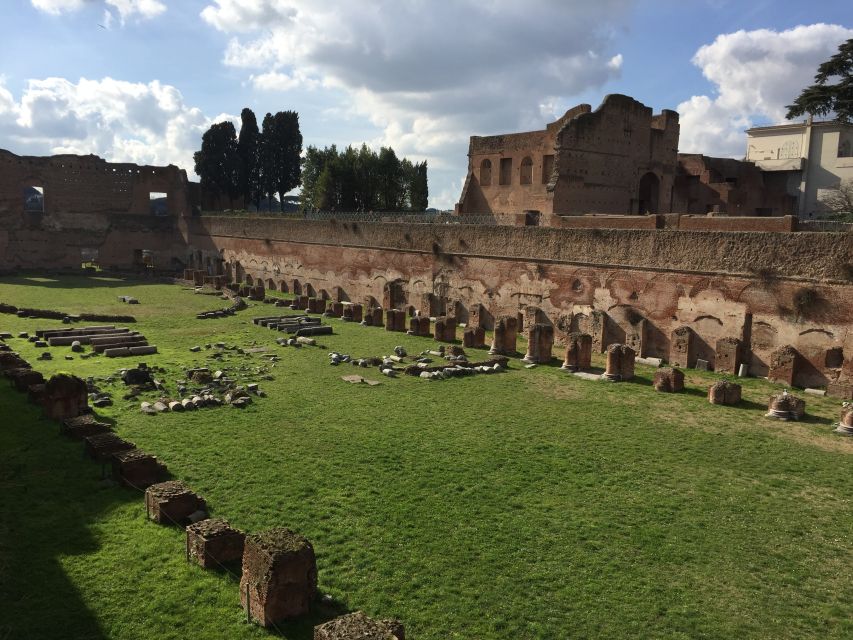
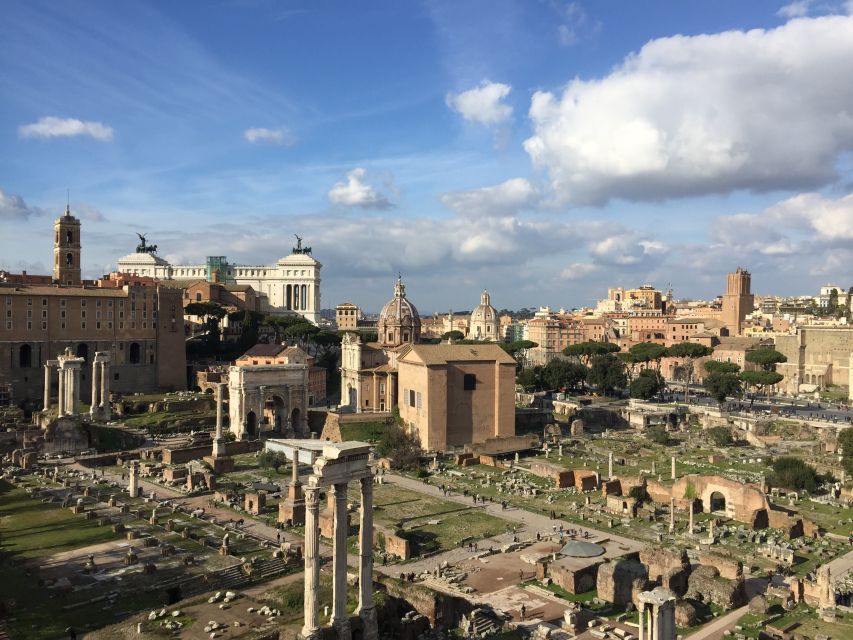
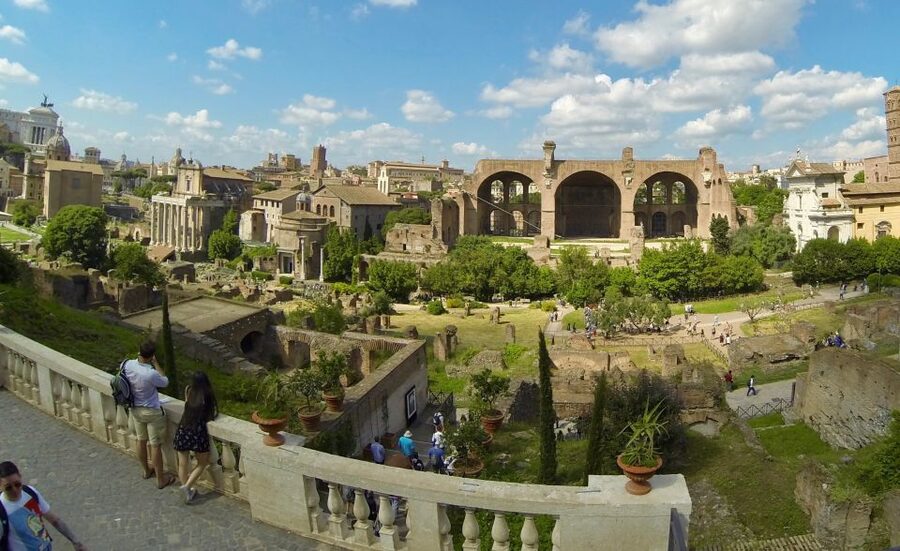
The Roman Forum is the heart of the tour. You spend roughly 50 minutes following ancient routes through the political and religious center of Rome. Without context, the Forum can look like a field of stones and partial walls. With a guide, the surviving fragments begin to show how crowded and purposeful this space once was.
You will hear about the Vestal Virgins, the women who maintained the sacred fire of the goddess Vesta. Their gardens and temple help explain how religion and public duty were tied together in Roman society. This is one of the more memorable parts of the route because it moves beyond emperors and battles and shows the importance of ritual in everyday political life.
The Basilica Julia offers another useful angle. Rather than thinking of a basilica only as a church, you learn about its Roman legal and civic role. The discussion includes the penal system and its effects on Christianity, linking the physical ruins to changes that continued long after the Republic and Empire.
The Temple of Castor and Pollux brings in Rome’s older religious traditions. The remaining columns are striking, but the explanation gives them a job in the larger story. The Forum was not arranged as a museum. It was a working center of worship, law, commerce, political debate, and public memory.
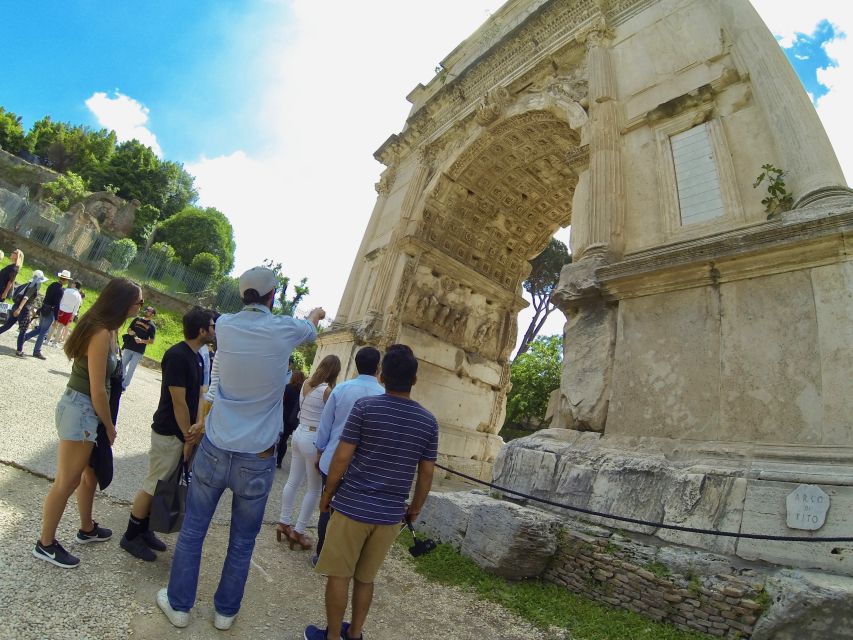
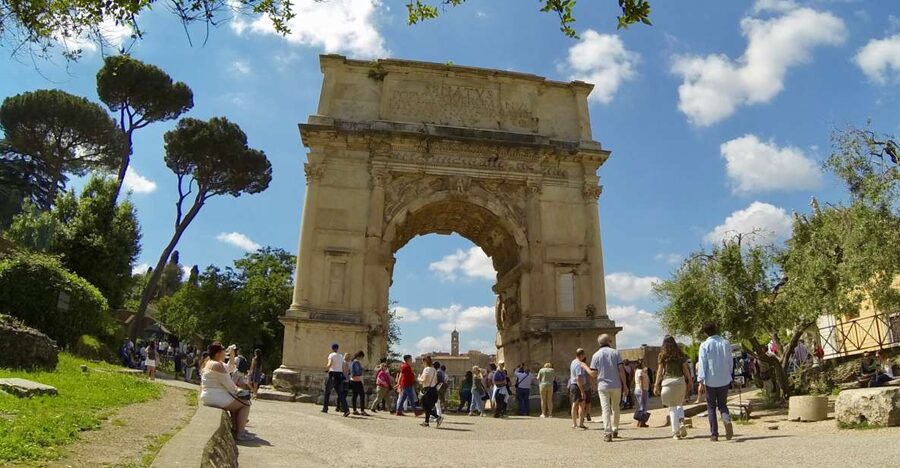
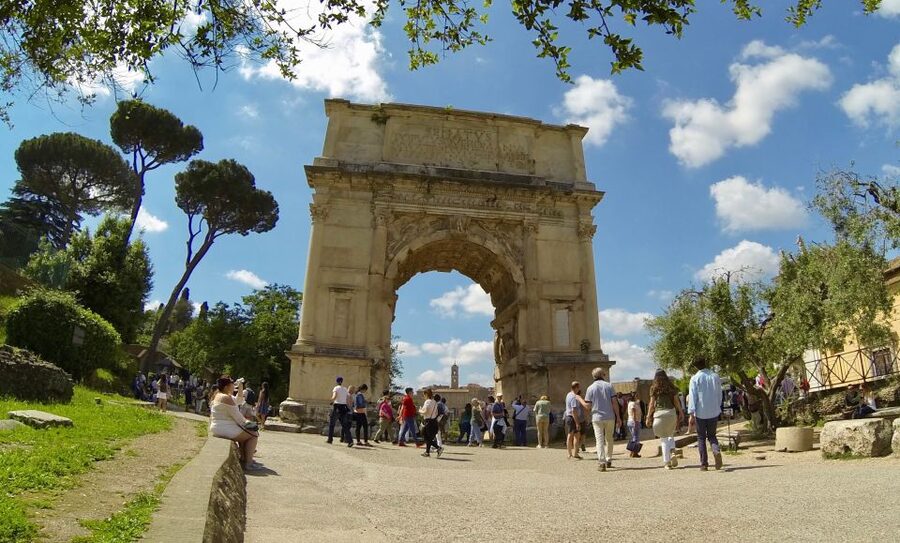
At the Arch of Titus, the focus shifts to the Roman sack of Jerusalem. This is a place where a surviving monument connects architecture with a specific military campaign and its consequences. The arch is also a reminder that Rome’s power was not abstract. It was built through conquest, taxation, administration, and the reshaping of other societies.
The Senate House is another major stop. Here, senators met to debate the future of the Roman Republic. The story reaches Julius Caesar, his murder, and the public handling of his body through cremation. A strong guide can make this familiar episode feel grounded in the actual political spaces where Roman power was contested.
Guides including Giovanni have been praised for explaining the function of individual buildings and answering questions in detail. Helena is also noted for using headsets even with a small group, a practical touch that lets you take photographs without losing the commentary. That equipment matters in an open archaeological site, where wind, foot traffic, and distance can make an unamplified voice difficult to follow.
The Forum portion is packed. You will not get a long pause at every monument, and anyone who wants detailed architectural study may need a second visit. Still, the route gives you a useful framework for returning to the area on your own.
Palatine Hill and the foundations of Rome
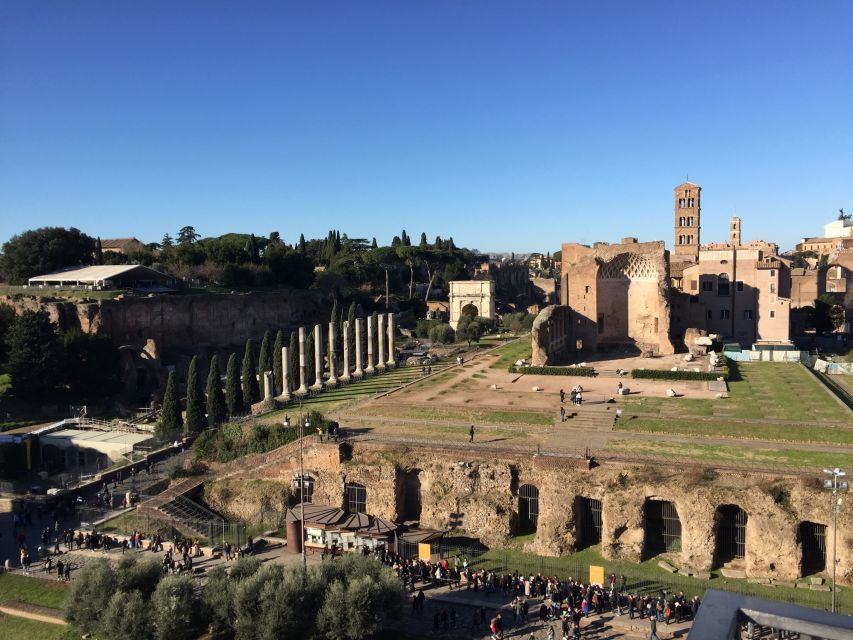
The final main stop is Palatine Hill, with about 40 minutes of guided time. This is where Rome’s origin story meets the remains of elite life.
According to Roman legend, Romulus and Remus were connected to the founding of the city, and Palatine Hill became tied to that story. The hill later developed into one of the most desirable addresses in Ancient Rome, occupied by wealthy Romans and emperors.
That change tells you a lot about the city. The hill was not only a sacred place linked to beginnings. It became a symbol of political rank and private luxury. From here, you can see why the location mattered: it overlooks the Forum and provides broad views toward the Colosseum and Circus Maximus.
Expect some uphill walking and uneven surfaces. The site is not suitable for wheelchair users, and baby strollers are not allowed. Comfortable shoes are essential, especially if you plan to stay after the guided portion and continue along the paths.
Palatine Hill can be the point where the tour either comes together or begins to feel rushed. The guide links the legendary foundation, imperial residences, gardens, and views into a single story. At the same time, 40 minutes is not enough to explore every ruin in detail. I would treat the guided visit as an introduction, then use the remaining time to choose the corners that interest you most.
The optional Circus Maximus extension
During booking, you can add a 30-minute tour of Circus Maximus viewed from the scenic Palatine terrace. The basic option does not include the Circus Maximus or Domus Aurea experiences, so check the exact option before paying.
The terrace view is useful because Circus Maximus is so large that its shape can be hard to read from street level. From above, you get a better sense of the long racing ground and its relationship to the surrounding hills. The guide can also explain why this space mattered to Roman public life and entertainment.
This add-on makes the most sense if you want a fuller Ancient Rome experience and do not have another Circus Maximus visit planned. If your priority is a shorter visit focused on the Forum and Palatine, the standard tour already contains plenty of material.
The optional extension is not the same as a separate, ground-level exploration of every part of Circus Maximus. You should think of it as a guided viewpoint and historical explanation from Palatine Hill.
More Roman Forum and Palatine Hill tours:
- Rome: Colosseum, Palatine Hill and Roman Forum Guided Tour
★ 4.8 · 32,814 reviews - Rome: Guided Tour of Colosseum, Roman Forum & Palatine Hill
★ 4.7 · 27,897 reviews - Rome: Colosseum, Roman Forum and Palatine Hill Guided Tour
★ 4.5 · 23,903 reviews - Rome: Colosseum, Forum & Palatine Hill Tour & Optional Arena
★ 4.4 · 13,839 reviews
How the 100-minute timing works
The stated duration is 100 minutes: about 10 minutes at the Arch of Constantine, 50 minutes in the Roman Forum, and 40 minutes on Palatine Hill. The optional Circus Maximus portion adds another 30 minutes.
Some tour experiences can run closer to an hour and a half or two hours depending on group movement, questions, and the selected option. Plan your day around at least the published 100 minutes, then leave extra time if you want to remain inside the Forum afterward.
The tour ends back at the meeting point. You can stay in the Roman Forum as long as permitted after the official guided route, which is one of the better features for independent sightseeing. You are not forced to leave as soon as the guide finishes.
Bring water. There are small water jets where you can refill a bottle, and there are shady places to sit after the tour. Toilets are available at the tourist information center for a fee, and there are also facilities near the top of Palatine Hill and in the museum church.
Is $78.17 a fair price?
At $78.17 per person, this is not a bargain-priced walk. The cost includes entry to the Roman Forum and Palatine Hill, a professional live guide, headsets, and on-site assistance. It does not include the Colosseum, food, drinks, hotel transport, or any optional upgrade you choose during booking.
The value depends on how you use the site. If you already know Roman history and prefer to read signs at your own speed, you may find the price high for 100 minutes. You will still receive admission and the ability to remain in the Forum afterward, but the main benefit is the interpretation.
For most first-time visitors, the guide is the reason to consider it. The Forum is sprawling, and the ruins do not always explain themselves. A clear narrative can save you from wandering past the Senate House, Vestal complex, or Basilica Julia without understanding what you are seeing.
Small groups are available, and the exact group size affects the value. In a group of eight, for example, it is easier to move together, ask questions, and hear the guide. Private options cost more, but they may suit families or people who want to set the pace.
The headsets are another small but important part of the price. You can move a few steps away to frame a photograph and still hear the explanation. That is much better than crowding close to the guide throughout the route.
Which guide style suits this experience?
The strongest guide reports focus on storytelling, clear speech, and the ability to answer questions. Francesca is described as engaging and passionate, with an explanation of Rome’s origins that made the scale of the archaeological area easier to appreciate.
Giovanni is associated with a clear headset presentation and detailed answers about the Forum’s temples, Senate, and public buildings. Helena is praised for friendly professionalism and for making the tour work well even with a small group. Tom is noted for bringing the ruins to life in a group of eight.
A guide with archaeological field experience can add another layer. One guide has taken part in archaeological digs at the site, which may help explain why certain walls, foundations, or changes in ground level matter.
You should not expect one fixed personality or lecture style. The guide assigned on your date may be different. Still, the experience is designed around live explanation rather than a recorded script, and the available languages include English, French, Portuguese, Italian, Spanish, and German.
Practical details that can make or break the visit
Carry an official passport or identity card. Everyone in the group needs one, and security checks are strict. You cannot skip the security queue, even with an arranged tour entry.
Leave large bags, luggage, trolleys, sharp objects, glass items, drones, and pets behind. Baby strollers are also not allowed. These rules are especially important because the Forum is not a place where you can easily return to a hotel or vehicle once you are inside.
Wear shoes with good support. The route includes moderate walking over archaeological ground and a climb on Palatine Hill. The site is not suitable for wheelchair users.
The tour has free cancellation up to 24 hours before the start, and you can reserve now and pay later. Those options help if your Rome schedule is still shifting, but they do not protect you from arriving late.
Who should book this Roman Forum tour?
I would recommend it to a first-time Rome visitor who wants the Forum to make sense rather than simply look impressive. It also suits history fans who want a guide capable of discussing the Republic, imperial Rome, religion, law, and the early roots of Christianity in one connected route.
Families with older children and teenagers may appreciate the stories about Romulus and Remus, Julius Caesar, the Vestal Virgins, and the sack of Jerusalem. The walking is moderate, but the ground is uneven and the material is dense, so very young children may lose interest.
Independent visitors should consider the value carefully. If you enjoy building your own route and reading at length, book only if the guide, headset, and added explanations matter to you. If you want to understand what you are looking at without doing extensive preparation, this is a sound choice.
Should you book it?
Book this tour if you want a well-organized introduction to the Forum and Palatine Hill, especially in a small group with clear audio and a live guide. The chance to continue exploring after the official tour adds useful flexibility.
Choose the Circus Maximus extension if that view and explanation are important to you. Skip it if you prefer a shorter Forum-focused visit or already have separate plans for the area.
The price is reasonable for visitors who value interpretation, but less attractive if you only want entry. Arrive early, carry your ID and water, wear proper shoes, and do not expect Colosseum admission. With those limits understood, this tour gives you a strong way to read the ruins as Rome’s political and religious center rather than as scattered stones.
FAQ
How long does the tour last?
The main tour lasts 100 minutes. An optional 30-minute Circus Maximus tour can be added during booking.
Does the tour include the Colosseum?
No. The tour includes admission to the Roman Forum and Palatine Hill, but Colosseum entry is not included.
Where is the meeting point?
Meet at the green kiosk on the right as you exit the Colosseo metro station. Look for a staff member carrying a yellow Touriks label. Use the downstairs exit rather than the upper-floor exit.
Which languages are available?
The live tour guide may provide the tour in French, English, Portuguese, Italian, Spanish, or German.
What should I bring?
Bring an official passport or identity card and comfortable shoes. Water is also a sensible choice because the tour includes moderate walking.
Is the tour suitable for wheelchair users?
No. The experience is not suitable for wheelchair users. Baby strollers, large bags, trolleys, pets, drones, weapons, sharp objects, and glass objects are not permitted.
Newest Rome tours we have reviewed
- Private TikTok Video Making in Rome★ 5.0 · 7 reviews
- Assisi, Orvieto and Civita di Bagnoregio Full Day Tour from Rome★ 4.5 · 45 reviews
- Assisi & Saint Francis Path Tour from Rome★ 5.0 · 45 reviews
- Assisi and Cascia Private Day Tour from Rome with Lunch★ 5.0 · 10 reviews
- Art Class in the center of Rome!★ 4.0 · 4 reviews
- Art & Craft: Beer Tour with Street Art in Rome★ 4.5 · 6 reviews
- Arrival in Rome: Airport Transfer & Exclusive City Introduction★ 5.0 · 3 reviews
- From Rome: Private Day-Tour of Tuscany★ 5.0 · 16 reviews
Roman Forum and Palatine Hill Tours, compared.
Colosseum, Palatine Hill and Roman Forum Guided Tour
Read our review →
Guided Tour of Colosseum, Roman Forum & Palatine Hill
Read our review →
Colosseum, Roman Forum and Palatine Hill Guided Tour
Read our review →
Colosseum, Forum & Palatine Hill Tour & Optional Arena
Read our review →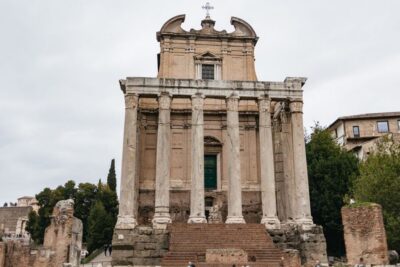
Colosseum, Palatine Hill & Roman Forum Guided Tour
Read our review →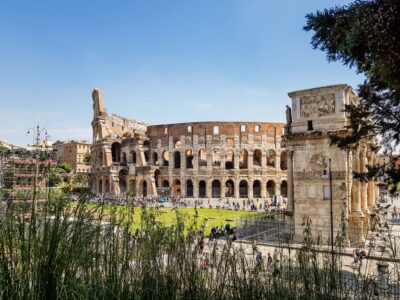
Colosseum Arena, Palatine Hill & Forum Guided Tour
Read our review →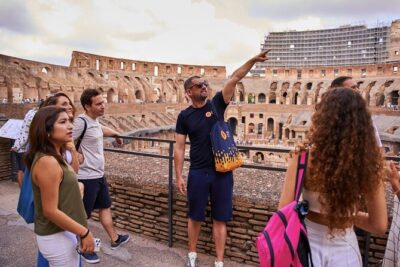
Colosseum, Roman Forum & Palatine Hill Guided Tour
Read our review →Colosseum, Roman Forum And Palatine Hill Guided Tour
Read our review →Browse the lists this tour appears in