
Reviewed · BATHS OF CARACALLA TOURS
Rome: Caracalla Baths & Circus Maximus — Private or Shared
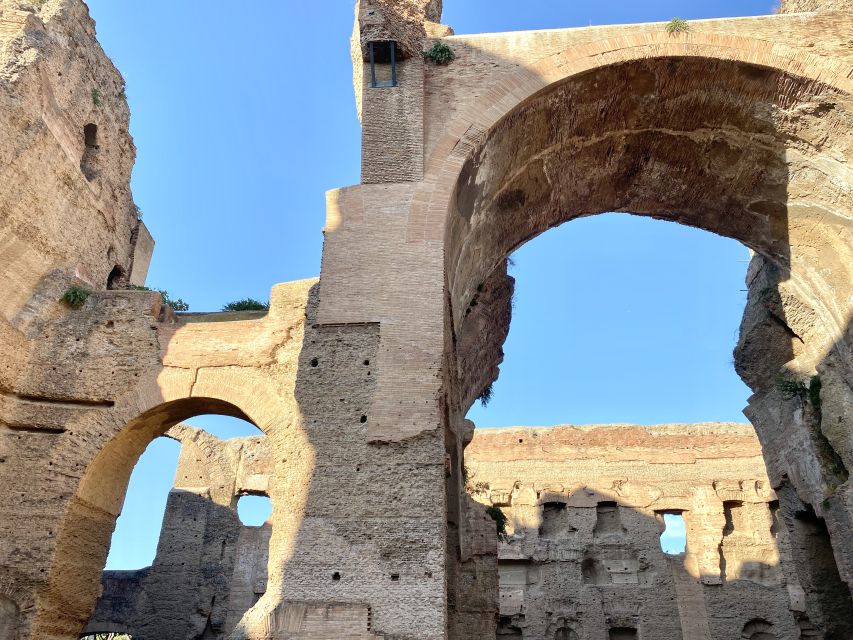
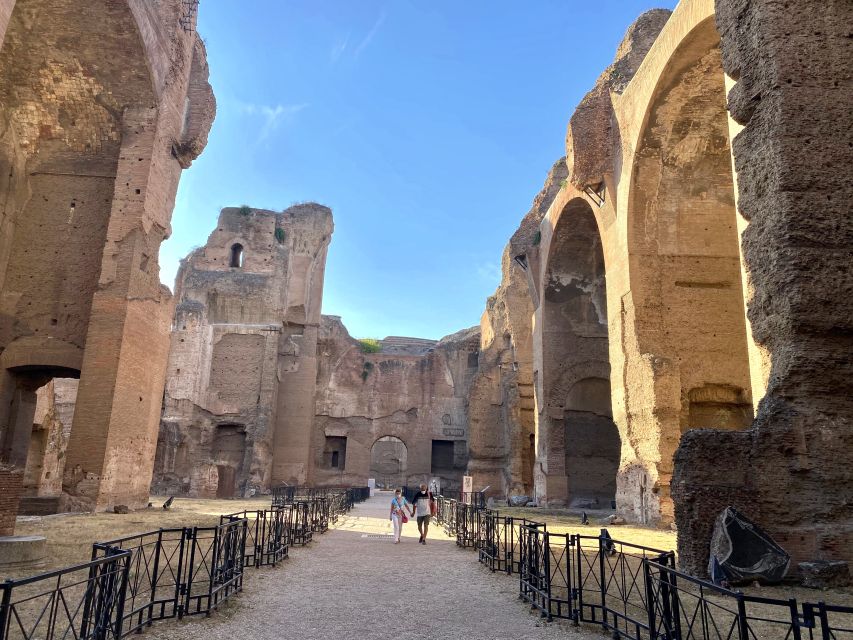
The Caracalla Baths are the star here: enormous walls, surviving mosaics, and traces of a heating system that once warmed an imperial public spa. I like that the tour explains not just what remains, but how an ordinary visit unfolded in the third century. The scale is startling, especially when you realize these ruins once formed only part of a working bath complex.
I also like the small-group format and the pairing of the baths with Circus Maximus. Guides including Chiara, Francesca, Lars, and Anestis have earned praise for clear explanations, humor, and patience with questions. The main drawback is simple: Circus Maximus has far less to see above ground, so much of that 30-minute visit depends on your guide and your imagination.
Key points to know before booking
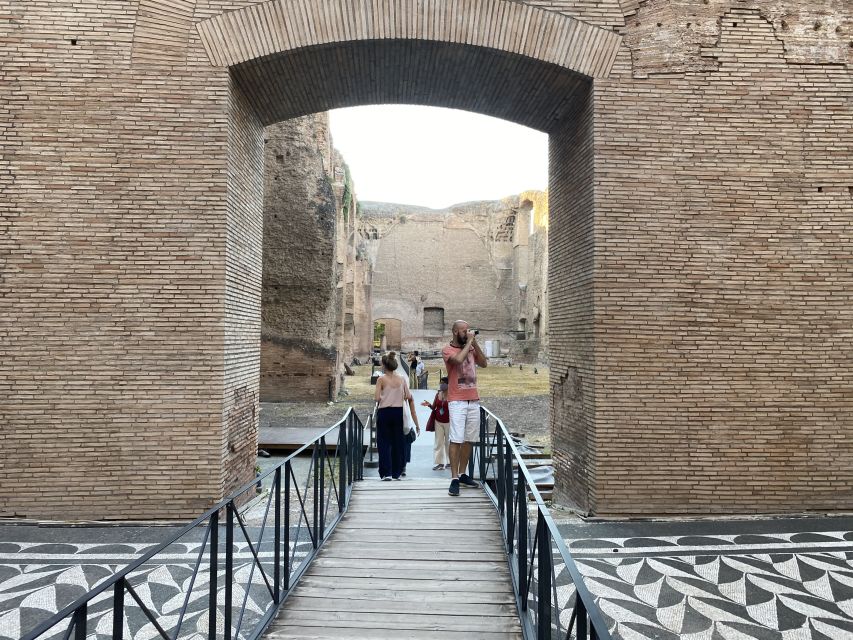
- The Caracalla Baths take up about one hour, with attention to mosaics, room layouts, engineering, and daily Roman bathing customs.
- Circus Maximus takes about 30 minutes, but the site is mainly an open area with limited visible remains.
- Groups are capped at 10 people, with private and small-group options available.
- The guide makes the difference, bringing together archaeology, Roman customs, chariot racing, and practical sightseeing tips.
- The meeting point is easy to reach, at Circo Massimo Metro station, in front of the FAO building.
- Comfortable shoes matter, since you walk through a large archaeological site and carry your visit mostly on foot.
Why the Caracalla Baths deserve your time
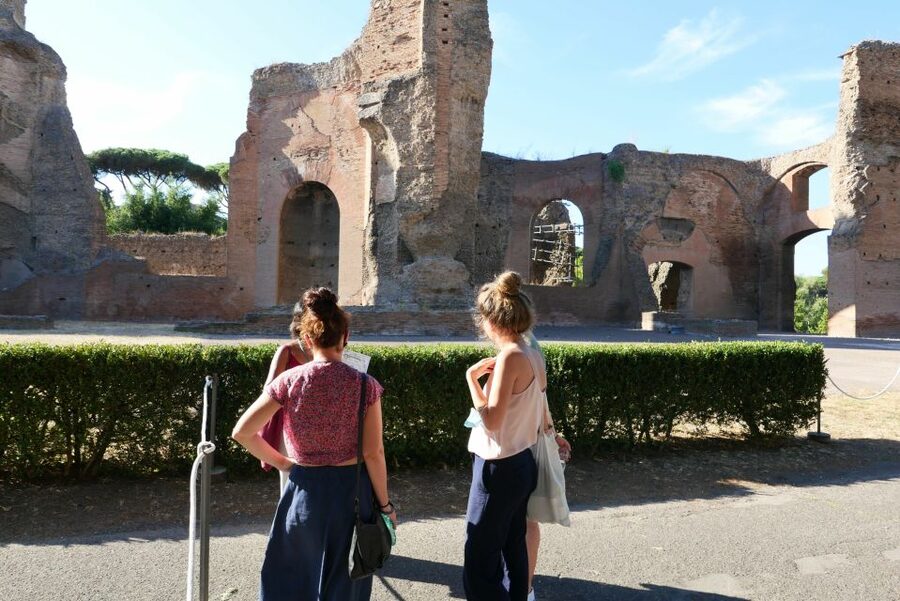
Rome gives you plenty of famous ruins, but the Caracalla Baths offer something different from temples, forums, and arenas. This was a place built for everyday pleasure. Romans came to bathe, exercise, relax, talk, read, and spend time away from home. The setting helps you picture ancient life as more than emperors, wars, and marble statues.
The complex is close to the Colosseum but feels calmer and more open. Several people who took the tour appreciated this quieter corner of Rome, especially after dealing with the crowds around the city’s best-known monuments. I see the appeal. You get impressive ancient architecture without the same crush of people found at the Colosseum.
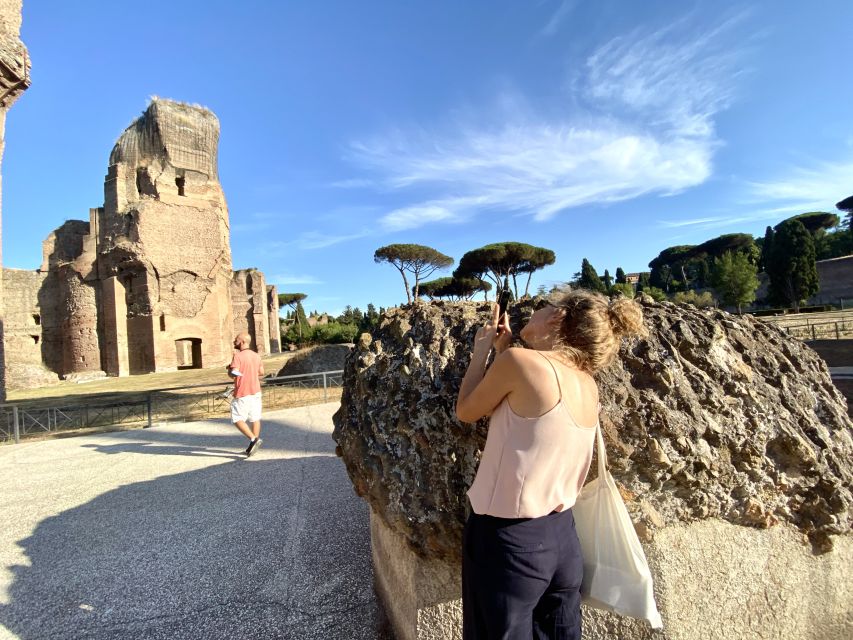
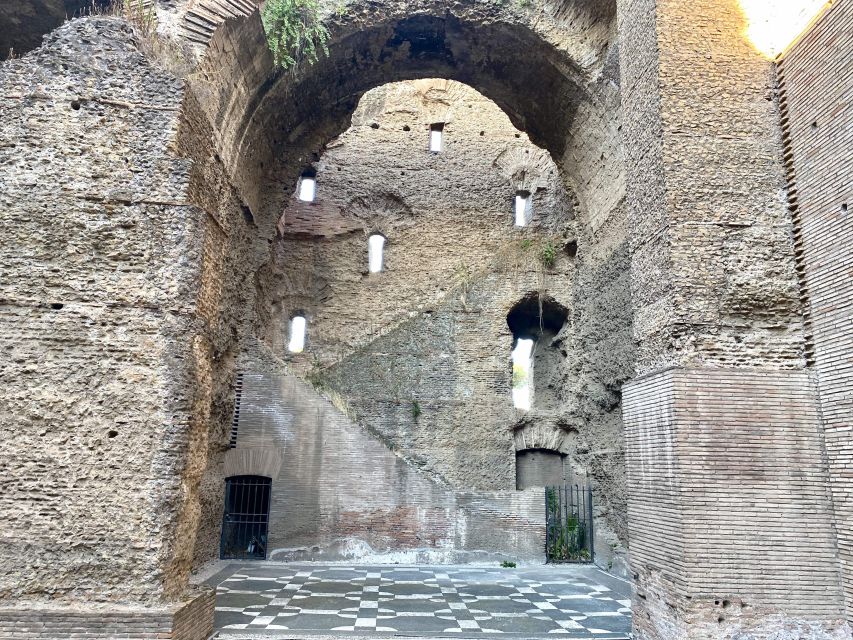
The ruins are also unusually easy to read with a good guide. You can see the height of the main walls and the broad arrangement of rooms. Surviving mosaics offer clues to the decoration, while the scale of the complex shows how much labor and planning went into public leisure in Imperial Rome.
Do not expect a complete building. Much has disappeared, and the rooms can look bare if you walk through without context. With an archaeologist or well-prepared guide, though, the remains become a map of the original complex. The guide can explain where different bathing temperatures fit into the routine, how the rooms connected, and why the building required such a large workforce.
More Baths of Caracalla tours:
- Rome: Caracalla Baths Express Small-Group or Private Tour
★ 4.7 · 175 reviews - Rome: Small-Group Tour of Caracalla Baths and Circus Maximus
★ 5.0 · 140 reviews - Rome: A Night at the Opera – Baths of Caracalla
★ 4.4 · 81 reviews
What the one-hour baths visit covers
The tour begins at the entrance to the Caracalla Baths after you meet your guide outside the Circo Massimo Metro station. The supplied headsets let you hear the commentary clearly, which matters when you are moving through large rooms or standing a short distance from the guide.
The visit follows the structure of a typical bath day. You learn how visitors moved through the complex and how the baths served both body and mind. The subject is not limited to washing. Roman bath complexes could be social spaces, places to exercise, rest, meet friends, and enjoy services connected with personal care.
One of the most useful parts is the explanation of temperature control. The guide describes the underfloor heating system and the methods used to keep rooms at different temperatures. This makes the building’s engineering easier to grasp. Instead of seeing only thick walls and broken floors, you begin to understand how heat was produced, carried, and managed.
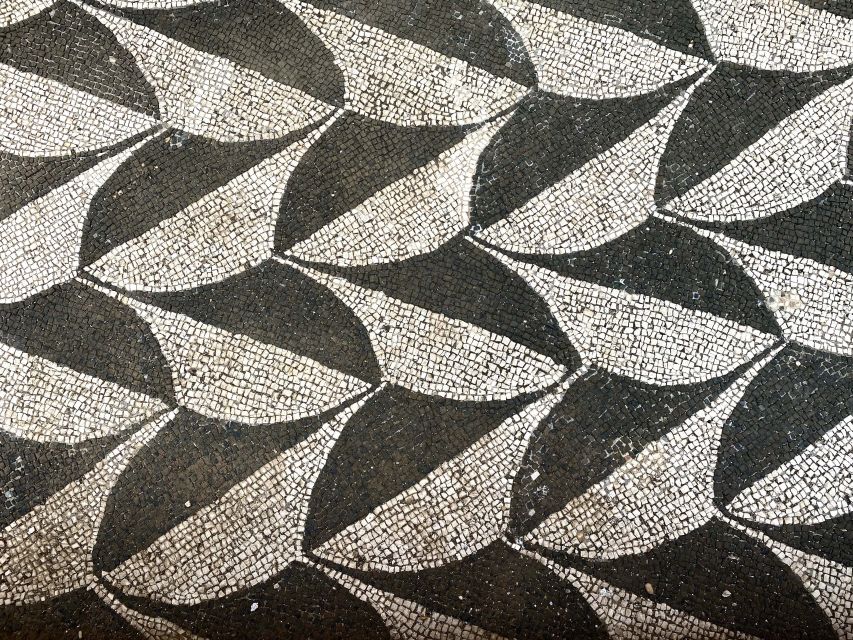
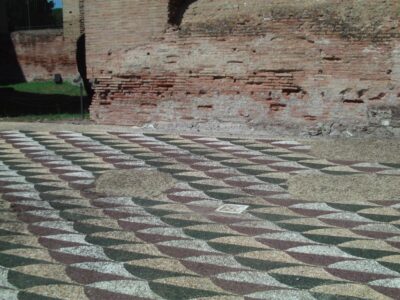
The mosaics deserve time. Geometric patterns remain visible in places, and some sections retain an impressive amount of detail. The ruins do not offer a polished museum display, which is part of their value. You are looking at the actual remains of a huge public complex, with decoration still attached to the floors and walls.
Several guides have been singled out for making the site easy to imagine. Anestis was praised for explaining the ruins in a clear, lively way, while Chiara has been described as warm, patient, and especially good at making the history feel immediate. Lars has also received strong praise for combining historical detail with an easy conversational manner. Guides can vary, but the repeated pattern is clear: the quality of the explanation is a major part of what you are paying for.
The visit is not physically extreme, but you should wear proper walking shoes. Large bags, trolleys, and baby strollers are not allowed inside the monuments, so pack light. Pets, drones, weapons, and sharp objects are also prohibited.
Why the engineering is the real surprise
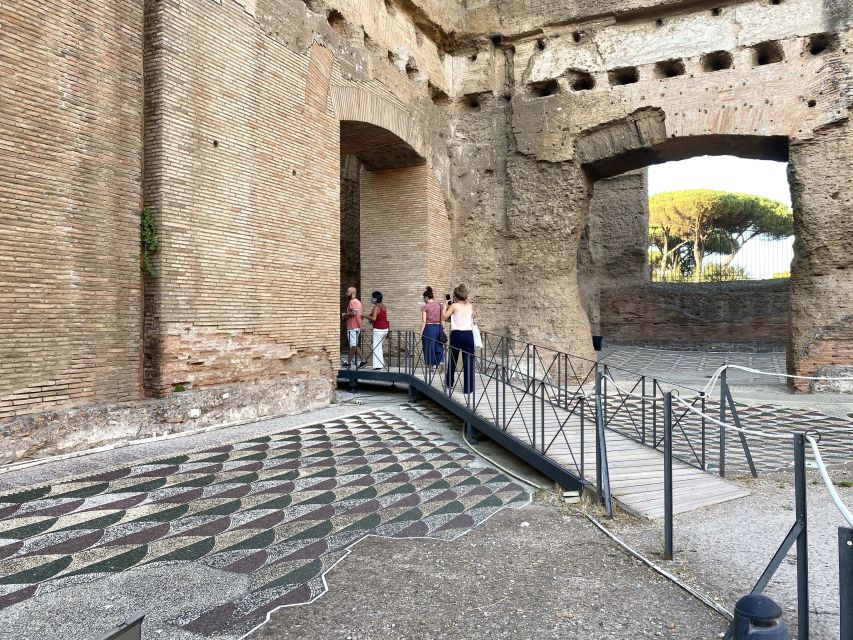
You may arrive expecting attractive ruins and leave thinking about plumbing. The Caracalla Baths show how Roman public works depended on systems hidden beneath the grand rooms.
The underfloor heating is a particularly good example. Your guide explains how heat was produced and how the floor was raised to allow hot air to circulate. The important point is not just that the Romans used heating. It is that they controlled different conditions across a large building with many rooms and functions.
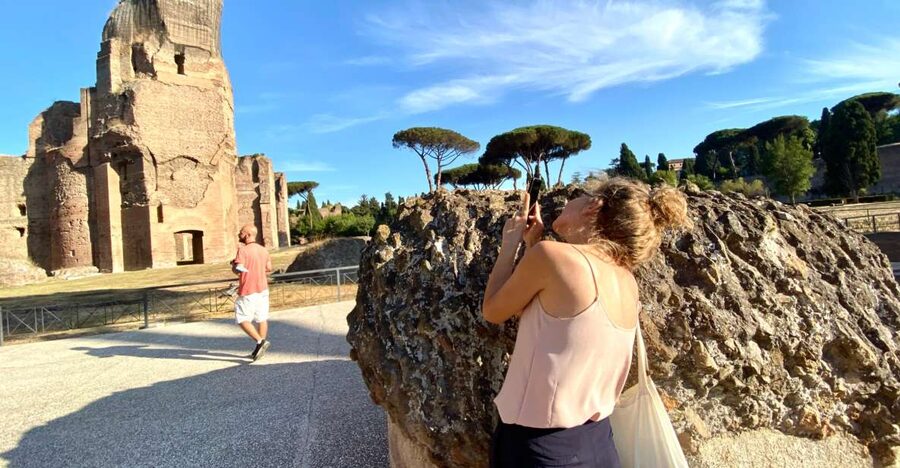
The walls and arches also give you a sense of construction on a huge scale. Even in a ruined state, the remains are tall enough to make you look upward. You can see why several people described the place as far more impressive in person than expected. The surviving structure gives the site a physical force that photographs do not always convey.
I like this part of the tour because it connects archaeology with practical questions. How did people move around? How were the rooms heated? What did they see underfoot? What did the staff need to maintain? These details turn a pile of ancient masonry into a functioning public facility.
Circus Maximus: an enormous site with little left to see
After the baths, the tour continues to Circus Maximus, once the setting for major public games. The guide discusses Roman Ludi, large celebrations that could continue for several days and include different public events.
You hear about chariot races, gladiator fights, and the noise of crowds gathered in one of Rome’s largest public venues. The guide also explains the site’s early connection with Roman myths and gods, taking the story back to the period before Rome became the imperial city familiar from textbooks.
This part is best understood as a storytelling stop. Unlike the Caracalla Baths, Circus Maximus does not offer a large group of standing walls, intact rooms, or extensive mosaics. The open site leaves much to your imagination. One participant found the baths excellent but felt there was not much to see at the circus, a fair assessment that you should take seriously.
Still, the stop has value if you want to understand the scale of Roman public entertainment. Your guide helps you picture the size of the venue and the crowds that gathered there. The contrast with the baths is useful: one was a place of bathing and social life, the other a huge venue for mass spectacle.
I would not book this tour solely for Circus Maximus. I would book it for the baths, then treat the circus as a short historical extension. If you already know the site is mostly open ground, you are less likely to feel disappointed.
More Circus Maximus tours:
- Rome: Roman Forum, Palatine, and Circus Maximus Tour
★ 4.7 · 117 reviews - Rome: Colosseum, Circus Maximus, Forum & Ancient Rome Tour
★ 4.3 · 32 reviews - Rome: E-bike Tour From The Circus Maximus To The Catacombs
★ 5.0 · 3 reviews - Rome: Caracalla, Colosseum, Circus Maximus Private Tour
★ 5.0 · 3 reviews
Small group, private tour, or shared visit
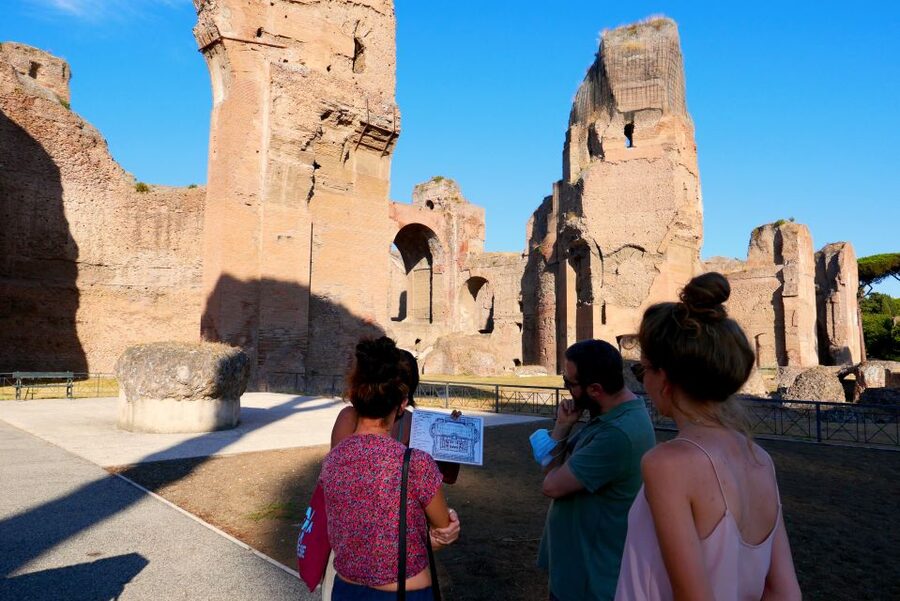
The maximum group size is 10 people, which is a sensible limit for these ruins. A small group lets you stay near the guide, hear the explanations through the headset, and ask questions without holding up a large crowd.
Private tours are available and can work well for families or couples who want to set the pace. A private visit also gives you more room to ask about Roman architecture, local monuments, or the surrounding area. One family found the private format especially useful for an in-depth visit.
The shared option is the better value if you are comfortable with a small group. Some departures may end up with only a few people, and at times a very small booking has continued rather than being canceled. That can give you a private-tour feel without the private-tour price, though you should not assume every departure will work that way.
The tour is offered in English, French, Portuguese, Spanish, German, and Italian. Confirm your preferred language when booking. The guide list includes people such as Francesca, Chiara, Lars, Anestis, Samuele, Mario, and Alicia, but the specific guide depends on the departure.
Is $77 a fair price?
At $77 per person, this is not the cheapest way to see ancient Rome. You are paying for the Caracalla entrance, an archaeologist guide, headsets, and on-site assistance. Food, drinks, and transport to the meeting point are not included.
The value depends on how you normally visit ruins. If you are happy reading signs and building the picture yourself, you could prefer an independent visit. The Caracalla Baths are large enough, though, that a guide adds real substance. The main rooms, heating system, mosaics, and bathing routine are much easier to understand when someone connects the pieces.
I would consider the price reasonable for a private or very small-group visit, especially if your guide is as generous with time as some past departures have been. Several tours lasted longer than the advertised 90 minutes, though that should be treated as a pleasant possibility, not a promise.
The price feels less convincing if you are mainly interested in Circus Maximus. The visible remains there are limited, and the experience relies heavily on spoken interpretation. Think of the cost as paying for a guided Caracalla visit with Circus Maximus included, not as paying equally for two fully preserved monuments.
Timing, meeting point, and practical planning
The meeting point is at the exit of Circo Massimo Metro station in the direction of Laurentina, in front of the FAO building. Look for a yellow label with the local partner’s name. Arrive at least five minutes early so the sign-up process does not delay the group.
The tour lasts 1.5 hours, with about one hour at the baths and 30 minutes at Circus Maximus. That makes it easy to fit into a Rome day, especially if you want a focused archaeological visit rather than a half-day commitment.
There is no hotel pick-up or drop-off, so plan your own route to the metro station. Since the tour takes place outdoors and inside an exposed archaeological complex, weather can affect the departure. Unfavorable conditions may lead to cancellation, with an alternative date or full refund offered.
The tour is listed as wheelchair accessible, but you should still consider the size and historic surfaces of the sites when deciding if it suits your needs. The supplied information does not specify every surface or route condition, so ask the operator for current access details if that is important for your party.
You can cancel up to 24 hours before the start for a full refund, and the reserve-now, pay-later option keeps your plans flexible. Bring comfortable shoes and avoid large bags. A small day bag is the practical choice.
Who will enjoy this tour most?
I would recommend it to anyone who has already seen the Colosseum and wants a quieter look at Roman public life. It also suits people who enjoy architecture, engineering, archaeology, and the small details that explain how a city worked.
Families can benefit from the guide’s storytelling, especially in the baths, where the heating system and daily routine give children something concrete to follow. A private option can make it easier to pause for questions.
This is also a good choice near the end of a Rome trip. The visit is relaxed compared with a packed central itinerary, and it offers a different side of the ancient city. One person specifically found it a calm way to finish several days in Rome.
I would be more cautious if you want a monument packed with statues, rooms, and intact decoration at every turn. The baths are impressive but ruined, while Circus Maximus is even more dependent on reconstruction through words. You need some interest in imagining what is gone.
Should you book the Caracalla Baths and Circus Maximus tour?
Yes, if the Caracalla Baths appeal to you and you want the ruins explained by a strong guide. The baths provide the substance: towering remains, mosaics, Roman bathing customs, and clever engineering. The small group size and multilingual format add practical value.
Book it with measured expectations about Circus Maximus. You will hear compelling stories about games, races, crowds, and early Roman beliefs, but you will not spend 30 minutes walking through a fully preserved stadium.
At $77, I see this as a focused guided experience rather than a bargain attraction. It is best for curious visitors who want ancient Rome made understandable, not simply photographed. If you choose it, arrive early, wear good shoes, pack lightly, and give the Caracalla Baths most of your attention.
FAQ
How long does the tour last?
The scheduled duration is 1.5 hours. About one hour is spent at the Caracalla Baths and about 30 minutes at Circus Maximus.
Where do I meet the guide?
Meet at the exit of Circo Massimo Metro station in the direction of Laurentina, in front of the FAO building. Look for a yellow label with the local partner’s name.
Is the tour private or shared?
You can choose a private tour or a small-group option. Shared groups have a maximum of 10 participants.
Which languages are available?
The tour is offered in English, French, Portuguese, Spanish, German, and Italian.
Are entrance fees included?
Yes. Admission to the Caracalla Baths, sterilized headsets, a live archaeologist guide, and on-site assistance are included.
What should I bring?
Wear comfortable walking shoes. Large bags, trolleys, baby strollers, pets, drones, weapons, and sharp objects are not allowed inside the monuments.
Can I cancel the booking?
You can cancel up to 24 hours before the start time for a full refund. You can also reserve now and pay later, subject to the booking conditions.
Newest Rome tours we have reviewed
- Private TikTok Video Making in Rome★ 5.0 · 7 reviews
- Assisi, Orvieto and Civita di Bagnoregio Full Day Tour from Rome★ 4.5 · 45 reviews
- Assisi & Saint Francis Path Tour from Rome★ 5.0 · 45 reviews
- Assisi and Cascia Private Day Tour from Rome with Lunch★ 5.0 · 10 reviews
- Art Class in the center of Rome!★ 4.0 · 4 reviews
- Art & Craft: Beer Tour with Street Art in Rome★ 4.5 · 6 reviews
- Arrival in Rome: Airport Transfer & Exclusive City Introduction★ 5.0 · 3 reviews
- From Rome: Private Day-Tour of Tuscany★ 5.0 · 16 reviews
Baths of Caracalla Tours, compared.
Caracalla Baths Express Small-Group or Private Tour
Read our review →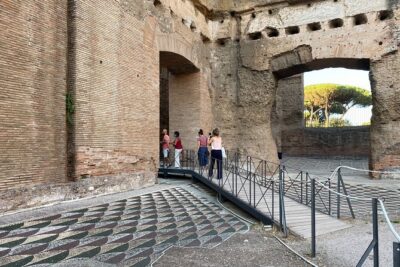
Small-Group Tour of Caracalla Baths and Circus Maximus
Read our review →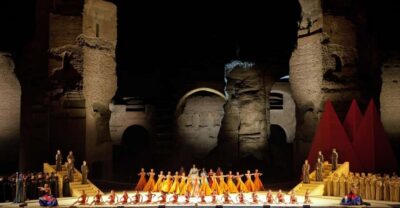
Baths of Caracalla Exclusive Private Guided Tour and Tickets
Read our review →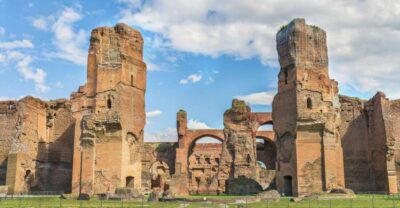
Caracalla, Colosseum, Circus Maximus Private Tour
Read our review →Browse the lists this tour appears in