
Reviewed · OSTIA ANTICA TOURS
Rome: Ostia Antica Archaeological Park Ticket & Audio App
Ostia Antica gives you something Rome’s famous monuments cannot: a chance to walk through an entire ancient city. You pass apartment blocks, villas, baths, shops, mosaics, frescoes, and an amphitheater, often with enough space to pause and picture ordinary Roman life. The scale is the main surprise.
I like the freedom to explore at my own speed, and I like the ticket’s reach across five archaeological sites. The well-preserved mosaics and frescoes are another strong point. The main drawback is simple: the park is huge, the paths are uneven, and the audio guide may not always make it clear where each site is located.
Key points to know before you go
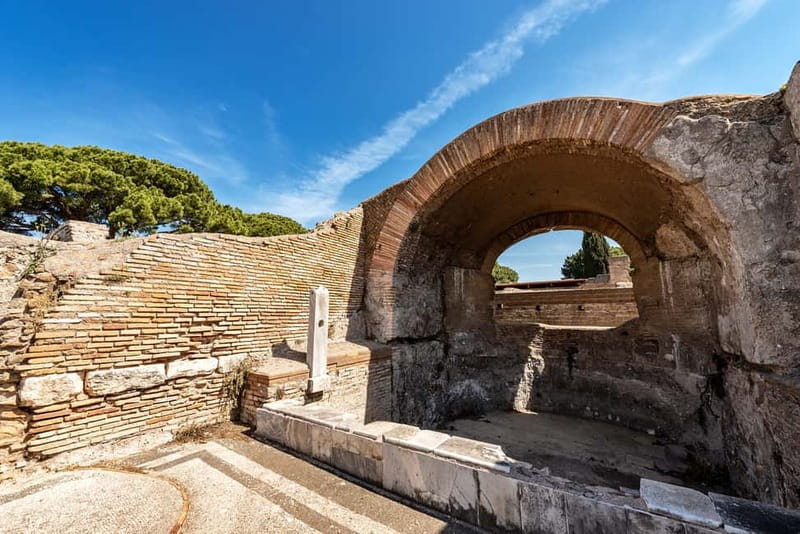
- Ostia was a complete Roman city: Walk through homes, public buildings, baths, and streets rather than seeing one isolated monument.
- Mosaics and frescoes are major highlights: Many survive in place, giving the ruins more color and character than bare stone alone.
- Your ticket covers five sites: It includes Ostia Antica, Julius II Castle, the Museum of Ships in Fiumicino, the Imperial Ports of Claudius and Trajan, and the Necropolis of Porto on Isola Sacra.
- The audio guide works on your phone: Arrive with a charged smartphone and use it to add context as you walk.
- Plan for a long day on foot: Comfortable shoes, water, and a map are sensible choices.
- The ticket offers flexibility: It is described as valid for eight days from first activation, though the practical information also refers to seven days, so confirm the exact validity when booking.
Why Ostia Antica feels different from Rome’s headline sights
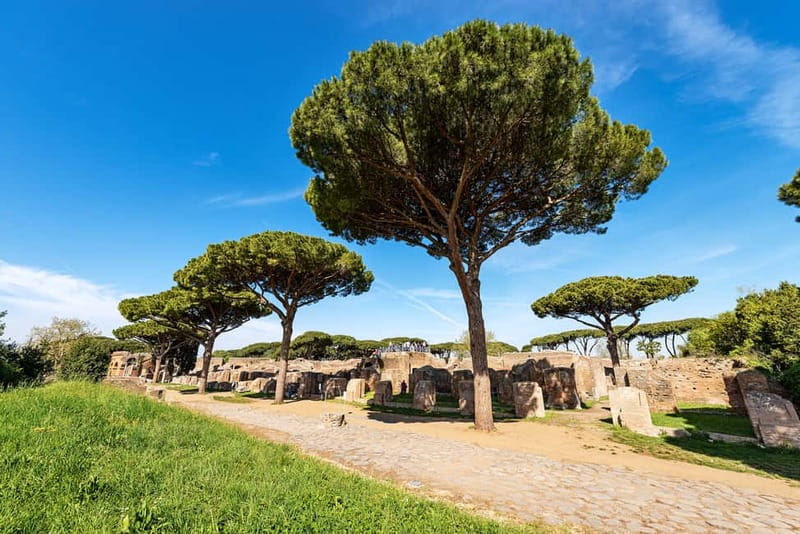
Ostia Antica was Rome’s ancient port city at the mouth of the Tiber. According to legend, King Ancus Marcius founded it in 620 BC as a Roman colony. Over time, silt from the river covered parts of the town, helping preserve buildings, decorative floors, and wall paintings.
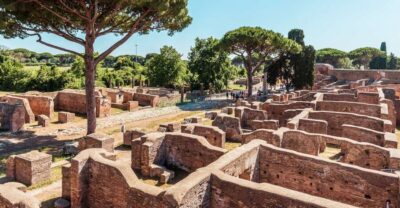
That preservation changes the experience. At the Colosseum, you see one enormous structure. At Ostia, you walk through a city. You can follow ancient streets, look into apartment buildings, enter villas, and compare private homes with public spaces. The site helps you picture how people lived, worked, washed, worshipped, and spent their free time.
I especially like that the remains are not limited to grand monuments. Two-story apartment blocks show that ancient Ostia housed more than wealthy families. The villas and baths add another layer, while the mosaics often hint at the purpose of a building. Even when the audio guide is not perfectly clear about your exact position, it can help you connect a plain-looking ruin with its former use.
The setting also gives you room to think. You are not simply moving from one famous photo stop to another. This is an archaeological park spread over a large area, and the slower pace is part of its appeal.
More Ostia Antica tours:
- Ancient Ostia Antica Semi-Private Day Trip from Rome by Train with Guide
★ 4.5 · 579 reviews - From Rome: Ostia Antica Guided Half-Day Trip by Train
★ 4.8 · 486 reviews - Horse Sanctuary & Trail Ride in Ostia Antica
★ 4.5 · 276 reviews
Entering the park and getting your bearings
You begin by exchanging your voucher at the Ostia Antica ticket office. Bring a valid passport or ID card, since identification is required. Transportation is not included, so you need to arrange your own way to the meeting point and to any of the additional sites you plan to visit.
Once inside, give yourself a moment to understand the layout. The paths are extensive and not always obvious. It is easy to lose track of where you are, particularly when you are concentrating on a mosaic or listening to the audio guide. A printed or digital map can save time, and you should keep an eye on your route rather than assuming every path leads directly to the next highlight.
The park is best approached as an open-air archaeological site, not a tightly timed museum. You may want to see every building, but that can turn the visit into a tiring march. Instead, pick a few areas that interest you most, then allow time for unplanned stops.
The ground is uneven. Sturdy shoes matter more here than stylish ones, and sandals with little support may become uncomfortable. Take water, particularly in warm weather. One practical detail worth knowing is that the site café can be hard to find, so do not rely on locating it quickly for a drink or meal.
Streets, apartments, and everyday Roman life
The city streets are where Ostia Antica makes its strongest impression. You can walk along the ancient routes and see how buildings once lined them. The remains include two-story apartment blocks, a useful reminder that Roman city life involved dense housing as well as grand villas.
These apartment buildings help correct the idea that ancient Rome was made only of temples, arenas, and palaces. Most people needed practical homes close to work and public services. At Ostia, the surviving structures let you think about that daily routine in a direct way.
The homes also show differences in wealth. Villas offer larger spaces and more decoration, while apartment blocks suggest a more crowded form of urban living. The contrast is valuable because it gives the park social range. You are not seeing one wealthy household repeated across the site.
Use the audio guide when a building looks difficult to interpret. Without context, a row of walls can blur into the next row of walls. With a clear explanation, you may begin to notice room layouts, entrances, decorative details, and the likely purpose of a space.
At the same time, keep your expectations realistic. The audio guide is not a personal guide who can point directly at the exact doorway or room you are standing beside. The site is large, and audio stops may take some effort to match with your location. Pause the recording, check your surroundings, and use a map when needed.
Mosaics and frescoes worth slowing down for
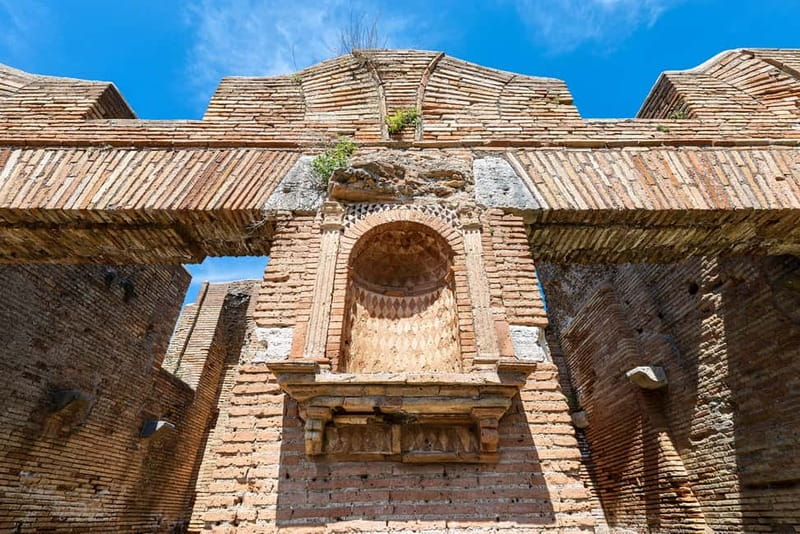
The mosaics are among the best reasons to visit. Instead of seeing only foundations, you may find patterned floors still in place, with designs that reveal the care once given to public and private interiors.
Frescoes add color to the stone remains. They help you imagine how rooms looked when the city was occupied, even if the surviving paint is partial. These details reward a slower visit. Walk past too quickly and Ostia can seem like a field of ruins. Stop and study the floor or wall, and the place becomes more specific.
I would make decorative work a priority even if you have limited time. A grand building may be impressive from a distance, but a small surviving mosaic can tell you just as much about taste, status, and daily life.
Protect your energy for these details. The park is large enough that an all-day walk is possible, and the most interesting floors and wall paintings are spread across the site. Comfortable shoes and water are not minor extras. They determine how long you can stay attentive.
More self-guided and audio tours in Rome:
- Rome: Colosseum & Forum with Audio Guide App -Optional Arena
★ 4.2 · 24,770 reviews - Rome: St. Peter’s Basilica & Dome Entry Ticket & Audio Tour
★ 4.2 · 7,537 reviews - Vatican & Sistine Chapel Ticket with Optional Audio Guide
★ 4.1 · 5,405 reviews - Rome: Colosseum, Forum, & Palatine Hill with Audio Guide
★ 4.3 · 4,591 reviews
Villas, baths, and the Procoio area
The seaside villas of Procoio add a different mood to the visit. These residences show the more comfortable side of ancient life, with larger spaces and a substantial bath complex.
The baths are important because they connect architecture with routine. Roman bathing was not simply a private act of washing. Bath complexes were major public spaces, and the surviving remains help you consider how much planning and construction went into them.
The villas also provide a useful contrast with the apartment blocks. You can compare compact urban housing with more spacious residences and see how varied the city could be. The experience is strongest when you resist rushing from one famous feature to the next and take time to compare these areas.
Keep in mind that the archaeological park does not present every building as a complete, restored structure. You will often need to imagine the missing upper floors, roofs, doors, and furnishings. That is where the audio guide earns its place, although you may need to work out which remains it is describing.
The amphitheater and its theatrical stone masks
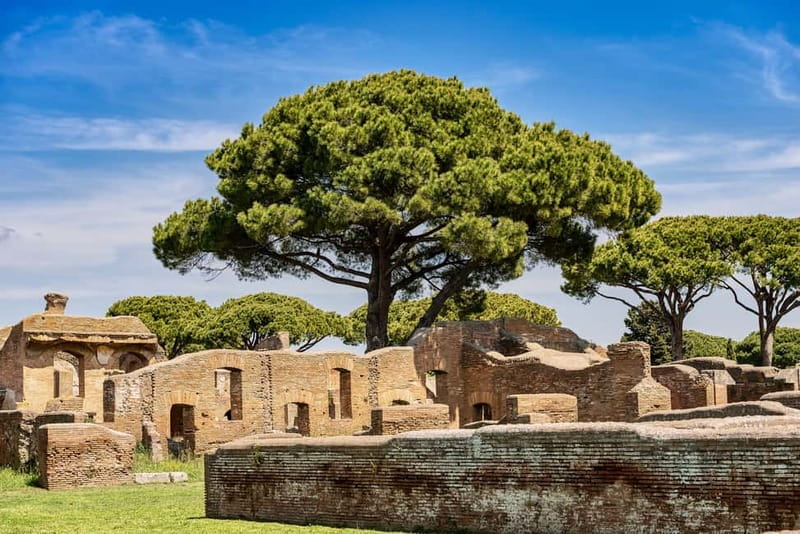
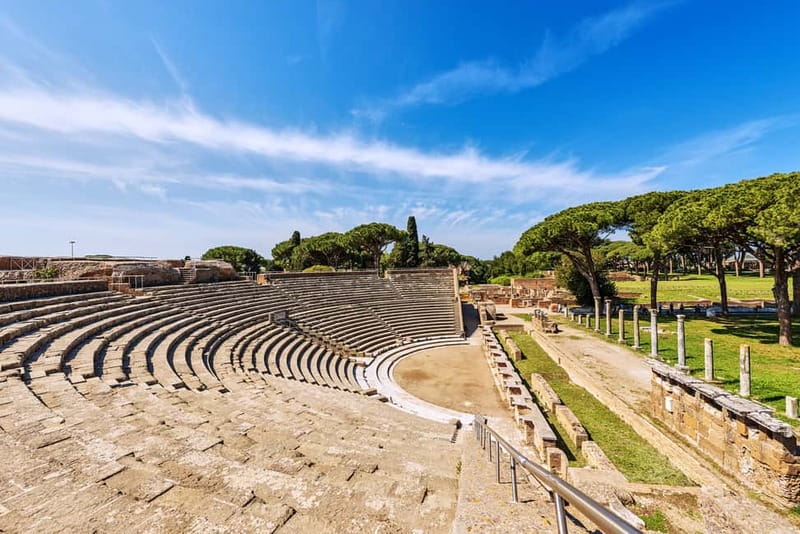
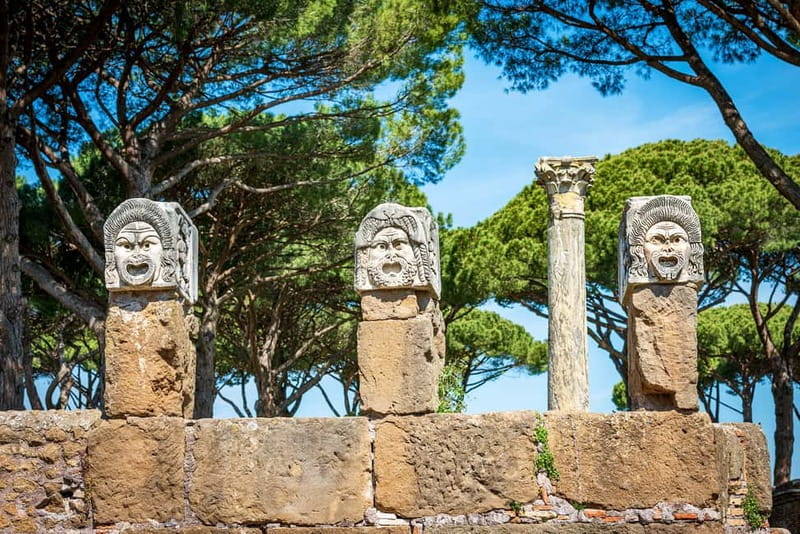
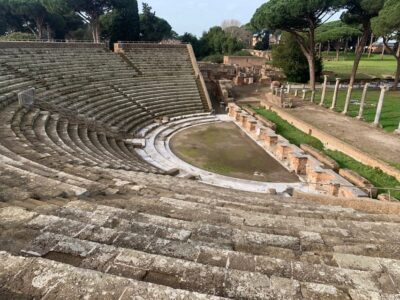
The amphitheater is another notable stop. Its seats and layout show how entertainment fitted into the city, while the stone theatrical masks lining the structure add a memorable visual detail.
These masks give the building a personality that bare ruins often lack. They also make the amphitheater easier to picture as a performance space rather than just an oval arrangement of stone.
If you are using the audio guide, this is a good place to stop and listen without walking. The park contains so many remains that it helps to give each major area a few quiet minutes. You will get more from the amphitheater by considering its setting and decoration than by treating it as another quick photograph.
What the five-site ticket adds
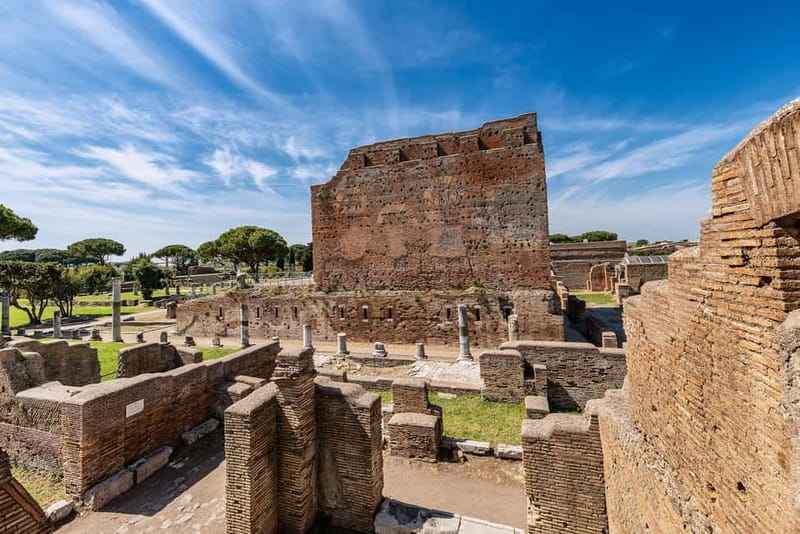
The admission is not limited to Ostia Antica. It also includes Julius II Castle, the Museum of Ships in Fiumicino, the Imperial Ports of Claudius and Trajan, and the Necropolis of Porto on Isola Sacra.
That broad coverage can make the $27 price useful, especially if you plan to visit more than one location. You are paying for access to a group of connected archaeological sites rather than one short attraction. The ticket is valid from the first activation, giving you time to spread the visits across several days.
There is an important wording issue in the supplied information. The main description says the ticket is valid for eight days, while the practical note says seven days. Since the ticket period begins with your first admission, check the current validity at the time of booking before planning a multi-day schedule.
The additional sites also require your own transportation. That matters when judging value. If you visit only Ostia Antica, the ticket may still be worthwhile for the size and quality of the park. If you can comfortably reach the castle, ship museum, ports, and necropolis during the validity period, the package offers more for your money.
You get one admission to each included site and museum. The ticket does not provide transportation or a private escort between them, so the flexibility comes with some planning responsibility.
The audio app and the postcard feature
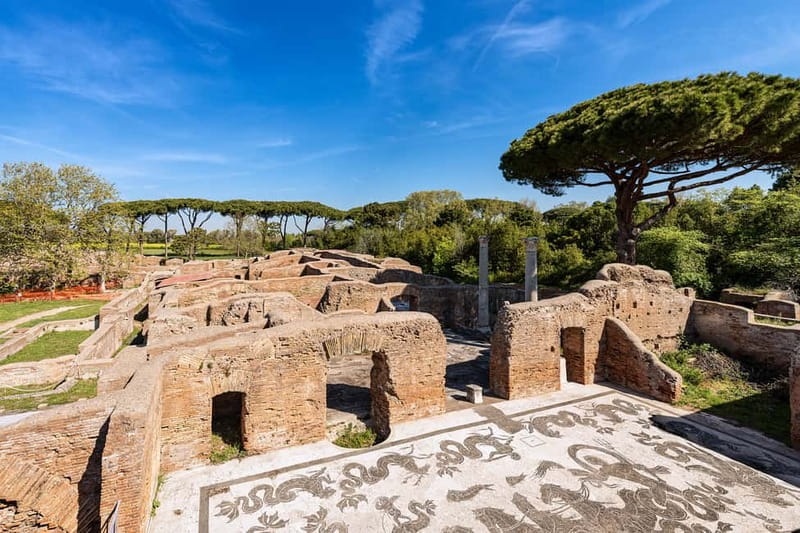
The digital audio guide is included, and it can make a major difference at a site this large. Ostia contains many walls and foundations that are hard to read without explanation. Audio commentary can help you understand what a building was used for and why a particular area matters.
Bring a fully charged smartphone. The phone is central to the experience, so a low battery could leave you without the audio guide when you need it most. Comfortable headphones may also make listening easier, though the supplied information specifically requires a charged smartphone rather than naming any particular equipment.
The guide is useful but not foolproof. Location tracking between individual sites can be difficult, so combine the audio with a map and your own attention. If the commentary seems out of place, stop and confirm your position instead of continuing blindly.
The postcard option is a small but unusual extra. You can turn one of your own digital photographs into a postcard and send it to friends or family anywhere in the world. It gives the visit a personal souvenir beyond the standard shop purchase, and an image of a mosaic, street, or amphitheater would make a fitting choice.
How much time should you allow?
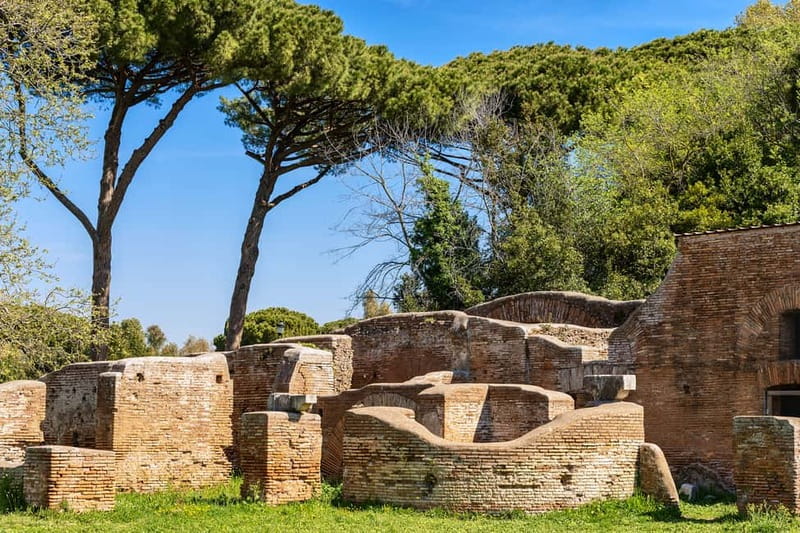
The ticket itself is valid for several days, but Ostia Antica deserves more than a rushed hour. The site is extensive, and one detailed visit can fill much of a day, especially if you stop for the mosaics, frescoes, apartments, villas, baths, and amphitheater.
You do not need to see every corner to enjoy it. A shorter visit can still work if you focus on the central streets and the best-preserved decorative remains. Still, do not underestimate the walking. The paths are uneven, the park is large, and it is easy to spend more time than planned once you start exploring.
If you are visiting the other included sites, use the ticket’s validity rather than forcing everything into one day. Spreading the visits out should make the archaeology easier to appreciate and reduce fatigue.
Who will enjoy this experience most?
I would recommend Ostia Antica to anyone who wants more than a single Roman monument. It suits people interested in architecture, archaeology, urban life, mosaics, and the practical details of how an ancient city worked.
It is also a good choice for independent sightseers. You are not tied to a group schedule, and you can spend ten minutes with a mosaic or move on from a building that does not interest you. The audio guide gives you structure without taking away that freedom.
Families and younger visitors may appreciate the open setting, but the long walks and uneven paths require planning. Anyone who has difficulty walking should consider the physical demands before booking, since the site paths are explicitly uneven.
If you prefer a short, highly organized tour with every stop clearly marked, this may feel frustrating. The site route is not always obvious, and the audio guide can be hard to match to individual locations. A map, patience, and a willingness to explore are part of the deal.
Is the $27 ticket good value?
At $27 per person, the price is reasonable if you make use of the archaeological park and at least one additional included site. Ostia Antica alone is extensive, visually rewarding, and capable of occupying a full day. The audio guide adds useful background without the cost of a private guide.
The value becomes less clear if you only want a brief look at the ruins or if you cannot reach the other sites. Transportation is not included, and you are responsible for getting to the ticket office and the additional locations.
I see the ticket as good value for a self-guided Rome day trip, especially if you enjoy taking your time. It is less suitable for someone seeking a polished, fixed-route excursion with transport included.
Should you book Ostia Antica?
Book it if you want to walk through a full Roman city, study well-preserved mosaics and frescoes, and explore without a group schedule. Bring ID, sturdy shoes, water, a charged smartphone, and a map.
Think twice if uneven paths, long walks, or self-guided navigation will spoil the day. Also confirm the seven-day or eight-day validity before you arrange visits to the other sites.
For independent visitors with a real interest in Roman life, this is one of the strongest archaeological experiences near Rome. It asks for time and energy, but it gives you far more than a quick ruin stop in return.
FAQ
Where does the experience begin?
You begin by exchanging your voucher at the Ostia Antica ticket office.
What is included in the ticket?
The ticket includes entry to Ostia Antica Archaeological Park, Julius II Castle, the Museum of Ships in Fiumicino, the Imperial Ports of Claudius and Trajan, and the Necropolis of Porto on Isola Sacra.
Is transportation included?
No. Transportation is not included, so you must arrange your own travel to the meeting point and to the additional sites.
How long is the ticket valid?
The main activity information says the ticket is valid for eight days from first activation. Another practical note says seven days, so confirm the exact validity when booking.
Can I visit the included sites more than once?
The ticket provides one admission to each included site and museum during its validity period.
Is an audio guide included?
Yes. A digital audio guide is included, and you need a charged smartphone to use it.
Do I need identification?
Yes. You must present a valid passport or ID card.
What should I wear?
Wear comfortable, sturdy shoes because the paths at the archaeological site are uneven. Bring water, especially if you plan a long visit.
Can I cancel the booking?
You can cancel up to 24 hours in advance for a full refund. A reserve-now, pay-later option is also available.
Newest Rome tours we have reviewed
- Private TikTok Video Making in Rome★ 5.0 · 7 reviews
- Assisi, Orvieto and Civita di Bagnoregio Full Day Tour from Rome★ 4.5 · 45 reviews
- Assisi & Saint Francis Path Tour from Rome★ 5.0 · 45 reviews
- Assisi and Cascia Private Day Tour from Rome with Lunch★ 5.0 · 10 reviews
- Art Class in the center of Rome!★ 4.0 · 4 reviews
- Art & Craft: Beer Tour with Street Art in Rome★ 4.5 · 6 reviews
- Arrival in Rome: Airport Transfer & Exclusive City Introduction★ 5.0 · 3 reviews
- From Rome: Private Day-Tour of Tuscany★ 5.0 · 16 reviews
Ostia Antica Tours, compared.
Ancient Ostia Antica Semi-Private Day Trip from Rome by Train with Guide
Read our review →

Browse the lists this tour appears in