
Reviewed · OSTIA ANTICA TOURS
Ancient Ostia Antica Semi-Private Day Trip from Rome by Train with Guide
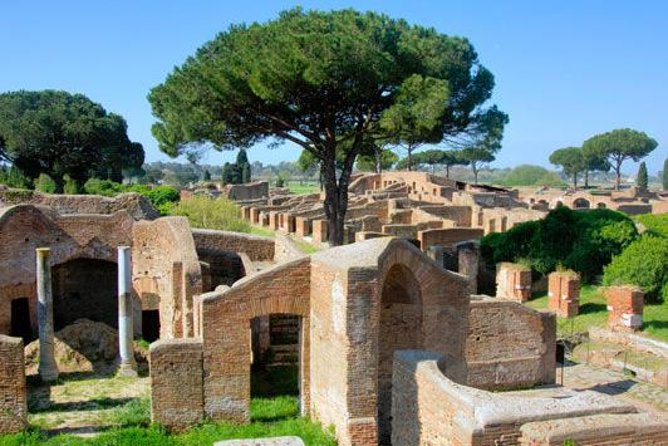
Ostia Antica gives you something Rome’s grand monuments rarely do: a street-level look at ordinary Roman life. You walk the Decumanus Maximus, pass shops and apartments, sit in a 3,500-seat amphitheater, and study the Baths of Neptune mosaic without Pompeii’s long journey or Rome’s thick crowds.
I like the simple train ride from Piramide, with your guide handling the tickets, and the small group of no more than 12 people. I also like the focus on the site’s most useful highlights, especially when the ruins could easily swallow a first-time visitor for an entire day.
The main caution is that the tour depends heavily on the individual guide. Alberto, Cat, Rob, Laura, and several others have earned warm praise for clear, lively explanations, but a few experiences describe dull delivery or poor attention to slower walkers. The site itself is excellent, but the guide can shape the day.
Key points to know before booking
- Ostia shows daily Roman life: See taverns, apartments, public baths, temples, offices, and streets rather than only imperial monuments.
- The train keeps the outing easy: Meet near Piramide Metro Station, travel with your guide, and return to the same Rome meeting point.
- You get about 2.5 hours on site: That is enough for the main sights, though not enough to inspect every corner of this large archaeological park.
- The group is capped at 12: You have a better chance to hear explanations and ask questions than on a large coach excursion.
- The $59.26 price covers the basics: Your guide, round-trip train ticket, and Ostia Antica admission are included.
- Plan for uneven ground and heat: The route includes walking, stairs, and transfers on and off the train, with limited help for serious mobility needs.
Why Ostia Antica feels different from Rome
Ostia began as the port city of ancient Rome and grew into a substantial town, with estimates in the itinerary placing its population above 100,000. Its importance came from workaday activity: shipping, trade, food, administration, religion, bathing, and housing.
That makes it a useful companion to the Colosseum, Roman Forum, and Pantheon. In central Rome, you often look at monuments built to impress emperors, senators, or gods. At Ostia, you see the places where people bought food, lived in cramped apartments, worked in shops, attended performances, and washed at public baths.
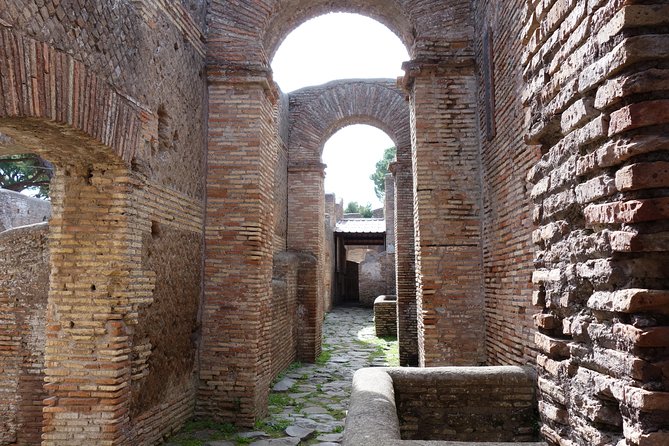
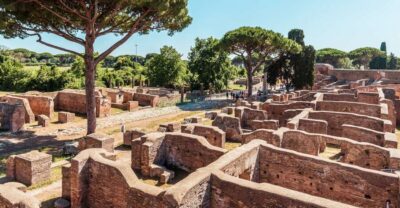
The ruins date as far back as the fourth century BC, and the site is praised for its level of preservation. You can still follow the shape of streets and buildings instead of viewing isolated fragments behind barriers. The result is less about one famous monument and more about understanding how a Roman town functioned.
The site is sometimes compared with Pompeii. That comparison helps explain the appeal, but Ostia is not a miniature version of Pompeii. It is a major archaeological park with its own port-city identity, and its location makes it a far easier half-day outing from Rome.
More Ostia Antica tours:
- From Rome: Ostia Antica Guided Half-Day Trip by Train
★ 4.8 · 486 reviews - Horse Sanctuary & Trail Ride in Ostia Antica
★ 4.5 · 276 reviews - Ostia Antica Semi Private Tour from Rome
★ 5.0 · 238 reviews
Meeting near Piramide and taking the train
The tour begins at P.za Ostiense, 11, near the Piramide Metro Station. This is not hotel pickup, so you need to make your own way to the meeting point and allow time to find the guide.
The guide supplies the round-trip train ticket before you leave Rome. That removes one small but useful piece of friction, especially if you are unfamiliar with the local rail system. You travel together to Ostia Antica, which lies southwest of Rome near the coast, then walk from the station to the archaeological area.
I like this part of the plan because the train makes Ostia feel like a real side trip rather than a packaged bus excursion. It also keeps the price low. At $59.26 per person, you are paying for the guide and admission as well as the rail connection, not simply for transportation.
The ride itself is not the main attraction, and the meeting point requires attention. One useful practical tip is to check your messages on the morning of the tour and arrive about 20 minutes early. The published meeting time and the precise instructions matter here, since a missed group departure could be hard to fix.
The tour ends back at the original meeting point in Rome. Since outside factors can occasionally extend the schedule, avoid booking a tightly timed museum visit or dinner immediately afterward.
Walking the Decumanus Maximus
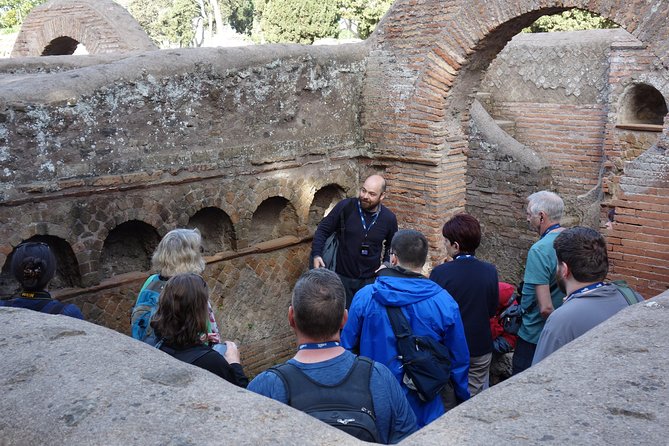
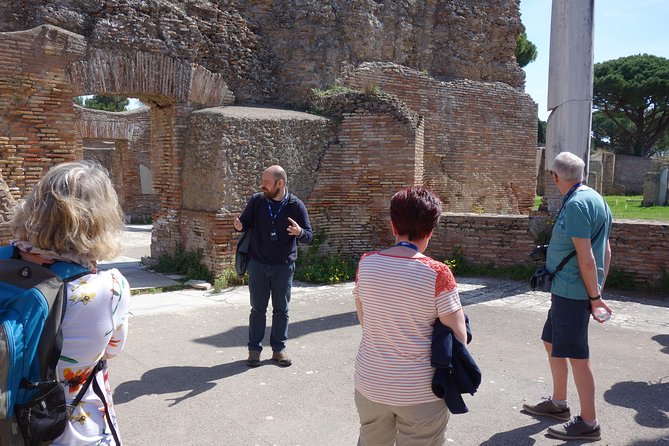
Your main visit lasts about 2.5 hours. The guide takes you along the Decumanus Maximus, the principal street through the ancient town, and uses the ruins to explain how Ostia worked.
This is where a guide adds real value. The remains can look like walls, paving stones, and partial rooms if you do not know what you are seeing. A good guide points out the purpose of buildings and connects the physical evidence to daily routines. Alberto, Rob, Cat, Laura, and other named guides have been especially praised for making Roman life understandable without turning the tour into a lecture.
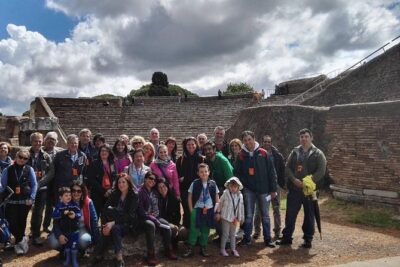
The small group helps. With a maximum of 12 people, you should be close enough to hear and ask questions. The experience is still a walking tour, not a private archaeological seminar, so the guide will choose a route and pace that works for the group.
The tradeoff is time. Ostia Antica is large, and 2.5 hours cannot cover every street, building, and museum display. The tour aims at the major sights, then may give you the option to leave with the group or continue looking around on your own. If you have a serious interest in ancient towns, you may want more time after the formal walk.
The Baths of Neptune and their sea-god mosaic
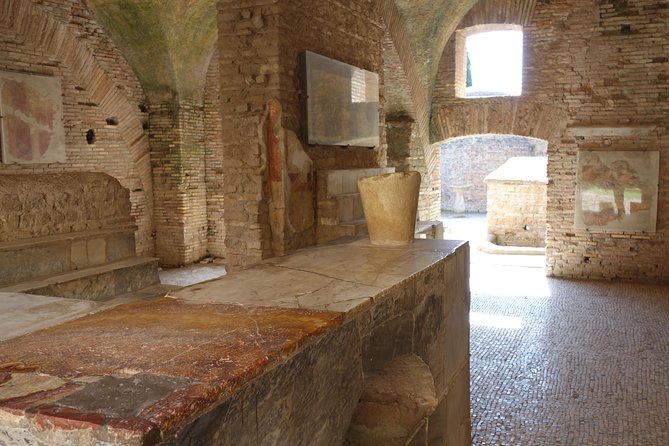
The Baths of Neptune are among the clearest examples of Ostia’s public side. Here you see the remains of a bathing complex, one of the central institutions of Roman urban life.
The best-known detail is the mosaic showing Neptune, the Roman god of the sea, behind a four-horse chariot. It is an unusually memorable stop because it links the decoration to Ostia’s identity as a port. Your guide can help you read the image as more than attractive floor art and explain why this kind of public building mattered to the town.
The baths are also a good reminder that ancient cities were not only temples and political buildings. Bathing, exercise, conversation, and social contact all took place in shared public spaces. If your Rome sightseeing has focused on emperors and churches, this section helps balance the picture.
Shade may be limited, depending on the route and season. One guide was praised for finding shady places to stop on a very hot day, but you should still bring water, wear a hat, and expect sun on exposed paths.
More day trips from Rome:
- From Rome: Pompeii, Amalfi Coast, and Sorrento Day Trip
★ 4.6 · 7,031 reviews - From Rome: Pompeii, Amalfi Coast and Positano Day Trip
★ 4.6 · 6,620 reviews - Pompeii, Amalfi Coast and Positano Day Trip from Rome
★ 4.5 · 6,250 reviews - Pompeii and Mount Vesuvius Day Trip from Rome with Pizza Lunch
★ 4.5 · 6,151 reviews
The amphitheater, shops, and apartments
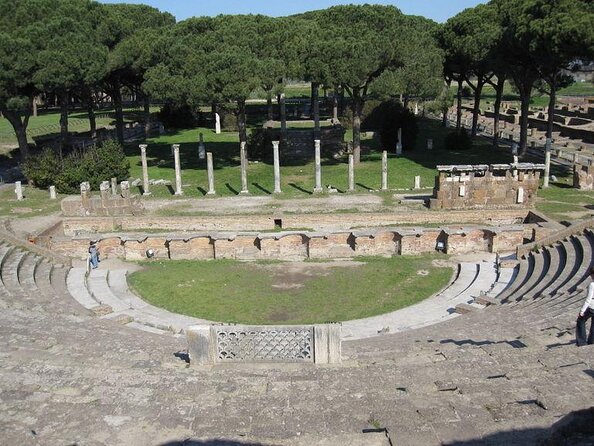
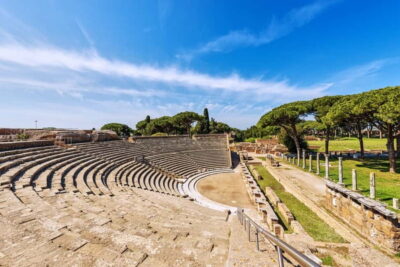
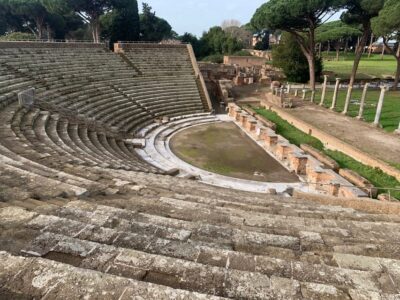
The amphitheater dates to 12 BC and was built to hold about 3,500 spectators. You can take a seat and look across the surviving structure, which makes this stop more tangible than simply viewing a photograph or a reconstructed plan.
It is not the Colosseum, and that is part of its appeal. The smaller scale helps you picture a local audience gathering in its own town. The guide can also explain how entertainment fit into the wider life of Ostia without letting the amphitheater overshadow the rest of the settlement.
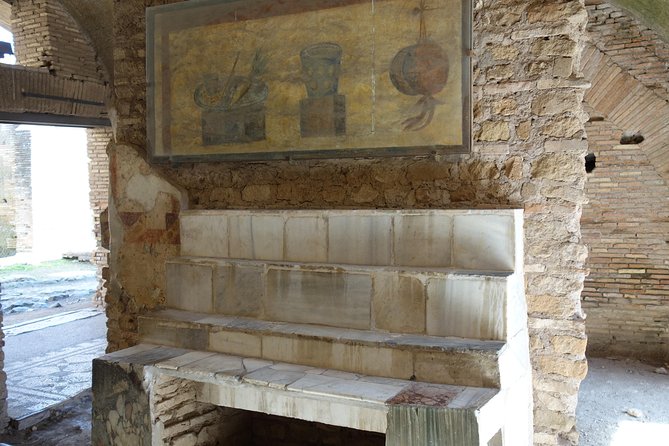
After that, the route moves among smaller buildings, including shops and living quarters. These areas often provide the most useful connection with the past. You can see how the town was organized around work and home, not only around grand civic projects.
The Forum of the Corporations and the Collegiate Temple add another layer. They point toward Ostia’s commercial and religious roles, while taverns and public buildings show how many kinds of activity took place within walking distance. The appeal is not one spectacular object. It is the chance to walk through a whole town with its working parts still visible.
What the guide can add, and where the tour can fall short
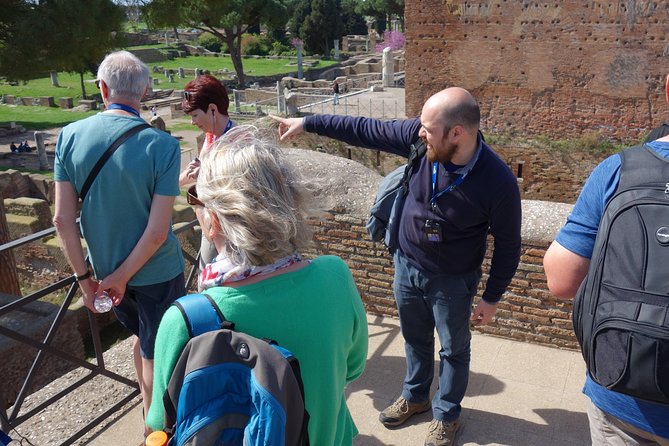
The strongest part of this experience is the interpretation. A well-prepared guide can explain what happened in a room, how a building served its users, and why a mosaic or street plan matters. Alberto is praised for setting a good pace, mixing humor with historical detail, answering questions, and giving people the choice to stay longer or return to Rome. Cat is praised for warmth and clear organization, while Rob is noted for helping the group stay comfortable in hot weather.
Several guides are named in positive experiences, including Barbara, Laura Luongo, Liv, Eduardo, Roberto, Alfredo, and Caterina. That range also shows why you should not book this tour expecting one specific guide unless the operator confirms it. The standard is not perfectly uniform.
A few problems deserve plain mention. One scheduled group had its guide delayed and was offered a refund or rescheduling. Other experiences describe a guide whose delivery felt flat, and one person with a knee problem felt rushed and overlooked. That does not make the tour unsuitable for everyone with limited mobility, but the published advice is important: you need moderate physical fitness, and the route includes stairs, uneven ground, and train transfers.
If you use a cane, have knee trouble, or need extra time, contact the operator before booking and explain your needs clearly. The tour has a fixed duration and a group pace. You should not assume the guide can provide a slow, customized route.
Is $59.26 a fair price?
For Rome, $59.26 is a reasonable price for a four-hour guided outing. The cost includes the English-speaking guide, Ostia Antica admission, and round-trip train tickets. You avoid paying separately at the entrance or figuring out the rail connection on your own.
The value depends on how much help you want. Independent travel to Ostia is possible, and the train ride is described as easy. You can also purchase an audio guide at the archaeological site. If you enjoy reading signs, exploring at your own pace, and spending several hours on one ruin, doing it yourself could offer more freedom.
The guided option is better suited to you if you want the main sights explained in a logical order. It also helps if you are visiting Rome for a short time and do not want to spend hours planning the route. The guide identifies the amphitheater, Baths of Neptune, Forum of the Corporations, Collegiate Temple, shops, baths, and living quarters within a limited window.
The price is less attractive if you want a full-day archaeological study. Four hours includes the Rome meeting, rail travel, walking, and the return trip, leaving about 2.5 hours inside the park. You will get a strong introduction, not an exhaustive inspection.
Who will enjoy this half-day outing
I would recommend it most to people who want ancient history connected to normal life. Families can benefit because the amphitheater, open streets, and stories about homes and shops offer more variety than a sequence of formal monuments. One guide was specifically praised for keeping a child engaged.
It also works well for teenagers who are tired of Rome’s packed center. The relaxed setting and train journey provide a change of pace, and the archaeological park can be followed by a separate trip toward the beach, as long as you arrange that on your own after the tour.
This is a strong choice if Pompeii is not practical. Ostia is closer to Rome and gives you a preserved Roman town without committing to a much longer excursion. It is also appealing if you have already seen the Colosseum and Forum and want a broader sense of how Romans lived beyond the imperial center.
I would be more cautious if you dislike walking on irregular surfaces, need frequent rest stops, or want total independence. The park is extensive, the route may be sunny, and the group must keep moving to fit the schedule.
Practical details that can make the day easier
Wear comfortable walking shoes. The route involves uneven ground and stairs, and the archaeological park is large enough that poor footwear will quickly become a nuisance.
Bring water, particularly in hot weather. Guides may point out places to refill bottles, but you should not depend on finding a convenient stop exactly when you need one. Sun protection is also sensible because some explanatory stops may be outdoors.
Bring identification for anyone under 18. Children may be asked to show an ID card at the entrance.
The tour is offered in English and uses a mobile ticket. Confirmation arrives at booking, and public transportation is nearby at the Rome meeting point. Free cancellation is available up to 24 hours before the start time for a full refund. Cancellations or changes made within 24 hours are not accepted for a refund, and poor weather or failure to reach the minimum group size can lead to a rescheduled date or full refund.
Should you book Ancient Ostia Antica by train?
Book it if you want an efficient, guided introduction to a major Roman port town and prefer daily life to grand imperial spectacle. The train connection, included admission, capped group size, and focused route make the outing easy to fit into a Rome stay.
I would choose it over Pompeii when you have only half a day, and I would choose it over an audio guide if you want to ask questions and have someone point out the meaning of the ruins. The 4.7 rating from 579 reviews and 95 percent recommendation rate reflect a very strong overall result, but guide quality can vary.
If you are comfortable walking and arrive early at Piramide, this is one of the better-value ways to see a less crowded side of ancient Rome. If you need a slow pace or want to explore every building, go independently or arrange a more flexible private visit instead.
FAQ
Where does the Ancient Ostia tour begin?
It begins at P.za Ostiense, 11, 00154 Roma RM, near the Piramide Metro Station. Hotel pickup and drop-off are not included.
How long does the experience last?
The full experience lasts about four hours. About 2.5 hours are spent walking through the Ostia Antica archaeological site, with the remaining time used for meeting, train travel, and returning to Rome.
Is transportation included?
Yes. The English-speaking guide provides a train ticket for the trip from Rome to Ostia Antica and the return journey.
How large is the group?
The tour has a maximum of 12 people. This is described as a semi-private group experience.
What does the tour include at Ostia Antica?
Admission to the archaeological site is included. The route covers major sights such as the Decumanus Maximus, Baths of Neptune, amphitheater, Forum of the Corporations, Collegiate Temple, shops, apartments, and public baths.
Can I cancel for a refund?
You can cancel at least 24 hours before the start time for a full refund. Changes or cancellations made less than 24 hours before the start time are not accepted, and weather or minimum-group cancellations may result in another date or a full refund.
Newest Rome tours we have reviewed
- Private TikTok Video Making in Rome★ 5.0 · 7 reviews
- Assisi, Orvieto and Civita di Bagnoregio Full Day Tour from Rome★ 4.5 · 45 reviews
- Assisi & Saint Francis Path Tour from Rome★ 5.0 · 45 reviews
- Assisi and Cascia Private Day Tour from Rome with Lunch★ 5.0 · 10 reviews
- Art Class in the center of Rome!★ 4.0 · 4 reviews
- Art & Craft: Beer Tour with Street Art in Rome★ 4.5 · 6 reviews
- Arrival in Rome: Airport Transfer & Exclusive City Introduction★ 5.0 · 3 reviews
- From Rome: Private Day-Tour of Tuscany★ 5.0 · 16 reviews
Ostia Antica Tours, compared.

Ostia Antica Archaeological Park Ticket & Audio App
Read our review →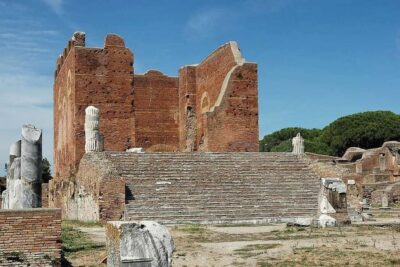
Browse the lists this tour appears in