
Reviewed · OSTIA ANTICA TOURS
Ostia Antica Small Group Tour
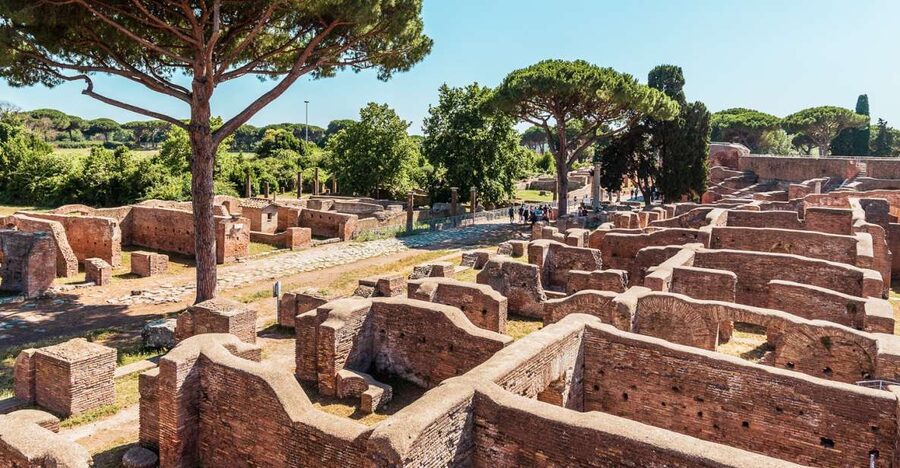
Ostia Antica gives you a clearer picture of ordinary Roman life than many of Rome’s grand monuments. This ancient port city has a theater, merchant offices, public baths, apartment buildings, and private homes, all spread across a quiet archaeological park. I like the small groups, capped at 10, and the easy local train ride with round-trip tickets included. I also like that you can stay after the guided tour and look around on your own.
The main catch is the amount of walking. The site is large, much of it is outdoors, and shade can be limited on hot days. Bring water, sunscreen, a hat, and good shoes. This tour is not suitable for wheelchair users or people with reduced mobility.
Key points to know before booking
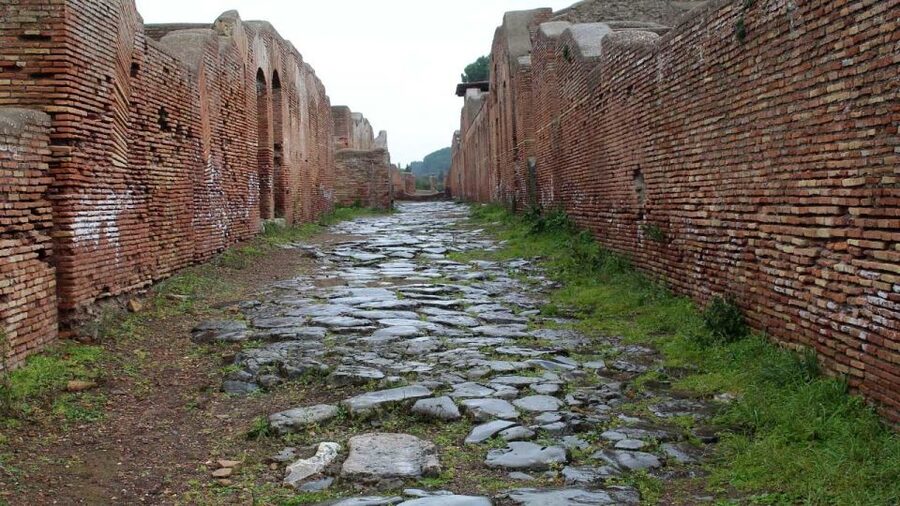
- A real ancient city, not just a single monument: See streets, shops, baths, temples, offices, theaters, and homes across a large archaeological park.
- The train is part of the adventure: Meet at Roma Ostia Lido Train Station and travel together to the ruins, with your return ticket included.
- Theater, guild square, and baths make the route memorable: These stops show how entertainment, trade, and daily hygiene worked in Roman society.
- Guides add the human details: Sonia, Sarah, Antonio, Claudia, and Kathleen have all led highly praised visits, with stories that help you picture life here.
- You may have extra time afterward: The return ticket lets you leave with the group or remain at the site and continue exploring.
- Expect a relaxed half-day outdoors: The four-hour schedule works well as a break from Rome’s crowded center, but it requires steady walking.
Why Ostia Antica is worth leaving central Rome
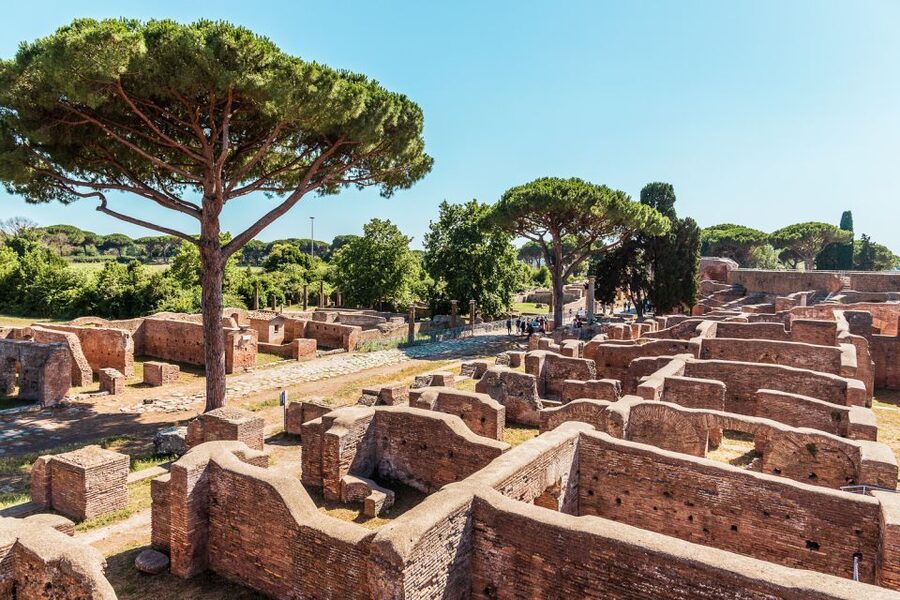
Rome offers spectacular ruins, but many of its best-known ancient sites are crowded and heavily controlled. Ostia Antica feels different. You walk through the remains of a working port city rather than simply viewing one famous building.
Ostia served as Rome’s port and commercial center. Its location near the Tiber helped connect the capital with goods and people moving around the Roman world. After the Roman Empire declined, the city was abandoned. Changes in the river left parts of it covered by silt and mud, which helped protect the remains until excavation began.
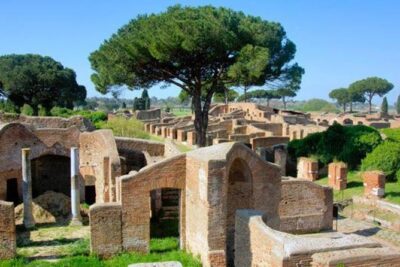
That history gives the site its special appeal. You are not only looking at columns and broken walls. You can follow streets, enter buildings, and see how different parts of the city fitted together. The scale also matters. The park is broad enough to give you a sense of urban life, but it is usually much calmer than Rome’s central attractions.
I would choose this tour if you have already seen some of Rome’s major monuments and want something more spacious and less rushed. It also suits anyone curious about everyday Roman life, not just emperors and monumental architecture.
More Ostia Antica tours:
- Ancient Ostia Antica Semi-Private Day Trip from Rome by Train with Guide
★ 4.5 · 579 reviews - From Rome: Ostia Antica Guided Half-Day Trip by Train
★ 4.8 · 486 reviews - Horse Sanctuary & Trail Ride in Ostia Antica
★ 4.5 · 276 reviews
Meeting at Ostiense Station and taking the local train
The tour begins in front of Roma Ostia Lido Train Station at Piazzale Ostiense, 9. You meet your guide there and travel by local train to the archaeological park. The round-trip train ticket is included, so you do not need to work out that part of the journey yourself.
This is a useful feature for visitors who are not yet comfortable with Italian public transport. One visitor specifically appreciated having the train tickets handled and being shown how to take the local service. The train also makes the trip feel like a genuine outing from Rome instead of a sealed coach excursion.
Allow enough time to reach the meeting point. Hotel pickup and drop-off are not included, and the tour does not begin at your hotel. Once you arrive, look for the guide at the stated station meeting point rather than heading directly to the ruins.
The ride is part of the four-hour schedule, so the main visit is not an all-day affair. That makes Ostia Antica easier to fit into a Rome itinerary than a longer day trip. You still get a substantial visit without giving up an entire day.
The ancient theater and the city’s public life
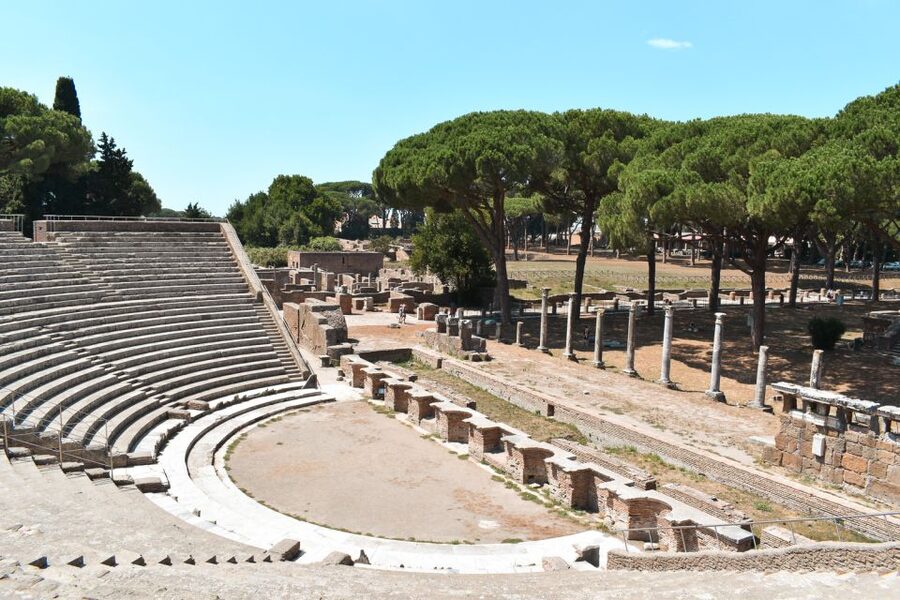
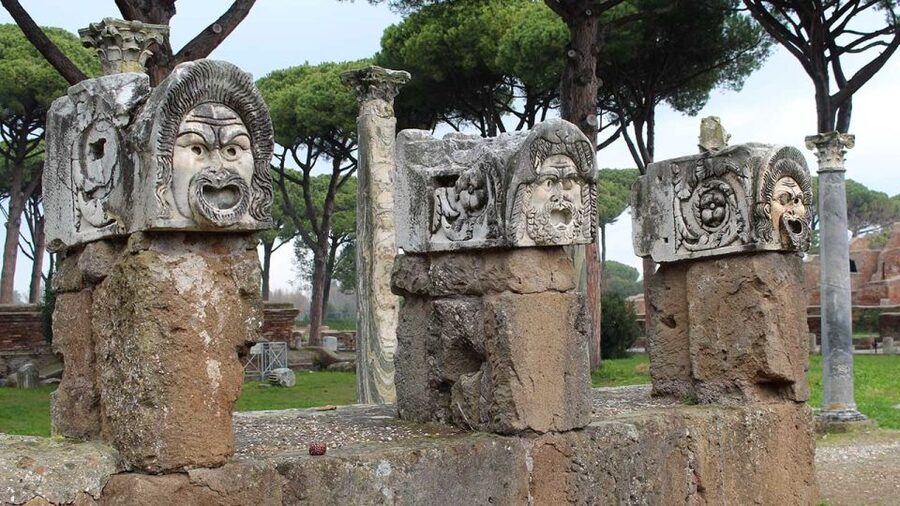
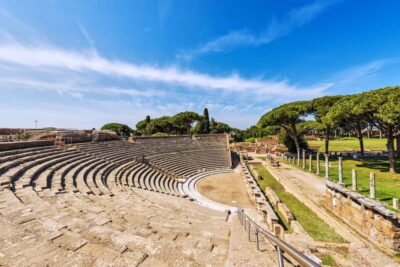
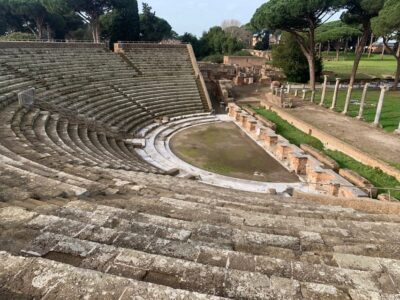
The outdoor theater is one of the first major sights that gives the old city a sense of scale. It once hosted plays and even gladiator fights. The surviving structure helps you picture Ostia as a place where people gathered for entertainment, not simply a storage and shipping center.
Your guide can explain how the theater fitted into the city’s social life. This is where a small group helps. With no more than 10 people, it is easier to hear the explanation and ask a question without interrupting a large procession.
Do not expect a complete modern theater or a polished monument. Ostia is an archaeological site, and many buildings survive as partial structures. That is part of the appeal, but you need some imagination. A guide such as Sonia or Sarah can fill in the missing pieces with stories about Roman life and help you notice details you might pass without context.
The theater also offers a useful introduction to the site. You begin to understand that Ostia was a functioning city with leisure, commerce, religion, and housing all packed into one urban setting.
The Square of the Guilds and Ostia’s working port
The Square of the Guilds is one of the most revealing stops. This was a commercial area where ship owners and merchants sought business. It shows the practical side of Ostia, the place where trade was organized and fortunes were made.
For me, this is one of the strongest reasons to visit Ostia instead of seeing only Rome’s imperial center. The square connects the ruins to actual work. You can think about the people handling cargo, arranging shipments, and running businesses that helped supply Rome.
A guide makes the square easier to read. Without explanation, you may see an open area surrounded by fragments of walls and wonder what happened there. With context, the space becomes part of a larger story about shipping, trade, and the relationship between Rome and its port.
The tour does not present Ostia as a silent collection of stones. It shows you the city as a place where people worked, negotiated, ate, washed, worshipped, and slept. That everyday focus is what makes the visit feel different from a standard tour of imperial Rome.
Same city, a completely different half-day:
- Vatican Museums & Sistine Chapel Tour with Optional Basilica
★ 4.3 · 67,413 reviews - Vatican Museums, Sistine Chapel & St Peter’s Basilica Guided Tour
★ 4.5 · 39,149 reviews - Rome: Colosseum, Palatine Hill and Roman Forum Guided Tour
★ 4.8 · 32,814 reviews - Rome: Guided Tour of Colosseum, Roman Forum & Palatine Hill
★ 4.7 · 27,897 reviews
The Baths of Neptune and Roman leisure
The Baths of Neptune show how public bathing shaped Roman social life. These were not simply places to wash. People lounged in pools, exercised, and cleaned themselves with olive oil.
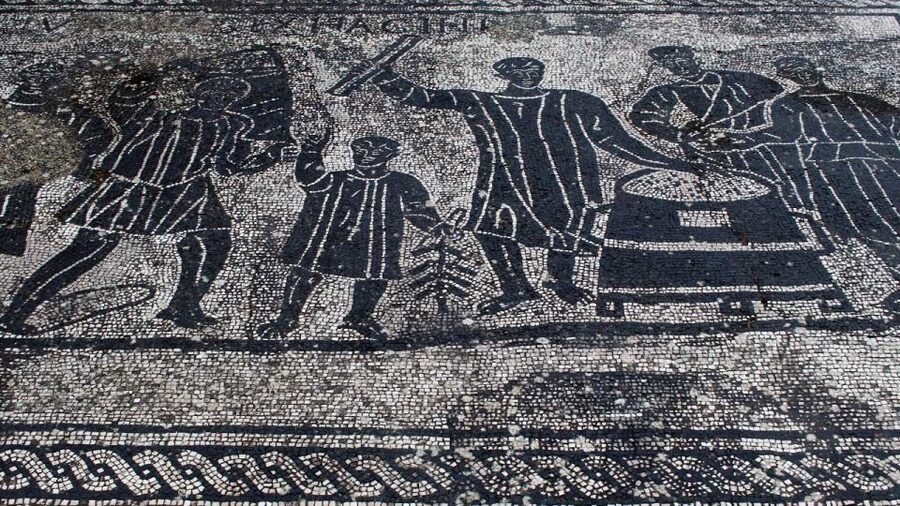
The stop also gives you a chance to see Roman decoration and design. The tour description highlights the Roman-style features of the baths, and the site is known for its surviving mosaics and architectural remains. You should expect ruins rather than a fully preserved spa, but the layout helps you understand how bathing could be both practical and social.
Your guide can also explain the bathing routine in a way that makes the buildings easier to picture. Olive oil, exercise, pools, and conversation all formed part of the visit. It was a daily public activity, closer to a social center than a quick trip to a modern shower.
The baths are another place where the outdoor setting affects your visit. You will be walking between buildings and standing while listening. On a hot day, water, a hat, and sunscreen are not optional extras.
The House of Diana and private Roman life
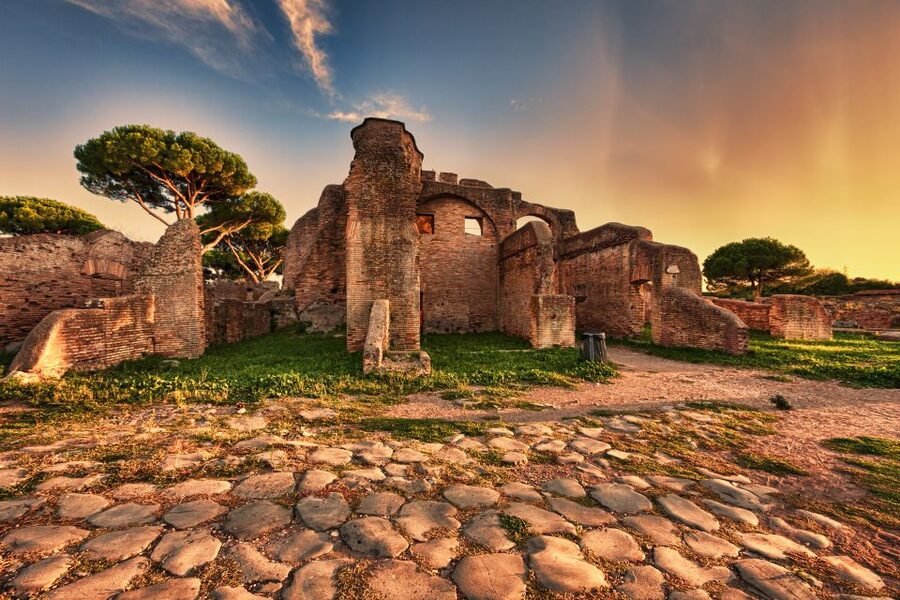
The House of Diana offers a change of scale. After the theater, commercial square, and public baths, you move toward a building connected with domestic life. The stop helps you consider where people lived and how the city looked after the workday ended.
It is described as a surprisingly sophisticated home, and that detail matters. Ostia was not made up only of warehouses and public buildings. People had private spaces, homes, and routines. Seeing the House of Diana helps balance the grand public parts of the tour with a more personal view of the city.
You may find that the remains require more imagination here than at a well-preserved monument. That is where the guide’s storytelling earns its keep. Sarah has been praised for making the ruins feel personal and for adding details about Roman life. Sonia has also been singled out for explaining the site with energy and warmth.
The route is not designed as an exhaustive survey of every building. Instead, the guide leads you to important highlights and explains why they matter. That approach works well if you want a clear half-day introduction rather than a specialist archaeological study.
Why the guide matters at such a large site
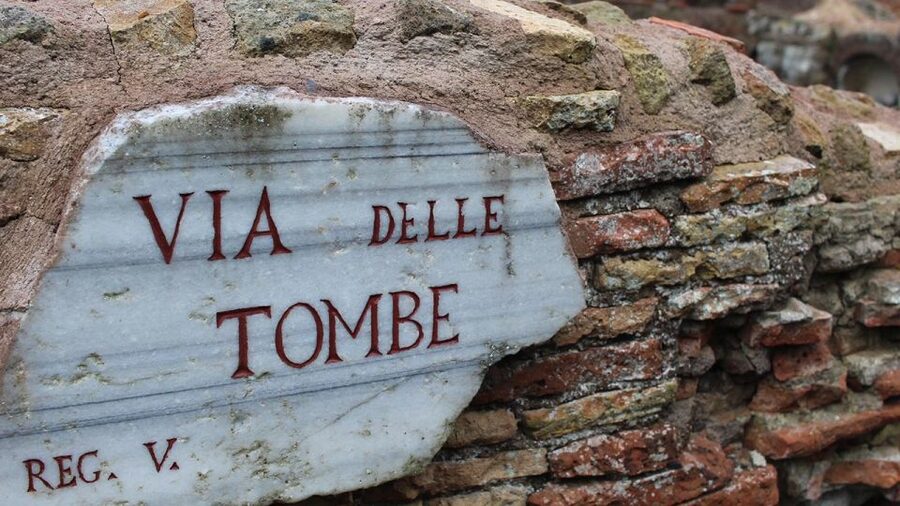
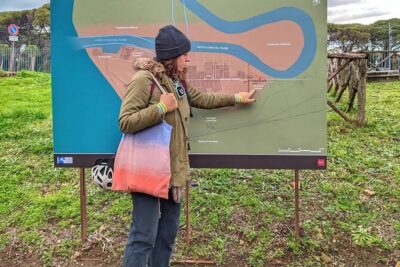
Ostia Antica is extensive, and it can be confusing. The park has signs and an audiobook tour, but the range of streets and ruins can make self-guided sightseeing slow. A live guide helps you find the main points without spending your visit studying a map.
The strongest praise for this tour centers on the guides. Sonia is described as friendly, enthusiastic, and full of useful details. Sarah has been praised for her stories, easygoing pace, and ability to make the site feel alive. Antonio helped with the train and offered extra Roman history along the ride. Claudia provided a flexible visit for a solo participant, and Kathleen was praised for knowing the site’s less obvious corners.
Those individual names are useful, but guide assignments can change. You should book for the format and setting rather than expecting one particular person. The shared quality is the chance to ask questions and receive a spoken explanation instead of moving through the ruins alone.
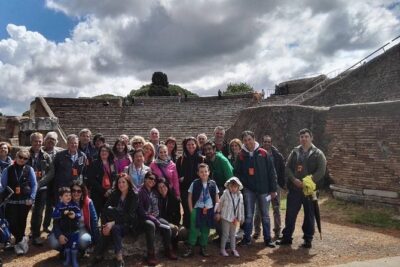
The small-group limit is important here. Some departures have ended up with only two or three people, and one booking became a private tour because no other participants joined. That cannot be guaranteed, but a maximum of 10 still gives you a more personal visit than a large coach group.
Pace, walking, and the practical side of the visit
The tour lasts four hours, including the train journey and the archaeological visit. The pace is generally relaxed, with enough time to listen and look rather than race from one ruin to the next.
You should still prepare for a lot of walking. The site is spread out, and the ground may be uneven. Comfortable shoes are specifically required, and the tour is not recommended for people with reduced mobility or wheelchair users.
Wear clothing suited to an outdoor archaeological park. A hat, sunscreen, and water are especially important on warm days. Food and drinks are not included, and large bags or luggage are not allowed, so leave suitcases at your accommodation.
The tour is available in English, Spanish, or French. When booking, check the available starting time and language. The small group format and live guide are the main reasons to choose this option over simply visiting with the park’s signs or audiobook.
What the $94 price includes
At $94 per person, this is not the cheapest way to spend half a day in Rome. The price includes the round-trip train ticket, skip-the-line admission through a separate entrance, and a licensed guide. The real question is how much those elements are worth to you.
The train ticket is convenient, especially if Italian public transport is unfamiliar. Skip-the-line entry saves time, though the site is often far less crowded than Rome’s most famous attractions. The guide is the largest part of the value because Ostia’s size and incomplete ruins can make it hard to know what you are seeing.
If you enjoy researching ancient sites and prefer moving at your own pace, you may not need this tour. The park has signs and an audiobook option. If you want a strong overview, help with transport, and stories that connect the buildings to Roman life, the price is easier to justify.
The option to stay after the guided portion adds value. You can return with the group or remain longer and explore independently, using the included return ticket later. Confirm the practical timing with your guide on the day, but the flexibility is a welcome part of the format.
Who should book this Ostia Antica tour?
I would recommend it to you if you want a break from central Rome’s crowds, enjoy archaeology, and like having a guide explain what you are seeing. It is especially good for people who want more than a quick photo stop. The theater, guild square, baths, and home work together to show a complete city.
It also suits first-time public transport users who would rather not figure out the route alone. The train trip is straightforward once you are with the guide, and the included ticket removes one small task.
I would be cautious if you dislike outdoor walking, have mobility limitations, or want a short visit with lots of indoor shelter. Ostia Antica is exposed and spread out. It is also less visually intact than Pompeii in some areas, so you need to enjoy interpreting ruins rather than expecting every building to be complete.
Should you book it?
Book this tour if you want to see ancient Rome beyond the Colosseum and Forum. Ostia Antica offers a quieter, more everyday view of Roman society, and the guide helps you understand the site without wasting time getting lost.
The four-hour length, train ticket, small group, and chance to stay afterward create a useful balance of structure and freedom. I would choose it for a Rome itinerary that already includes the major monuments and needs one half-day with fewer crowds.
Skip it if you cannot manage extensive walking or if you prefer exploring archaeological sites entirely alone. For everyone else, $94 is a reasonable price for transport, admission, and a guide who can turn a large field of ruins into a readable ancient city.
FAQ
Where does the Ostia Antica tour meet?
The meeting point is in front of Roma Ostia Lido Train Station at Piazzale Ostiense, 9, 00154 Roma RM, Italy.
How long does the tour last?
The tour lasts four hours, including the train journey and the guided visit.
Is transportation included?
Yes. A round-trip local train ticket to Ostia Antica is included.
Is admission to the archaeological park included?
Yes. The price includes skip-the-line admission through a separate entrance.
How large is the group?
The tour is limited to 10 participants. Some departures may be smaller, depending on bookings.
Which languages are available?
The live guide is available in English, Spanish, or French.
Can I stay at Ostia Antica after the guided tour?
Yes. You have the option to remain at the site and explore further, with the return train ticket included.
What should I bring?
Bring a passport or ID card and comfortable shoes. Water, sunscreen, and a hat are also sensible for the outdoor site.
Is the tour suitable for wheelchair users?
No. The tour is not recommended for wheelchair users or people with reduced mobility.
Newest Rome tours we have reviewed
- Private TikTok Video Making in Rome★ 5.0 · 7 reviews
- Assisi, Orvieto and Civita di Bagnoregio Full Day Tour from Rome★ 4.5 · 45 reviews
- Assisi & Saint Francis Path Tour from Rome★ 5.0 · 45 reviews
- Assisi and Cascia Private Day Tour from Rome with Lunch★ 5.0 · 10 reviews
- Art Class in the center of Rome!★ 4.0 · 4 reviews
- Art & Craft: Beer Tour with Street Art in Rome★ 4.5 · 6 reviews
- Arrival in Rome: Airport Transfer & Exclusive City Introduction★ 5.0 · 3 reviews
- From Rome: Private Day-Tour of Tuscany★ 5.0 · 16 reviews
Ostia Antica Tours, compared.
Ancient Ostia Antica Semi-Private Day Trip from Rome by Train with Guide
Read our review →
Ostia Antica Archaeological Park Ticket & Audio App
Read our review →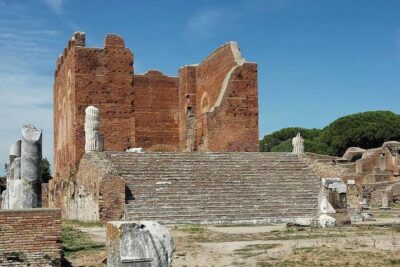
Browse the lists this tour appears in