
Reviewed · CARAVAGGIO AND BAROQUE ART TOURS
Guided Walking Tour of Rome: Top Sights & Baroque Treasures
Rome’s great sights are packed into a surprisingly walkable center, and this two-hour route gives you a useful first look without burying you under dates and names. You’ll move through busy squares, quieter lanes, churches, fountains, and grand civic buildings, with the stories filled in along the way.
I like the stop inside St. Ignatius of Loyola, where the painted ceiling creates a wonderful surprise in a church that many first-time visitors miss. I also like the small-group limit of 15, which matters in Rome’s noisy streets. The main drawback is that the Pantheon is viewed from outside, and the price does not include entry.
Key points to know before you book
- A strong first-day route: Trevi Fountain, the Pantheon, St. Ignatius Church, the Four Rivers Fountain, and Piazza Navona give you a quick map of central Rome.
- Guides with different strengths: Dan is praised for Italian art and history, Anna for patient answers, Domenica for clear timing and humor, and Paulina for handling family groups well.
- The church visit is the surprise: You spend only 5 to 10 minutes inside St. Ignatius, but its ceiling frescoes give the walk an extra artistic lift.
- Mostly outdoor sightseeing: The Pantheon, Palazzo Venezia, and the large palace buildings are seen from outside, so plan another visit if you want interiors.
- Good value at $30.25: The price is reasonable for a guided introduction to several major sights, especially if this is your first day in Rome.
- Allow for real walking: The route covers a compact area, but Rome’s crowds, uneven streets, and frequent stops make comfortable shoes important.
Why this short Rome walk works well
This is the kind of tour I’d use to get oriented at the start of a Rome visit. In two hours, you see several famous landmarks and learn how the historic center fits together. You are not spending half the day inside one museum, and you are not simply being marched from one photo stop to another.
The route begins at Piazza d’Aracoeli, near Via di San Venanzio, and finishes in Piazza Navona. That direction makes practical sense. You begin near the grand civic monuments around the Capitoline and move toward the fountains and cafés of central Rome.
The group can include up to 15 people. That is not a private walk, but it is small enough for a guide to keep an eye on the group and answer questions. The streets around Trevi Fountain and Piazza Navona can be loud, so a smaller group also helps you stay close and hear the commentary.
The guide matters here. Dan is noted for his stories about Italian art, history, and culture. Anna has been especially good at handling questions, while Domenica has earned praise for explaining sights before the group reaches a noisy crowd. Other guides include Sharon, Pablo, Sila, Vlad, Éléonora, and Paulina.
That range of guides means the tone may vary from one departure to another. The shared thread is a focus on stories, art, architecture, and practical advice rather than a rush through a checklist.
More Caravaggio and baroque art tours:
- Rome: Terrazza Borromini Open-Air Opera with Aperitif
★ 4.7 · 212 reviews - Borghese Gallery Max 6 People Tour: Baroque & Renaissance in Rome
★ 5.0 · 185 reviews - Renaissance Scarlet Ladies Tour: Caravaggio’s and Borgia’s Women
★ 5.0 · 65 reviews
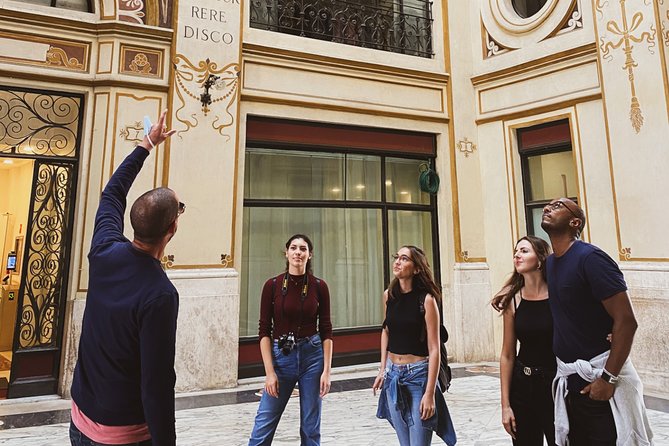
Starting near Palazzo Venezia and Rome’s grand civic buildings
The first part of the walk introduces the large-scale Rome of palaces, national monuments, and political history. You see Palazzo Venezia from the outside, including its unusual connection with Venetian architecture in Rome.
The route also brings in the story of the king who unified Italy. This is a useful piece of background because modern Italian identity is closely tied to the monuments and public buildings in this part of the city. Your guide helps connect the buildings you see with the people and events behind them.
You also look toward a huge palace complex described as covering 110,500 square metres and ranking among the largest palaces in the world by area. This is an exterior stop, so you should think of it as a chance to understand Rome’s grand civic scale, not as an indoor palace tour.
This opening section is best for people who enjoy context. The buildings may not have the instant fame of the Trevi Fountain, but the stories help explain why Rome feels like several eras placed side by side.
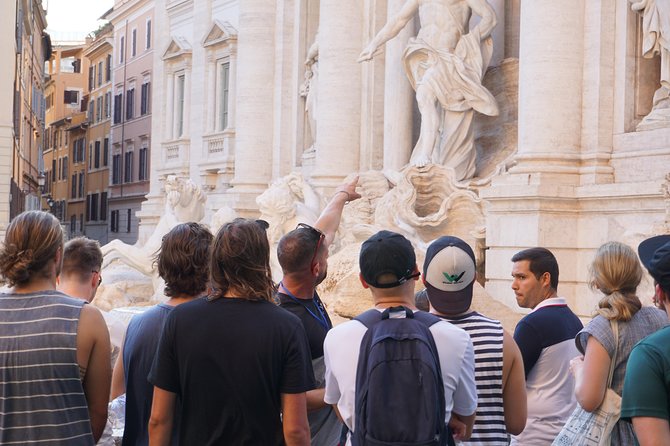
Trevi Fountain: a 20-minute look at Rome’s most famous water show
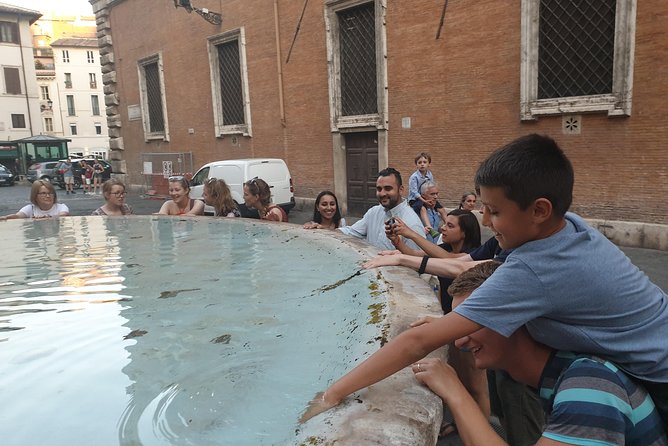
Trevi Fountain gets about 20 minutes, enough time to take photographs and toss in a coin. It is one of Rome’s busiest sights, so do not expect a quiet, private moment with the fountain.
The stop works well because the guide can give you the basic story and point out details before you face the crowds. Once you arrive, you have time to look around rather than taking one hurried photograph and moving on.
The fountain is free to view, though the surrounding space can feel crowded. Keep your belongings close and listen for the guide’s instructions about where to gather. A guide who knows how to manage a crowd can make a real difference here. Sila, for example, has been praised for helping the group move through busy areas while keeping the commentary clear.
Trevi is also a good example of the tour’s overall approach. You get the famous sight, but you do not spend the whole morning there. The walk uses it as one chapter in a larger story about Rome.
St. Ignatius Church and the ceiling that changes the mood
The brief visit to Chiesa di Sant’Ignazio di Loyola is one of the best reasons to choose this particular route. You spend around 5 to 10 minutes inside, looking at the church’s ceiling frescoes.
Rome has more than 900 churches, so a church stop needs to offer something special. St. Ignatius does. The painted ceiling uses perspective to create an impressive visual effect, and it rewards looking up slowly rather than simply walking through.
This is also where a good guide adds real value. The room can be busy or noisy, and the artistic details are easy to miss without an explanation. The visit is short, but it breaks up the outdoor walking and gives you a close look at Rome’s Baroque art.
You should dress and behave as you would for any church visit. The tour information does not specify a dress code, but modest clothing and respectful conduct are sensible. Since this is a working church, access can depend on what is happening inside.
More city highlights tours in Rome:
- Rome: Big Bus Hop-on, Hop-off Open-Top Sightseeing Tour
★ 3.5 · 2,580 reviews - Rome in a Day Group Tour with Vatican Museums and Colosseum
★ 4.5 · 2,450 reviews - Rome Highlights by Golf Cart Private Tour
★ 5.0 · 2,379 reviews - Rome: City Highlights Open-Top Bus Night Tour
★ 4.1 · 2,038 reviews
The Pantheon from the outside
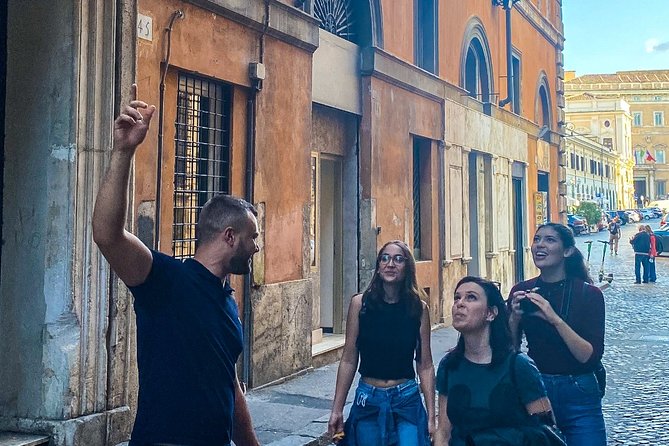
The Pantheon receives about 30 minutes, the longest single stop listed on the route. The guide explains the building’s connection with Emperor Hadrian and its remarkable dome, which remains the world’s largest unreinforced dome.
The key limitation is simple: admission is not included, and the itinerary describes the Pantheon as an exterior visit. You should not book this walk expecting a full indoor tour of the building.
Even from outside, the Pantheon is worth serious attention. The ancient structure sits in a lively square, and its columns, proportions, and enormous dome make more sense when you hear how old it is and how unusual its construction remains. A guide can also help you understand why this building has influenced architects for centuries.
If seeing the interior is a priority, treat the walking tour as an introduction and make separate plans for entry. The tour itself does not promise that indoor visit.
An artist’s feud and the Baroque drama of Rome
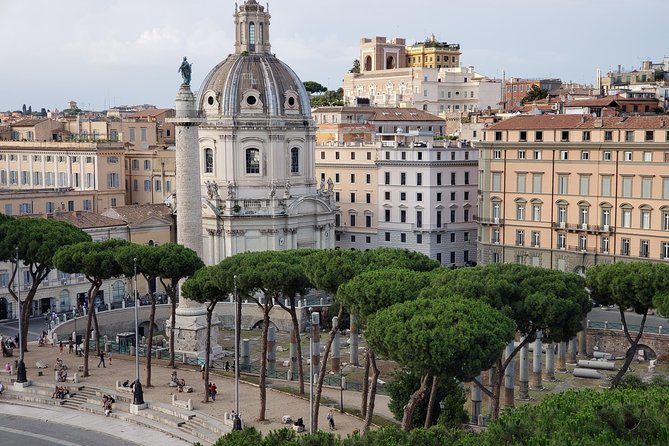
The route includes a story about a feud between artists that helped define one of Rome’s beautiful churches. This is the sort of detail that can turn a pretty façade into a human story.
Rome’s Baroque monuments are full of rivalry, ambition, religious purpose, and theatrical design. You may not remember every date, but you will understand that these buildings were not created in a vacuum. Artists competed, patrons made demands, and public spaces became stages for artistic power.
The guide’s storytelling style is important here. Dan has been praised for keeping people interested with strong stories, while Éléonora has been appreciated for a clear mix of humor and historical information. This is not a lecture hall. You are standing on a street corner, often with traffic and voices around you, so concise explanations work best.
Bernini’s Four Rivers Fountain
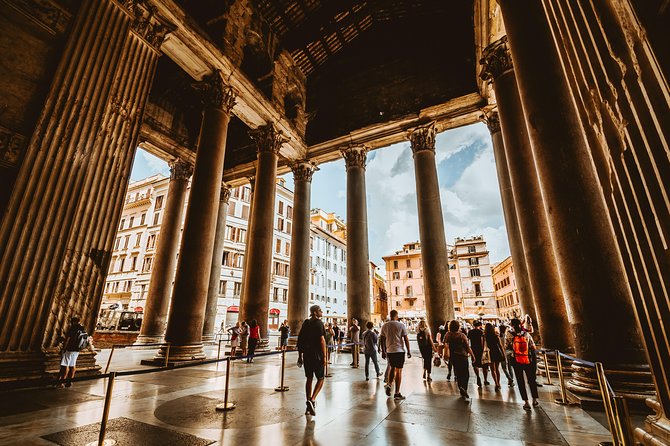
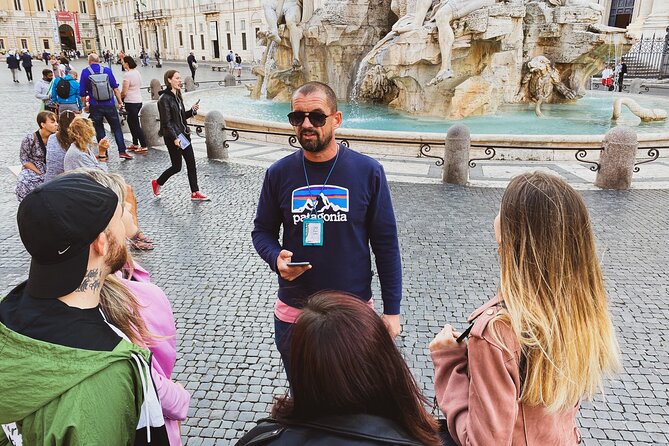
At Fontana dei Quattro Fiumi, you see Gian Lorenzo Bernini’s work in Piazza Navona. The stop lasts about 10 minutes and is free.
The fountain is a good place to pause and study sculpture in an open setting. The figures and design are easier to appreciate once you know the fountain represents four major rivers. Your guide can also explain the artistic competition and the personalities behind Rome’s Baroque monuments.
This stop is short, but it connects directly with the church and artist-rivalry stories earlier in the walk. The result is more satisfying than treating each fountain as an unrelated photo opportunity.
Expect people, restaurant touts, and plenty of noise around Piazza Navona. The open square gives the group more room than Trevi Fountain, but you still need to stay near the guide.
Piazza Navona: a practical and attractive finish
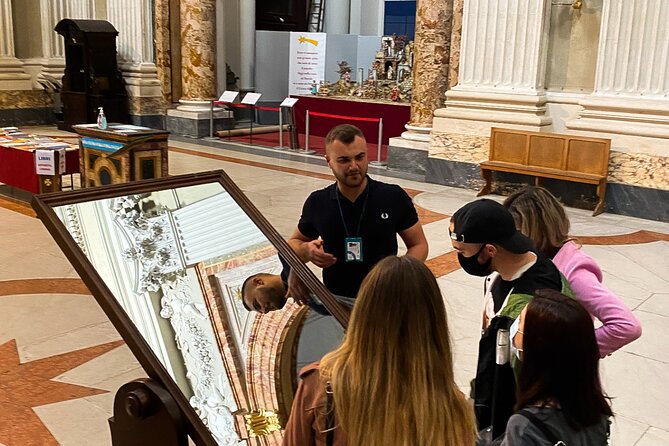
The walk ends at Piazza Navona after about 20 minutes there. This is one of Rome’s most famous squares, lined with restaurants and places to stop for a drink or a meal.
Finishing here is convenient. You can continue exploring on foot, sit down for lunch, or use the guide’s suggestions for restaurants, bars, and rooftops. Several guides have also offered practical ideas for places to eat and visit after the walk.
Be cautious with restaurants directly on the square. The location is attractive, but a view often affects the bill. Ask for recommendations and compare menus before sitting down. The value of the final stop is not only the fountain and architecture. It is also the chance to finish with a useful plan for the rest of your day.
What $30.25 buys you
At $30.25 per person, this is a fairly priced introduction to central Rome. You are paying for a local guide, route planning, historical explanation, and help with navigating crowded streets. You are not paying for museum admission, a meal, or private access.
I consider the price strongest if you are visiting Rome for the first time. A good two-hour orientation can save you time later because you learn where the major sights sit in relation to one another. It also helps you decide which places deserve a longer return visit.
The value depends partly on your expectations. If you want to enter the Pantheon, spend a long time inside churches, or move at your own pace, this will feel limited. If you want a lively overview with several major sights and a few less obvious stops, the cost is easier to justify.
Group discounts may be available, and the tour is offered in English. It is booked well ahead on average, around 47 days in advance, so popular dates may not remain open close to your visit.
Timing, walking, and the small details that matter
The advertised duration is about two hours. That is long enough for a useful introduction, but not long enough for extended visits at every stop. The Pantheon receives the most time, while the church and Four Rivers Fountain are shorter stops.
You should expect plenty of walking. One person described it as a lot of walking, with good photo chances and a strong overview of Rome’s historic district. Wear shoes you can use on uneven streets and bring water, especially in warm weather.
The tour requires good weather. If poor weather causes cancellation, you are offered another date or a full refund. You can cancel for a full refund up to 24 hours before the start time. Changes or cancellations within 24 hours are not refunded.
Pay close attention to the meeting point before departure. There has been at least one reported problem involving a last-minute change and an unclear address, while another group had a small meeting-point issue resolved by a direct phone call. Confirm the location and arrive early. This is especially important in Rome, where a short address can still leave you searching among several streets and monuments.
Most people can take part, and service animals are allowed. The tour runs near public transportation, though the provided details do not specify a particular bus or metro stop. If you are traveling with a large family group, Paulina has been praised for staying flexible and keeping the experience interesting.
Who will get the most from this tour?
I would recommend this walk to first-time visitors who want to get their bearings fast. It is also useful for anyone who enjoys architecture, fountains, church art, and stories about the people behind Rome’s monuments.
It suits you if you want:
- A short introduction on your first day
- A small group instead of a large bus tour
- Famous sights mixed with less obvious stops
- A guide who can explain history without turning the outing into a formal class
- Suggestions for what to eat and see afterward
It may not suit you if you have limited walking ability, want a slow photography session, or need every major building visited from the inside. The tour is also less useful if you already know central Rome well and prefer a specialist walk focused on one period or artist.
The route is family-friendly in spirit, though children who dislike walking or standing may find two hours tiring. The guide can make a big difference. Paulina has handled family groups well, and several guides have been praised for humor and an easy manner.
Should you book this Rome walking tour?
Book it if you want a well-priced first look at central Rome with a human guide, a manageable group, and a mix of famous monuments and rewarding details. The St. Ignatius ceiling, the Baroque fountain stories, and the practical finish in Piazza Navona give it more character than a basic landmark checklist.
Skip it if your main goal is entering the Pantheon or spending long stretches inside historic buildings. In that case, use the route as a starting point and arrange separate admission visits.
For most first visits, I would choose an early tour date in the trip. You can learn the layout, note places worth returning to, and ask the guide for help with the rest of your Rome plans. Just confirm the meeting point, wear good shoes, and remember that the Pantheon is an exterior stop.
FAQ
How long does the walking tour last?
The tour lasts approximately two hours.
How much does the tour cost?
The listed price is $30.25 per person.
What language is the tour offered in?
The tour is offered in English.
How many people can join the group?
The maximum group size is 15 people.
Where does the tour start?
The meeting point is Piazza d’Aracoeli, Via di S. Venanzio 8, 00186 Rome.
Where does the tour finish?
The tour ends in Piazza Navona, 00186 Rome.
Is entry to the Pantheon included?
No. Admission to the Pantheon is not included, and the route describes the Pantheon visit as an exterior stop.
Which sights are included on the route?
The route includes exterior views of Palazzo Venezia and other civic buildings, Trevi Fountain, Chiesa di Sant’Ignazio di Loyola, the Pantheon, Fontana dei Quattro Fiumi, and Piazza Navona.
Can I cancel for a full refund?
Yes. You can cancel at least 24 hours before the start time for a full refund. Cancellations or changes made within 24 hours are not refunded. If poor weather causes the tour to be canceled, you are offered another date or a full refund.
More walking tours in Rome
- Rome: Trastevere & Campo de Fiori Street Food Walking Tour
★ 4.9 · 2,768 reviews - Rome: Paranormal Night Walking Tour & Secret Backstreets
★ 4.9 · 1,921 reviews - Rome by Night Walking Tour – Legends & Criminal Stories
★ 4.5 · 1,003 reviews - Rome: Guided City Center Evening Sightseeing Walking Tour
★ 4.4 · 953 reviews
Newest Rome tours we have reviewed
- Private TikTok Video Making in Rome★ 5.0 · 7 reviews
- Assisi, Orvieto and Civita di Bagnoregio Full Day Tour from Rome★ 4.5 · 45 reviews
- Assisi & Saint Francis Path Tour from Rome★ 5.0 · 45 reviews
- Assisi and Cascia Private Day Tour from Rome with Lunch★ 5.0 · 10 reviews
- Art Class in the center of Rome!★ 4.0 · 4 reviews
- Art & Craft: Beer Tour with Street Art in Rome★ 4.5 · 6 reviews
- Arrival in Rome: Airport Transfer & Exclusive City Introduction★ 5.0 · 3 reviews
- From Rome: Private Day-Tour of Tuscany★ 5.0 · 16 reviews
Caravaggio and Baroque Art Tours, compared.
Terrazza Borromini Open-Air Opera with Aperitif
Read our review →
Borghese Gallery Max 6 People Tour: Baroque & Renaissance in Rome
Read our review →
Renaissance Scarlet Ladies Tour: Caravaggio’s and Borgia’s Women
Read our review →
Rome’s Baroque Art Walking Tour: Who Killed Caravaggio?
Read our review →
Palazzo Barberini (Caravaggio Exhibition Is Not Included)
Read our review →
Browse the lists this tour appears in