
Reviewed · ROME JUBILEE YEAR TOURS
Rome: Holy Door and the Relics of Christ Guided Tour
Rome’s most unusual pilgrimage route links relics connected by tradition to Christ’s birth, suffering, and death. You’ll visit the Holy Cross in Jerusalem, St. John Lateran, the Holy Stairs, Santa Prassede, and Santa Maria Maggiore in one compact walk. I like the clear Christian focus and the chance to see objects that many Rome visitors miss. I also like the small-group option and radio headset, which make a guide’s explanations easier to follow.
The main thing to consider is that this is a faith-based and historical tour, not a general introduction to Rome. Some relics are presented through Christian tradition rather than independently proven history, and church access requires suitable clothing. The tour also needs at least four people to run, so a cancellation is possible if the minimum is not reached.
Key points at a glance
- Relics tied to Christ’s life: See fragments associated with the Cross, wood linked to the Nativity cradle, and a column connected by tradition to the Flagellation.
- Five important church stops: The route includes the Basilica of the Holy Cross, St. John Lateran, Scala Sancta, Santa Prassede, and Santa Maria Maggiore.
- A short but full morning or afternoon: The walk lasts about 2 to 2.5 hours, with guided visits ranging from 15 to 30 minutes.
- Spanish and Portuguese guiding: A live guide leads the experience in one of these languages. Cesar may be your guide, depending on the departure.
- Useful audio equipment: A radio headset helps you hear the guide while moving between busy streets and large churches.
- Good fit for Jubilee pilgrims: The tour connects Rome’s sacred sites with the wider Christian meaning of the Jubilee period.
Why this relic route is different from ordinary Rome sightseeing
Rome can turn sacred places into quick photo stops. This experience takes the opposite approach. It follows a theme: relics connected to Christ’s birth, Passion, and crucifixion, with a guide explaining why each object matters to Christian worship.
That focus gives the walk a clear purpose. You are not simply checking off five churches. You are moving through a sequence of places tied to major moments in the life of Jesus, at least according to Christian tradition. The value lies in the connection between the objects, the buildings that house them, and the faith that has brought pilgrims here for centuries.
I would choose this tour if you want religious context in Spanish or Portuguese. If you mainly want Rome’s ancient ruins, fountains, or art museums, this is not the best use of your limited time. The route has some art and architecture, but its subject is Christian devotion.
More Jubilee Year tours in Rome:
- Highlights of Rome Bike Tour (Including Jubilee Sights)
★ 5.0 · 239 reviews - Private Sacred Relics Jubilee Bike Tour
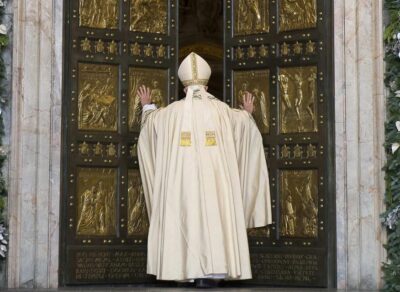
★ 5.0 · 58 reviews - Rome: Jubilee Year Papal Basilicas Tour by Private Car
★ 4.8 · 57 reviews
Starting near Santa Maria Maggiore
The listed meeting options include Piazza di Santa Maria Maggiore and Coin. Check your booking carefully because the exact starting point depends on the option selected.
The route is presented as a walking tour, so wear shoes that can handle several city streets and church interiors. The stated duration is 2 to 2.5 hours, but Rome’s traffic, church activity, and group movement can affect the pace. You should keep a little flexibility around the scheduled finish.
The tour is available with a Spanish or Portuguese-speaking guide. This matters because the experience depends heavily on explanation. A relic can look like a small fragment behind glass if you do not know its religious meaning or the tradition attached to it.
A radio headset is included. That is a useful touch, especially when the guide is speaking to a group in a large basilica or while people are walking together. Small-group availability can make the experience more personal, but the actual group size depends on the booking.
Basilica of the Holy Cross in Jerusalem and the Cross relics
The first major stop is the Basilica of the Holy Cross in Jerusalem, also known as Santa Croce in Gerusalemme. Here, the focus is on fragments associated with the Cross on which Jesus was crucified.
The wording matters: these are relics preserved and honored within Christian tradition. The tour is not presenting a laboratory investigation of their origin. Your guide’s role is to explain their place in Christian devotion and the story of how such objects became part of Rome’s sacred identity.
This stop sets the tone for the rest of the walk. You will likely spend about 30 minutes with a guided visit, enough time for explanation without making the entire tour feel like a long church service. The basilica is especially important for visitors who want to understand why Rome became a major pilgrimage center.
The possible drawback is that the stop may feel more meaningful to a practicing Christian or to someone interested in religious history than to a visitor seeking only architecture. Go in knowing that the relic is the main attraction.
St. John Lateran, Rome’s major cathedral
From there, the tour continues to the Archbasilica of St. John Lateran, one of Rome’s most important churches. The itinerary allows about 30 minutes for a guided visit.
This is a strong part of the route because the building gives scale to the subject. Relics are not being shown in isolation. They are part of a larger Christian setting, surrounded by centuries of worship, ceremony, and art.
Your guide can also help you connect this basilica to the pilgrimage character of the tour. Rome has many churches, and it is easy to lose track of their different roles. A guided visit gives you a reason for being in this one rather than simply walking through, looking up, and leaving.
You should still keep expectations realistic. Thirty minutes is enough for a focused explanation, not a complete study of the basilica’s architecture, chapels, and artwork. If you want detailed art history, you will need a longer specialist visit.
More guided tours in Rome:
- Vatican Museums, Sistine Chapel & St Peter’s Basilica Guided Tour
★ 4.5 · 39,149 reviews - Rome: Colosseum, Palatine Hill and Roman Forum Guided Tour
★ 4.8 · 32,814 reviews - Rome: Guided Tour of Colosseum, Roman Forum & Palatine Hill
★ 4.7 · 27,897 reviews - Rome: Colosseum & Forum with Audio Guide App -Optional Arena
★ 4.2 · 24,770 reviews
Scala Sancta and the steps linked to Pontius Pilate
Next comes the Scala Sancta, or Holy Stairs. Christian tradition holds that these marble steps were climbed by Jesus before his judgment by Pontius Pilate.
The stairs are the emotional center of the route for many pilgrims. Their meaning comes from the act of approaching them as a sacred object, not from their appearance alone. Your guide can explain the tradition and the devotion associated with the steps, helping you understand why this seemingly simple staircase has such importance.
The planned visit lasts about 15 minutes. That makes this a brief stop, so do not expect an extended lecture or a long period for quiet reflection. The short timing also means the group must keep moving to stay within the two to 2.5-hour schedule.
Appropriate clothing is required for church entry. The instructions specifically call for comfortable clothing, but you should also dress modestly for sacred sites. Comfortable shoes matter here and throughout the tour.
Santa Prassede and the Flagellation column
Santa Prassede is another shorter stop, listed at about 15 minutes. The tour connects this church with the column of the Flagellation, described as a silent witness to Christ’s suffering.
This is a good example of why a guide adds value. Without context, a column or fragment can be easy to overlook. With an explanation of its place in Christian tradition, the object becomes part of the route’s larger story of suffering and devotion.
The short visit is also a limitation. You will not have time to study every detail of the church or pause at length in each area. If you are especially interested in Santa Prassede’s artwork or architecture, consider returning on your own later, if your schedule allows.
The tour keeps these stops concise so it can include all five sites. I see that as a fair trade for visitors who want a broad pilgrimage route rather than one long visit in a single basilica.
Santa Maria Maggiore and the wood of the Nativity cradle
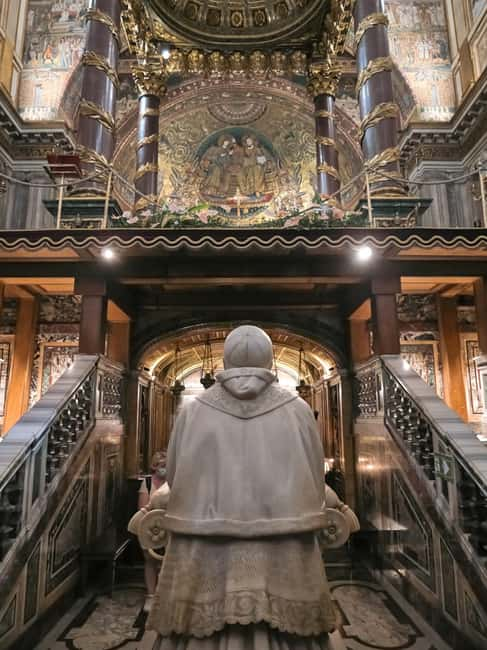
The final major stop is the Basilica Papale di Santa Maria Maggiore, with about 30 minutes for a guided visit. The focus here is wood associated by tradition with the cradle or manger of the Nativity.
That gives the route a useful shape. It begins with relics linked to Christ’s death and suffering, then ends with an object connected to his birth. The tour also includes the column associated with the Flagellation, creating a clear movement through the central Christian story.
Santa Maria Maggiore is also close to one of the listed meeting areas, though the exact end point can vary. The stated drop-off options include the Basilica of the Holy Cross in Jerusalem and Santa Maria della Neve. Confirm the final location when you book, especially if you have a timed reservation afterward.
The cradle wood is presented as a traditional relic. That distinction is important, but it does not make the visit pointless. For a person of faith, the devotional meaning can be more important than physical proof. For a history-minded visitor, the object offers a way to examine how relic traditions shaped Rome and Christian pilgrimage.
What the guide adds to the experience
The guide is central here. You are visiting several churches in a short time, and the religious meaning is not always obvious from the objects themselves.
Cesar is one guide associated with this experience. If he leads your group, you can expect a friendly and patient style, with time to appreciate each stop rather than a rushed march from one doorway to the next. He is also described as asking questions, helping people feel at ease, and offering suggestions for other things to enjoy in Rome.
That personal approach can matter on a pilgrimage route. The best guide does not simply recite dates. The guide helps you understand why a small relic, a stairway, or a piece of wood still matters to people today.
The tour is offered in Portuguese and Spanish, not English according to the supplied information. Be sure you are comfortable following religious and historical explanations in your chosen language. Tips for the guide are not included, so plan for that extra cost if you feel the service deserves it.
Is $45.55 a fair price?
At $45.55 per person, the price is reasonable if you want a guided route through several sacred sites rather than a self-guided church walk. You are paying for a specialist guide, a planned sequence of locations, and a radio headset. The two to 2.5-hour length also makes it easier to fit into a busy Rome schedule.
The value depends on your interest. If you would happily visit these churches on your own and read about the relics afterward, the fee may feel unnecessary. If you want the sites tied together in one story, the guide can save you preparation time and help you notice details you might otherwise pass.
Entry to places requiring a previous payment is not included. The information does not specify which stops carry an additional charge, so check the booking conditions before you assume the $45.55 covers every possible entrance fee.
Food and drinks are not included, though the tour is short enough that this is not a serious concern. You can eat before or after the walk.
Who should book this pilgrimage?
I would recommend it most strongly to:
- Christian visitors who want to pray, reflect, or learn more about relic traditions.
- Visitors planning a Jubilee trip who want a focused religious experience near Rome’s major sacred sites.
- Spanish and Portuguese speakers who prefer live explanations in those languages.
- People who enjoy church art, ritual history, and the human stories behind pilgrimage.
- First-time Rome visitors who want a guided introduction to important basilicas beyond the usual headline sights.
I would be more cautious if you have limited time and no interest in Christian history. Rome offers countless art and archaeology tours, and this experience spends most of its time in churches connected to one religious theme.
The route may also be less suitable if you need a very relaxed pace. The tour is not long, but it includes several stops and walking between them. The group must keep to a schedule, particularly because the itinerary includes five sites.
Practical advice before you go
Dress for church entry. Comfortable shoes and comfortable clothes are listed as essentials, but modest clothing is also important. Pets are not allowed.
The activity requires a minimum of four participants. If that number is not reached, the tour can be canceled 24 hours before it begins. Keep this in mind if you are building a tight itinerary around the booking.
You can cancel up to 24 hours in advance for a full refund, and the reserve-now, pay-later option lets you hold a place without paying immediately. Those terms are useful when your Rome plans are still changing.
The experience ends back at a listed meeting point, though the exact drop-off can be the Basilica of the Holy Cross in Jerusalem or Santa Maria della Neve. Check the selected option so you know where you will finish.
Should you book it?
Book this tour if you want Rome through a Christian lens and would value clear explanations in Spanish or Portuguese. The strongest feature is the combination of several important churches and relic traditions in a single, manageable walking route.
Skip it if you are looking for a broad Rome overview, English commentary, or a tour centered on ancient ruins and secular art. For the right audience, the $45.55 price buys more than transport between churches. It gives you a story, a guide, and a thoughtful way to connect Rome’s sacred places.
FAQ
How long does the Holy Door and relics tour last?
The tour lasts approximately 2 to 2.5 hours. Starting times vary, so check availability for the date you want.
Which languages are available?
The live guide is available in Portuguese and Spanish.
Which churches are visited?
The route includes the Basilica of the Holy Cross in Jerusalem, the Basilica of St. John Lateran, Scala Sancta, Santa Prassede, and the Basilica of Santa Maria Maggiore.
What relics are included?
The tour includes fragments associated with the Cross, wood traditionally linked to the cradle of the Nativity, and a column traditionally connected with the Flagellation.
Is the tour suitable for people interested in Christian history?
Yes. The experience has a historical and Christian emphasis, with explanations about the relics, churches, and traditions connected to them.
What should I bring?
Bring comfortable shoes and comfortable clothing. You should also wear appropriate clothing for entering churches.
Are food and drinks included?
No. Food and beverages are not included.
Can the tour be canceled if the group is small?
Yes. The tour requires at least four participants. If that minimum is not reached, it may be canceled 24 hours before the scheduled start.
Newest Rome tours we have reviewed
- Private TikTok Video Making in Rome★ 5.0 · 7 reviews
- Assisi, Orvieto and Civita di Bagnoregio Full Day Tour from Rome★ 4.5 · 45 reviews
- Assisi & Saint Francis Path Tour from Rome★ 5.0 · 45 reviews
- Assisi and Cascia Private Day Tour from Rome with Lunch★ 5.0 · 10 reviews
- Art Class in the center of Rome!★ 4.0 · 4 reviews
- Art & Craft: Beer Tour with Street Art in Rome★ 4.5 · 6 reviews
- Arrival in Rome: Airport Transfer & Exclusive City Introduction★ 5.0 · 3 reviews
- From Rome: Private Day-Tour of Tuscany★ 5.0 · 16 reviews
Rome Jubilee Year Tours, compared.
Highlights of Rome Bike Tour (Including Jubilee Sights)
Read our review →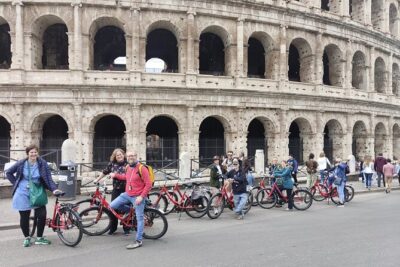
Jubilee Year Papal Basilicas Tour by Private Car
Read our review →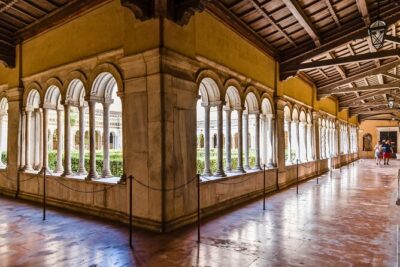
Private Jubilee Tour: 3 Papal Basilicas with Santa Maria Maggiore
Read our review →
Rome+Jubilee Audioguide – TravelMate app for your smartphone
Read our review →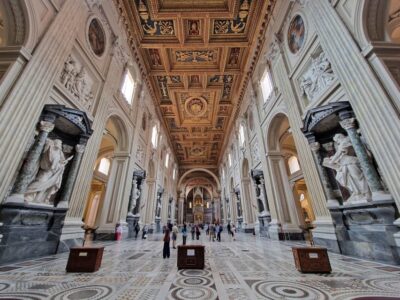
Jubilee tour: art and popes in Rome in the golden age of Christendom
Read our review →Browse the lists this tour appears in