
Reviewed · OSTIA ANTICA TOURS
From Rome: Ostia Antica 4-Hour Guided Tour
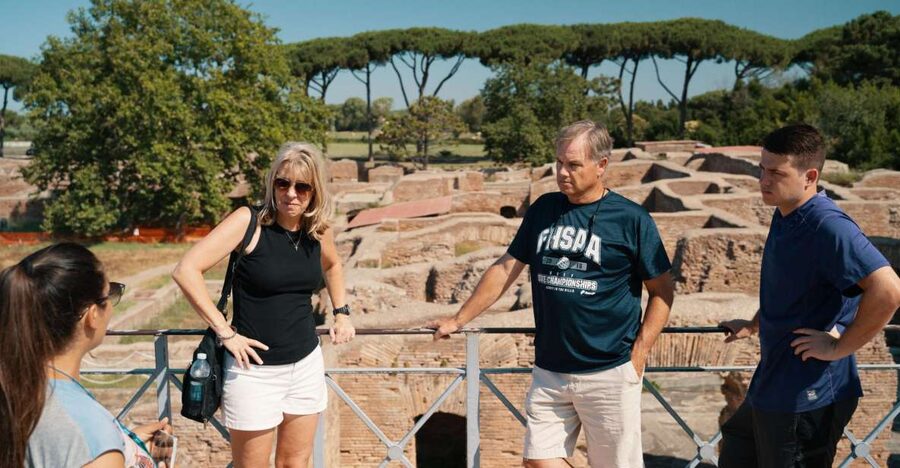
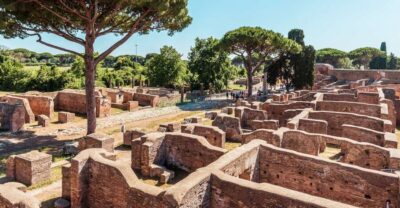
Ostia Antica gives you something Rome itself cannot: a whole ancient city you can walk through without squeezing past crowds at every monument. In about 20 minutes by train, you reach the former port of Rome, where shops, apartment houses, temples, baths, tombs, and a theater still form a readable Roman town.
I like the private-group format, which allows the guide to set a comfortable pace, and I like the mix of grand monuments and small everyday details, especially the fish shop mosaic and the old brothel. The main drawback is the price, $648.74 per person, which makes this a serious splurge, especially for solo visitors or couples.
Key points to know before booking
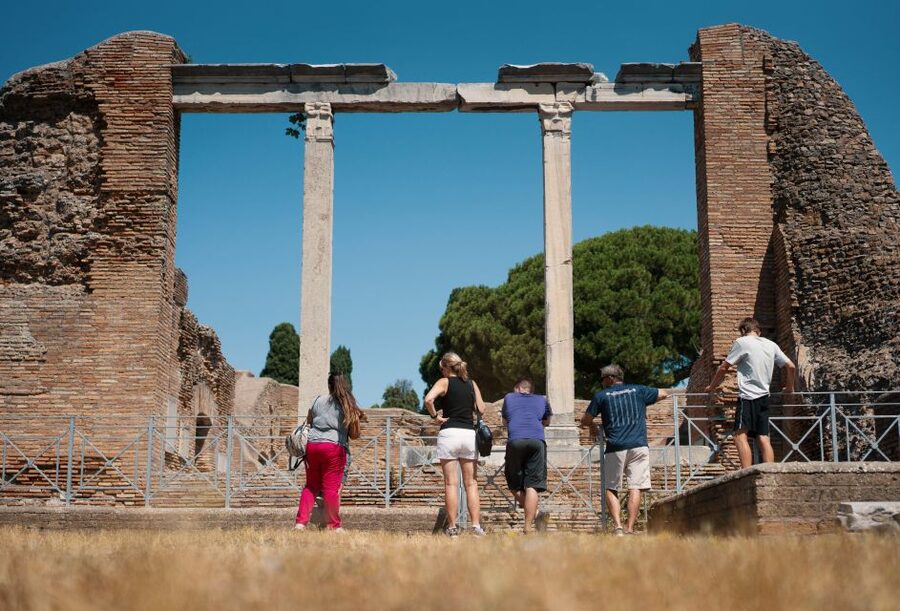
- A complete ancient city near Rome: Ostia Antica offers streets, homes, shops, temples, baths, and public buildings in one archaeological park.
- A short train journey: The trip from central Rome takes less than 20 minutes, so you spend your time exploring rather than commuting.
- Private guiding: Your group receives a live guide in English, Arabic, French, or Spanish. Valeria is one guide associated with the experience, when assigned.
- A revealing look at Roman life: The route includes a fish shop, a brothel, private houses, public baths, and the city’s main theater.
- A quieter alternative to Pompeii: Ostia is described as less crowded than Pompeii, though the park still involves plenty of walking outdoors.
- Important mobility warning: The tour is not suitable for wheelchair users or people with mobility impairments.
Why Ostia Antica makes a smart half-day from Rome
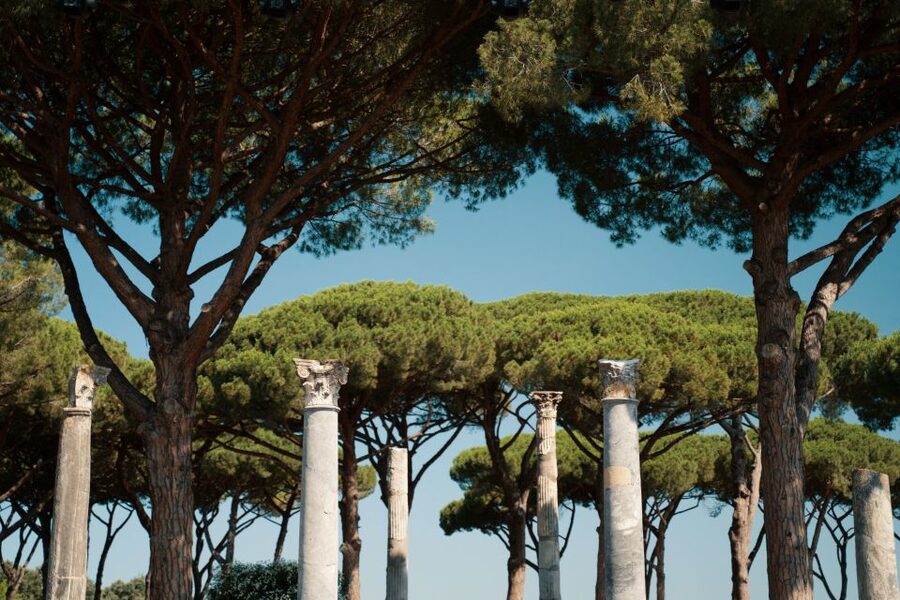
Ostia was Rome’s ancient port at the mouth of the Tiber River. It handled goods that kept the capital fed and supplied: grain from Sicily, marble from Africa, slaves from Asia, and wine from Spain. That role gives the ruins a practical feel. This was not only a place of temples and emperors. It was a working city filled with merchants, laborers, sailors, shopkeepers, and families.
I find that context useful because it changes the way you read the ruins. A temple tells you what people worshipped. An intact shop tells you how they earned a living. A theater shows how they spent free time. A public bath reveals how social life worked. Ostia offers all of these pieces in one place.
The site is also close enough to Rome for a half-day visit. The train ride takes less than 20 minutes, and the total experience lasts 4.5 hours. That makes it easier to fit into a Rome itinerary than a full-day trip to Pompeii or another distant archaeological site.
You should still treat this as a walking tour, not a quick photo stop. The ruins are spread through an open archaeological park, and the combination of uneven surfaces, heat, and sun can wear you down. Comfortable shoes, a hat, and clothing suited to the weather are essential.
More Ostia Antica tours:
- Ancient Ostia Antica Semi-Private Day Trip from Rome by Train with Guide
★ 4.5 · 579 reviews - From Rome: Ostia Antica Guided Half-Day Trip by Train
★ 4.8 · 486 reviews - Horse Sanctuary & Trail Ride in Ostia Antica
★ 4.5 · 276 reviews
The train ride and meeting point
The excursion includes your train ticket and pickup. You must give the local partner your hotel or requested pickup address in advance. If that address falls outside the pickup area, you receive a different meeting point after booking.
One practical note deserves attention: the meeting area near Piramide metro was found uncomfortable by one participant, who described the wait there as a bit dodgy. That does not define the whole tour, but it is useful information. Confirm the meeting instructions before departure, arrive with enough time to spare, and keep your belongings close while waiting.
The short train journey is one of the tour’s strong points. Rome traffic can turn a simple outing into a slow one, while the train gets you out of the city center quickly. Once you arrive, the setting changes from modern Rome to a broad archaeological site with open paths and ancient walls.
Skip-the-line admission is included, so you do not need to buy a separate entrance ticket or spend part of your morning sorting out admission. Food and drinks are not included, although a restaurant and cafe are located inside the park.
Entering the ancient harbor city
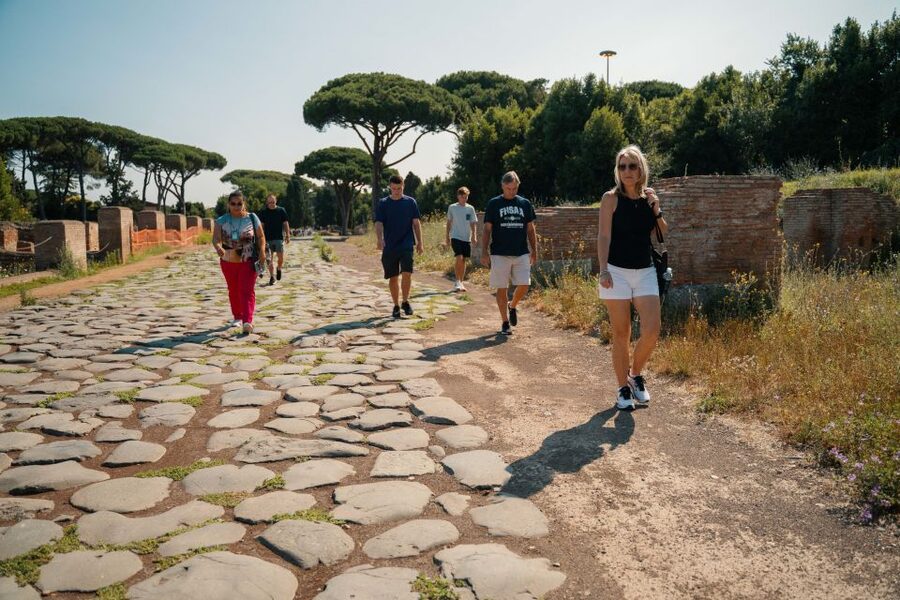
At Ostia’s entrance, your guide helps you understand the site as a city rather than a pile of ruins. The location near the Tiber made Ostia Rome’s gateway to the Mediterranean world. Cargo arrived here, was stored or processed, and then moved toward Rome.
That commercial role explains the variety of buildings you see. Warehouses and shops sit alongside religious buildings and homes. The city’s importance was not limited to trade, either. Ostia also served as a center of public life, with spaces for worship, entertainment, business, and daily errands.
A private guide is especially useful here because many remains are low or partly damaged. Without context, an old wall can look like just another old wall. With a guide, you can better understand the purpose of a building and how it fit into the city.
The tour is offered in English, Arabic, French, and Spanish. The group is private, so you do not have to follow the pace of a large coach party. That matters at an archaeological site, where you may want more time at a mosaic or a shorter explanation in the heat.
The theater, Capitolium, and public life
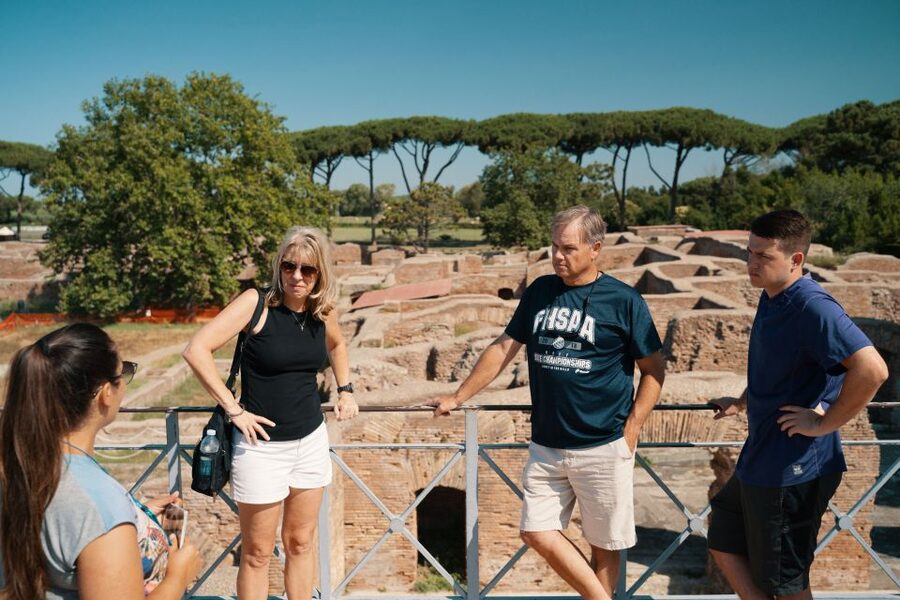
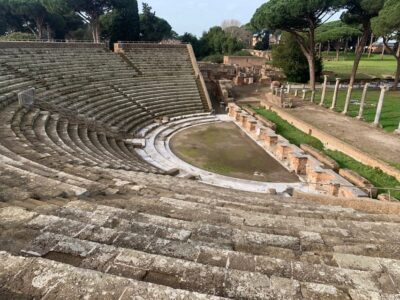
Ostia’s Roman theater is one of the main reasons to visit. It is unusually well preserved and remains in use for occasional performances. Seeing the seating area and stage gives you a clearer sense of how public entertainment worked than a few scattered stones ever could.
The theater also helps you picture Ostia as a functioning town. People did not come here only to trade goods. They gathered, watched performances, met friends, and took part in the social life of the city.
Nearby, the Capitolium marked the center of public and religious life. Its monuments had an official character, unlike the more personal spaces found in private homes. Your guide can connect the Capitolium to the civic structure of Roman Ostia and explain why this part of town mattered.
The contrast between the theater and Capitolium is worth noticing. One reflects entertainment and community life. The other reflects authority, religion, and public identity. Together, they help turn the site into a living town in your mind.
More guided tours in Ostia Antica:
- All-included Guided Tour of Ancient Ostia from Rome with Hotel Pickup & Drop Off
★ 5.0 · 11 reviews - Rome: Ostia Antica Guided Tour in German with Tickets
★ 4.8 · 10 reviews - Rome: Ostia Antica Half Day Semi-Private Tour with Guide
★ 5.0 · 8 reviews - Ostia Antica: Hidden City Guided ENGLISH Tour with Transfer
★ 5.0 · 6 reviews
Baths, mosaics, and the details of daily work
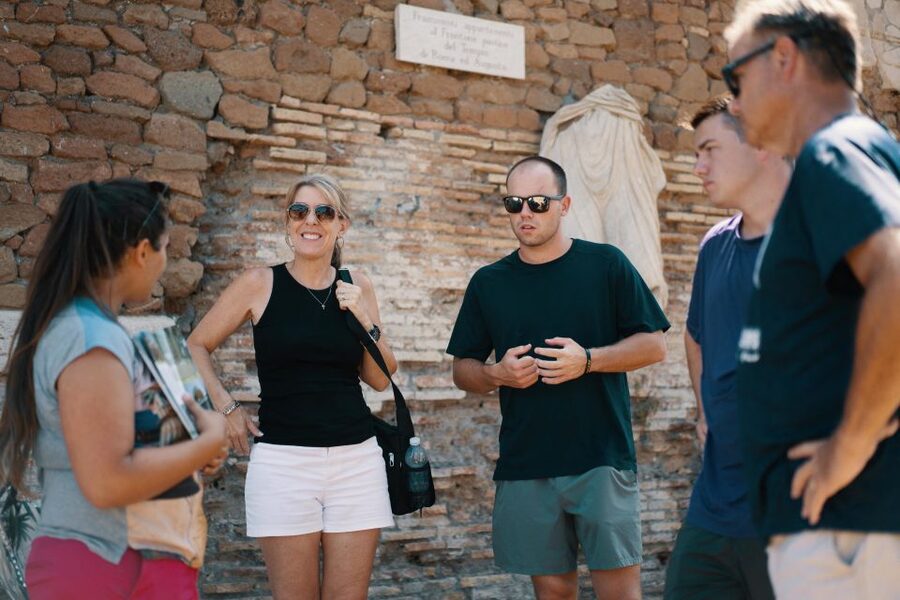
The Baths of Neptune are another major stop. Roman baths were not simply places to wash. They were social spaces, and their decoration could signal the wealth and taste of the city. The surviving mosaics give you a sense of the visual world Roman residents encountered in public buildings.
The fish shop offers a smaller but particularly memorable detail. Its mosaic decoration connects the building to the goods sold there, making it easier to picture a real business rather than an abstract archaeological structure. I like stops such as this because they bring Roman life down to street level.
You also visit the House of Diana, one of the private residential buildings associated with the city. Private homes and apartment-style housing show how ordinary people lived near the public monuments. They make the site less about rulers and grand ceremonies, and more about the people who filled the streets each day.
The route also includes ancient shops that remain remarkably intact. You might find these spaces more revealing than the larger monuments because they show how a Roman city worked on an ordinary morning. Goods were displayed, customers came and went, and the port’s wider trade network reached into local streets.
The brothel and Ostia’s less polished side
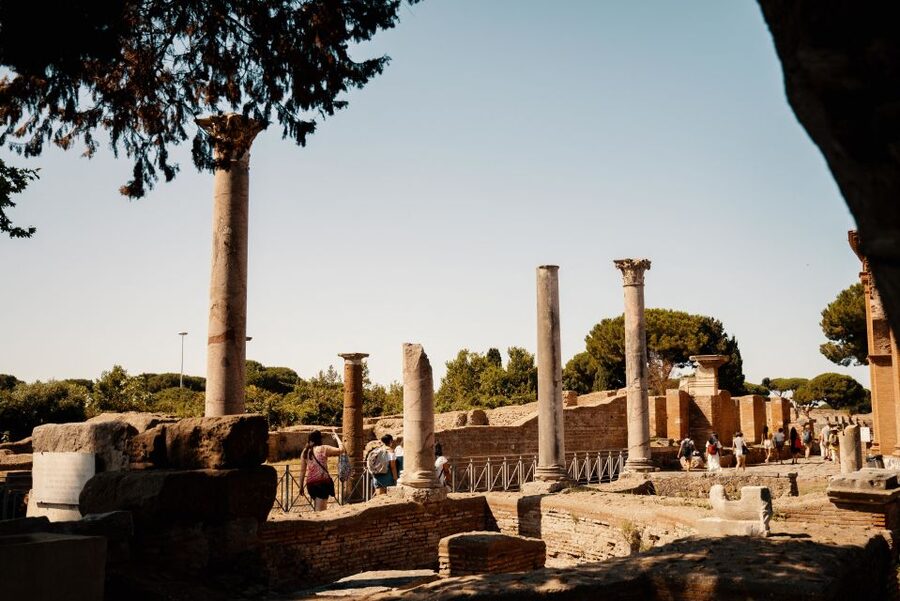
Ostia’s brothel gives the tour a franker look at Roman society. It is easy to reduce ancient cities to temples, statues, and military power, but commercial sex was also part of urban life. The remains offer a glimpse of the city’s less respectable business activity.
This stop may not suit every family or every visitor, especially if you prefer your archaeology presented in a more formal way. For many adults, though, it adds useful balance. Roman life included pleasure, exploitation, commerce, and social divisions, not only impressive public buildings.
Your guide can help place the site in its wider setting without turning it into a cheap joke. That is where the private format helps. You can ask direct questions and move on when the explanation is complete.
Tombs at the Necropolis
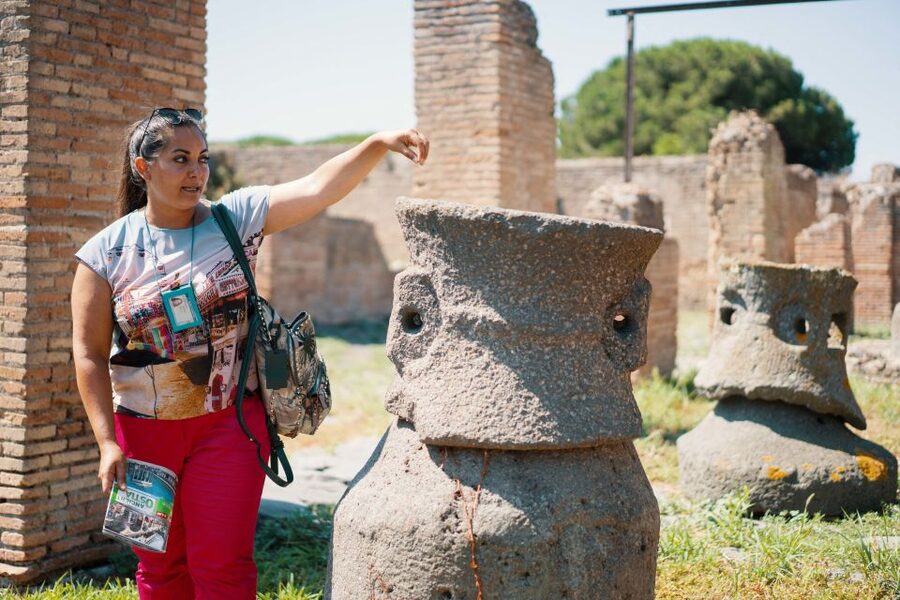
The Necropolis brings a quieter, more somber mood. Tombs stood outside the main city, as was common in Roman settlements. Their location reminds you that Ostia was not only a place of business and public life, but also a community of people who marked the deaths of family members and associates.
The remains can feel eerie, particularly after the open public spaces of the theater and baths. This change in mood gives the tour a good rhythm. You move from trade and entertainment to worship, domestic life, and finally the ways people remembered the dead.
The Necropolis also helps explain the physical spread of the ancient city. Ostia was not a compact collection of famous monuments. It had entrances, streets, homes, commercial areas, public buildings, and burial grounds. Expect a substantial amount of walking between these sections.
Temples and the private side of Roman life
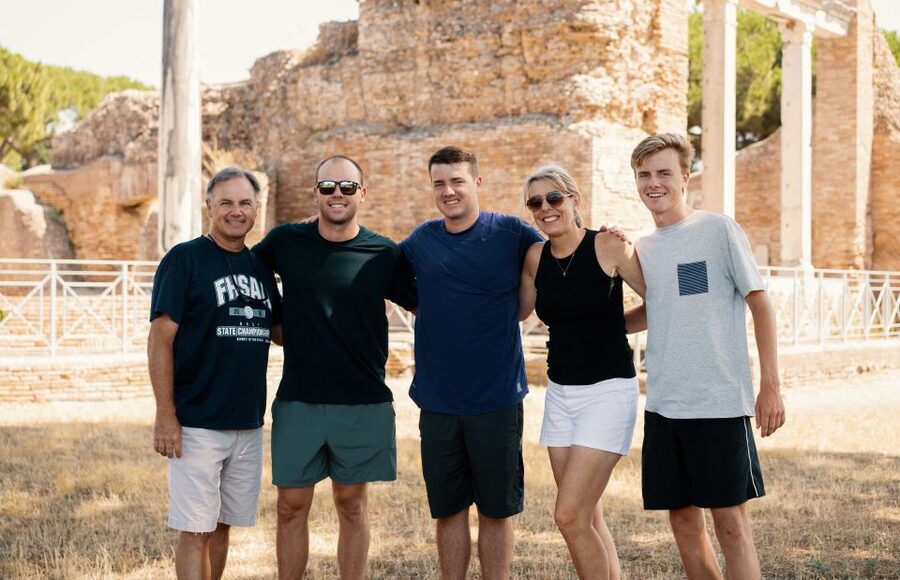
Ostia contains several remarkably preserved Roman temples. These religious buildings help show how worship was woven into public and private life. Some are grand and official, while others connect to particular groups or traditions within the port city.
The temples are most meaningful when seen alongside the houses and shops. Religion was not set apart from daily activity in the way a modern visitor might expect. People worked, traded, bathed, worshipped, and socialized within the same urban world.
Private houses provide another useful counterpoint. Their rooms and surviving decoration offer clues about status, family life, and domestic space. You cannot expect every detail to survive, but the remains are strong enough to make the basic layout of a Roman home understandable.
This is where Ostia can feel more rewarding than a quick visit to a single monument in Rome. You are not only looking at one building. You are following the connections among many types of buildings and seeing how they formed a city.
What the 4.5-hour schedule feels like

Four and a half hours is long enough for a serious visit but short enough to fit around other Rome plans. The schedule includes transport, admission, guiding, and the archaeological walk. Since the exact starting times depend on availability, check the schedule before arranging museum visits or dinner.
The private format should make the pace more flexible than a large group tour, but you should not expect a relaxed cafe outing. Ostia is outdoors, and the site requires walking. The best experience comes when you reserve enough energy for the final stops instead of treating the first hour as a race.
Use the cafe or restaurant inside the park if you need a break. Food and drinks are not included, so budget separately for that stop. A water bottle is sensible, although the supplied information does not specify whether refill points are available.
The experience is not suitable for wheelchair users or people with mobility impairments. Uneven archaeological ground and the size of the site are important considerations. If walking is difficult for you, this is not the right excursion.
Is $648.74 per person good value?
At $648.74 per person, this is expensive. The price needs to be judged against what is included: a private group, a live guide, admission, train tickets, and pickup arrangements. You are paying for personal attention and convenience, not just entry to the ruins.
For a family or group that values a private guide, the cost may feel more reasonable when spread across the service provided. For one person or a couple watching expenses, it is a much harder sell. Ostia Antica itself is the attraction, and the entrance ticket alone does not justify such a high price.
The strongest case for booking is the guide. A good explanation can transform a large archaeological site from confusing fragments into a readable city. Valeria has been specifically praised for her clear and informed presentation, and another private tour was described as relaxed and very informative. Since guide assignments can vary, you should treat Valeria as a possible guide rather than a guarantee.
The value also depends on your Rome priorities. If you want a personal, focused visit and dislike large groups, the extra cost may be worthwhile. If you mainly want to see the ruins and can manage your own transport, a less expensive admission option may make more sense.
Who should book this Ostia Antica tour?
I would recommend it to first-time visitors who want an ancient site beyond the Colosseum and Roman Forum. It is also a strong choice for people who find Pompeii too far away or too crowded for a half-day plan.
The tour suits you best if you enjoy archaeology, Roman urban life, mosaics, and the small details of old businesses and homes. The mix of theater, temples, baths, tombs, and a brothel gives you more range than a tour focused only on imperial monuments.
Families with older children may also find the site engaging because it offers concrete subjects: shops, food, theaters, houses, and public baths. Younger children may struggle with the walking and the length of the explanations.
I would hesitate if your budget is tight, you have limited mobility, or you want a short sightseeing stop with little walking. I would also think twice if you have already seen several large Roman archaeological sites and prefer a cheaper, self-guided visit.
Should you book it?
Book this tour if you want a private, well-explained visit to one of Rome’s most complete ancient towns and you are comfortable paying a premium for convenience. The short train ride, included admission, and range of surviving buildings make Ostia Antica an excellent half-day choice.
Skip it if $648.74 per person feels out of proportion to your budget. The ruins are compelling, but the price is justified mainly by the private guide and transport arrangements. If you do book, wear sturdy shoes, bring a hat, confirm the pickup details, and keep the open-air walking in mind.
FAQ
How long does the Ostia Antica tour last?
The tour lasts 4.5 hours, including the journey from Rome and the guided visit.
How long is the train ride from Rome to Ostia Antica?
The train journey takes less than 20 minutes from the city center.
Is transportation included?
Yes. The train ticket is included, and pickup is included within the local partner’s service area.
Is the entrance ticket included?
Yes. Admission to the archaeological site is included, along with skip-the-line entry.
What languages are available?
The live guide is available in English, Arabic, French, or Spanish.
Is this a private tour?
Yes. The activity is offered for a private group.
Is the tour suitable for wheelchair users?
No. The experience is not suitable for wheelchair users or people with mobility impairments.
What should I bring?
Bring a passport or ID card, comfortable shoes, and clothing suited to the weather. A hat is strongly recommended.
Newest Ostia Antica tours we have reviewed
- Ancient Ostia Private Tour Led By An Archaeologist★ 5.0 · 3 reviews
- Private Tour – Ancient Ostia★ 5.0 · 42 reviews
- All-included Guided Tour of Ancient Ostia from Rome with Hotel Pickup & Drop Off★ 5.0 · 11 reviews
- Rome: Ostia Antica Private Van Tour with an Archaeologist★ 5.0 · 3 reviews
- Rome: Ostia Antica Skip-The-Line Entry Ticket & Tour Option★ 4.7 · 20 reviews
- Rome: Ostia Antica Half Day Semi-Private Tour with Guide★ 5.0 · 8 reviews
- Rome: Ostia Antica Tour From Rome★ 4.9 · 73 reviews
- Rome: Ostia Antica Private Guided Tour★ 4.8 · 4 reviews
Ostia Antica Tours, compared.
Ancient Ostia Antica Semi-Private Day Trip from Rome by Train with Guide
Read our review →


Ostia Antica Archaeological Park Ticket & Audio App
Read our review →
Browse the lists this tour appears in