
Reviewed · ROME JUBILEE YEAR TOURS
Jubilee tour: art and popes in Rome in the golden age of Christendom
Rome’s Jubilee story comes alive on foot here, not as a list of holy doors and grand buildings, but as a tale of popes, artists, rivalries, scandals, and power. The route links Trevi Fountain, the Pantheon, two remarkable churches, and Caravaggio’s Roman stomping ground in a compact three-hour walk.
I like the focus on Michelangelo, Bernini, and Caravaggio, since their work gives the walk plenty to look at. I also like the small-group format and the way ancient ruins, Renaissance churches, Baroque art, and papal politics are tied to the Jubilee years.
The main caution is practical: this is a walking tour with several stops in churches and busy central streets, so it is not suitable for wheelchair users or people with mobility impairments. The guide meeting problem reported by one guest also means you should arrive early and keep the provider’s contact details handy.
Key points to know before booking
- A Jubilee story told through art: The walk connects papal history with works by Caravaggio, Michelangelo, Bernini, and other major artists.
- Three hours in central Rome: You cover more than ten important places, mostly on foot, from the Accademia di San Luca to Via degli Acquasparta.
- Small-group setting: The tour is semi-private, with the possibility of arranging an exclusive private experience.
- Two beautiful church interiors: St. Ignatius and Santa Maria sopra Minerva give the route some of its best indoor stops.
- Pantheon entry costs extra: You can see and discuss the monument, but admission is not included and nominal reservations are required through the official Pantheon website.
- Strong guide feedback, one serious hiccup: Diana earned praise for being fun and well informed, but one January booking ended with a missed meeting and a full refund.
Why this Jubilee walk works
I like tours that give Rome a clear thread. This one uses the Jubilee, the Catholic tradition of special pilgrimage years, as that thread. You move through the city while hearing how Rome prepared for major Jubilee celebrations, how popes used art and architecture to project authority, and how artists competed for the Church’s most important commissions.
The subject is bigger than religion. It is also about money, prestige, politics, artistic jealousy, and the changing face of Rome. That gives the walk appeal even if you are more interested in painting and architecture than papal ceremony.
The route stays in the historic center, so you are not spending your three hours sitting in a vehicle or crossing distant parts of the city. You walk from one sight to the next, with short guided stops at places that are easy to miss when exploring alone.
At $71 per person, the price is fair if your guide is strong and the group remains small. You are paying for a focused art and history lesson across more than ten sites, not for a major museum admission package. The value depends heavily on the quality of the guide, and the early feedback is mixed in that regard: Diana received especially warm praise, while one booking suffered from a serious meeting-point failure.
More Jubilee Year tours in Rome:
- Highlights of Rome Bike Tour (Including Jubilee Sights)
★ 5.0 · 239 reviews - Private Sacred Relics Jubilee Bike Tour
★ 5.0 · 58 reviews - Rome: Jubilee Year Papal Basilicas Tour by Private Car
★ 4.8 · 57 reviews
Starting at the Accademia di San Luca
Meet in front of Hotel all’Accademia, at Piazza dell’Accademia di San Luca. This is a useful central starting point, but do not cut it close. The meeting point should be easy to identify before you leave your hotel, and I would arrive at least 10 minutes early.
The opening stop is the Accademia di San Luca, an institution tied to the artists who worked in Rome under papal patronage. You spend only about five minutes here, but it sets up the main idea of the tour: art in Rome was not separate from power. Artists gained status and commissions by serving popes, religious orders, and wealthy patrons.
This short introduction should help you understand the people behind the buildings you see later. It also gives the walk a stronger beginning than simply meeting at a famous fountain.
Trevi Fountain and the Jubilee rivalry
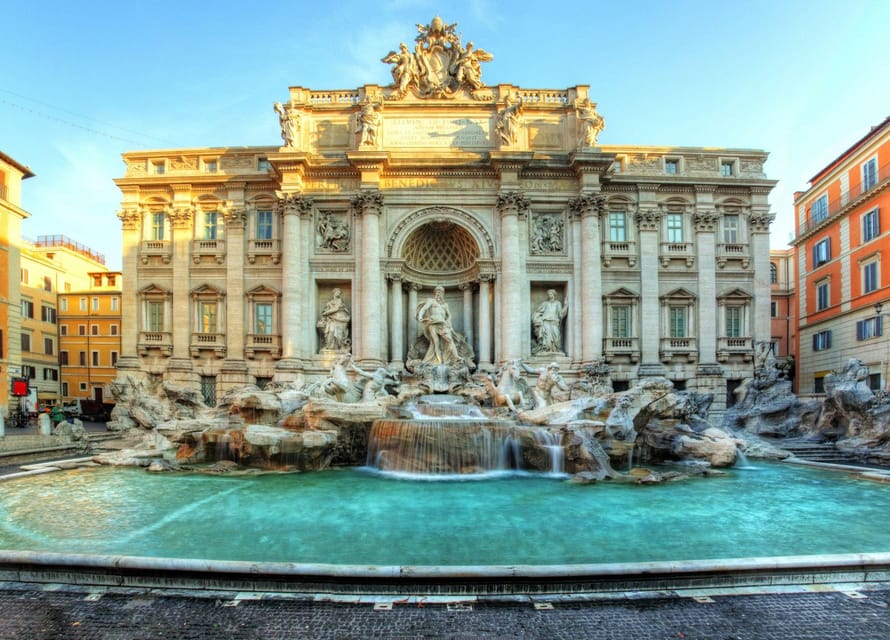
From the academy, the group walks to Trevi Fountain, with about 15 minutes of guided commentary. The fountain is one of Rome’s most crowded and photographed places, so your guide’s role matters here. You are not just stopping for a picture. You are hearing about the rivalry between two famous artists connected with the Jubilee of 1650.
The exact identity and details of that rivalry are best left to the guide’s explanation, since this is one of the tour’s storytelling moments. The important point is that Jubilee celebrations created opportunities for artists to compete for attention, commissions, and papal favor.
Trevi is also a good reminder that Rome’s famous sights often have several layers. The fountain you see today belongs to a later period than the ancient Roman monuments, yet it became part of the city’s public image and religious theater. Expect a busy stop, and keep your group in sight.
Gregorian Rome at Piazza della Pilotta
The walk continues toward Piazza della Pilotta and the Pontifical Gregorian University. You spend around 10 minutes hearing about this institution and its role as a center of learning in Baroque Rome and beyond.
This stop broadens the tour beyond painting. Rome’s religious power depended on schools, theology, debate, and the training of clergy as much as it depended on churches and monuments. The Gregorian University offers a useful look at the intellectual machinery behind the Catholic world.
You will mostly be viewing the exterior and listening, rather than entering for an extended visit. That makes this part best for anyone who enjoys context and city history. If you want nonstop masterpieces, it may feel quieter than the fountain and church stops.
Same city, a completely different half-day:
- Vatican Museums & Sistine Chapel Tour with Optional Basilica
★ 4.3 · 67,413 reviews - Vatican Museums, Sistine Chapel & St Peter’s Basilica Guided Tour
★ 4.5 · 39,149 reviews - Rome: Colosseum, Palatine Hill and Roman Forum Guided Tour
★ 4.8 · 32,814 reviews - Rome: Guided Tour of Colosseum, Roman Forum & Palatine Hill
★ 4.7 · 27,897 reviews
Ancient Rome at Piazza di Pietra
At Piazza di Pietra, the tour shifts toward the meeting point of ancient Rome and early Christianity. The stop lasts about 10 minutes and helps explain how the modern city was built over, around, and through the remains of the Roman Empire.
This is one of the route’s strongest ideas. Rome is not divided into neat historical boxes. Ancient columns, Christian institutions, Renaissance projects, and Baroque decorations sit close together, often sharing the same streets.
You should pay attention to the guide’s ability to connect what is physically in front of you with the larger Jubilee story. Without that explanation, a short square stop can seem like a pause between major attractions. With it, the square becomes part of the argument that Rome’s Christian identity grew out of its imperial past.
The gallery stop: Sciarra or Colonna
The route passes through a decorated gallery with striking frescoes. The tour description identifies Galleria Sciarra, while the scheduled stop names Galleria Colonna. Since those are different places, confirm the exact gallery with the provider when you book or at the meeting point.
That detail matters because both names can create different expectations. Galleria Sciarra is known for its decorative covered passage, while Galleria Colonna refers to a major palace gallery. The supplied timing allows about 10 minutes for this part, so expect a brief art and architecture stop rather than a full palace visit.
Either way, the gallery section gives you a change of pace. After open squares and busy streets, you move into a more enclosed setting where decoration takes center stage. I like this kind of stop because it lets you notice Rome’s theatrical side without requiring a long museum visit.
St. Ignatius and the visual tricks of Baroque Rome
St. Ignatius is one of the important church stops. The tour connects the church with popes, Jesuits, knights, artists, and the era of exploration in the 15th and 16th centuries.
This is where the art focus becomes especially useful. St. Ignatius is famous for its grand interior and painted architectural effects, so listen closely when the guide explains how the church creates the impression of space and height. The building rewards looking upward, not just straight ahead.
Church visits can be affected by services, closures, or crowd control, and the supplied schedule does not promise how long you will be inside. Dress and behave respectfully, and do not expect a private viewing. You are visiting active religious spaces as well as historic monuments.
Santa Maria sopra Minerva and the first Jubilee
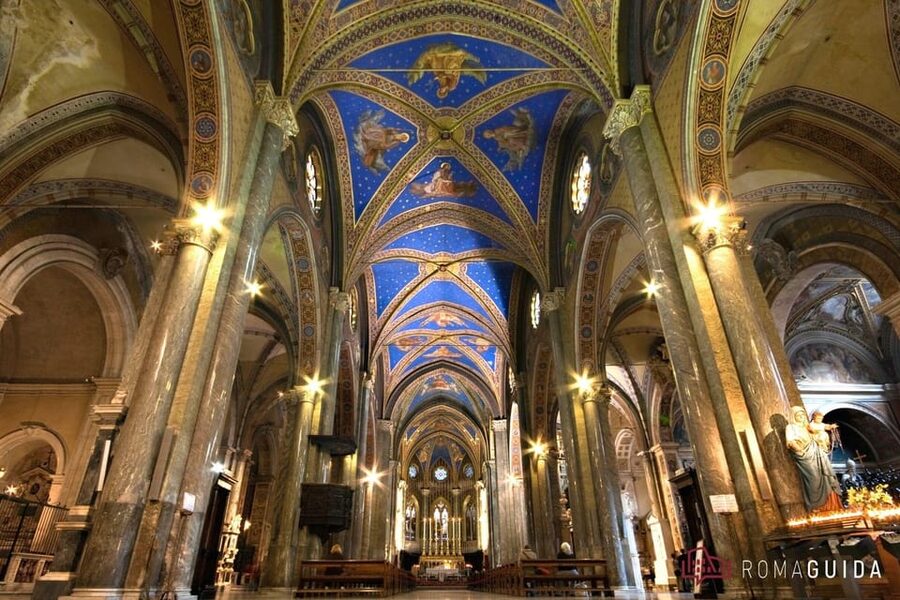
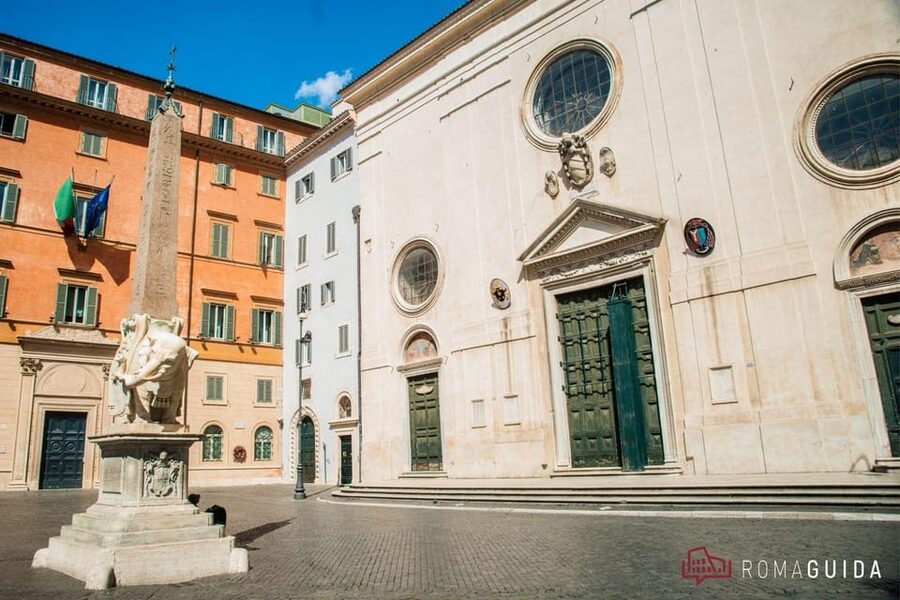
Santa Maria sopra Minerva is another church included on the walk. The tour links it to the first Jubilee in 1300 and to St. Catherine of Siena, the patron saint of Italy, whose remains are associated with the church.
This stop gives the Jubilee story its clearest historical anchor. The year 1300 is presented as the beginning of the tradition discussed on the walk, so the church becomes more than a beautiful interior. It is tied directly to the origin of the event that shapes the entire tour.
Santa Maria sopra Minerva also helps balance the grand scale of Rome’s famous monuments with a more intimate church setting. You will want to give yourself a moment to look at the details rather than rushing from one explanation to the next.
The schedule lists Sant’Ivo alla Sapienza before and after this church, with about 20 minutes at one point and 15 minutes later. That appears to reflect two separate commentary points or a route-planning duplication, so ask the guide how the stops will be arranged on the day.
Sant’Ivo alla Sapienza and papal planning
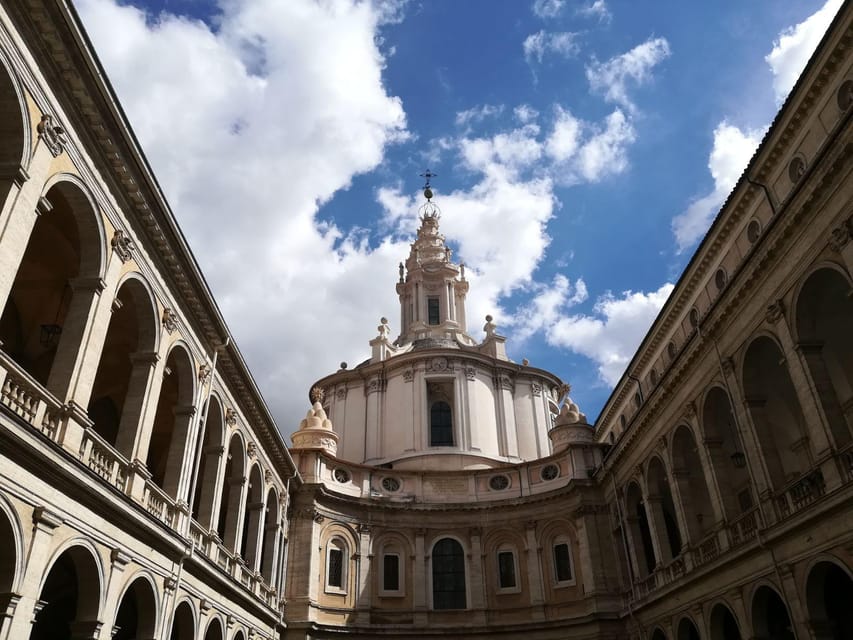
Sant’Ivo alla Sapienza is connected with the rooms where major Jubilees of the past were decided and organized. The stop gives you a look at the administrative side of papal Rome, the part that is easy to miss when attention stays on paintings and fountains.
This is valuable because a Jubilee does not happen by magic. It requires planning, ceremony, messages, movement, and control. Rome’s religious events also shaped the city’s buildings and public spaces.
The church and courtyard are among the route’s more architectural moments. The stop is likely to appeal most to you if you enjoy unusual buildings and the story of how institutions use space. If your main goal is to enter every major church in depth, the short tour format will feel limited.
The Pantheon and a thousand years of changing meaning
The Pantheon is the route’s biggest ancient monument. The guide explains how its story begins in the Roman Empire and later becomes tied to Christian Rome and the Jubilee tradition during the Renaissance.
The building is powerful because its meaning changed over time. It began as a monument of Roman religion and imperial ambition, then became part of the Christian city. That transition fits the tour’s main subject: Rome repeatedly reuses its past to support new forms of power and belief.
Admission to the Pantheon is not included. You need a nominal reservation through the official Pantheon website if you want to enter, so arrange that separately and check the timing carefully. The tour can discuss the monument even if you do not go inside, but entry adds a more complete experience.
The guided stop lasts about 15 minutes. That is enough for a useful explanation, but not enough for a long independent visit during the tour itself. If you plan to study the interior, return later with your reservation.
Caravaggio between Sant’Agostino and San Luigi
The walk ends near Via degli Acquasparta after exploring the churches of Sant’Agostino and San Luigi dei Francesi. This closing section focuses on Caravaggio, his talent, his passions, and his reputation as a rebellious artist of the 1600s.
For many people, this will be the artistic high point. Caravaggio’s paintings bring drama, ordinary human figures, and sharp emotion into religious scenes. The tour presents him not only as a great painter but also as a difficult and turbulent character.
The two churches are important because they hold major Caravaggio works, although the supplied details do not promise how long you will spend inside each one or which paintings will be viewed in depth. Ask the guide where to stand and what details to notice. In a crowded church, a few well chosen observations can make the difference between merely seeing a painting and understanding why it matters.
Ending with Caravaggio is a smart choice. His complicated life and intense art leave the walk on a human note after several hours of popes, institutions, and grand public projects.
What the three-hour format feels like
Three hours is long enough to create a strong outline of central Rome, but short enough to fit into a busy sightseeing day. You should expect steady walking, frequent stops, and a lot of commentary rather than long periods inside each monument.
Wear comfortable shoes. The experience is not suitable for wheelchair users or people with mobility impairments, and the provider also lists motion sickness and an age over 95 among its restrictions. Those limits suggest that you should take the walking requirement seriously, even though the route stays in central Rome.
The tour is offered in English and Italian. Some material may be presented in its original language, so ask questions if a name, quotation, or art term is unclear.
The guide can make or break the experience
The strongest part of a small-group history walk is the guide. Richard from Canada praised the information about the Jubilee, and Diana was singled out for being both fun and well informed. Those comments point to the kind of guide you want here: someone who can explain complicated papal politics without turning every stop into a lecture.
There is also one serious service issue to keep in mind. A January booking ended with the guide not meeting the group, unanswered calls, and a later disagreement about where the meeting point was. The help center refunded the full amount, but a refund does not recover lost sightseeing time.
To protect yourself, arrive early, take a photo showing your location at the meeting point, and save the provider’s phone number. This is sensible advice for any timed tour in Rome, especially one beginning near a busy central attraction.
Should you book this Rome Jubilee tour?
Book it if you want a guided connection between Rome’s art, papal power, and Jubilee tradition. It suits first-time visitors who want a strong historical framework, art lovers interested in Caravaggio and the Baroque period, and repeat visitors looking for a more focused walk through familiar streets.
The $71 price makes sense for a semi-private three-hour tour if the group is small and the guide delivers the promised depth. You should not book it expecting included museum admission, a long Pantheon visit, or a relaxed pace with lots of free time.
I would choose this experience for its route and subject, while taking the meeting details seriously. If you value stories about artists, popes, rivalries, and the changing meaning of Rome’s monuments, it offers a useful and enjoyable way to see the historic center. If mobility is a concern, or if you want extended time inside each church, choose a slower and more accessible option instead.
FAQ
How long does the Jubilee tour last?
The tour lasts three hours.
What languages are available?
The live guide is available in English and Italian. Some content may be presented in its original language.
Where does the tour meet?
The meeting point is in front of Hotel all’Accademia, near Piazza dell’Accademia di San Luca.
Where does the tour finish?
The tour finishes at Via degli Acquasparta.
Is Pantheon admission included?
No. Pantheon admission is not included. Nominal reservations are required through the Pantheon’s official website if you want to enter.
Who is the tour not suitable for?
The experience is not suitable for people with mobility impairments, wheelchair users, people with motion sickness, or people over 95 years old.
What should I bring?
Bring comfortable shoes for the three-hour walking route.
Newest Rome tours we have reviewed
- Private TikTok Video Making in Rome★ 5.0 · 7 reviews
- Assisi, Orvieto and Civita di Bagnoregio Full Day Tour from Rome★ 4.5 · 45 reviews
- Assisi & Saint Francis Path Tour from Rome★ 5.0 · 45 reviews
- Assisi and Cascia Private Day Tour from Rome with Lunch★ 5.0 · 10 reviews
- Art Class in the center of Rome!★ 4.0 · 4 reviews
- Art & Craft: Beer Tour with Street Art in Rome★ 4.5 · 6 reviews
- Arrival in Rome: Airport Transfer & Exclusive City Introduction★ 5.0 · 3 reviews
- From Rome: Private Day-Tour of Tuscany★ 5.0 · 16 reviews
Rome Jubilee Year Tours, compared.
Highlights of Rome Bike Tour (Including Jubilee Sights)
Read our review →
Jubilee Year Papal Basilicas Tour by Private Car
Read our review →
Private Jubilee Tour: 3 Papal Basilicas with Santa Maria Maggiore
Read our review →
Rome+Jubilee Audioguide – TravelMate app for your smartphone
Read our review →
Browse the lists this tour appears in