
Reviewed · OSTIA ANTICA TOURS
Rome: Ostia Antica Half Day Semi-Private Tour with Guide
Ostia Antica gives you something central Rome cannot: a broad look at how ordinary Roman life worked. This was not only a collection of grand monuments. It was a working port city, with shops, bakeries, public baths, latrines, offices, theaters, and a network that helped feed Rome.
I like the small group of up to six because a guide can explain details without shouting across a crowd. I also like the clear 2.5-hour route, which covers major sights such as the Baths of Neptune, the theater, the necropolis, and the Square of the Corporations. Guides Tiffany and Federico received especially strong praise for keeping the visit well timed and informative.
The main consideration is the price, about $146.14 per person. That is a serious outlay for a half-day archaeological visit, and you will need to reach Ostia Antica on your own. The value depends on how much you want expert explanation rather than simply walking through the ruins with an audio guide or map.
Key Points
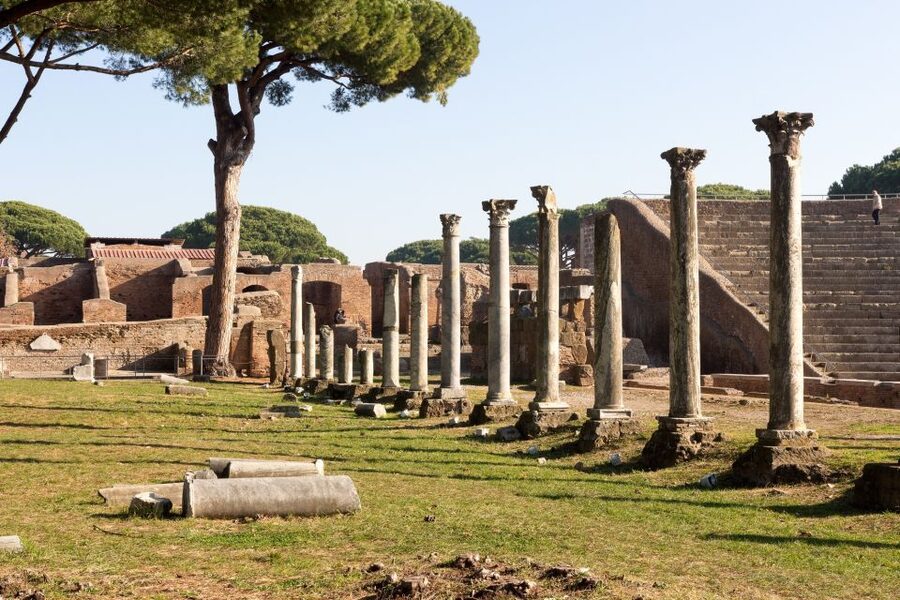
- Roman commerce takes center stage: See the Square of the Corporations and learn how trade helped supply Rome.
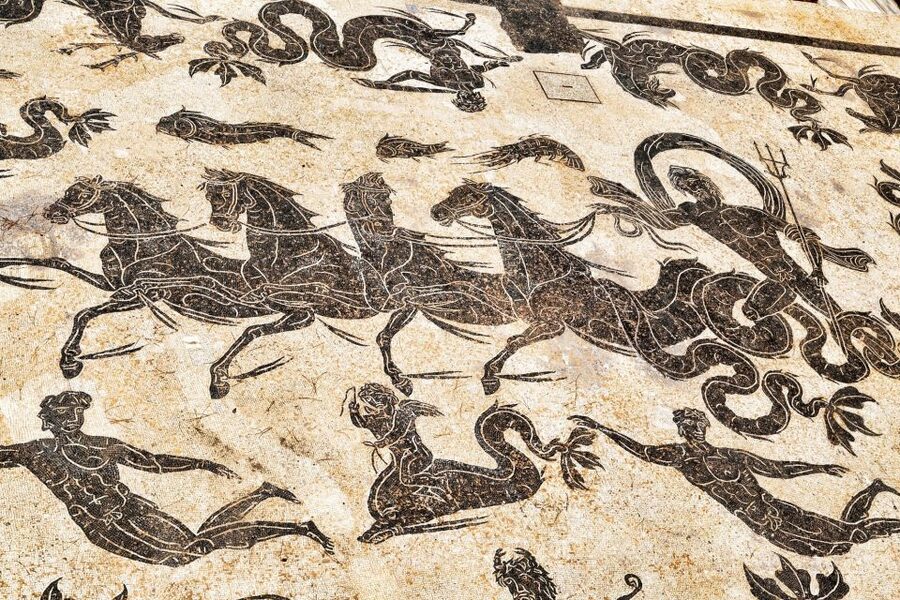
- Neptune’s Baths feature a fine mosaic: The preserved image of Neptune connects the site to its port-city setting.
- A genuine small-group format: The normal limit is six people with one guide per group.
- The route covers daily life as well as monuments: Expect ancient storefronts, a bakery, latrines, water systems, and public buildings.
- Theater and necropolis add variety: You move from public entertainment to burial practices within one visit.
- Tiffany and Federico are named guides to look for: Both earned specific praise for clear, well-paced tours.
Why Ostia Antica Feels Different From Rome’s Famous Ruins
Ostia Antica was Rome’s ancient harbor city. Its importance came from work. Goods moved through here, businesses operated here, and the city helped support Rome’s growing population.
That practical role changes what you notice. At the Colosseum, your eyes go first to the scale of the monument. At Ostia, you are more likely to pause at a shop opening, a bakery, a water channel, or a public toilet. These modest remains help you picture the systems behind Roman power.
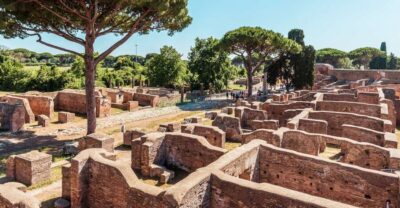
The site also gives you room to move through a city rather than viewing isolated monuments. You follow streets and pass through different parts of Roman life. With a guide, those broken walls become evidence of commerce, engineering, religion, entertainment, and household routines.
The tour is conducted in English and lasts 2.5 hours. That is enough time for a focused introduction, but not enough to inspect every corner of Ostia Antica. If you want to study every inscription or wander far beyond the main route, you may need a separate visit.
More Ostia Antica tours:
- Ancient Ostia Antica Semi-Private Day Trip from Rome by Train with Guide
★ 4.5 · 579 reviews - From Rome: Ostia Antica Guided Half-Day Trip by Train
★ 4.8 · 486 reviews - Horse Sanctuary & Trail Ride in Ostia Antica
★ 4.5 · 276 reviews
Meeting at the Ostia Antica Entrance
You meet directly outside the ticket office at the entrance to the archaeological site. Your guide carries a LivTours sign, so the meeting point is specific rather than vague.
Entrance tickets are included, and the experience includes skip-the-ticket-line access. Bring a passport or ID card, as requested in the tour information. Starting times vary, so check the available schedule before booking.
The tour ends back at the same meeting point. That makes planning easier if you want to continue exploring on your own or return toward Rome after the guided walk.
The small-group promise is one guide for six participants. In rare cases, one or two extra people may be added so families or friends can stay together. You might also find yourself in a group smaller than six. For solo visitors, that flexibility is worth knowing in advance.
Neptune’s Baths and Roman Water Engineering
The Baths of Neptune are one of the strongest early stops. The preserved mosaic of Neptune, the god of the sea, fits the setting perfectly and gives the guide an easy way to explain the city’s connection to water and maritime trade.
The baths were not just places to wash. Roman bath complexes were social spaces, and the water system shows how much planning went into public buildings. During this part of the tour, you learn about the advanced systems that carried both hot and cold water into Roman structures.
That detail is useful because it moves the conversation beyond the familiar image of Rome as a city of temples and emperors. You begin to see plumbing, heating, public services, and urban planning as part of daily life.
The mosaic is a visual highlight, but do not expect a fully intact building. Ostia Antica is an archaeological site, and many structures survive as walls, floors, foundations, and fragments. A guide matters here because the remains do not always explain themselves.
The Necropolis and Piazza della Minerva
The route continues to the Necropoli di Porto, identified in the tour stops as the Ostia necropolis. Burial areas offer a different view of Roman society. Instead of asking how people worked or entertained themselves, you consider how they marked death and remembered individuals.
The necropolis helps break up the commercial and civic parts of the visit. It also shows that the ancient city was more than a business center. The tour places burial customs alongside markets, water systems, public buildings, and entertainment, giving you a wider sense of how the city functioned.
Piazza della Minerva is another guided stop. The supplied details do not specify a single feature to expect here, so your guide’s explanation will be especially important. Treat this part as a setting for context rather than a guaranteed single showpiece.
This is one reason the personal format can be valuable. With a large group, a less famous square can pass quickly. With six people or fewer, you have a better chance to ask why the space mattered and how it connected to the rest of Ostia.
More private tours in Ostia Antica:
- Ostia Antica Semi Private Tour from Rome
★ 5.0 · 238 reviews - Private Tour – Ancient Ostia
★ 5.0 · 42 reviews - Rome: Ostia Antica Private Guided Tour
★ 4.8 · 4 reviews - Ostia Antica: Archaeological Guided Private Tour
★ 5.0 · 4 reviews
The Theater and the Public Side of Roman Life
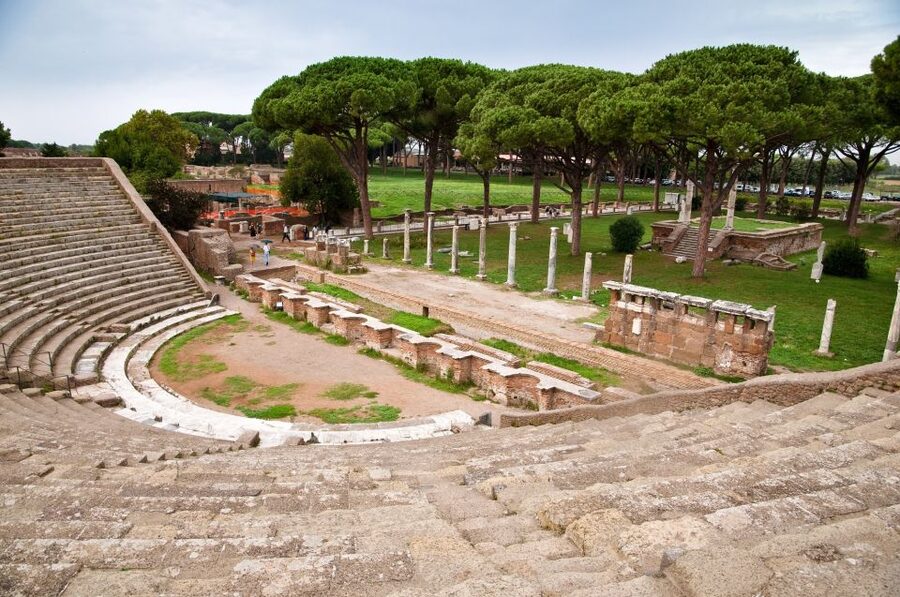
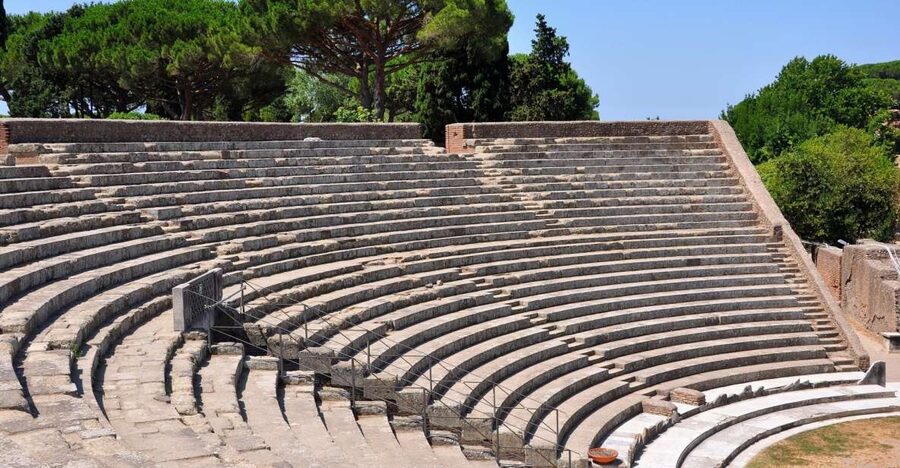
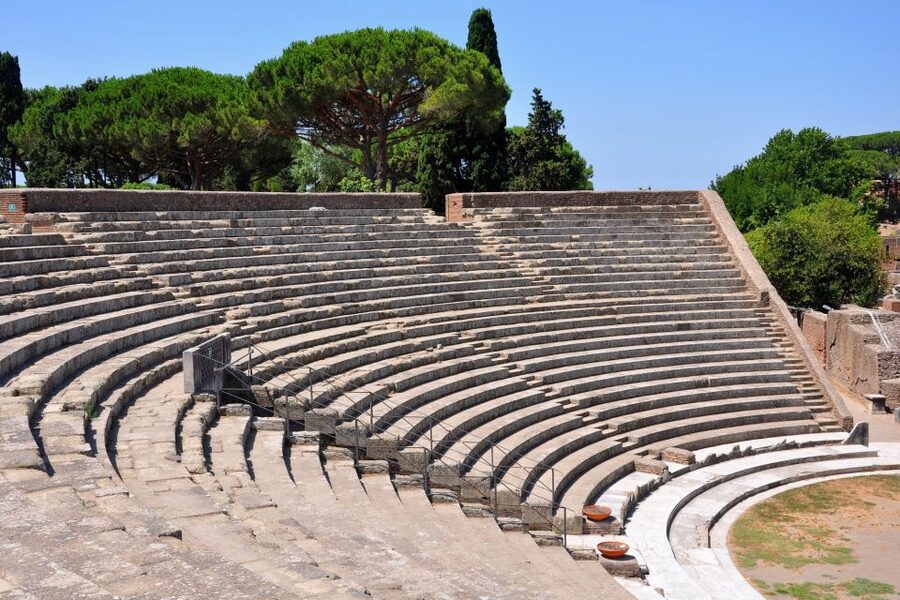
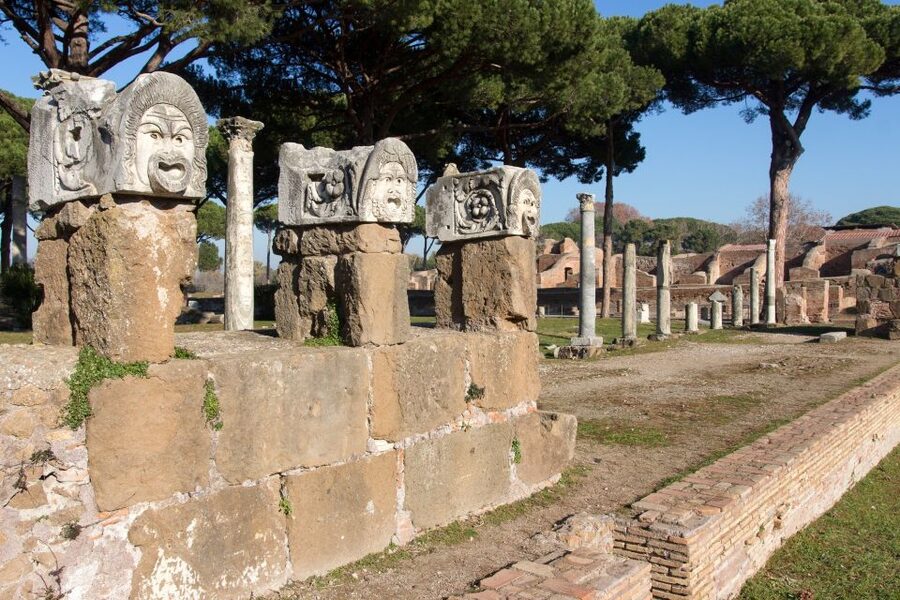
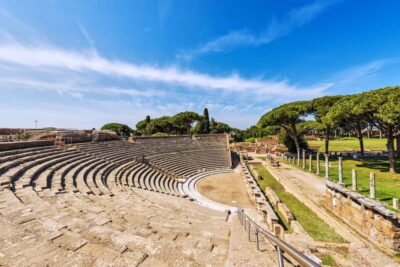
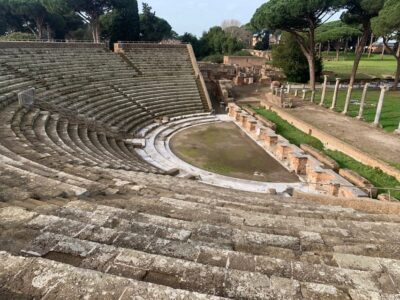
The ancient theater of Ostia could hold up to 3,500 people. That capacity gives you a clear sense of the city’s social scale. Entertainment was not a private luxury for a few wealthy households. It was part of public life.
Your guide explains what events took place here and how the theater fit into the city. The structure also gives the route a welcome change of pace. After examining baths, commerce, and burial spaces, you turn to performance and public gatherings.
The theater is an impressive stop, but the experience is not a full performance or a staged reconstruction. You are seeing an archaeological remains and listening to a historical explanation. If you prefer ancient sites that provide a dramatic visual punch at every turn, some sections may feel understated.
Still, the theater works well within a short tour. It is easy to understand, visually distinct, and tied to a basic question: what did people do when they were not working, trading, bathing, or praying?
The Square of the Corporations and Rome’s Supply Line
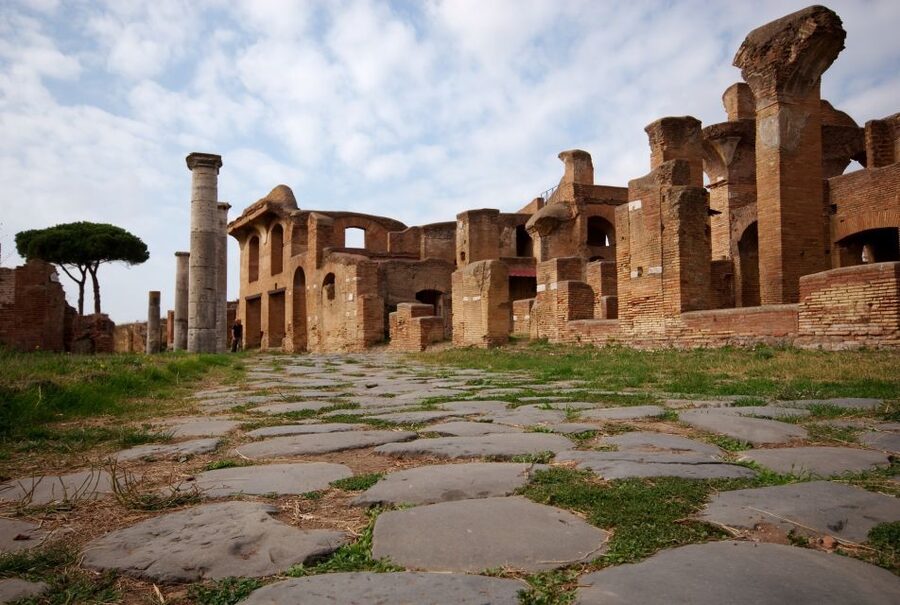
The Forum of Corporations, also called the Square of the Corporations, is central to the tour’s main idea. This was a center of commerce and trade during the age of Emperor Augustus.
Here, the focus turns from individual buildings to the network that made Rome possible. Ostia helped move goods toward the capital, and that trade supported Rome’s large population. The guide connects the ruins to Roman business, shipping, and administration.
This stop is particularly valuable if you want more than architectural sightseeing. You learn why a port city mattered and how commerce shaped the empire. The site helps explain that Rome’s power depended not only on armies and monuments, but also on food, transport, labor, and organized trade.
The name Forum might suggest a grand civic square in the style of Rome’s central forum. Here, the more important point is function. The Square of the Corporations represents organized business and the practical machinery of an empire.
Shops, Bakery, Latrines, and Everyday Details
Some of the best moments at Ostia Antica are the small ones. The route takes you past ancient storefronts, where you can imagine the street as a place of buying, selling, and routine errands.
The ancient bakery adds another useful piece to the picture. Bread was a basic part of Roman life, and a bakery shows how food production operated within the city. It helps connect the massive population of Rome with the labor and supply systems that kept people fed.
Ancient latrines may sound like a comic stop, but they are informative. Public sanitation reveals how Romans organized shared spaces and dealt with basic urban needs. These remains also keep the visit grounded in real life. Empires are built by people who need food, water, toilets, work, and places to shop.
You also hear about the complex systems that brought hot and cold water into buildings. Taken together, the shops, bakery, latrines, and waterworks make Ostia feel less like a collection of ruins and more like a functioning town.
What the Two-and-a-Half-Hour Format Gives You
A 2.5-hour visit is a sensible length for an introduction. You get a guided route through the main sights without giving up an entire day in the heat or among exposed ruins.
The trade-off is coverage. Ostia Antica is extensive, and this tour cannot provide a slow examination of every street, house, inscription, and mosaic. You are getting a curated selection of important locations, with explanation tying them together.
The pacing seems to be a real strength. Tiffany was praised for a tour that was well timed and full of interesting information. Federico was also singled out as an excellent guide. That matters because archaeological sites can either feel clear and alive or blur into one long line of walls.
If you have limited time in Rome, the short format works well. You can see the major themes, then decide if you want to stay longer afterward. If Ostia is your main archaeological interest, consider treating this as an introduction rather than the complete visit.
Is the $146.14 Price Worth It?
At about $146.14 per person, this is not a budget excursion. The price includes entrance, skip-the-line access, and a fully guided English-language visit. The group limit also matters: you are paying for a more personal format rather than joining a large crowd.
I would consider the price reasonable for visitors who want historical explanation and a small group. The guide can point out details you might miss, explain how buildings worked, and connect separate ruins into one story. The value is strongest if you are curious about Roman commerce and everyday life, not only famous monuments.
The price is harder to justify if you are comfortable exploring independently. Ostia Antica may still be worth visiting, but you might prefer a less expensive entrance-only option if available for your dates. This tour earns its cost through the guide, group size, and included ticket, not through a long duration.
The flexible booking terms help reduce the risk. You can reserve now and pay later, and cancellation is allowed up to 24 hours in advance for a full refund. Check the exact conditions at booking, but this gives you some room when your Rome schedule is still shifting.
Who Will Enjoy This Tour Most
I would recommend this experience to first-time visitors who want Roman history explained in plain terms. It also suits anyone who has already seen Rome’s grand monuments and wants to understand the working city behind them.
Families may appreciate the short length and variety. The route includes mosaics, shops, a theater, a bakery, and unusual details such as ancient latrines. The possibility of a small adjustment to group size also helps families and friends remain together, though you should know the group may occasionally exceed six by one or two people.
History fans will value the focus on trade and engineering. Architecture fans will find plenty to examine, but the tour is not limited to grand design. It is equally interested in infrastructure and routine life.
This may not be the best choice if you want a relaxed, unguided wander or a full-day archaeological study. It is also less suitable if you need a tour in a language other than English, since English is the stated tour language.
Should You Book the Ostia Antica Tour?
Book it if you want a compact, well-organized introduction to Rome’s ancient harbor city and you value a guide who can explain the purpose behind the ruins. The small group, included entrance, focused route, and strong praise for Tiffany and Federico all support the tour’s appeal.
Skip it if $146.14 feels too high for 2.5 hours or if you would rather explore independently. You should also allow for your own travel time to the Ostia Antica entrance, since the tour begins there rather than in central Rome.
For most visitors, the deciding question is simple: do you want to see ruins, or do you want help understanding how a Roman port city worked? If the second answer is yes, this is a useful and well-focused choice.
FAQ
Where does the Ostia Antica tour begin?
It begins at the entrance to the Ostia Antica archaeological site, directly outside the ticket office. Your guide will be holding a LivTours sign.
Where does the tour end?
The activity ends back at the original meeting point at the entrance.
How long does the tour last?
The guided experience lasts 2.5 hours. Starting times vary, so check availability for the date you want.
Is entrance to Ostia Antica included?
Yes. Entrance tickets for Ostia Antica are included, along with skip-the-ticket-line access.
What language is the tour conducted in?
The live guided tour is conducted in English.
How large is the group?
The standard small group is limited to six participants, with one guide per group of six. In rare cases, one or two additional people may be added to keep families or friends together.
What sights are included?
The route includes the necropolis, Piazza della Minerva, Baths of Neptune, ancient theater, Square of the Corporations, ancient bakery, Ostia forum, and ancient latrines.
What should you bring?
Bring a passport or ID card.
Can I cancel or pay later?
You can reserve now and pay later. Cancellation is available up to 24 hours in advance for a full refund, according to the stated booking terms.
Newest Ostia Antica tours we have reviewed
- Ancient Ostia Private Tour Led By An Archaeologist★ 5.0 · 3 reviews
- Private Tour – Ancient Ostia★ 5.0 · 42 reviews
- All-included Guided Tour of Ancient Ostia from Rome with Hotel Pickup & Drop Off★ 5.0 · 11 reviews
- Rome: Ostia Antica Private Van Tour with an Archaeologist★ 5.0 · 3 reviews
- Rome: Ostia Antica Skip-The-Line Entry Ticket & Tour Option★ 4.7 · 20 reviews
- Rome: Ostia Antica Tour From Rome★ 4.9 · 73 reviews
- Rome: Ostia Antica Private Guided Tour★ 4.8 · 4 reviews
- Rome: Ostia Antica Archaeological Park Ticket & Audio App★ 4.6 · 146 reviews
Ostia Antica Tours, compared.
Ancient Ostia Antica Semi-Private Day Trip from Rome by Train with Guide
Read our review →


Ostia Antica Archaeological Park Ticket & Audio App
Read our review →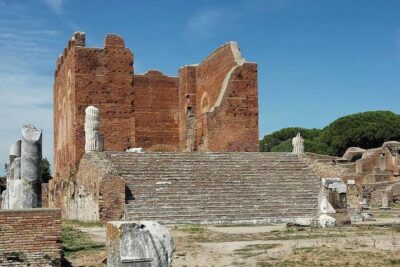
Browse the lists this tour appears in