
Reviewed · ROME JUBILEE YEAR TOURS
Highlights of Rome Bike Tour (Including Jubilee Sights)
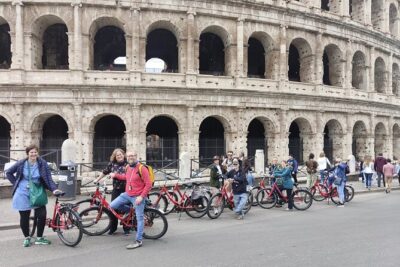
Rome reveals itself quickly from a bike seat. In about three hours, you move from the Jewish Ghetto and Campo de’ Fiori to the Pantheon, Trevi Fountain, Imperial Forums, and Circus Maximus without spending the day underground on buses or walking the same crowded streets twice. It is a smart first look at the city, especially when you want the big picture before choosing where to return.
I like the wide sweep of the route, which ties together ancient, Renaissance, Baroque, and modern Rome. I also like the small-group format, limited to 14 people, plus the practical front pouch and rear rack for water, phones, and small belongings. The main caution is Rome’s traffic and rough cobbles. Afternoon crowds can be thick, and one poor experience involved a fall on slick stones when the guide had moved too far ahead.
Key points at a glance
- A strong first-day route: Cover the Jewish Ghetto, Campo de’ Fiori, Piazza Navona, Pantheon, Trevi Fountain, Trajan’s Forum, Piazza Venezia, the Arch of Constantine, and Circus Maximus.
- Easy in physical terms: Rome is mostly flat along this route, though cobbles, uneven surfaces, crowds, and traffic require alert riding.
- Bike choice matters: Standard bikes are enough for many riders, while an e-bike can make the ride more relaxed if you dislike hills or want to save your energy.
- Personal guiding: Groups are capped at 14, and guides such as Daniele, Elena, Stefano, Nico, Marika, and Sarah have been praised for clear stories, humor, and careful group management.
- Useful equipment included: You receive a bike, helmet, front bike pouch, and rear rack. Drinks are not included, so bring water.
- Best timing: Morning is likely easier than afternoon or a crowded Friday evening, when narrow streets and popular squares become harder to navigate.
Why a Bike Works So Well for Rome’s Center
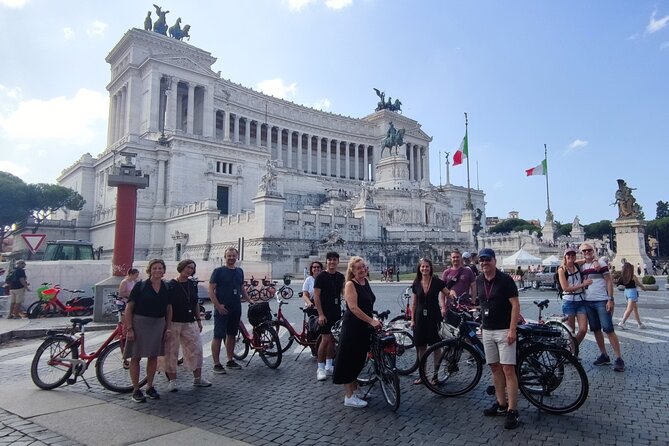
Rome’s core is compact on a map but tiring on foot. The Pantheon, Trevi Fountain, Piazza Navona, and the Roman Forum area are not far apart, yet walking between them means weaving through crowds and stopping often for traffic lights. A bike lets you cover more ground while keeping you close to the street life.
You are not simply pedaling past monuments. The guide stops for short explanations and gives you time for photos or a quick look around. The balance matters. A three-hour lecture would be exhausting, while a ride with no context would leave you with a blur of churches and ruins. This tour aims for the middle ground.
The route is also a useful introduction to Rome’s layers. You see the Jewish community’s quarter, imperial monuments, Baroque squares, a Christian church, and the great open spaces linked to ancient public entertainment. Guides including Daniele and Elena have been praised for turning dates and emperors into stories rather than reciting a list of names.
Your group may be as small as a handful of people or closer to the 14-person limit. That size is small enough for the guide to keep an eye on the group, but not so small that the experience feels like a private tour. The guide usually rides ahead, stops the group, explains the site, and checks that everyone is together.
More city highlights tours in Rome:
- Rome: Big Bus Hop-on, Hop-off Open-Top Sightseeing Tour
★ 3.5 · 2,580 reviews - Rome in a Day Group Tour with Vatican Museums and Colosseum
★ 4.5 · 2,450 reviews - Rome Highlights by Golf Cart Private Tour
★ 5.0 · 2,379 reviews
Start in the Jewish Ghetto and Campo de’ Fiori
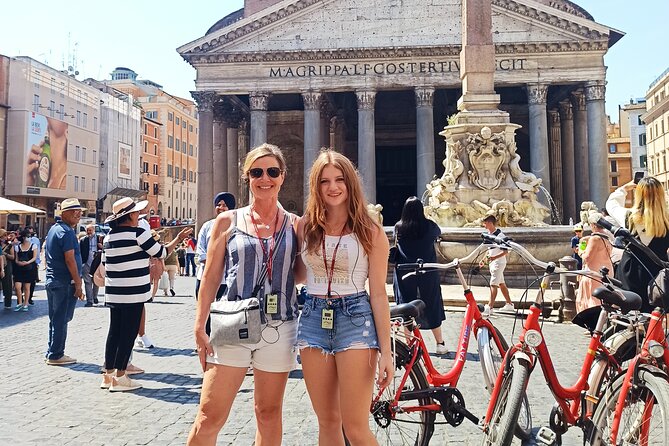
The meeting point is on Via dei Delfini, 35, in central Rome. Arrive 15 minutes early so you have time to get fitted to the bike, receive a helmet, and settle your belongings in the front pouch or on the rear rack.
The first stop is the Jewish Ghetto, one of Rome’s most distinctive neighborhoods. Created by order of Pope Paul IV in 1555, it is among the oldest Jewish quarters in the world. The tour gives you about seven minutes here, enough for an introduction and a quick look, but not enough for a full exploration of the area or its religious sites.
That short stop is useful because it gives the rest of the ride a human setting. Rome is not only emperors, popes, and fountains. The Ghetto’s story adds a different part of the city’s past, shaped by religious identity and enforced residence.
You then move toward Campo de’ Fiori, the Field of Flowers. During the day, the square is known for its flower, fruit, and vegetable market. In the evening, its terraces fill with people. The stop is brief, around ten minutes, so you should treat it as an orientation rather than a market visit.
Crowds are part of the charm and part of the challenge here. You will likely need to walk the bike for a short stretch or move slowly around pedestrians. This is one reason the guide’s pace matters. Sarah has been praised for keeping a group moving while still allowing time for photos and water.
Piazza Navona, the Pantheon, and Sant’Ignazio
Piazza Navona is one of the finest open spaces in Baroque Rome. Its long oval shape follows the outline of the Stadium of Domitian, built in AD 86 for athletics and horse racing. Today, the square is filled with fountains, churches, restaurants, artists, and people taking photographs.
The tour allows about seven minutes at Piazza Navona. That is enough to hear why the square has its unusual shape and to take in the scene, but you should not expect a detailed examination of every fountain or building. If you want more time here, mark it as a place to revisit after the ride.
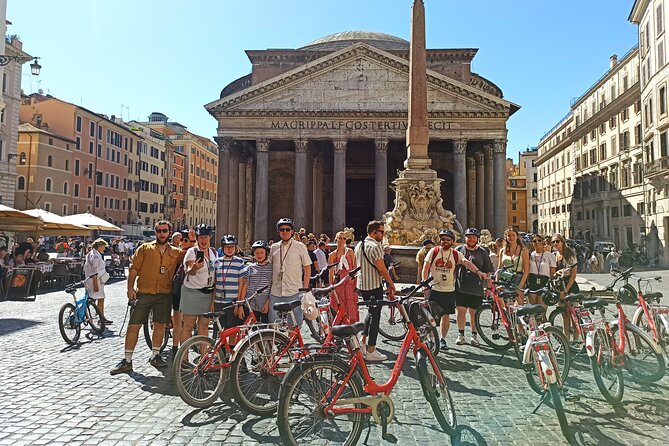
The Pantheon receives a longer stop, about 15 minutes. That is welcome. This is one of the most important buildings on the route and one of the best-preserved examples of Roman monumental architecture. Marcus Vipsanius Agrippa commissioned the original temple in 27 BC, dedicating it to all the gods.
The Pantheon’s power comes from its calm geometry. Even from outside, you can see why later architects studied it so closely. Admission is not included, so the stop may focus on the exterior unless you choose to pay separately. The schedule does not leave enough time for a long interior visit, especially if a line is present.
Next comes Sant’Ignazio di Loyola. The guide explains the church and provides pictures from outside rather than taking the group in for an extended visit. This is a good example of the tour’s broad approach: you receive context for many places, but only a few stops receive substantial time.
The Church of Sant’Ignazio is especially worthwhile for its Baroque visual tricks, though the supplied plan specifies an exterior explanation and photographs. If you want to explore the inside, ask the guide whether the timing allows it, but do not count on a full church visit.
Ancient Columns, Trevi Fountain, and Trajan’s Forum
The route continues past the Temple of Hadrian, now visible mainly through its surviving columns incorporated into a later building. The temple was likely commissioned by Hadrian for his wife, Vibia Sabina, and completed around AD 145 by Antoninus Pius after Hadrian’s death and deification.
This is a quick, five-minute stop. It is not a major pause for photographs, but it gives you another example of how ancient Rome is woven into the modern city rather than kept in one fenced-off archaeological park.
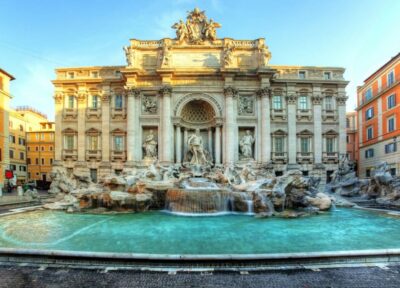
At the Trevi Fountain, the guide gives you about seven minutes. The fountain marks the terminal point of the Aqua Virgo, the only ancient aqueduct still in continuous use. It is Rome’s best-known fountain and one of the most crowded points on the route.
Do not expect a quiet moment here. You will have to watch pedestrians, hold your bike securely, and work quickly if you want a clear photo. The short stop is sensible because the fountain can swallow time. If Trevi is a priority for you, return early in the morning or later in the evening on another day.
Trajan’s Forum and the Imperial Forums receive about 15 minutes of explanation and viewing. This is one of the strongest history stops because the ruins show how Roman emperors used architecture to project power. The route gives you a useful view without requiring the time or ticket cost of a full archaeological visit.
Admission is not included at the paid sites listed in the itinerary. The tour is best understood as a guided overview, not a substitute for entering every monument. You will learn where to return, what deserves more time, and how the pieces fit together.
More Jubilee Year tours in Rome:
- Private Sacred Relics Jubilee Bike Tour
★ 5.0 · 58 reviews - Rome: Jubilee Year Papal Basilicas Tour by Private Car
★ 4.8 · 57 reviews - Private Jubilee Tour: 3 Papal Basilicas with Santa Maria Maggiore
★ 5.0 · 53 reviews - Rome+Jubilee Audioguide – TravelMate app for your smartphone
★ 4.2 · 38 reviews
Piazza Venezia and the Long View of Ancient Rome
Piazza Venezia is one of central Rome’s busiest junctions. It stretches between Via del Corso and Via dei Fori Imperiali, near the Monument to Vittorio Emanuele II. The square’s current form took shape through major changes in the 19th and 20th centuries.
You stop for only about five minutes, but the location helps connect the ancient forums with later national history. It is also a point where traffic and pedestrians demand extra attention. Your guide’s instructions matter here, and you should not assume that a broad-looking road is calm.
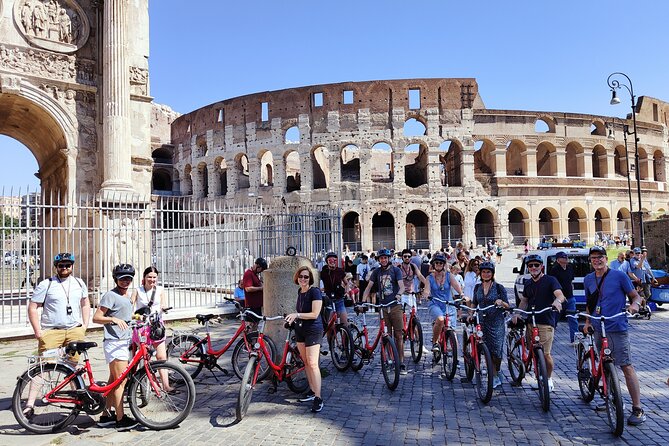
The ride then heads toward the Arch of Constantine. Built along the triumphal route between the Circus Maximus and the Arch of Titus, it celebrates Constantine’s victory over Maxentius on October 28, AD 312. It is the largest surviving honorary arch in Rome and combines older reliefs with Constantinian symbolism.
Again, the stop is short, around five minutes. That is enough for the main story and a photograph, but not for a close study of the reliefs. The advantage is that you see it in relation to the ancient route rather than as an isolated monument.
Circus Maximus and the End of the Loop
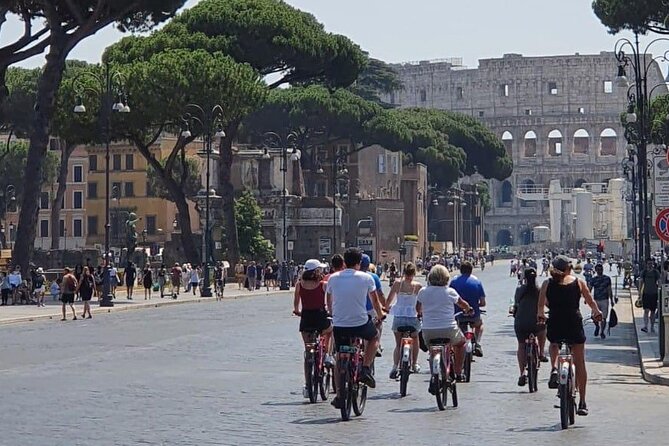
The final major stop is Circus Maximus, the enormous ancient venue for public entertainment. It measured roughly 600 meters long by 140 meters wide and was associated by legend with the early story of Rome and the abduction of the Sabine women.
The scale is difficult to understand from a guidebook photograph. Even in its open, grassy condition today, the space helps you picture the crowds, races, and political theater that once filled it. The tour allows about eight minutes here before returning to the meeting point.
The return ride completes a broad loop through central Rome. Because the activity ends where it begins, you do not need to arrange transport back from a distant neighborhood. You can also note which monuments deserve a second visit while the route is still fresh.
Bikes, E-Bikes, and the Real Riding Conditions
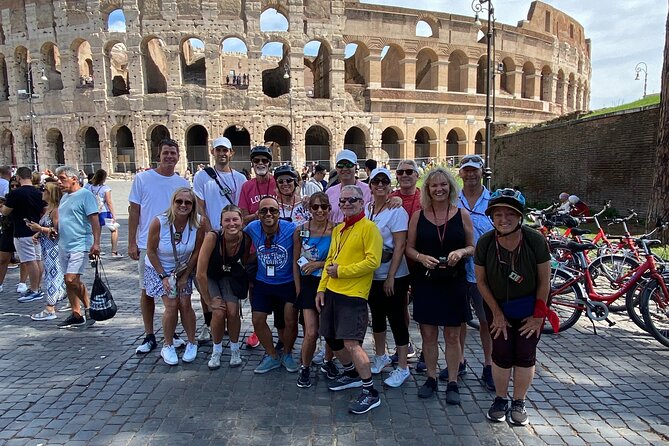
The route is mostly flat, which is why several riders found a standard bike easy to manage. One rider said an e-bike made the outing more leisurely on some difficult hills, while others felt they did not need one. The practical choice depends on your fitness, comfort, and how much effort you want to spend in traffic.
The bikes have been described as being in good condition, though one account called them older but serviceable. You receive a helmet, front pouch, and rear rack. The pouch is handy for valuables, but keep your phone and wallet secured rather than loose on the bike.
Rome is not a quiet cycling city. You may ride over cobblestones, uneven surfaces, and slick streets. The route also passes through narrow roads and busy public squares. Several riders felt safe and found the ride easy, but one evening group encountered heavy traffic, a fast-moving police car, and a fall on wet cobbles.
I would avoid treating this as a carefree cruise. You need to be comfortable braking, steering around pedestrians, and riding in a group. Children are welcome if they have been riding for a while, can handle different surfaces, and are comfortable staying with a group. Include each child’s height when reserving the correct bike size.
Pregnant women are strongly discouraged from joining because of the cobblestones. Children under 18 must have an adult with them, and the activity is not recommended for children aged one and under.
Guides, Group Size, and the Quality of the Commentary
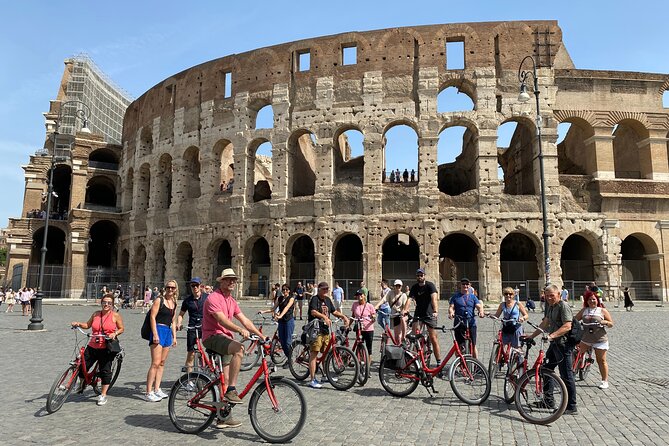
The guide is the heart of this experience. Strong guides such as Daniele, Nico, Stefano, Marika, Sarah, Elena, Matt, and Arvin have been praised for humor, good pacing, clear communication, and useful suggestions for the rest of a Rome stay.
Daniele, in particular, has been noted for using memorable comparisons to make Roman history easier to follow. Other guides have been praised for not leaving anyone behind, stopping often, and allowing time for photographs and water. That is exactly what you want on city streets.
The quality can vary by guide. One two-star experience found the historical explanations too shallow, even though the route itself was enjoyable. That criticism is worth taking seriously if you want a formal history lesson. This tour is strongest as a lively overview with stories and context, not as an academic examination of ancient Rome.
Some riders found it hard to hear the guide through the headset while moving. Frequent stops help, but you may still want to ask the guide to repeat a point if traffic noise gets in the way.
Is $54.44 Good Value for Three Hours?
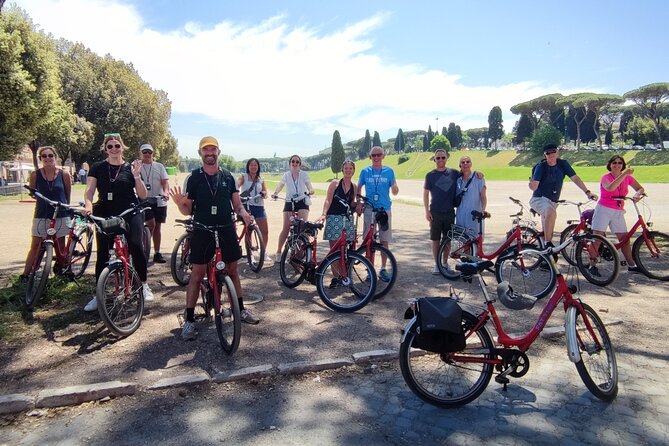
At $54.44 per person, the tour offers a fair package for a first visit. You receive a bike, helmet, storage, a local guide, and a route that reaches many of Rome’s main sights. Booking each element separately would not make sense, since the main value is the guide’s ability to connect the stops and manage the ride.
The price does not include drinks or admission to sites. Bring water, especially in warm weather, and budget separately if you plan to enter the Pantheon or another paid attraction. The tour itself focuses on outdoor viewing and explanations.
The value is highest on your first or second day in Rome. You get a mental map, a list of places to revisit, and a quick sense of how the historic center fits together. If you already know Rome well or want long interior visits, the short stops may feel too rushed.
How to Prepare for the Ride
Arrive 15 minutes before departure. Wear clothes suited to the forecast, and use sunscreen and a hat in hot weather. In winter, bring warm layers, gloves, and a scarf. Waterproof clothing is sensible when rain is expected.
Drink water before you start and bring a bottle. There is no included drink service, and the combination of sun, traffic, and pedaling can catch up with you quickly. Comfortable clothing matters more than looking dressed up.
Morning is the better choice when you have flexibility. The route passes through places that become packed later in the day, and one afternoon experience found the crowds difficult. Friday evening can be particularly awkward when concerts or other events fill the streets.
Free cancellation is available up to 24 hours before the start time for a full refund. If the minimum number is not reached and the operator cancels, you are offered another date or experience, or a full refund.
Who Should Book This Rome Bike Tour?
You should book it if you are visiting Rome for the first time, want to cover the central highlights quickly, and enjoy learning through stories rather than sitting through long formal talks. It also suits families with older children who can ride confidently in traffic and over cobbles.
It is a good choice after a long flight, since the ride gives you movement and a city orientation without demanding a full day of walking. It works particularly well for people who want to decide which sights deserve a second visit.
You may want a different format if you dislike cycling near cars, need long visits inside monuments, or want highly detailed archaeological commentary at every stop. In that case, a walking tour or private guide may fit better.
Final Verdict: Book It for Rome’s Big Picture
I would book this tour early in a Rome stay, preferably in the morning. The route is broad, the riding is generally manageable, and the small group keeps the experience more personal than a large bus outing.
The best guides make the city easy to read, and the mix of Jewish, ancient, Baroque, and modern sights gives you a strong first framework. Just bring water, expect cobbles and crowds, and choose an e-bike if you want the least effort.
FAQ
How long is the Highlights of Rome Bike Tour?
The tour lasts approximately three hours.
What sights does the bike tour visit?
The route includes the Jewish Ghetto, Campo de’ Fiori, Piazza Navona, the Pantheon, Sant’Ignazio di Loyola, the Temple of Hadrian, Trevi Fountain, Trajan’s Forum, Piazza Venezia, the Arch of Constantine, and Circus Maximus.
Where does the tour start and finish?
The tour starts at Via dei Delfini, 35, 00186 Rome, Italy, and finishes back at the same meeting point.
Is bike rental included?
Yes. Bike rental, a helmet, a front bike pouch, and a rear rack are included.
Are drinks included?
No. Drinks are not included, so you should bring water.
How large is the group?
The tour has a maximum of 14 participants.
Can children join the tour?
Children can join if they have been riding for a while, can ride comfortably in a group, and can manage different surfaces. Participants under 18 must be accompanied by an adult. The tour is not recommended for children aged one and under.
What happens if I need to cancel?
You can cancel up to 24 hours before the experience begins for a full refund. Cancellations or changes made less than 24 hours before the start time are not accepted for a refund.
More e-bike tours in Rome
- Rome EBike Tour: Appian Way, Catacombs & Roman Aqueducts
★ 5.0 · 1,766 reviews - Rome: Top Highlights & Hidden Gems Tour by Cannondale E-Bike
★ 4.9 · 1,760 reviews - Rome: Appian Way, Catacombs, & Roman Aqueducts E-bike Tour
★ 4.9 · 1,421 reviews - Rome City Small Group Bike Tour with quality Cannondale EBike
★ 5.0 · 1,380 reviews
Newest Rome tours we have reviewed
- Private TikTok Video Making in Rome★ 5.0 · 7 reviews
- Assisi & Saint Francis Path Tour from Rome★ 5.0 · 45 reviews
- Assisi, Orvieto and Civita di Bagnoregio Full Day Tour from Rome★ 4.5 · 45 reviews
- Assisi and Cascia Private Day Tour from Rome with Lunch★ 5.0 · 10 reviews
- Art Class in the center of Rome!★ 4.0 · 4 reviews
- Art & Craft: Beer Tour with Street Art in Rome★ 4.5 · 6 reviews
- Arrival in Rome: Airport Transfer & Exclusive City Introduction★ 5.0 · 3 reviews
- From Rome: Private Day-Tour of Tuscany★ 5.0 · 16 reviews
Rome Jubilee Year Tours, compared.
Jubilee Year Papal Basilicas Tour by Private Car
Read our review →
Private Jubilee Tour: 3 Papal Basilicas with Santa Maria Maggiore
Read our review →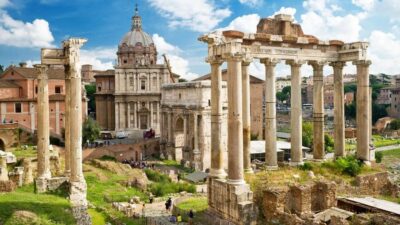
Rome+Jubilee Audioguide – TravelMate app for your smartphone
Read our review →
Jubilee tour: art and popes in Rome in the golden age of Christendom
Read our review →Browse the lists this tour appears in