
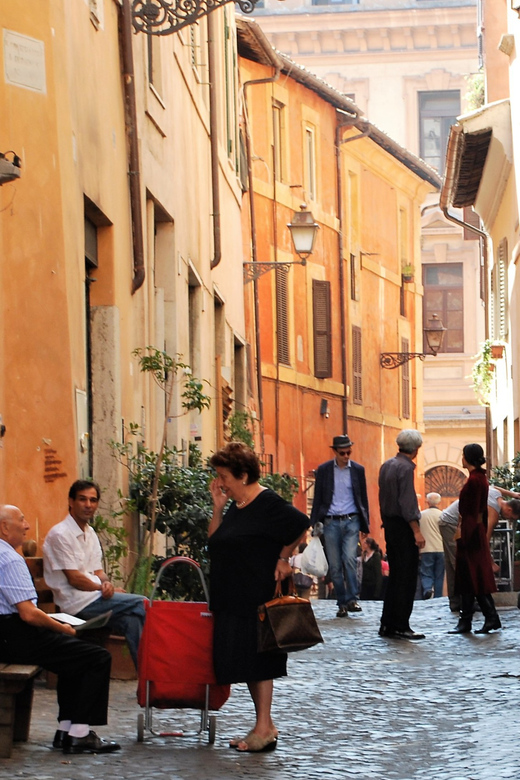
Reviewed · ROME SQUARES AND FOUNTAINS TOURS
Rome: Squares and Fountains Guided Walking Tour
Rome’s grandest sights are linked by ordinary streets on this 2.5-hour walking tour. You move from the Trevi Fountain to the Pantheon, Piazza Navona, Santa Maria della Pace, and Castel Sant’Angelo, with an art, history, and archaeology guide explaining what you are seeing.
I like the route’s focus on squares and fountains, since these are the places where Rome feels most open and theatrical. I also like the smaller turn through the Ponte district, which gives you more than the standard postcard stops. The main drawback is the walking: this is not suitable for wheelchair users or anyone who has trouble walking, and the meeting point can be easy to miss.
Key points at a glance
- Trevi Fountain stories: Hear the myths and legends tied to Rome’s most famous fountain.
- Piazza Navona’s Baroque theater: See Bernini’s Fountain of the Four Rivers and Borromini’s Sant’Agnese in Agone.
- Pantheon context: Learn why its ancient dome mattered for centuries.
- A quieter Rome: Walk through the Ponte district and visit Santa Maria della Pace.
- Castel Sant’Angelo finale: View the ancient tomb and the Bridge of the Angels from outside.
- Practical format: English guide, group walking tour, $67 per person, and free cancellation up to 24 hours before departure.
Rome’s fountains are the real itinerary
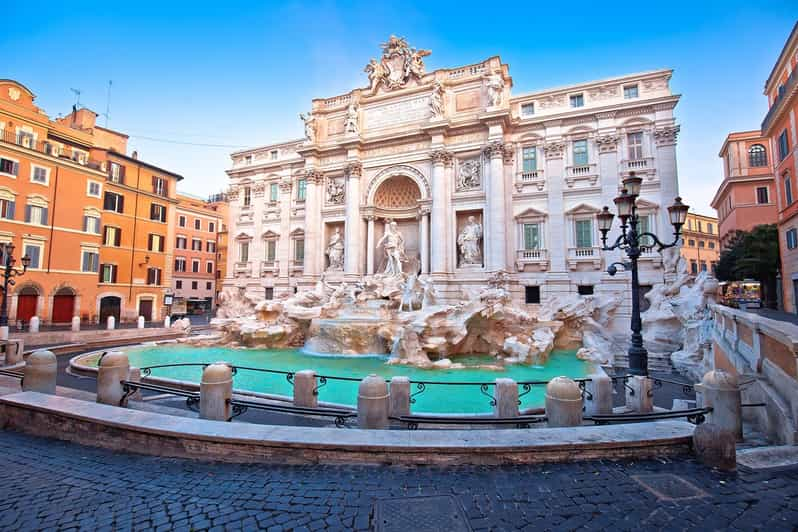
Rome is often treated like a checklist of ancient monuments. This walk takes a different route through the city. Its main subject is the public space between the monuments: the fountains, piazzas, lanes, churches, and bridges that give central Rome its character.
You start at Piazza della Trinità dei Monti, beside the obelisk. That is near the top of the Spanish Steps, so you should allow time to reach the meeting point and find the guide’s Fun Tour signboard. Check-in is mandatory 15 minutes before departure. One person who took the tour had trouble finding the meeting point, though the contact help in the booking app eventually helped locate Sabrina, the guide.
The route then heads into the historic center. Your guide covers art, archaeology, and the stories behind the buildings. That mix matters. Rome’s monuments are easier to understand when you know why a fountain was built, how a square was used, or what stood on a site before the building in front of you.
The group format keeps the price below what you would pay for a private guide, but it also means you should expect a shared pace. The tour costs $67 per person, which is fair if you want historical explanation at several major sites in one outing. It is less attractive if you prefer to linger silently at each monument or move at your own speed.
More squares and fountains walks in Rome:
- Rome: Pantheon, Trevi Fountain & Roman Squares Guided Tour
★ 4.7 · 386 reviews - Rome: Fountains and Squares Small-Group Walking Tour
★ 4.7 · 335 reviews - Tour Squares of Rome and Vatican
★ 4.5 · 133 reviews
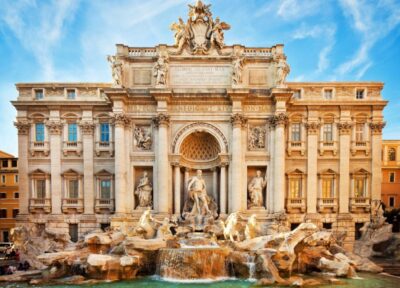
Trevi Fountain and the stories behind the water
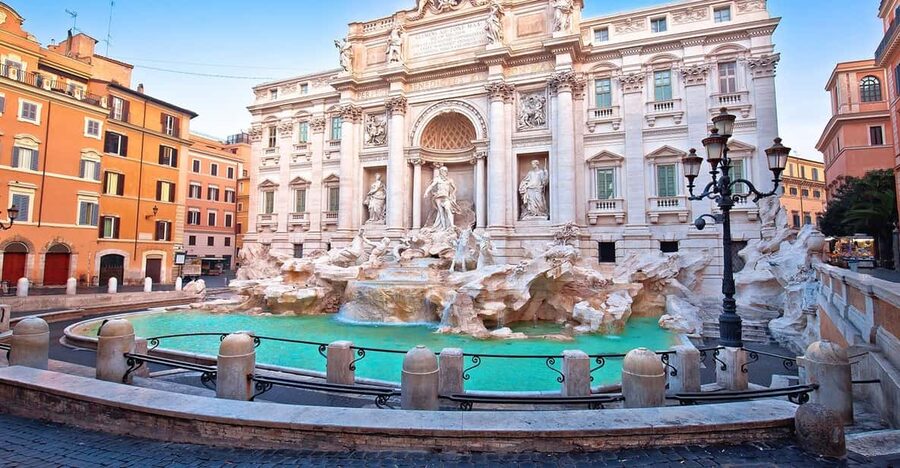
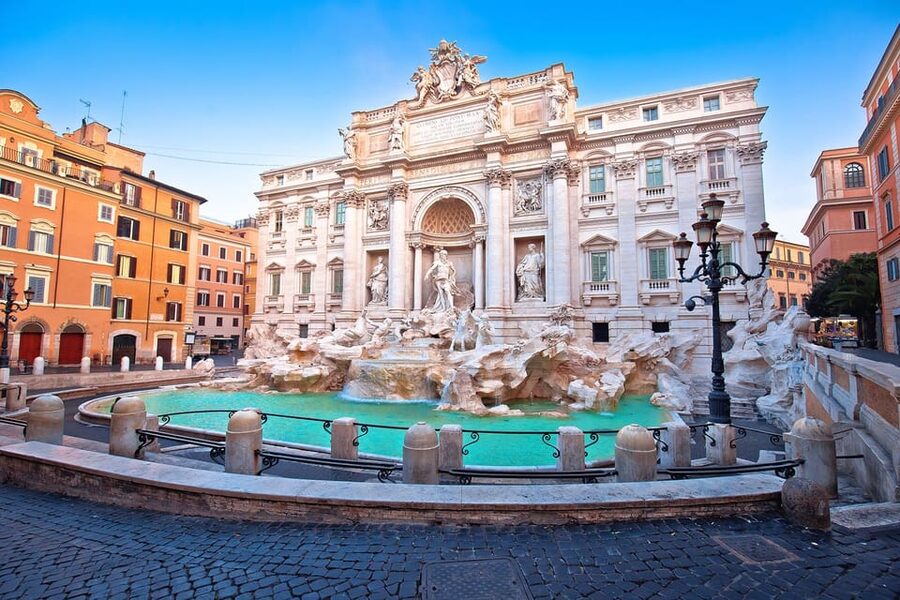
The Trevi Fountain is an early highlight. You will see the water, carved figures, and theatrical setting, but the useful part of the stop is the explanation of its legends and myths.
A guide can help you look beyond the crowded central view. The fountain is not only a famous place for photographs. It is also a good example of Rome’s habit of turning practical infrastructure into grand public art. Water has always mattered to the city, and Rome’s fountains often combine engineering, political display, religion, and decoration.
The information supplied for this tour does not promise a set amount of free time at the fountain, so do not assume you will have a long private photo stop. Your attention will be shared with the guide’s commentary and the group’s movement. If the fountain is a priority, arrive with your camera ready and wear shoes that let you stand comfortably.
This is also one reason I would not schedule the tour immediately before a timed museum visit. The walk lasts 2.5 hours, and city streets do not always allow a precise finish.
The Pantheon: an ancient dome in the middle of daily Rome
From Trevi, the route continues to the Pantheon. The building began as a temple to all the gods of Olympus, and its dome has been the world’s largest since ancient times.
That single fact gives the stop its proper weight. The Pantheon is not just another old building on a busy street. It shows the scale and ambition of Roman construction, while its present setting makes the past feel unusually close to daily life.
The tour helps connect the Pantheon to the fountains and squares around it. Rome’s historic center works best when you see it as a walkable sequence rather than isolated attractions. A grand ancient building can lead to a Renaissance street, then to a Baroque church or fountain within minutes.
The details do not specify whether the tour includes entry inside the Pantheon. Plan on an exterior explanation unless your guide tells you otherwise. That is important if seeing the interior is your main reason for choosing this activity. The route is strongest for context and orientation, not for long interior visits.
Piazza Navona and Bernini’s Fountain of the Four Rivers
Piazza Navona is the tour’s great Baroque stage. The square was used for theatrical events and festivals, and its long shape still gives it a sense of performance.
Here you see Bernini’s Fountain of the Four Rivers, one of Rome’s most recognizable pieces of public sculpture. The fountain’s design is meant to be read from several sides, so listen for the explanation of the four rivers and the way the sculpture works with the surrounding square.
You also see Borromini’s church, Sant’Agnese in Agone. The presence of Bernini’s fountain and Borromini’s church in the same piazza offers a useful introduction to Rome’s Baroque period. You do not need to know every artistic rivalry or architectural term to appreciate the contrast. The guide’s role is to show how sculpture, church architecture, open space, and public ceremony were designed to work together.
Piazza Navona is also a good place to notice the difference between visiting Rome alone and walking with an art-focused guide. On your own, you may see a beautiful fountain. With explanation, you can read the square as a planned public setting with a long life as a place for spectacle.
Still, do not expect an empty piazza. The square is one of central Rome’s best-known sights. The tour gives you meaning and structure, not solitude.
More walking tours in Rome:
- Rome: Trastevere & Campo de Fiori Street Food Walking Tour
★ 4.9 · 2,768 reviews - Rome: Paranormal Night Walking Tour & Secret Backstreets
★ 4.9 · 1,921 reviews - Rome by Night Walking Tour – Legends & Criminal Stories
★ 4.5 · 1,003 reviews - Rome: Guided City Center Evening Sightseeing Walking Tour
★ 4.4 · 953 reviews
Santa Maria della Pace and the Ponte district
After the headline monuments, the walk turns toward a less obvious part of central Rome. The Ponte district and Santa Maria della Pace bring a quieter, more local feeling to the route, at least in comparison with Trevi Fountain and Piazza Navona.
This section is valuable because it breaks up the major-sight rhythm. You get a chance to see how Rome’s historical layers continue into smaller streets and church fronts. The supplied route describes this area as full of historical memories, which is a good way to think about it: not a separate attraction, but a change in scale.
Santa Maria della Pace is one of the tucked-away Renaissance and Baroque treasures included on the walk. The tour information does not promise interior access, so you should treat the church as an exterior stop unless the guide says otherwise.
I like this part of the itinerary for readers who have already seen Rome’s famous fountains or who want more than the usual central route. It also gives the guide room to explain details that can be lost at a major monument. The tradeoff is that anyone looking only for famous landmarks may find this section less immediately exciting.
Castel Sant’Angelo and the Bridge of the Angels
The final major sight is Castel Sant’Angelo, viewed from outside. The building began as a monumental tomb in 139 AD, then took on other roles across Rome’s long past. Even without entering, its cylindrical mass and fortress-like form make it easy to understand why it dominates the river approach.
The walk finishes near the Bridge of the Angels, directly in front of the castle and next to a hop-on-hop-off bus stop. This is a strong visual ending. The bridge leads your eye toward Castel Sant’Angelo, and the setting gives you a clear sense of how Rome’s monuments connect across the river.
There is one practical point to clarify. The activity information says the tour ends at the Bridge of the Angels, while the meeting-point details also say the activity ends back at the meeting point. Those statements do not fully match. Confirm the exact end location when you check in, and do not make an important connection based on a tight assumption.
The route does not include entry to Castel Sant’Angelo. If you want the castle’s interior, its rooms, and its views, you will need a separate visit. This tour is about the exterior setting and the history visible from the street.
What $67 buys you in two and a half hours
At $67 per person, this is not a bargain-priced orientation stroll. The value comes from the number of major sights covered and the guide’s focus on art, history, and archaeology.
In 2.5 hours, you see the Trevi Fountain, Pantheon, Piazza Navona, Santa Maria della Pace, Castel Sant’Angelo, and the Bridge of the Angels. You also pass through the Ponte district and connect these places on foot. Paying for that route can make sense on your first day in Rome, when you want a clear introduction before exploring individual monuments on your own.
The price is harder to justify if you already know the historic center well or prefer self-guided sightseeing. Rome’s fountains and squares are free to view from the street, and the tour does not include food, drinks, hotel transfers, or confirmed interior admission.
There is no hotel pickup or drop-off. You must get to Piazza della Trinità dei Monti yourself and arrive 15 minutes early. Build in extra time for this, especially if you are coming from another part of Rome.
Free cancellation up to 24 hours before departure and the reserve-now, pay-later option reduce the risk of booking ahead. Starting times vary, so check the available departure before planning the rest of your day.
Who will enjoy this Rome walking tour
I would choose this tour for you if you want a guided first look at central Rome and care about the stories behind public art. It suits visitors who enjoy walking between sights instead of being moved from one monument to the next.
It is also a good match if you want a balance of famous stops and less obvious corners. The Trevi Fountain and Piazza Navona give you the major sights, while Santa Maria della Pace and the Ponte district add a quieter change of pace.
The tour is less suitable for anyone with back problems or difficulty walking. Comfortable shoes are essential. Bring sunglasses and a sun hat, since the activity is outdoors and includes a moderate amount of walking.
Children can receive a discount, but a valid ID card is required. All participants must show a valid ID at check-in. The tour is conducted in English, so choose it only if you are comfortable following historical and artistic explanation in that language.
Small details that make the day easier
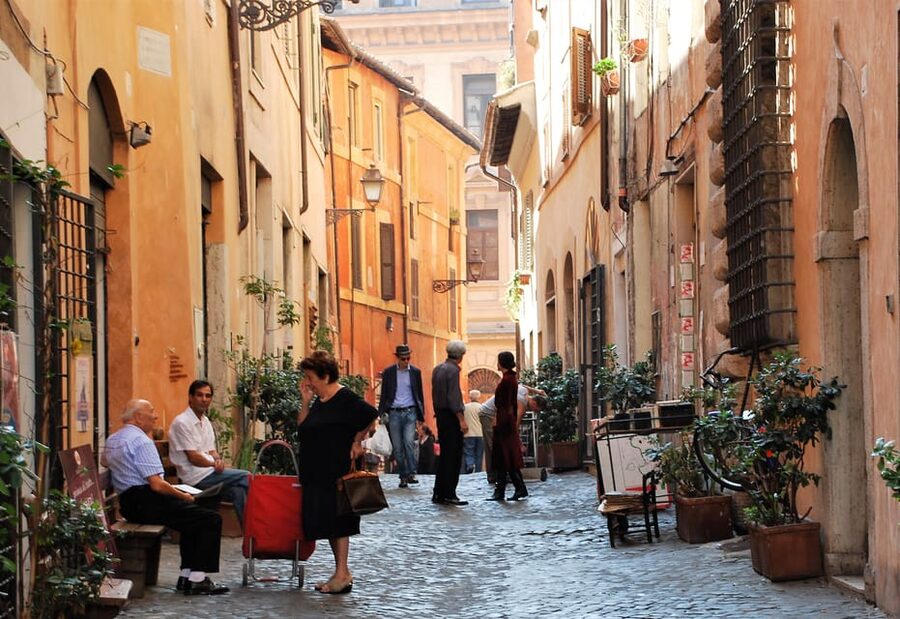
Use the meeting point exactly as written: Piazza della Trinità dei Monti, next to the obelisk. Look for the guide holding a signboard marked Fun Tour. Since one participant had trouble finding the meeting point, do not wait until the last minute to work out where you are going.
Wear shoes with good support rather than stylish but stiff footwear. The streets and squares are the stage for the whole activity, and there is no hotel transfer to shorten the walk.
Keep water and sun protection in mind, although food and drinks are not included. The route is long enough that you will appreciate being prepared, especially in warm weather.
Finally, leave space after the tour. The published duration is 2.5 hours, but the exact finish point and the pace of a group can affect your next plan. The Bridge of the Angels is near a hop-on-hop-off bus stop, which may help with onward sightseeing, but confirm the final location with your guide.
Should you book this tour?
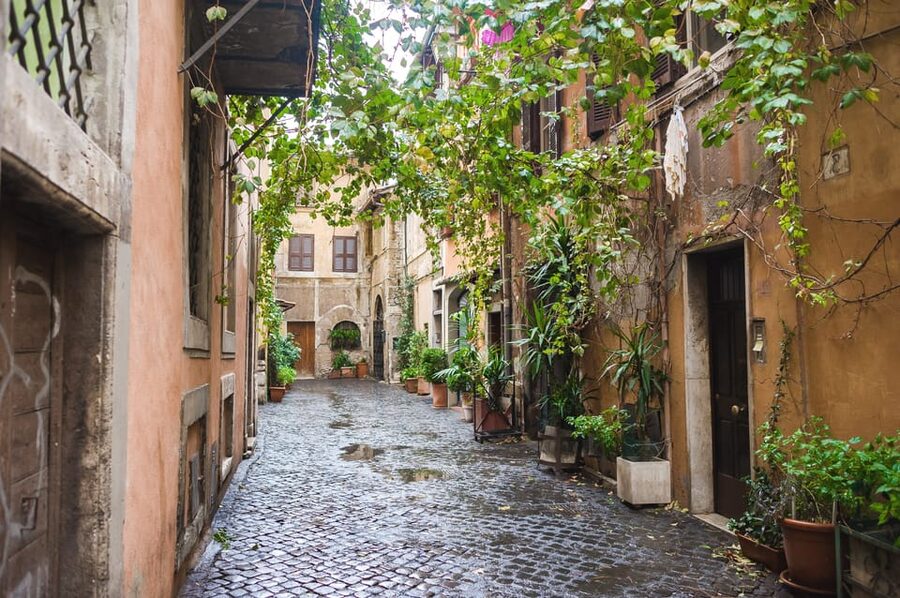
Book it if you want a guided introduction to Rome’s central squares, fountains, churches, and monuments, with enough history to make the walk meaningful. The best parts are the connection between Trevi, the Pantheon, and Piazza Navona, plus the change of pace in the Ponte district and the strong finish at Castel Sant’Angelo.
Skip it if you need wheelchair access, dislike moderate walking, or want extended visits inside the Pantheon or Castel Sant’Angelo. At $67, the tour earns its price through coverage and explanation rather than admissions or extras.
For most first-time visitors who can walk comfortably, it is a useful way to get your bearings in Rome. Just confirm the meeting and ending points, arrive early, and treat the route as an introduction to the city rather than a substitute for visiting every monument inside.
FAQ
How long is the Rome Squares and Fountains Guided Walking Tour?
The tour lasts 2.5 hours. Starting times vary, so check availability before booking.
What language is the tour conducted in?
The live guided tour is conducted in English.
Where does the tour start?
Meet at Piazza della Trinità dei Monti, next to the obelisk. Your guide will have a signboard marked Fun Tour.
How early should I arrive?
The mandatory meeting time is 15 minutes before departure.
What sights are included on the walking route?
The route includes the Trevi Fountain, Pantheon, Piazza Navona, Santa Maria della Pace, Castel Sant’Angelo, the Ponte district, and the Bridge of the Angels.
Is entry to Castel Sant’Angelo included?
No. The tour includes an external visit to Castel Sant’Angelo.
Is hotel pickup included?
No. Hotel pickup and drop-off are not included.
Is the tour suitable for wheelchair users?
No. The tour is not wheelchair accessible and is not recommended for people with back problems or difficulty walking.
Newest Rome tours we have reviewed
- Private TikTok Video Making in Rome★ 5.0 · 7 reviews
- Assisi, Orvieto and Civita di Bagnoregio Full Day Tour from Rome★ 4.5 · 45 reviews
- Assisi & Saint Francis Path Tour from Rome★ 5.0 · 45 reviews
- Assisi and Cascia Private Day Tour from Rome with Lunch★ 5.0 · 10 reviews
- Art Class in the center of Rome!★ 4.0 · 4 reviews
- Art & Craft: Beer Tour with Street Art in Rome★ 4.5 · 6 reviews
- Arrival in Rome: Airport Transfer & Exclusive City Introduction★ 5.0 · 3 reviews
- From Rome: Private Day-Tour of Tuscany★ 5.0 · 16 reviews
Rome Squares and Fountains Tours, compared.
Pantheon, Trevi Fountain & Roman Squares Guided Tour
Read our review →
Fountains and Squares of Rome 2-Hour Walking Tour
Read our review →

Browse the lists this tour appears in